Reviewed July 22, 2026
HVAC Rescue Editorial Team
Editorial StandardsWhen you need heat pump repair
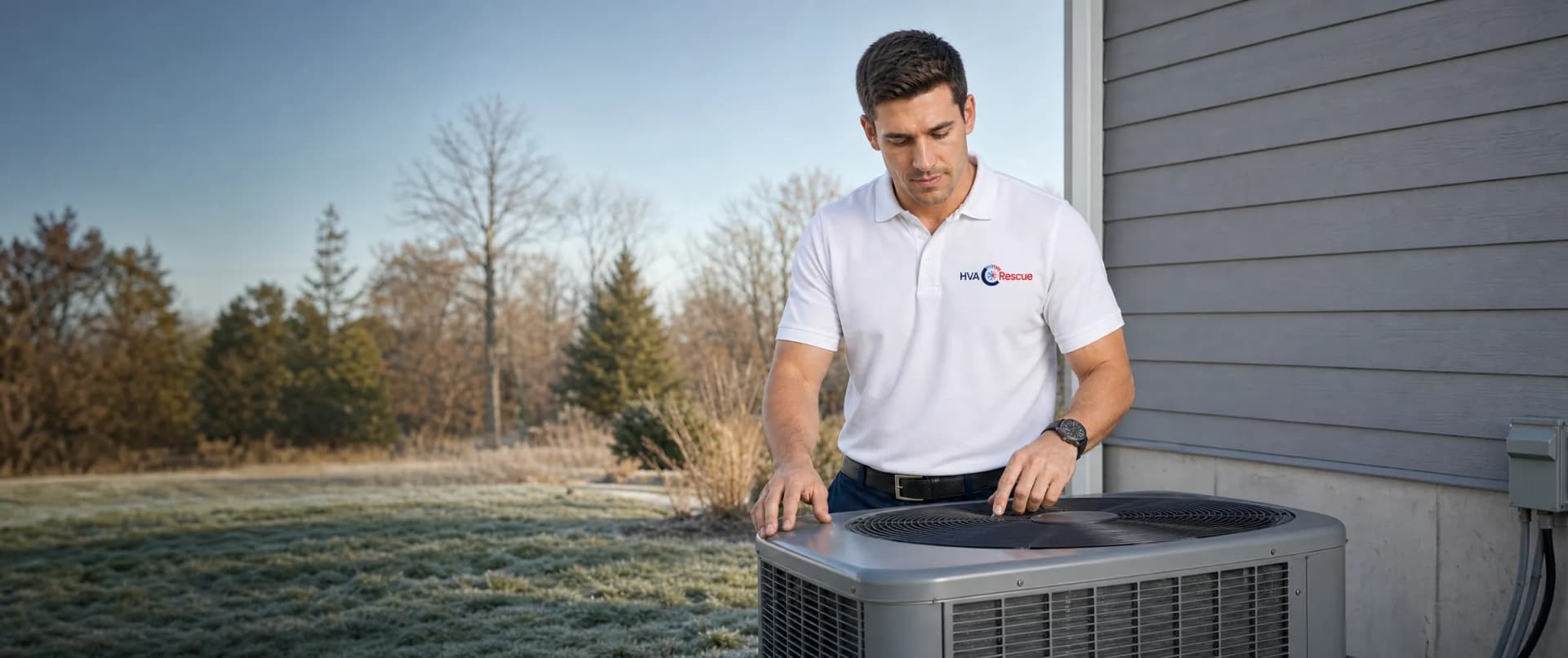
Heat pump repair is the right starting point when the same system that cools your home in summer also heats it in winter, and one or both modes stop working the way they should. Common examples are cool air from the vents in heat mode beyond a normal defrost cycle, weak or missing cooling in summer, auxiliary heat that seems to run all the time, or an outdoor unit that is iced over, humming loudly, or not running at all.
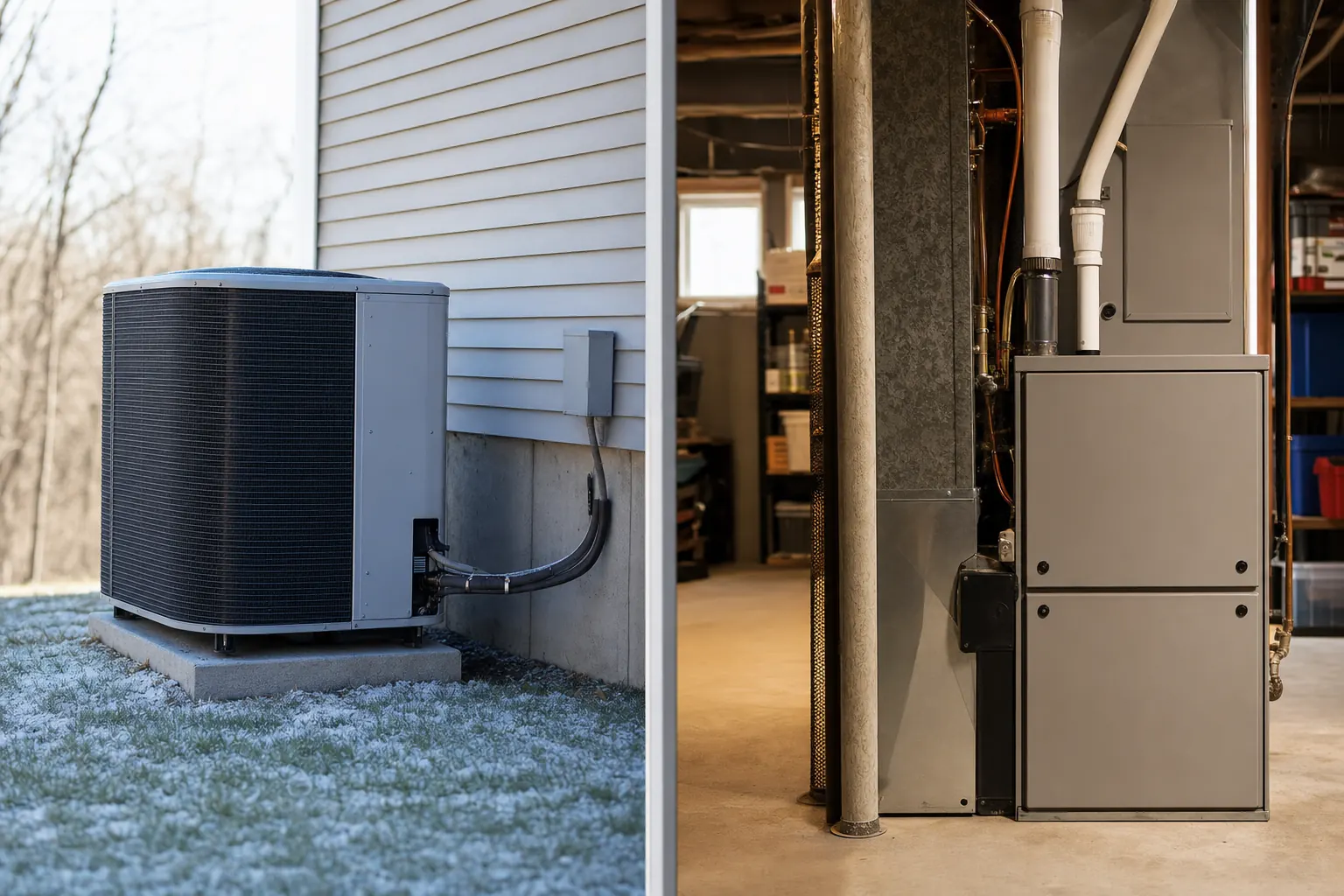
This page is for diagnosing a fault in an existing heat pump, not installing a new one or replacing the whole system. It is also different from furnace or boiler repair because the outdoor unit matters during heating season on a heat pump. If the equipment used to work and now has a clear symptom tied to heating, cooling, defrost, or auxiliary heat behavior, repair is the most useful next step.
The decision this service should answer
Determine whether the heat pump fault is in heating, cooling, defrost, reversing, airflow, controls, refrigerant performance, or backup heat.
Heat-pump repair must evaluate both operating modes and distinguish normal defrost behavior from a control, airflow, electrical, refrigerant, or auxiliary-heat failure.
Common problems
Start with the symptom you notice
Common causes
- Refrigerant charge problems
- A heat pump depends on the right refrigerant charge to move heat in either direction. When the charge is off, the system may struggle to heat in winter, cool poorly in summer, or run for long periods without reaching the set temperature.
- Reversing valve fault
- The reversing valve switches the system between heating and cooling modes. If it does not shift correctly, the heat pump can blow the wrong temperature air, fail in one season but not the other, or seem stuck between modes.
- Defrost control issues
- In cold weather, the outdoor unit needs to clear normal frost at the right time. If a defrost control or sensor is not working correctly, frost can build into heavy ice and the system may lose heating performance or rely too much on backup heat.
- Outdoor fan or capacitor
- The outdoor fan motor and capacitor help the outdoor unit start and run properly. If either fails, you may hear humming outside, see a fan that will not spin, or notice that heating and cooling both drop because the outdoor section cannot do its job.
- Thermostat or aux wiring
- A control problem can make auxiliary heat run when it should not, or prevent the heat pump from responding to the thermostat correctly. That can show up as high electric bills, uneven comfort, or a system that heats or cools only part of the way.
What you can safely check first
A few basic observations can help narrow the symptom, but homeowner checks should stop well short of opening panels or testing electrical or refrigerant parts. The goal is to confirm settings, airflow, power, and outdoor condition so the problem is described clearly and obvious issues are ruled out safely.
Confirm thermostat settings
Set the thermostat to the mode you want and make sure the setpoint calls for heating or cooling. If the mode or setpoint was off, the system may recover on its own. If the setting is correct and the air temperature still does not match, that points to a system problem rather than a simple control mix-up.
Check the air filter
Replace a dirty filter if airflow looks restricted. Low airflow can affect both heating and cooling performance and can also contribute to icing problems. If a clean filter does not change the symptom, the fault is likely elsewhere.
Clear the outdoor unit
Remove visible snow, ice, or debris around the outdoor unit so air can move freely. A blocked unit can lose capacity or ice up more easily. If the unit stays heavily iced after a normal defrost cycle, that suggests a repair issue rather than simple weather buildup.
Look for a tripped breaker
Check whether a breaker has tripped for the system. If power was lost and the breaker resets once, note whether the outdoor unit and indoor airflow return. If it trips again, leave it off and report that, because repeated trips point to a fault that needs professional diagnosis.
When to call a professional
Call for heat pump repair when the symptom remains after basic checks or when the outdoor unit, auxiliary heat, or seasonal mode change clearly is not behaving normally. At that point, the important next step is finding the failed function before any part is replaced.
- No heating or cooling
- If the system still will not heat or cool after checking the thermostat, filter, outdoor unit, and breaker, a deeper fault is likely. This matters because the same issue can affect year-round comfort. The system can usually be turned off between attempts if it is running without helping.
- Outdoor unit stays iced
- A heat pump can show some frost in winter, but it should clear through defrost. If the outdoor unit remains coated in ice after a defrost cycle, shut the system off and have it checked. Continued operation can leave the system unable to heat properly.
- Aux heat runs nonstop
- If auxiliary or backup heat seems to run constantly, the heat pump may not be carrying its normal share of the work. That matters because it can drive up electric use and hide the real fault. The system does not always need to be shut off, but the condition should not be ignored.
- Outdoor fan will not spin
- If the outdoor fan is not running, the outdoor section cannot operate normally in heating or cooling. Shut the system off and arrange repair. Leaving it on can worsen the problem, especially if the unit only hums or keeps trying to run.
How much does heat pump repair cost?
HVAC repair scope depends on the failed part, system type, diagnosis, access, labor, and urgency. This guide explains the common cost drivers and questions to use when comparing itemized proposals.
Heat pump repair quotes can vary because the symptom may trace back to a control issue, an outdoor electrical part, a defrost problem, or a refrigerant-related fault. The total can also change based on whether the problem affects one mode or both, whether ice or repeated cycling has to be worked through during diagnosis, and how much testing is needed to confirm the repair in heating and cooling.
| HVAC Repair Cost | Typical range |
|---|---|
| Minor repair (capacitor, filter, simple part)Small, common fixes. | $173 – $652 |
| Moderate repair (motor, sensor, control board)Mid-range components and labor. | $450 – $1,650 |
| Major repair (compressor, heat exchanger work)Significant parts and labor; sometimes points toward replacement. | $1,867 – $6,600 |
Cost ranges are estimates developed from standardized project scopes and reviewed pricing inputs. Government labor and regional cost data are used where applicable. See our Pricing Methodology for the exact sources, calculations, and review date. Actual prices vary by property, scope, materials or equipment, location, and provider.
See the full HVAC repair cost guide for the complete breakdown, then call to get a real quote for your home.
Get help with heat pump repair
One quick call connects you with HVAC pros who service your area. No pressure, no obligation.
What happens during service
A qualified technician narrows a heat pump fault by checking how the system behaves in both heating and cooling, when conditions allow, instead of guessing from one symptom alone. The diagnosis may include thermostat response, supply and return air temperatures, refrigerant readings, reversing-valve operation, defrost controls, and outdoor electrical parts such as the fan motor, contactor, and capacitor. That process helps identify the failed part or failed function before repairs are made.
- 1
Identify the season and symptom
Note whether heating, cooling, or both are affected, and the outdoor unit condition.
- 2
Run safe checks
Thermostat, filter, breaker, and a clear outdoor unit.
- 3
Connect with a pro
HVAC Rescue helps connect you with heat pump repair professionals that service your area.
- 4
Diagnose the system
The technician checks refrigerant, the reversing valve, defrost controls, and electrical parts.
- 5
Repair and verify
Repairs are made and both heating and cooling modes are tested.
Why homeowners use HVAC Rescue
- One call connects you with HVAC pros who service your area
- Help for repair, maintenance, replacement, and emergencies
- Plain-English guidance on what is likely wrong before anyone visits
- No pressure and no obligation to book
- Available nationwide, year-round
- We point you to the right service for your system, not an upsell
Heat Pump Repair: common questions
Why is my heat pump blowing cool air in heat mode?
Is it normal for the outdoor unit to have ice on it in winter?
Why does my auxiliary heat run all the time?
Can a heat pump stop cooling in summer but still heat in winter?
What should a repair diagnosis explain?
Sources and fact-checking
Reviewed July 22, 2026. We favor primary government and standards sources for safety, efficiency, and regulatory claims. These references support the technical and consumer guidance on this page.
- Heat pumpsU.S. Department of EnergyHeat-pump operation, system types, climate considerations, and backup heat.
- Heat pump equipment key product criteriaENERGY STARCurrent cold-climate heat-pump efficiency, capacity-retention, and low-ambient performance criteria.
- Heating and cooling maintenance checklistENERGY STARProfessional tune-up scope, filters, airflow, coils, drains, and safety checks.
- ENERGY STAR heating and cooling guidanceENERGY STAREfficiency, replacement planning, qualified equipment, and contractor questions.