Reviewed July 25, 2026
HVAC Rescue Editorial Team
Editorial StandardsA practical service schedule for most homes
Regular maintenance is one of the most cost-effective things you can do for a heating and cooling system. Like a car, HVAC equipment usually runs better, lasts longer, and breaks down less often when it gets routine attention. For most homes, the simple answer is this: plan on professional service twice a year, once before cooling season and once before heating season, and handle a few basic homeowner tasks in between. That schedule is not about perfection. It is about catching wear early, keeping airflow where it should be, and avoiding preventable strain on expensive parts.
If you smell gas, a carbon monoxide alarm goes off, or you notice smoke or a burning-electrical smell, everyone should leave the building immediately and call the gas utility or emergency services from outside. Do not stay inside to investigate and do not try to restart the system. For ordinary maintenance planning, spring is the usual time for an air conditioning or heat pump cooling tune-up, and fall is the usual time for a furnace or heating tune-up. Booking before the first hot stretch or cold snap often gives you better scheduling options than waiting for the first weather extreme.
- Air conditioners and furnaces are commonly serviced once each year, ideally in spring for cooling and fall for heating.
- itemsHeat pumps usually benefit from two visits a year because the same equipment works through both summer and winter.
- A newer system in a mild climate may still need yearly service even if it seems to run fine, because performance and safety problems often start gradually.
- An older system, a home with pets, or a home with heavy dust may need closer attention between professional visits, especially to filters and airflow.
- If the manufacturer or warranty documents call for a specific maintenance interval, follow those requirements because they may affect coverage.
Why twice a year is a good target
HVAC systems do not fail on a neat calendar, but seasonal tune-ups line up with how the equipment is used. In spring, a technician can check whether the cooling side starts, runs, drains, and moves air correctly before sustained heat arrives. In fall, the heating side can be inspected for safe ignition, proper venting, normal temperature rise, and general condition before the first hard cold snap. Small issues are easier to address when the system is not already under peak demand and when appointment books are not packed after a regional weather swing.
The value of regular service is not just cleaning. It is also testing and trend-spotting. A weak capacitor, a blower wheel loaded with dust, a partially blocked condensate drain, loose electrical connections, an inducer motor getting noisy, or a pressure imbalance across a filter can all show up before the homeowner sees a complete breakdown. None of those checks guarantees the system will never fail, but they improve the odds that wear items are noticed before they take the whole unit down on the hottest or coldest day of the year.
Twice a year is a good target, not an iron rule for every house. A cooling-only system paired with baseboard heat may only need one professional visit for the air conditioner. A little-used furnace in a vacation property still needs periodic safety inspection, but not necessarily the same pattern as a full-time residence. Homes with long run times, high indoor dust, multiple pets, allergy concerns, or older ductwork often see more benefit from staying close to the spring-and-fall schedule than lightly used systems in very mild climates.
What a professional tune-up usually includes
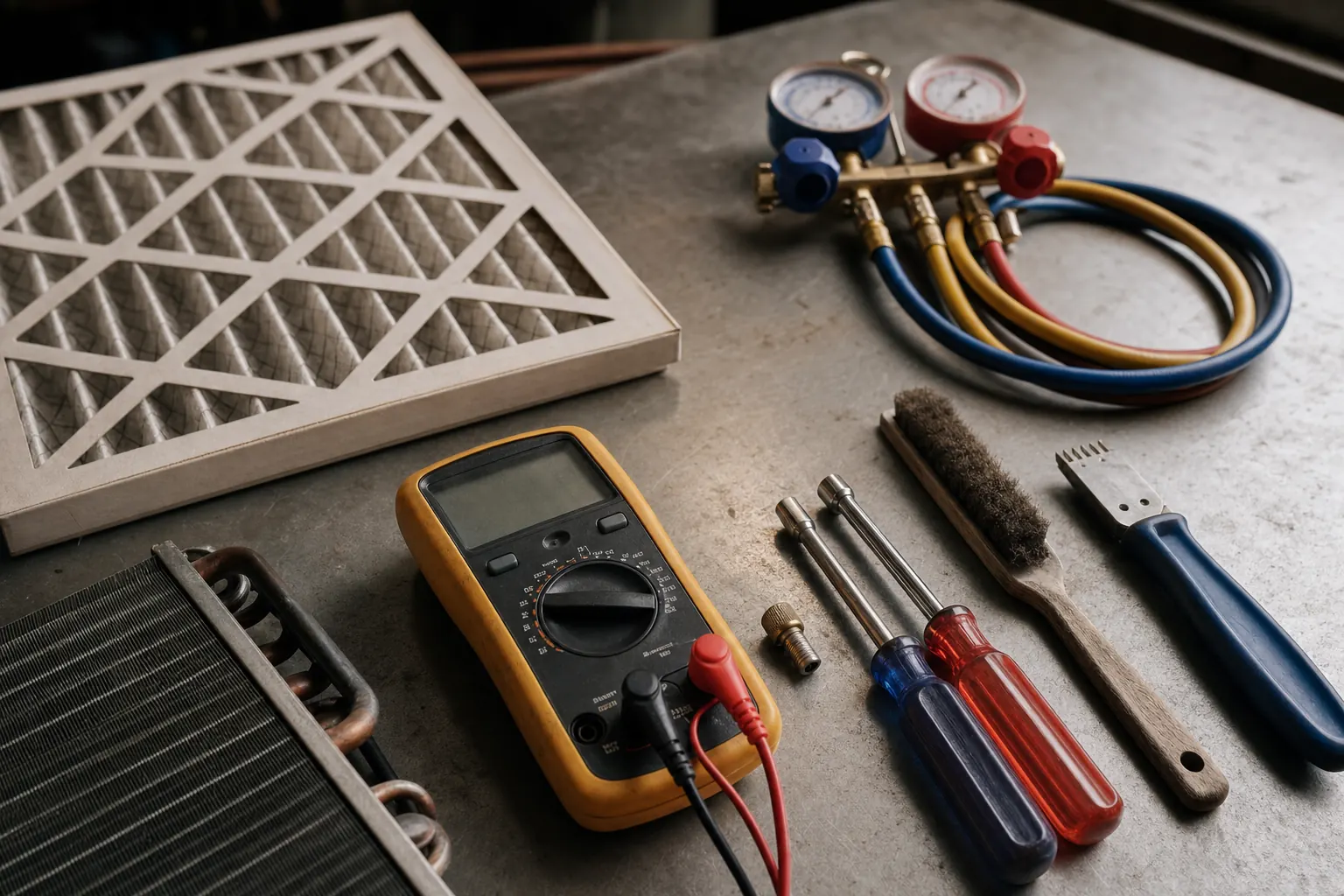
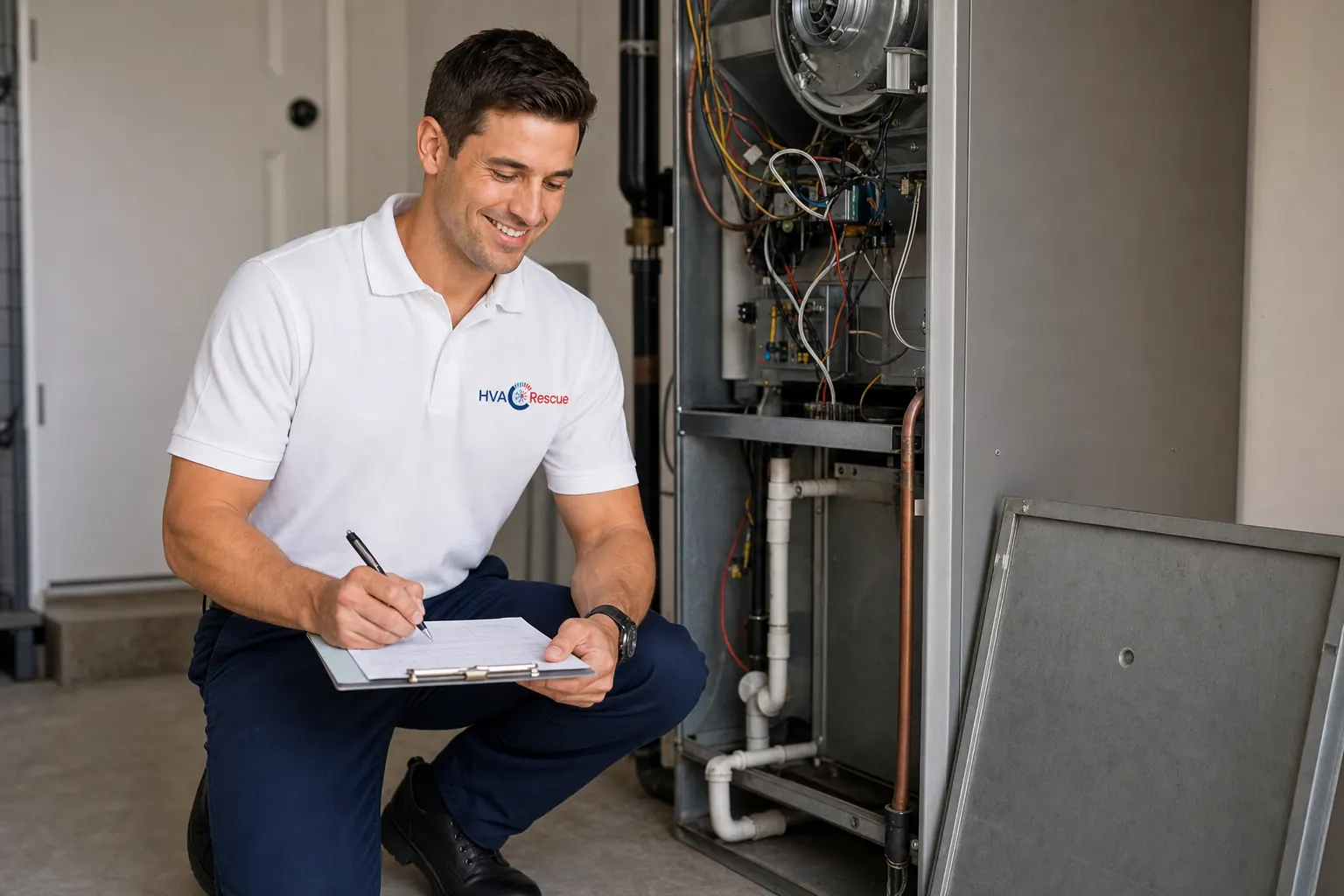
A professional tune-up goes well beyond what a homeowner should try to do. The exact checklist varies by contractor and by equipment type, but a thorough visit generally covers safety, electrical condition, airflow, controls, cleanliness, and overall operation. On cooling equipment, that often means checking temperature split, refrigerant-related performance indicators, condensate drainage, blower function, contactors, capacitors, and the condenser coil condition. On heating equipment, it may include checking ignition sequence, flame characteristics, safeties, venting condition, blower operation, and signs of overheating or short cycling.
This is also when a technician can catch installation or duct-related problems that are not obvious to a homeowner. Examples include an oversized filter rack allowing air bypass, a return duct pulling attic dust, closed dampers reducing airflow, an unlevel condensate setup causing drainage issues, or combustion air and venting concerns at a furnace. These are not always part failures. Sometimes they are system conditions that quietly lower comfort, raise utility use, or shorten the life of motors, heat exchangers, compressors, and control boards.
- Electrical connections are inspected for looseness, overheating, corrosion, and abnormal amp draw where applicable.
- System controls and operating sequence are checked so the equipment starts, runs, and shuts down normally.
- Accessible components are cleaned where buildup affects operation, such as condensate areas, blower compartments, or outdoor coil surfaces.
- Safety controls are tested according to the equipment type, and technicians look for wear, heat stress, vibration damage, and water-related issues.
- Airflow and overall performance are reviewed, because many HVAC problems are really airflow problems before they become part failures.
What homeowners should do between service visits
Homeowner maintenance should stay simple, regular, and safe. The most important task is filter management, because restricted airflow can hurt comfort, efficiency, and equipment life. Check the filter every month, not because it always needs replacement monthly, but because loading varies widely by house. A 1-inch filter in a home with pets, shedding rugs, construction dust, or wildfire smoke may load much faster than the same filter in a cleaner environment. Many households end up replacing filters every one to three months, while thicker media filters may last longer if the manufacturer allows it.
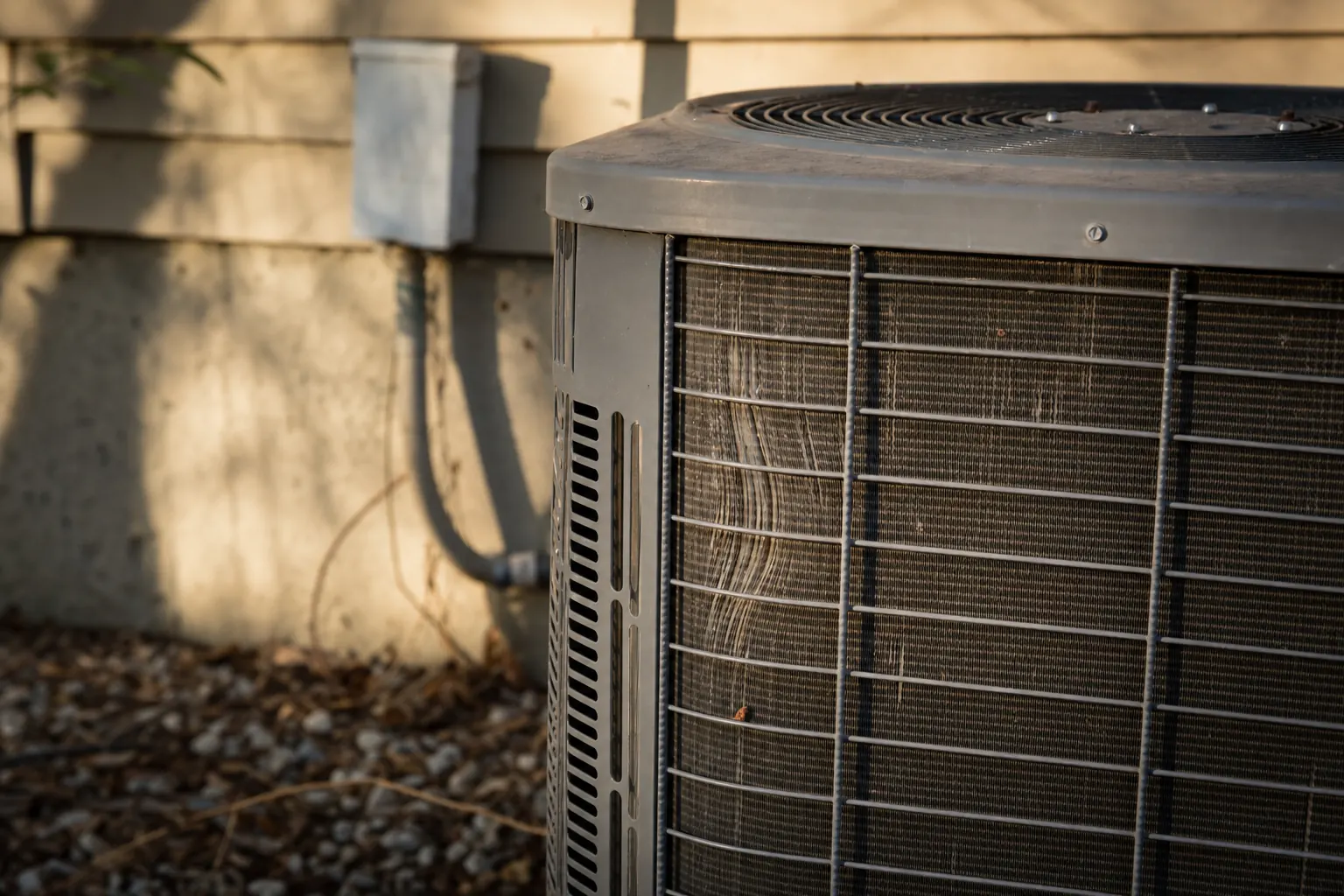
Keep supply registers and return grilles open and unobstructed. Closing too many vents does not reliably save money and can create airflow problems, noise, and pressure changes that strain the blower. Rugs, furniture, drapes, and pet beds commonly block returns more than homeowners realize. Outside, keep the area around the condenser or heat pump clear of leaves, weeds, and grass clippings. A common rule of thumb is to maintain about 2 feet of clearance around the unit and more above it if shrubs are nearby, while avoiding any cleaning step that requires opening panels or handling wiring.
Pay attention to changes. A system that runs longer than usual, starts hard, trips breakers, cycles on and off rapidly, or develops new rattling, buzzing, squealing, or grinding sounds is asking for attention. Indoors, watch for uneven temperatures, rising humidity in summer, frequent filter loading, or water around the air handler or furnace. Those symptoms do not identify the exact cause, but they are useful observations to share when HVAC Rescue helps you find a local contractor. Good notes often shorten diagnosis and prevent a problem from being dismissed as intermittent.
- Check the air filter monthly and replace it when dirty or at the interval listed for that filter type.
- Keep supply and return openings clear so the system can move the air volume it was designed to handle.
- Rinse visible debris from around the outdoor unit and keep vegetation trimmed back, but do not remove panels or reach into the cabinet.
- Make sure the area around the indoor unit stays clean and accessible, especially around a condensate drain or service access path.
- Listen and look for changes in noise, comfort, run time, humidity, drainage, or utility use and write down when they started.
How service frequency changes by system type and home conditions
Not every house needs the exact same schedule. Heat pumps usually deserve the most attention because one system handles both heating and cooling, often with long run times in both shoulder seasons and extremes. A gas furnace paired with a separate air conditioner still fits the classic spring-and-fall pattern well. Ductless mini-splits can need more frequent indoor filter cleaning by the homeowner because the filters are small and the heads are often used room by room. Boilers, hydronic systems, and steam heat follow different maintenance routines than forced-air systems and should be serviced according to their own equipment needs.
Home conditions matter as much as equipment type. Pets add hair and dander. Smokers, candles, and fireplaces can increase indoor particulates. Renovation dust can overload filters quickly and settle into blowers and coils. A home near cottonwood trees, farm fields, or heavy pollen can load outdoor coils and indoor filters faster. Homes with occupants who are home all day often rack up more runtime than homes empty during work hours. If someone in the home has asthma or strong dust sensitivity, consistent filter checks and airflow maintenance become even more important for comfort and cleanliness, even though HVAC maintenance is not a substitute for medical-grade air control.
Age also shifts the equation. A 15-year-old system may still run well, but parts such as capacitors, contactors, inducer motors, blower motors, relays, and drain components are more likely to show wear than on a 3-year-old unit. Older equipment can benefit from sticking closely to a twice-yearly rhythm because small drifts in amp draw, temperature rise, static pressure, or drainage are more likely to become service calls if ignored. That does not mean every old system needs replacement. It means maintenance gets more valuable as tolerances tighten and parts age.
When to schedule sooner than the routine plan
Do not wait for the next seasonal tune-up if the system is already showing trouble. Schedule service sooner if cooling air is not meaningfully cool, if heating is weak, if the system short cycles, if the thermostat setting and room temperature no longer seem to match, or if water is appearing around the indoor unit. A clogged condensate drain, failing blower component, weak electrical part, or airflow restriction can worsen quickly if the system keeps running under strain. Early attention is usually cheaper than letting a minor issue trigger a larger failure.
Some warning signs are especially important. Ice on refrigerant lines or the indoor coil area, breaker trips, loud metal-on-metal noises, repeated ignition attempts, soot around furnace areas, or frequent high-limit shutdowns should not be treated as normal quirks. Turn the system off if it is making severe noises or if water is leaking in a way that could damage the home, and arrange professional diagnosis. Again, any gas smell, carbon monoxide alarm, smoke, or burning-electrical smell is not a maintenance issue at all; everyone leaves immediately and calls the gas utility or emergency services from outside.
Budgeting for maintenance and making the schedule stick
The standardized single-heating-system furnace tune-up scenario used by this site falls around $93 to $263 per visit, with the active pricing table supplying the current canonical range. Other equipment types use their own maintenance scenarios, and multi-system homes, heat pumps, or visits that turn into diagnosis and repair can run higher. A basic disposable filter may cost roughly $10 to $30, while thicker media filters can cost more. This comparison helps frame the cost of routine upkeep against the inconvenience and expense of peak-season breakdowns.
Cost ranges are estimates developed from standardized project scopes and reviewed pricing inputs. Government labor and regional cost data are used where applicable. See our Pricing Methodology for the exact sources, calculations, and review date. Actual prices vary by property, scope, materials or equipment, location, and provider.
The easiest schedule to remember is simple: check the filter monthly, clean around the equipment as needed, book cooling service in spring, and book heating service in fall. Put calendar reminders on your phone for the first weekend of each month to inspect the filter and the area around the system. Keep a note with filter sizes, installation direction, thermostat battery type if applicable, model numbers, and the dates of past service. That small record helps any contractor see patterns faster, especially if comfort issues come back seasonally or only under heavy load.
If you are ready to set up maintenance, HVAC Rescue can help you find an independent local contractor. The goal is not to chase perfect efficiency numbers. It is to give the system a reasonable maintenance rhythm, keep homeowner tasks within safe limits, and address warning signs before they become emergency calls. For most households, twice-yearly professional service plus monthly filter checks is the right baseline, with extra attention for heat pumps, older equipment, pets, dust, and any home where the system runs hard for long stretches.
Sources and fact-checking
Reviewed July 25, 2026. We favor primary government and standards sources for safety, efficiency, and regulatory claims. These references support the technical and consumer guidance on this page.