Quick summary
Match what you notice to a safe next step
These observations can narrow the starting service, but they do not confirm which part has failed.
What you notice
Thermostat fan set to ON, thermostat miscalibrated, or thermostat wiring issue
What it may point to
If only the blower keeps running, or the system ignores the room temperature, the thermostat may be telling the fan or cooling circuit to stay on even after the house reaches the setpoint.
Safe next action
Check the setpoint and note outdoor conditions
What you notice
Low refrigerant charge or a compressor that is not pumping effectively
What it may point to
When the AC runs for long stretches but the home cools very slowly, the system can be moving some air without removing heat fast enough to satisfy the thermostat.
Safe next action
Inspect the filter and arrange service
What you notice
Outdoor condenser airflow or heat-rejection problem
What it may point to
A dirty condenser coil, failed condenser fan motor, or blocked outdoor unit can keep heat from leaving the refrigerant, so the AC runs longer and may overheat or trip intermittently.
Safe next action
Confirm the fan is set to Auto
What you notice
Indoor evaporator airflow restriction or icing
What it may point to
If there is weak airflow, frost on the refrigerant lines, or water after thawing, the evaporator can get too cold and ice up, which cuts cooling capacity and leads to marathon run times.
Safe next action
Turn the system off and request service
Safe things to check
- Confirm the thermostat mode and setpoint
- Inspect the air filter and replace it if visibly dirty
- Make sure visible supply and return vents are open
Do not attempt
- Do not handle, vent, or add refrigerant
- Do not open sealed electrical or equipment panels
- Do not bypass a safety switch or force repeated restarts
A few quick questions
Refine the best next step
Question 1 of 3
- 1How much of the home is affected?
- 2What is the system doing right now?
- 3When did this begin?
What this symptom can mean
Use the evidence you can observe
What continuous AC operation usually means
An air conditioner is supposed to run longer on very hot afternoons, but it should still cycle off after it removes enough heat to satisfy the thermostat. When it runs continuously, the key question is whether it is cooling too slowly or whether part of the system is being told to run when it should be off. That distinction matters because a nonstop blower points toward fan-control or thermostat issues, while a nonstop outdoor unit points more toward a stuck contactor or a cooling system that cannot keep up.
What you can tell from what keeps running
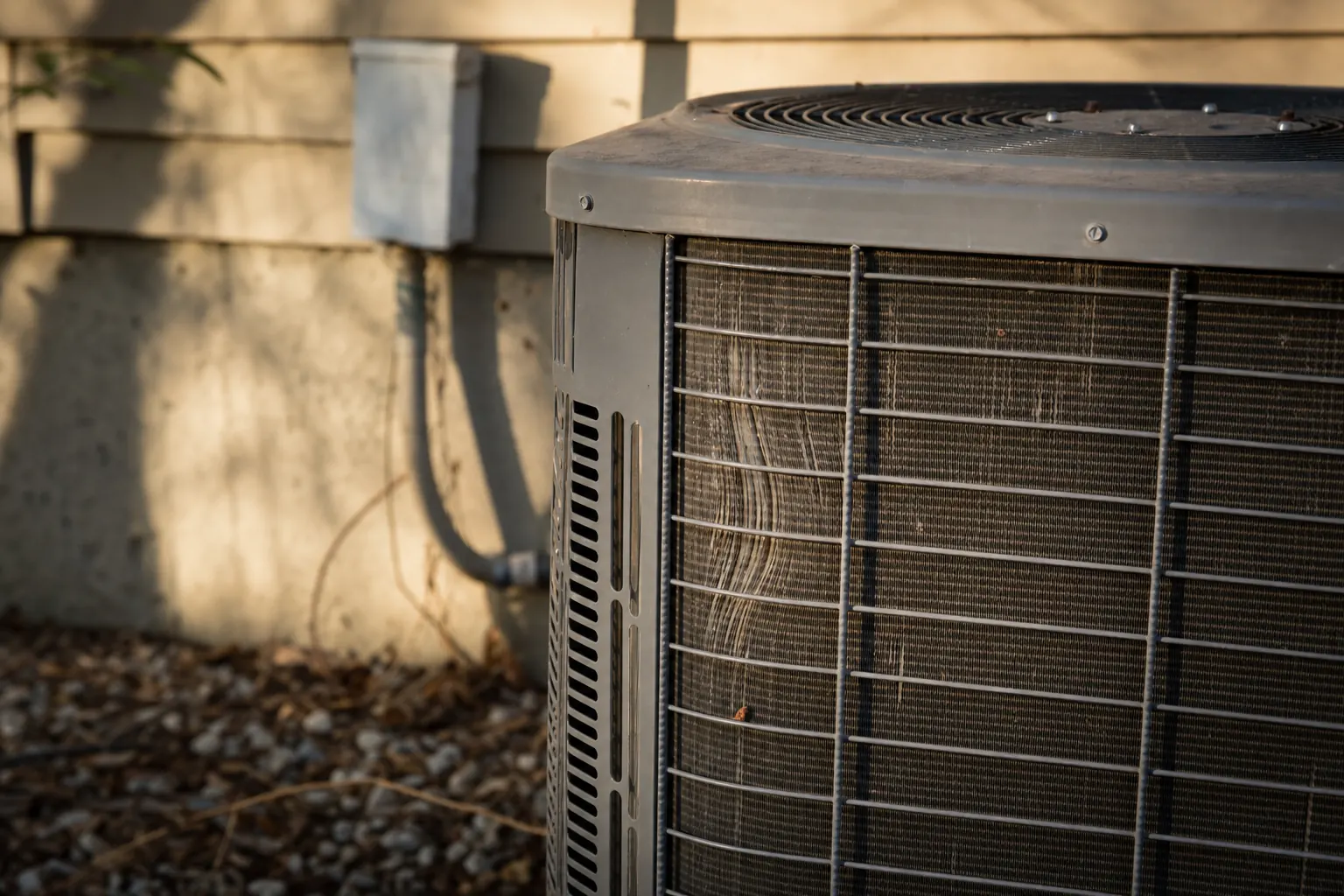
Listen for whether the indoor airflow continues by itself, the outdoor unit continues by itself, or both stay on together. If the fan keeps blowing from the vents after the temperature setting is reached but the outdoor unit is off, the thermostat may be set to FAN ON instead of AUTO, or the fan relay/control may be sticking. If the outdoor condenser keeps humming and the top fan keeps spinning even after the thermostat is satisfied, that is more consistent with a contactor that is stuck closed and needs service.
Signs the system is running nonstop because cooling capacity has dropped
If the AC runs all day and the indoor temperature falls only a degree or two every hour, the system is probably not moving enough heat. Common clues are air that feels only mildly cool instead of distinctly cold, ice on the larger copper line, water around the air handler after thawing, or an outdoor unit that feels extremely hot and seems to struggle in the afternoon. Those symptoms fit low refrigerant, evaporator icing, or a condenser that cannot reject heat, not a simple on-off control problem.
What a technician usually checks on this call
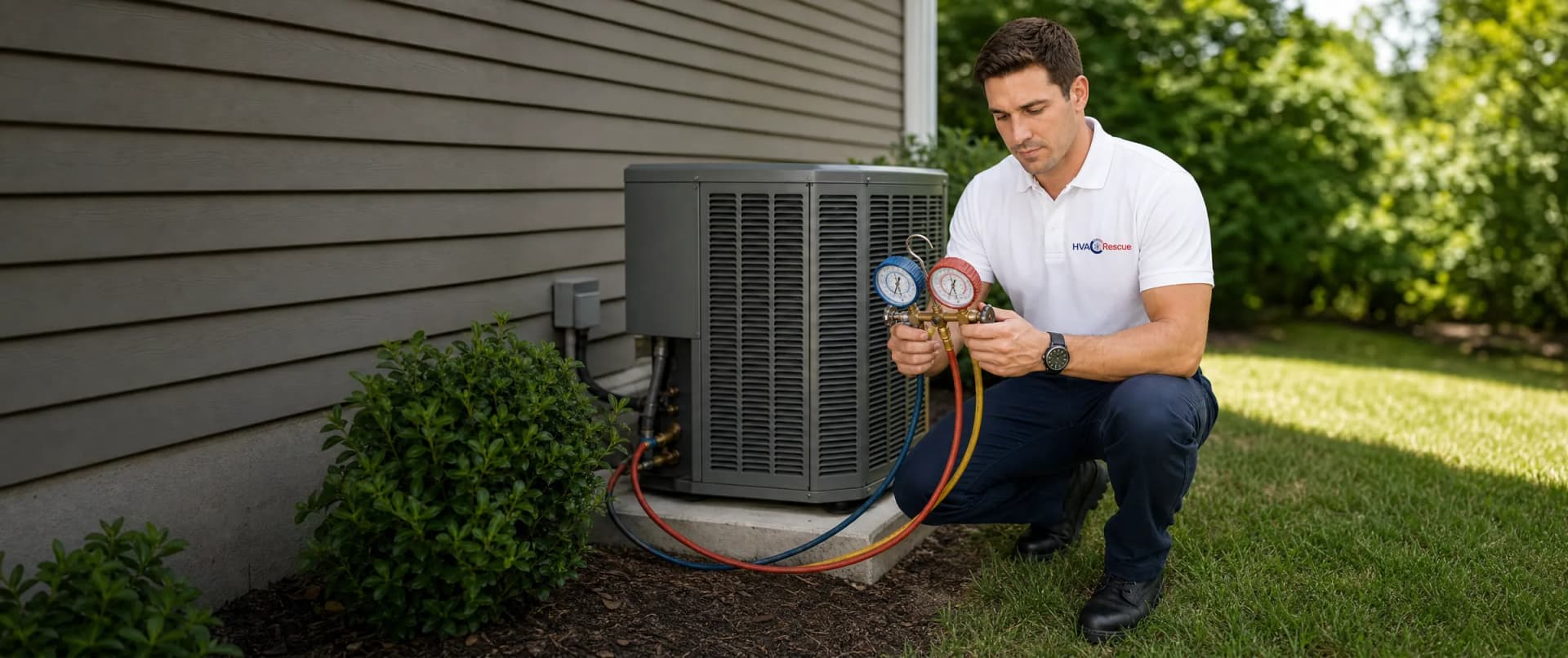
A service visit for this symptom typically starts with cycle behavior: whether the thermostat is calling correctly, whether the blower and outdoor unit respond normally, and whether either one keeps running after the call ends. The technician will then check temperature split across the indoor coil, amperage draw of the compressor and fan motors, condenser coil condition, refrigerant pressures, and whether the contactor is opening and closing properly. If icing is present, they may need the system thawed before final measurements are accurate.
What affects repair cost
Cost depends heavily on whether the problem is a control issue or a cooling-capacity issue. Thermostat replacement or rewiring is often in the roughly $150-$500 range, and a contactor replacement commonly falls around $150-$400. Condenser fan motor repairs often run about $300-$900, while refrigerant leak diagnosis and sealed-system repairs can range from several hundred dollars into $1,500 or more before any refrigerant is added, depending on leak location, refrigerant type, and accessibility.
Cost ranges are estimates developed from standardized project scopes and reviewed pricing inputs. Government labor and regional cost data are used where applicable. See our Pricing Methodology for the exact sources, calculations, and review date. Actual prices vary by property, scope, materials or equipment, location, and provider.
If the system is running constantly during a severe heat wave, some extended run time can be normal, especially in direct sun or poorly insulated homes. But if it runs through cooler evening hours without catching up, if the outdoor unit will not shut off, or if you see ice, water, or overheating, that is no longer just weather-related demand. Those observations help narrow the problem quickly and are useful details to share when you book service.
When to turn the system off
- Stop if you smell gas, see smoke or sparks, or hear a carbon-monoxide alarm
- Stop if water reaches powered equipment or a breaker trips again
- Stop if loud grinding, booming, or heavy ice appears
When to call for help
- Call when the symptom continues after the safe checks
- Call promptly when comfort is lost for the whole home
- Describe when it started and any water, ice, noise, odor, alert, or breaker activity
Cost guidance
What could this cost to fix?
Price depends on the actual cause, equipment, access, and local labor. Compare the national ranges in the AC Repair Cost guide, or check service availability for your system.
Find local help for AC Repair
We will keep this problem and recommended service selected while you answer a few quick availability questions.
Browse HVAC help by stateFrequently asked questions
AC runs constantly or will not shut off: common questions
Why does my AC run all day but only lower the temperature a little?
Why does the fan keep blowing after the AC stops cooling?
Why won't my outdoor AC unit shut off even when the thermostat is satisfied?
Can hot weather alone make my AC run constantly?
How long does it usually take to diagnose an AC that will not shut off?
Sources and review standard
Last updated July 18, 2026. Last reviewed July 18, 2026. HVAC Rescue reviews problem pages for homeowner-safe boundaries, service routing, source quality, and unsupported claims. No named technical reviewer is shown unless a qualified HVAC reviewer has completed that review.