Quick summary
Match what you notice to a safe next step
These observations can narrow the starting service, but they do not confirm which part has failed.
What you notice
Failed start or run capacitor
What it may point to
The outdoor unit gets power and tries to start, but the capacitor cannot give the compressor or fan the extra electrical boost it needs, so you hear a hum or brief buzz instead of normal startup.
Safe next action
Check the thermostat display and the normal service switch
What you notice
Condenser fan motor seized or failing
What it may point to
If the outdoor unit hums but the fan blade does not spin, the motor may be locked up or overheating, which can quickly stress the compressor if the system keeps trying to run.
Safe next action
Turn it off and describe the sound to a technician
What you notice
Compressor is hard-starting or mechanically stuck
What it may point to
A louder hum followed by a click, shutdown, or breaker trip often means the compressor is drawing heavy current but cannot get moving, which can range from a start-component repair to compressor replacement.
Safe next action
Reset it no more than once; stop if it trips again
What you notice
Pitted contactor or low-voltage/control fault
What it may point to
A repeated click or buzzing from the outdoor unit without full startup can mean the contactor is chattering, not pulling in cleanly, or losing the 24-volt signal intermittently.
Safe next action
Record the exact code and consult the owner manual without opening panels
Safe things to check
- Confirm the thermostat mode and setpoint
- Inspect the air filter and replace it if visibly dirty
- Make sure visible supply and return vents are open
Do not attempt
- Do not handle, vent, or add refrigerant
- Do not open sealed electrical or equipment panels
- Do not bypass a safety switch or force repeated restarts
A few quick questions
Refine the best next step
Question 1 of 3
- 1How much of the home is affected?
- 2What is the system doing right now?
- 3When did this begin?
What this symptom can mean
Use the evidence you can observe
What this symptom usually means
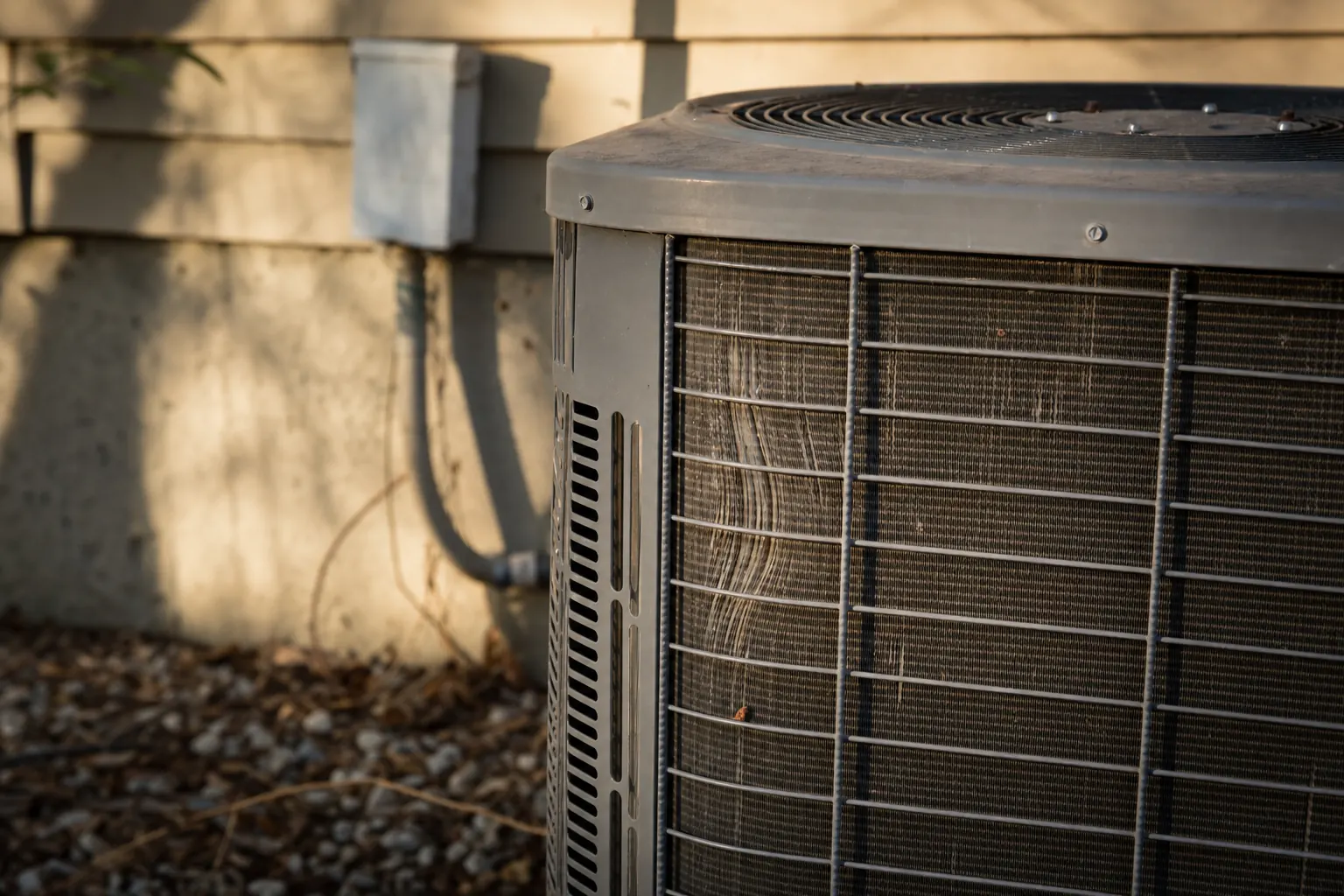
A hum or buzz without startup usually means the AC is receiving at least some electrical command to run, but one of the major outdoor components cannot actually get moving. That is different from a completely dead system, and it is different from an AC that runs but does not cool. On this symptom, the key clue is that the machine tries to start, makes an electrical noise, then stalls, clicks off, or trips a breaker.
How to narrow it down from what you can observe
If you hear the outdoor unit hum and the top fan is not spinning, a bad capacitor or failing fan motor moves to the top of the list. If the unit hums for a few seconds and then clicks off, especially with a hot cabinet or a breaker trip, the compressor may be locked, overheated, or drawing excessive amperage. If you hear rapid clicking or an uneven buzzing from the control area, that points more toward a contactor or voltage issue than a cooling-performance issue.
A tripped breaker matters here because it often means the equipment tried to start and pulled more current than it should. One reset may restore operation briefly, but if it trips again, continued attempts can worsen compressor or motor damage. If the thermostat or indoor display shows a fault code, that code often helps the technician tell whether the unit is losing communication, locking out on compressor protection, or failing on an electrical start component.
What a service visit usually includes
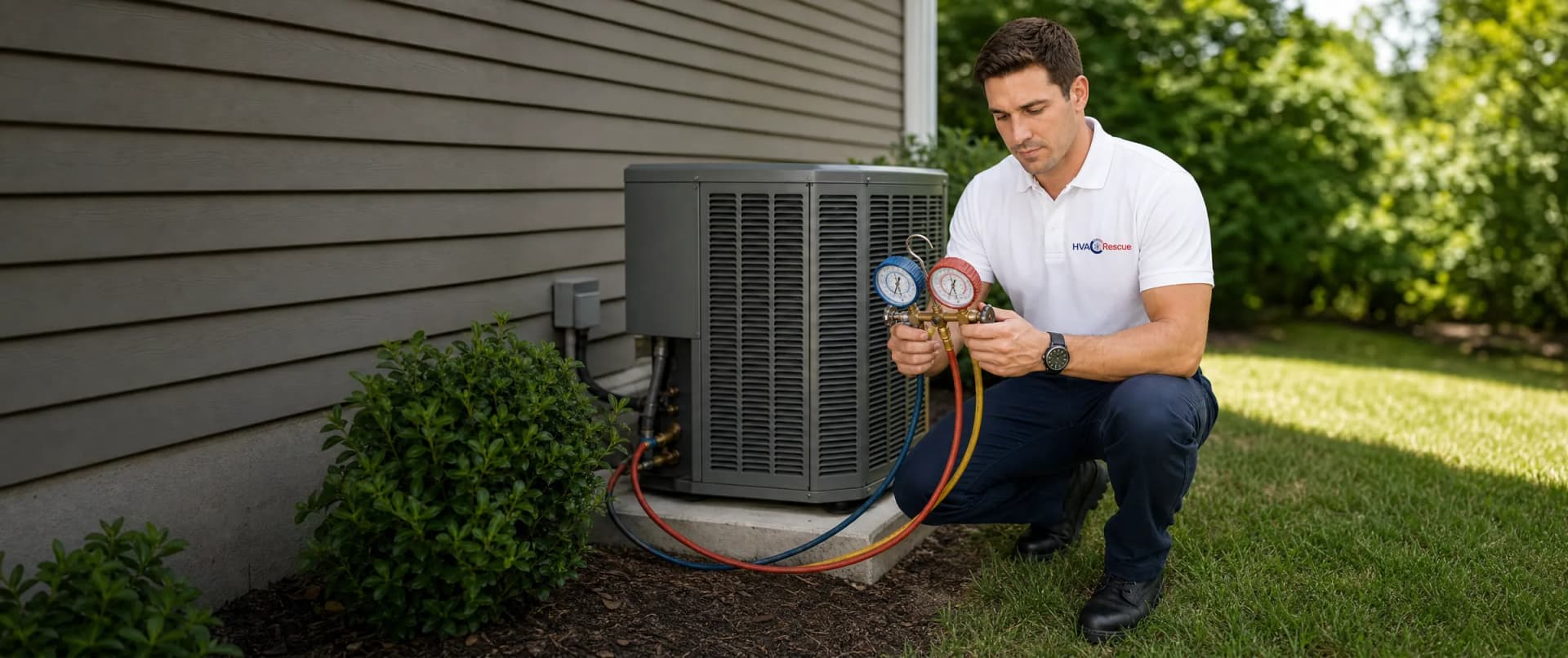
A technician will usually verify whether the outdoor unit is getting proper line voltage and whether the contactor is closing correctly when there is a call for cooling. From there, they typically test the capacitor value, inspect the condenser fan motor, measure compressor amperage on startup, and check for signs of overheating, loose wiring, or a failed disconnect. If the compressor is the source of the hum, they may determine whether a hard-start kit is appropriate or whether the compressor is mechanically failing.
What affects repair cost on this symptom
Costs vary mainly by which part is failing and whether the problem is confined to a start component or involves a major motor. A capacitor replacement is commonly one of the lower-cost AC electrical repairs, often around $150-$400 installed in typical US pricing for 2025-2026, while a contactor or minor electrical repair may land in a similar range. A condenser fan motor often runs roughly $400-$1,100 installed, and compressor-related repairs can range from several hundred dollars for start-assist work to several thousand for compressor or outdoor-unit replacement, depending on warranty status, refrigerant type, and equipment age.
Cost ranges are estimates developed from standardized project scopes and reviewed pricing inputs. Government labor and regional cost data are used where applicable. See our Pricing Methodology for the exact sources, calculations, and review date. Actual prices vary by property, scope, materials or equipment, location, and provider.
Because this symptom often involves repeated failed startup attempts, waiting can turn a simpler repair into a larger one. A weak capacitor can lead to overheating, and a struggling fan motor can leave the compressor without proper heat rejection. Scheduling service soon is usually the best way to avoid escalating damage.
When to turn the system off
- Stop if you smell gas, see smoke or sparks, or hear a carbon-monoxide alarm
- Stop if water reaches powered equipment or a breaker trips again
- Stop if loud grinding, booming, or heavy ice appears
When to call for help
- Call when the symptom continues after the safe checks
- Call promptly when comfort is lost for the whole home
- Describe when it started and any water, ice, noise, odor, alert, or breaker activity
Cost guidance
What could this cost to fix?
Price depends on the actual cause, equipment, access, and local labor. Compare the national ranges in the AC Repair Cost guide, or check service availability for your system.
Find local help for AC Repair
We will keep this problem and recommended service selected while you answer a few quick availability questions.
Browse HVAC help by stateFrequently asked questions
AC hums or buzzes but will not start: common questions
Why does my AC just hum for a few seconds and then shut off?
If my AC breaker tripped after the unit buzzed, can I reset it once?
Why is the outside AC unit humming but the fan not spinning?
Can a bad capacitor make my air conditioner buzz but not start?
How long does it take to diagnose an AC that hums but will not start?
Sources and review standard
Last updated July 18, 2026. Last reviewed July 18, 2026. HVAC Rescue reviews problem pages for homeowner-safe boundaries, service routing, source quality, and unsupported claims. No named technical reviewer is shown unless a qualified HVAC reviewer has completed that review.