Quick summary
Match what you notice to a safe next step
These observations can narrow the starting service, but they do not confirm which part has failed.
What you notice
Partially closed, disconnected, crushed, or leaking branch ducts
What it may point to
One or more rooms are not getting the same amount of conditioned air as the rest of the house, so those rooms stay warmer in summer or cooler in winter even while the system seems to run normally.
Safe next action
Note when the change began and whether the system is running
What you notice
Supply and return airflow imbalance
What it may point to
A room can have plenty of supply air but still feel off if air cannot get back to the system easily, causing pressure differences and weak circulation when doors are closed.
Safe next action
Compare nearby rooms and keep vents open
What you notice
Zoning damper, zone thermostat, or control board problem
What it may point to
If your home has zones, a failed damper motor or control issue can send too much air to one area and starve another, often making the temperature difference appear suddenly.
Safe next action
Record any code, sound, smell, or weather event
What you notice
Room-specific heat gain or heat loss
What it may point to
Upstairs bedrooms, rooms over garages, west-facing rooms, bonus rooms, and spaces with large windows often drift away from the rest of the home because they gain or lose heat faster than the system was balanced for.
Safe next action
Check the filter and arrange an evaluation if it persists
Safe things to check
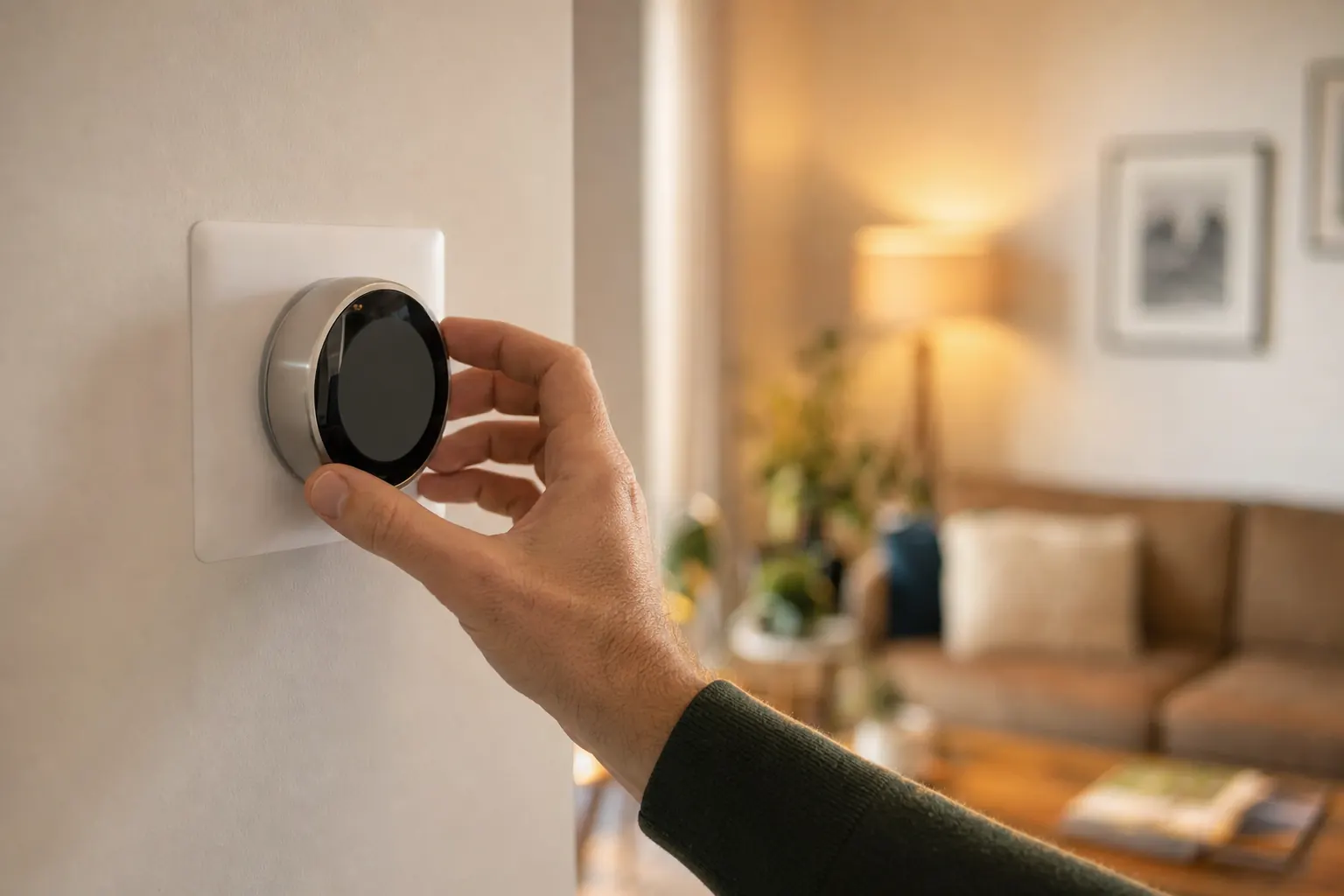
- Confirm the thermostat mode and setpoint
- Inspect the air filter and replace it if visibly dirty
- Make sure visible supply and return vents are open
Do not attempt
- Do not open sealed electrical or equipment panels
- Do not bypass a safety switch or force repeated restarts
A few quick questions
Refine the best next step
Question 1 of 3
- 1How much of the home is affected?
- 2What is the system doing right now?
- 3When did this begin?
What this symptom can mean
Use the evidence you can observe
What uneven temperatures usually point to
When some rooms are noticeably warmer or cooler than others, the problem is usually distribution, not a total loss of heating or cooling. The equipment may be making conditioned air, but that air is not reaching each room in the right amount or cycling back properly through the return side. That is why this symptom often shows up as one hot upstairs bedroom, a cold room over the garage, or one zone that never matches the thermostat setting.
What your observations can tell you
If the issue affects one room or one side of the house, suspect a branch duct problem, a closed damper, a weak return path, or a room with unusually high heat gain or heat loss. If it affects an entire zone, especially in a home with two thermostats, a zoning damper or zone control fault becomes more likely. If it began suddenly, look harder at a damper that moved, a flex duct that came loose or was crushed in an attic or crawlspace, or a zone actuator failure; if it has worsened gradually, long-term duct leakage, settling insulation, or a design imbalance is more common.
Simple checks that are safe for a homeowner
Make sure every supply register is open and not blocked by rugs, furniture, or drapes, and check that return grilles are not covered. Compare the airflow by hand at the vents in the comfortable rooms versus the uncomfortable room with the system running for at least 10 minutes. Also note whether the problem changes when the bedroom or office door is shut; a room that gets much worse with the door closed often has a return-air problem or pressure imbalance rather than a lack of supply alone.
What happens during service for this symptom
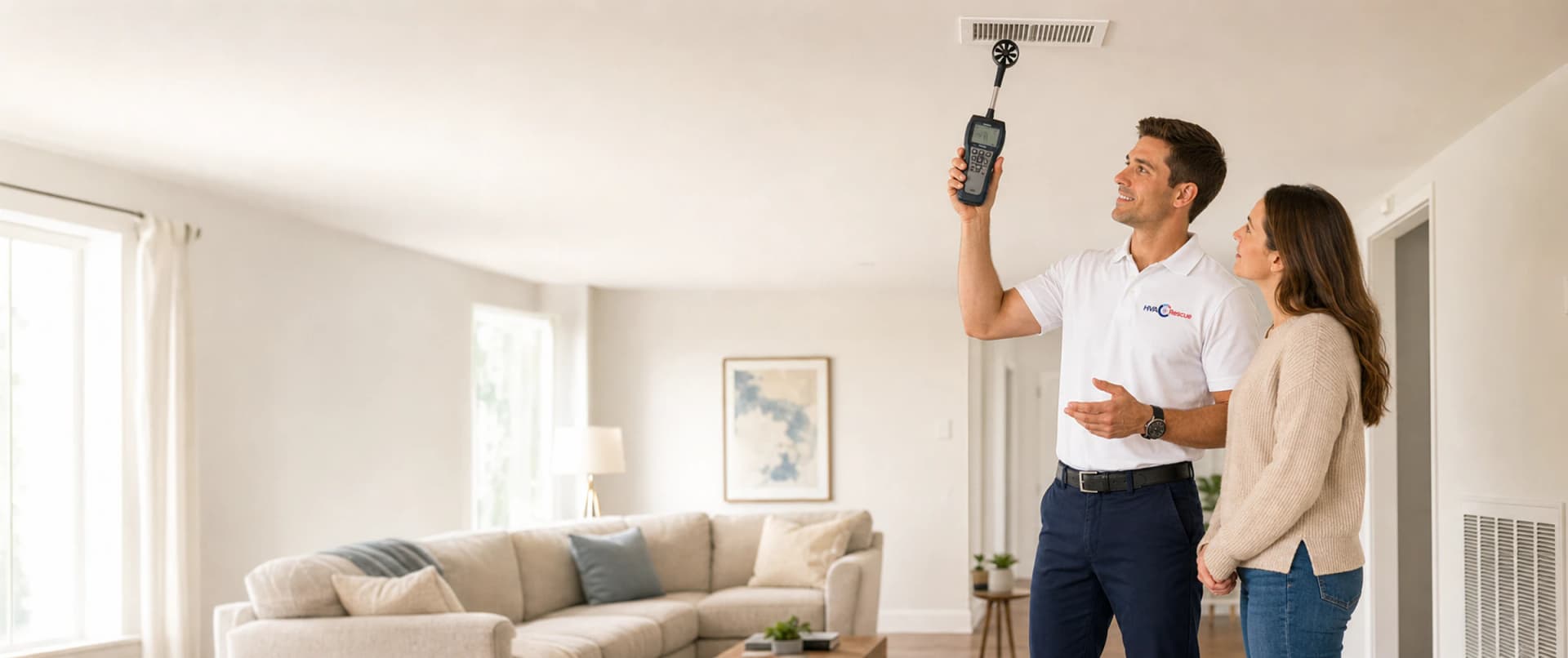
A technician typically measures temperature and airflow at selected registers, checks static pressure, inspects accessible ducts for kinks, disconnections, and leaks, and verifies damper positions. In zoned systems, they usually test whether each zone thermostat is calling correctly and whether the dampers actually open and close. They may also look at attic insulation, window exposure, and room location because a room over an unconditioned garage or under a hot roof can have a building-envelope problem that looks like an HVAC problem.
What affects repair cost
Cost depends on whether the fix is a simple airflow adjustment or a larger duct correction. Basic balancing, damper adjustment, and airflow diagnosis are different scopes from accessible duct sealing or branch repair. Zoning damper and actuator work should be compared with a zoning-control repair scenario rather than a duct-sealing scenario. If the real issue is poor duct design, missing returns, or rooms with major insulation and window-load problems, the solution can move into a larger duct modification or home-performance project that costs more and takes longer.
If one room has always been uncomfortable since you moved in, the service visit may confirm that the original layout was never balanced well for that space. If the problem is new and clearly limited to one room or zone, a targeted duct or damper repair is more likely. HVAC Rescue can help you request an evaluation, but the contractor who comes out will determine the actual cause, scope, and price.
When to turn the system off
- Stop if you smell gas, see smoke or sparks, or hear a carbon-monoxide alarm
- Stop if water reaches powered equipment or a breaker trips again
- Stop if loud grinding, booming, or heavy ice appears
When to call for help
- Call when the symptom continues after the safe checks
- Call promptly when comfort is lost for the whole home
- Describe when it started and any water, ice, noise, odor, alert, or breaker activity
Cost guidance
What could this cost to fix?
Price depends on the actual cause, equipment, access, and local labor. Compare the national ranges in the Duct Repair Cost guide, or check service availability for your system.
Find local help for Ductwork Repair
We will keep this problem and recommended service selected while you answer a few quick availability questions.
Browse HVAC help by stateFrequently asked questions
Rooms have uneven temperatures: common questions
Why is one bedroom always hotter than the rest of the house?
Why does the upstairs stay hotter in summer and colder in winter?
Can closing vents in comfortable rooms force more air to the rooms that are too hot or too cold?
How long does it take to diagnose uneven temperatures between rooms?
Will adding a return vent fix a room that never matches the thermostat?
Sources and review standard
Last updated July 18, 2026. Last reviewed July 18, 2026. HVAC Rescue reviews problem pages for homeowner-safe boundaries, service routing, source quality, and unsupported claims. No named technical reviewer is shown unless a qualified HVAC reviewer has completed that review.