Reviewed July 22, 2026
HVAC Rescue Editorial Team
Editorial StandardsTypical cost ranges
Approved national ranges grouped by comparable project scope.
AC tune-up (single cooling system)
Standalone spring visit for the standardized single-system cooling scope
$95 – $273
Furnace tune-up (single heating system)
Fall visit with burner cleaning, combustion check, and heat exchanger inspection
$93 – $263
Heat pump tune-up (single visit)
Heat pumps run year-round, so most pros recommend two visits per year
$111 – $308
Full-system tune-up (AC + furnace, one visit)
Both sides of a split system checked in one appointment
$163 – $425
Comprehensive deep-clean service
Adds blower pull-and-clean or evaporator coil chemical cleaning; several hours of labor
$325 – $925
Annual maintenance plan (two visits)
Per year; usually includes spring and fall visits plus repair discounts
$150 – $300
Advertised coupon special
Marketing-priced visit — legitimate work is possible, but expect upsell pressure (see below)
$29 – $79
Cost ranges are estimates developed from standardized project scopes and reviewed pricing inputs. Government labor and regional cost data are used where applicable. See our Pricing Methodology for the exact sources, calculations, and review date. Actual prices vary by property, scope, materials or equipment, location, and provider.
What affects the price
System type and fuel
Gas furnaces take longer than straight AC visits because the checklist adds combustion analysis, gas-pressure checks, heat exchanger inspection, and carbon monoxide testing.
Number of systems
Each additional system or zone adds inspection, testing, and cleaning scope. Compare matching single-system and multi-system scenarios rather than applying a single-system visit range as an add-on.
Scope of the checklist
A 15-minute visual inspection and a 20-plus-point clean-and-check with recorded measurements are different products at different prices, even when both are called a tune-up.
Standalone visit vs. maintenance plan
Plans spread the cost across the year and usually bundle two visits with 10-20% repair discounts and priority scheduling, lowering the effective per-visit price.
Season and demand timing
Shoulder-season bookings (early spring, early fall) are easier to schedule and more likely to carry legitimate promotional pricing than peak-season appointments.
System age and condition
Neglected coils or drains add cleaning time and may require a deeper service scope. The canonical visit range is not an hourly technician rate.
Accessibility
Attic air handlers, tight crawlspaces, and rooftop package units add setup and labor time compared with a garage or basement installation.
Local labor rates
The active localized range uses approved state labor conditions only. Provider pricing may vary; no metro or city factor determines where a visit falls in the range.
What a tune-up quote should actually list on the work order
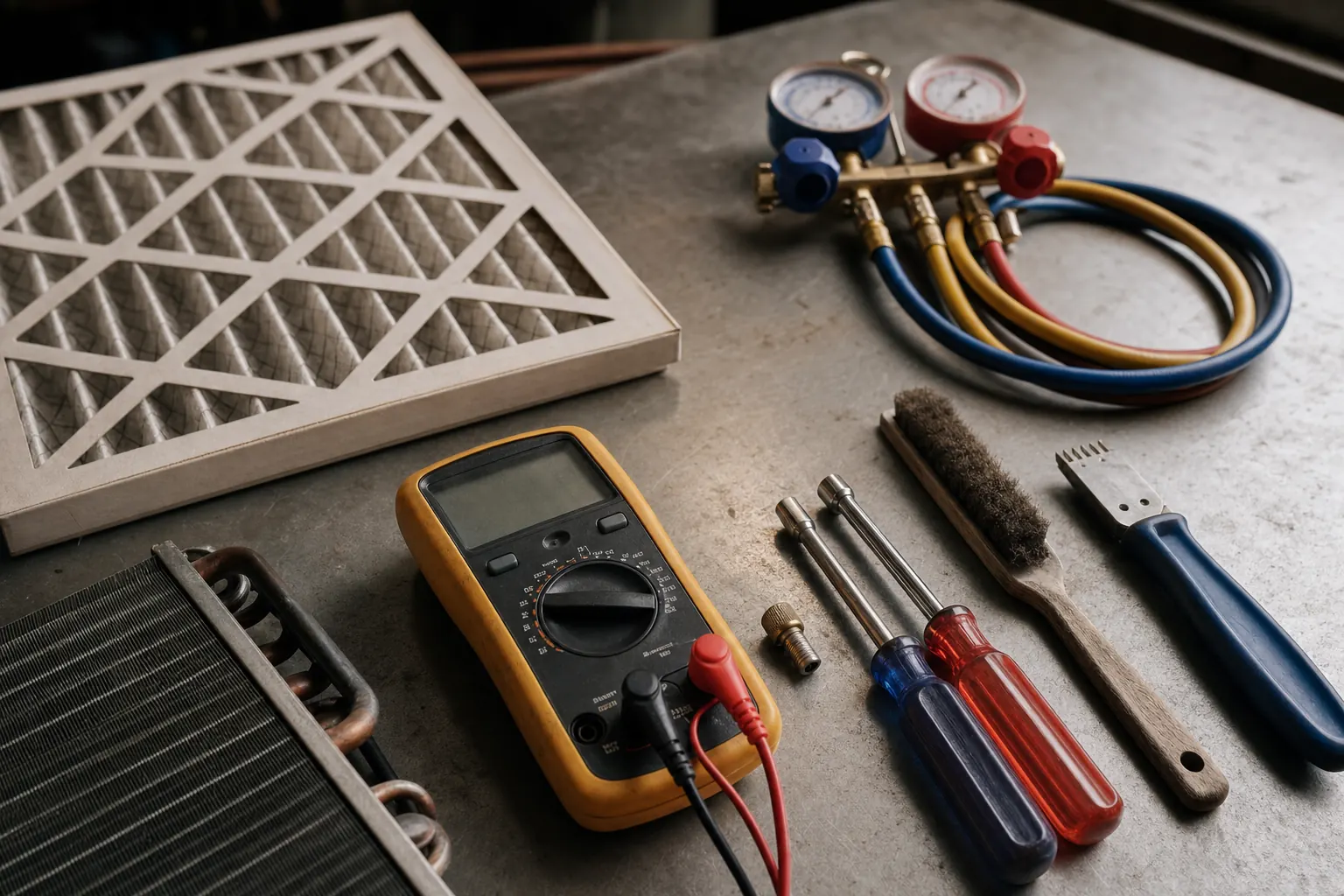
A real HVAC tune-up quote should read more like a checklist than a coupon. For an air conditioner, the line items usually include thermostat operation, condenser coil condition, contactor and capacitor testing, outdoor fan motor amperage, refrigerant temperature split, suction and discharge pressure readings if the contractor judges gauges appropriate, condensate drain clearing, filter check, and tightening accessible electrical connections. On a furnace visit, the quote commonly adds burner cleaning, flame-sensor cleaning, ignition test, draft or combustion check, heat exchanger inspection, and carbon monoxide screening. If the paper only says "inspect system" with no measurements or named tasks, the price is hard to compare.
What is usually excluded matters just as much. A normal tune-up price estimate generally does not include refrigerant, leak search, blower pull-and-clean, evaporator coil chemical wash, duct cleaning, replacement parts, drain-line rebuilding, or repairs found during the visit. It also may not include difficult access charges for a rooftop package unit, a tight attic air handler, or multiple mini-split heads. If a homeowner is pricing a full-system tune-up on a split system, the quote should say whether both the indoor furnace or air handler and the outdoor condenser are included in one visit or billed separately.
Time on site is another clue. A basic single-system AC tune-up often runs 45 to 90 minutes if the system is reasonably clean and accessible. A combined heating-and-cooling visit on a gas furnace and central AC commonly takes 1. 5 to 2. 5 hours because the checklist is longer. A quote for a very cheap visit is not automatically bad, but if it cannot reasonably cover that time, meter readings, and cleaning steps, it may be priced to create repair or cleaning upsells later.
Why one tune-up is $89 and another is $219 for the same house
Two tune-up estimates for the same equipment can differ for honest reasons. One contractor may be quoting a spring AC check only, while another is quoting a deeper clean-and-check with documented amp draws, capacitor readings, condensate testing, and photo notes. On a furnace, gas equipment takes longer than straight cooling because the checklist adds combustion-related work and safety testing. A provider offering an annual plan may show a lower effective per-visit cost because the spring and fall appointments are bundled, often with repair discounts and priority scheduling built into the yearly price.
The part homeowners miss is scope. One quote may include replacing a standard 1-inch filter the homeowner already bought, rinsing the condenser from the inside out when accessible, and clearing a lightly clogged drain. Another may treat those as separate charges. A heat pump can also price differently from a straight AC because the unit serves in both seasons, and many contractors recommend two tune-ups per year. That means a cheap one-visit number is not the same product as a year-round maintenance approach.
Red flags are less about the number itself and more about how the number is explained. Be cautious if the office cannot describe the checklist, will not say whether indoor and outdoor equipment are both included, or advertises a very low special but immediately pushes coil washing, hard-start kits, capacitors, or refrigerant without recorded readings. Another warning sign is a quote that promises a tune-up on any system regardless of age and condition but refuses to mention possible extra labor for heavy coil buildup, blocked drains, or difficult attic access.
What makes tune-up pricing climb: gas heat, attic installs, multiple systems, and metro labor
Equipment type moves tune-up cost more than many homeowners expect. A gas furnace tune-up generally prices above a straight AC check because cleaning burners, inspecting the heat exchanger, testing ignition, and checking for safe combustion add steps that simply do not exist on cooling-only equipment. Heat pumps are their own category because they reverse operation and usually merit attention in both spring and fall. A dual-fuel system can also take longer because the technician may check both the heat pump operation and the gas heat sequence depending on the season and appointment scope.
House layout and access also show up on the bill. A basement furnace next to a floor drain is faster to service than an air handler buried in a hot attic behind stored boxes. Rooftop package units need ladder, roof, or safety setup time. Homes with two systems, a zoned setup with separate air handlers, or several ductless heads usually do not double the first-system price, but each added piece of equipment commonly adds noticeable labor. A tune-up estimate should identify how many indoor and outdoor units are included so a two-system house is not compared against a one-system special.
Regional labor rates still matter even for maintenance. In lower-cost markets, a straightforward single-system visit may land near the bottom of this guide’s standardized range, while dense metros often price combined AC-and-furnace appointments toward the top because payroll, insurance, travel time, and overhead are higher. Timing changes price too. Early spring and early fall are usually easier scheduling windows for maintenance than the first heat wave or first hard cold snap, and legitimate promotional pricing is more common in those shoulder seasons.
How to lower the tune-up bill without buying a weak checklist
The cheapest way to cut tune-up cost is usually not haggling over the visit fee. It is making the system easy to service and scheduling at the right time. Replace or have the correct filter on hand, clear storage away from the furnace or air handler, unlock gates, secure pets, and trim vegetation back from the condenser before the appointment. Those steps do not replace skilled maintenance, but they can keep the visit focused on testing and cleaning instead of access delays. Booking before peak summer or winter demand can also produce better pricing than emergency-season appointments.
If the home has both cooling and heating equipment, ask whether a combined full-system tune-up in one appointment is less expensive than two standalone visits. In many markets, it is. For households that intend to stay put, an annual maintenance plan can also lower the effective per-visit number compared with calling separately every season, especially if the plan includes two visits and a modest repair discount. The key is to compare the actual checklist and included systems, not just the headline membership price.
Another money-saver is asking for findings to be prioritized. During a tune-up, a contractor may note a weak capacitor, a dirty blower wheel, heavy coil buildup, or a failing contactor. Not every issue is equal. Safety concerns, drain overflow risks, and parts likely to stop the system soon deserve fast attention. Cosmetic cleaning or optional upgrades can often wait. A homeowner who asks for measured readings and a ranked list of recommended work usually makes better spending decisions than one reacting to a same-day sales pitch.
When paying more for maintenance is the cheaper choice over the next 5 to 10 years
A more complete tune-up can be the cheaper decision if it catches the small things that become expensive calls later. A condensate drain that is tested and cleared before summer may avoid a ceiling stain or float-switch shutdown in July. A furnace visit that includes flame-sensor cleaning, combustion checks, and inspection for venting issues can prevent a no-heat call on the coldest weekend of the year. Paying a little more for recorded electrical readings on capacitors, contactors, and motor amperage can also identify aging parts before they fail under load.
This is where deep-cleaning services become a separate decision, not a routine add-on. If the blower wheel is packed with dust or the evaporator coil is visibly matted and airflow is suffering, a deeper service can make sense even though it costs far more than a standard tune-up. That is several hours of labor and should be quoted as its own scope. If the system is relatively clean and airflow readings are normal, paying deep-clean prices every year is usually unnecessary. The value depends on actual condition, not a script.
The longer the homeowner plans to keep the equipment, the more useful consistency becomes. Having the same checklist performed in spring and fall creates a baseline for temperature split, static pressure observations if offered, amp draw, ignition behavior, and drain condition. That history helps separate a routine tune-up issue from a true repair need. Over five to ten years, regular documented maintenance on a heat pump, furnace, or central AC often leads to fewer surprise visits than a pattern of skipped service followed by peak-season emergency calls.
Estimate methodology
How we built these ranges
We develop these ranges from standardized residential project scopes and reviewed pricing inputs, then keep materially different scopes separate instead of presenting one misleading average. Government data supports labor and location adjustments where applicable; it does not publish the final HVAC project range. This page was reviewed on July 22, 2026.
The approved scenario definitions distinguish factors such as system type and fuel, number of systems, scope of the checklist, standalone visit vs. maintenance plan. Equipment capacity, model, access, and documented labor and material assumptions define each scope. Unsupported permit, tax, rebate, utility, insurance, financing, and warranty amounts are excluded from the canonical calculation.
Compare written, itemized proposals for the same model numbers and scope. Ask whether diagnosis, labor, refrigerant, permits, disposal, warranty registration, and any required supporting work are included.
Sources and fact-checking
Reviewed July 22, 2026. We favor primary government and standards sources for safety, efficiency, and regulatory claims. These references support only the specific technical, safety, efficiency, regulatory, or consumer-guidance claims described on their cards. They do not establish the displayed price ranges.
Want a real number for your system?
Connect with HVAC professionals that service your area for an accurate, no-obligation estimate.