Quick summary
Match what you notice to a safe next step
These observations can narrow the starting service, but they do not confirm which part has failed.
What you notice
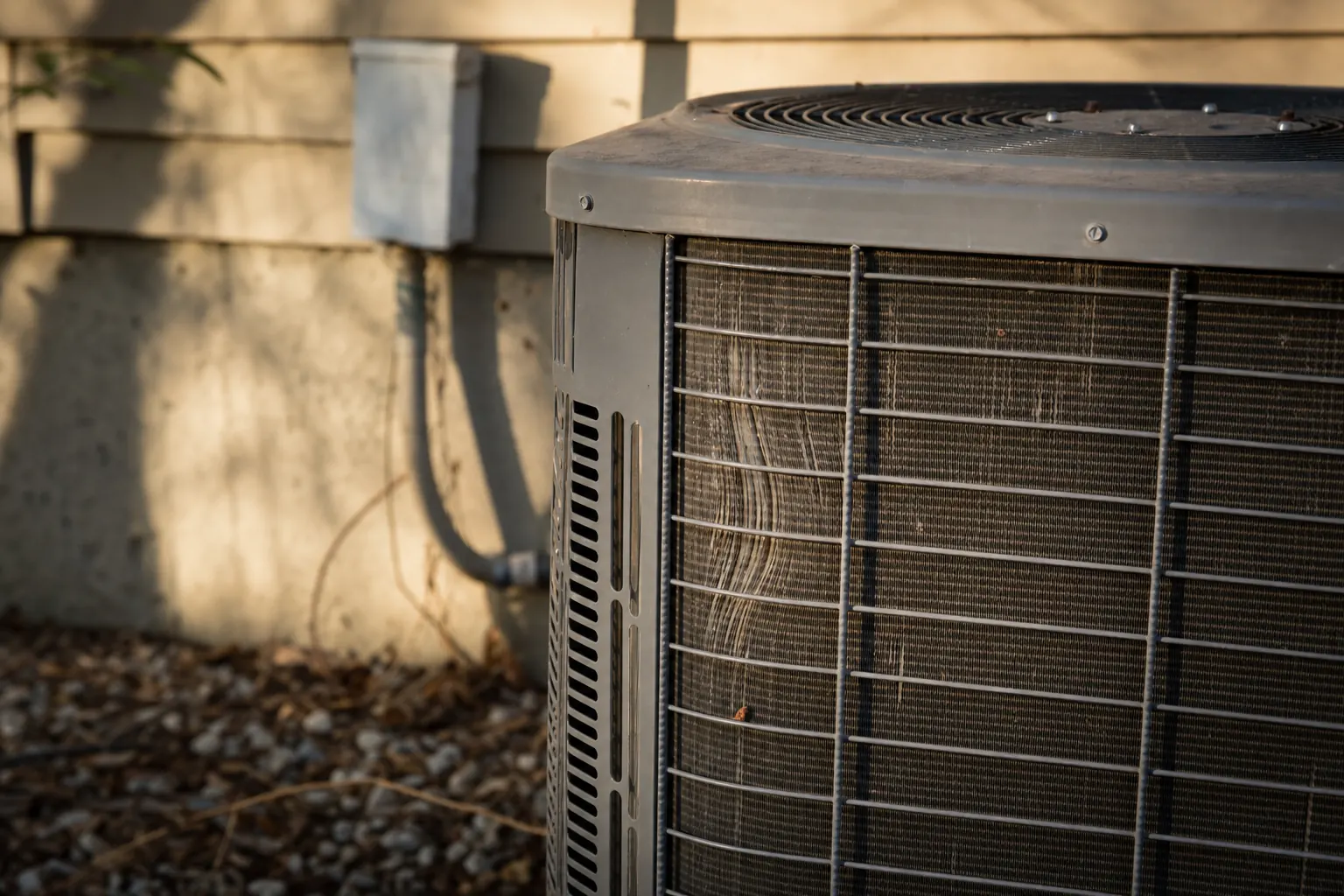
Outdoor condenser unit is not operating
What it may point to
If the indoor blower still runs but the outside unit is silent or the fan is not spinning, the system can move air without removing heat, so the vents feel warm instead of cold.
Safe next action
Confirm the thermostat mode and note whether the outdoor unit is running
What you notice
Low refrigerant charge from a leak
What it may point to
A leak can leave the system unable to absorb enough heat, so supply air turns lukewarm or warm and cooling gets worse over days or weeks.
Safe next action
Inspect the filter and make sure visible vents are open
What you notice
Failed run capacitor, contactor, or compressor problem
What it may point to
These parts help the outdoor unit start and pump refrigerant; when they fail, you may hear clicking, humming, or notice the AC runs but never delivers cold air.
Safe next action
Turn the system off and arrange professional service
What you notice
Evaporator coil icing from restricted airflow or low charge
What it may point to
Ice on the indoor coil can choke heat transfer and airflow, so the system may start with cool air, then shift to weak, warmer air and sometimes drip water as the ice melts.
Safe next action
Compare airflow at nearby vents and note the affected rooms
Safe things to check
- Confirm the thermostat mode and setpoint
- Inspect the air filter and replace it if visibly dirty
- Make sure visible supply and return vents are open
Do not attempt
- Do not handle, vent, or add refrigerant
- Do not open sealed electrical or equipment panels
- Do not bypass a safety switch or force repeated restarts
A few quick questions
Refine the best next step
Question 1 of 3
- 1How much of the home is affected?
- 2What is the system doing right now?
- 3When did this begin?
What this symptom can mean
Use the evidence you can observe
What warm air from the vents usually means
This symptom is more specific than general “not cooling.” When an AC is blowing warm air, the blower is usually working and pushing air through the ductwork, but the system is not removing heat the way it should. In a central air system, that most often means the outdoor section is not rejecting heat, the refrigerant circuit is not operating correctly, or one part of the home is getting air from the wrong place because of a duct or zone problem.
How to tell the likely causes apart by what you can observe
If airflow feels normal but the air is warm, start by noticing what the outdoor condenser is doing. If the thermostat is calling for cooling and the indoor unit is blowing but the outside unit is completely off, or the fan is not spinning, the issue is often a capacitor, contactor, breaker-related failure, or compressor problem. If the outdoor unit is running but the air is only slightly cool at first and becomes warmer over time, low refrigerant or a developing coil freeze is more likely.
If the warm air comes with weak airflow, icing should move higher on the list. A frozen evaporator coil can block airflow enough that some vents barely blow, and as the ice builds the air can feel less and less cool. If you also see ice on the refrigerant lines, water near the indoor unit after the system has been running, or hear a new hissing or bubbling sound, technicians will look closely for a refrigerant leak or a coil that has frozen and thawed.
If only one room or one zone gets warm air while the rest of the house is comfortable, the problem is usually not the compressor. That pattern points more toward a stuck zone damper, a disconnected or crushed branch duct, or an airflow balancing issue. A whole-house mechanical failure typically affects every supply vent, not just one bedroom, addition, or upstairs zone.
What a technician usually checks on this call
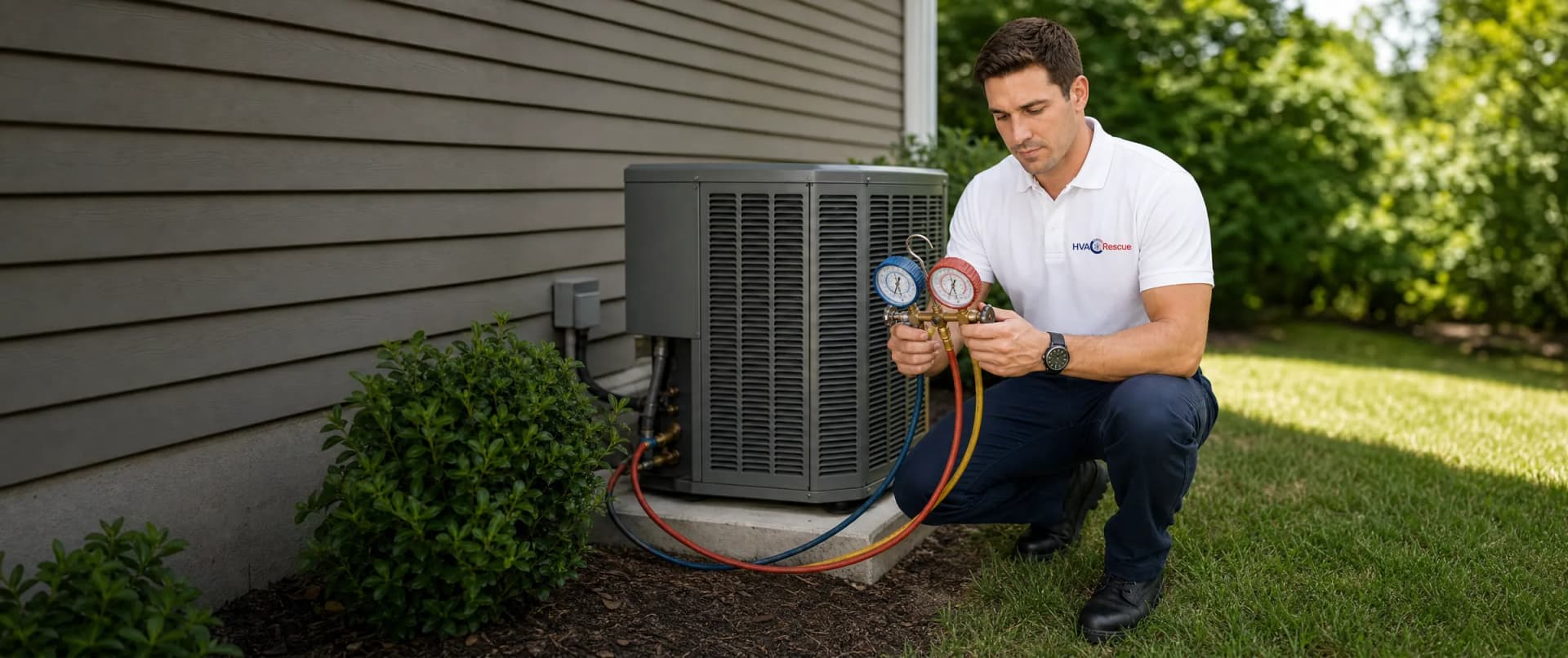
On an AC blowing warm air service visit, the technician will usually confirm the temperature split between return and supply air, verify whether the outdoor unit is starting, test capacitor and contactor operation, inspect the compressor circuit, and check refrigerant pressures and line temperatures. They may also inspect the evaporator coil for frost, look for visible oil staining that can suggest a refrigerant leak, and check dampers or branch ducts if the complaint is limited to one area of the home. Refrigerant handling, sealed-system diagnosis, and high-voltage electrical testing are technician-only tasks.
What affects repair cost for warm-air complaints
Cost depends heavily on whether the fix is electrical, refrigerant-related, or in the duct system. Typical 2025-2026 US ranges are roughly $150-$450 for a capacitor or contactor replacement, $300-$900 for many blower or fan-motor related repairs, $225-$1,500+ for refrigerant leak diagnosis and repair before any refrigerant recharge, and several thousand dollars if the compressor has failed or the system is old enough that replacement makes more sense. A single-room warm-air issue can be relatively modest if it is a damper or accessible duct repair, but costs rise if the duct run is hidden behind finished ceilings or walls.
Cost ranges are estimates developed from standardized project scopes and reviewed pricing inputs. Government labor and regional cost data are used where applicable. See our Pricing Methodology for the exact sources, calculations, and review date. Actual prices vary by property, scope, materials or equipment, location, and provider.
When to turn the system off
- Stop if you smell gas, see smoke or sparks, or hear a carbon-monoxide alarm
- Stop if water reaches powered equipment or a breaker trips again
- Stop if loud grinding, booming, or heavy ice appears
When to call for help
- Call when the symptom continues after the safe checks
- Call promptly when comfort is lost for the whole home
- Describe when it started and any water, ice, noise, odor, alert, or breaker activity
Cost guidance
What could this cost to fix?
Price depends on the actual cause, equipment, access, and local labor. Compare the national ranges in the AC Repair Cost guide, or check service availability for your system.
Find local help for AC Repair
We will keep this problem and recommended service selected while you answer a few quick availability questions.
Browse HVAC help by stateFrequently asked questions
AC is blowing warm air: common questions
Why is my AC running but blowing hot air instead of cold?
If my AC is blowing warm air, should I check whether the outdoor unit is on?
Why is warm air only coming from one room or one zone?
Can low refrigerant make my vents blow warm air?
How much does it usually cost to fix an AC that blows warm air?
Sources and review standard
Last updated July 18, 2026. Last reviewed July 18, 2026. HVAC Rescue reviews problem pages for homeowner-safe boundaries, service routing, source quality, and unsupported claims. No named technical reviewer is shown unless a qualified HVAC reviewer has completed that review.