Reviewed July 25, 2026
HVAC Rescue Editorial Team
Editorial StandardsStart with safety and the basic difference
If you ever smell gas, a carbon monoxide alarm goes off, or you notice smoke or a burning-electrical smell, everyone should leave the building immediately and call the gas utility or emergency services from outside. Do not stay inside to investigate, reset equipment, or search for the source. That safety rule matters more with furnaces because combustion and venting are involved, but it applies to any heating system with electrical components.
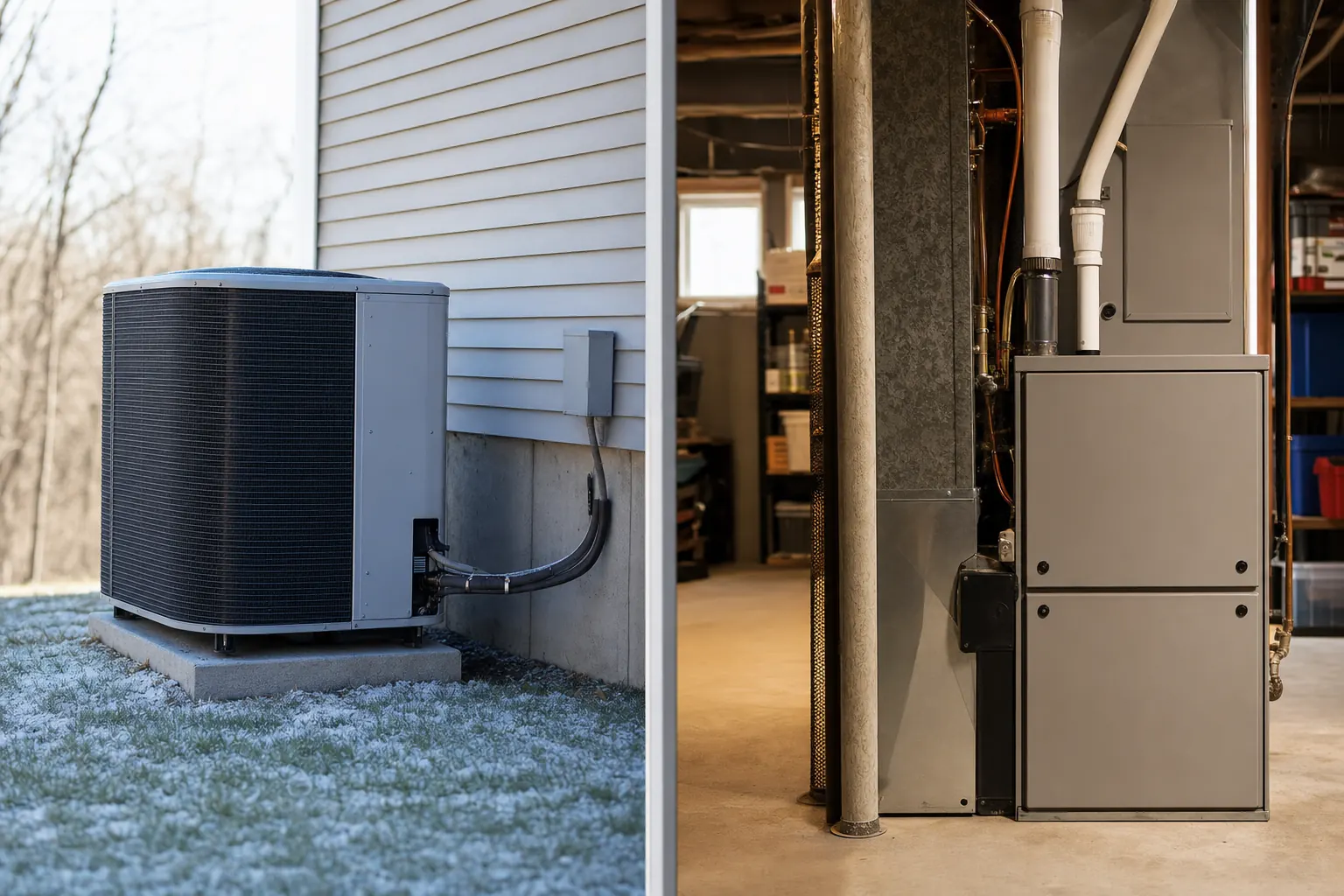
A furnace makes heat and then blows that heat through ductwork. Gas furnaces burn fuel in a heat exchanger; electric furnaces use electric resistance heat strips. A heat pump works differently: it uses refrigeration to move heat from outdoors to indoors in winter, then reverses in summer to cool the house like an air conditioner. That difference drives most of the trade-offs in efficiency, comfort, equipment cost, and cold-weather performance.
- A furnace is a heating appliance only, so most homes pair it with a separate central air conditioner for summer cooling.
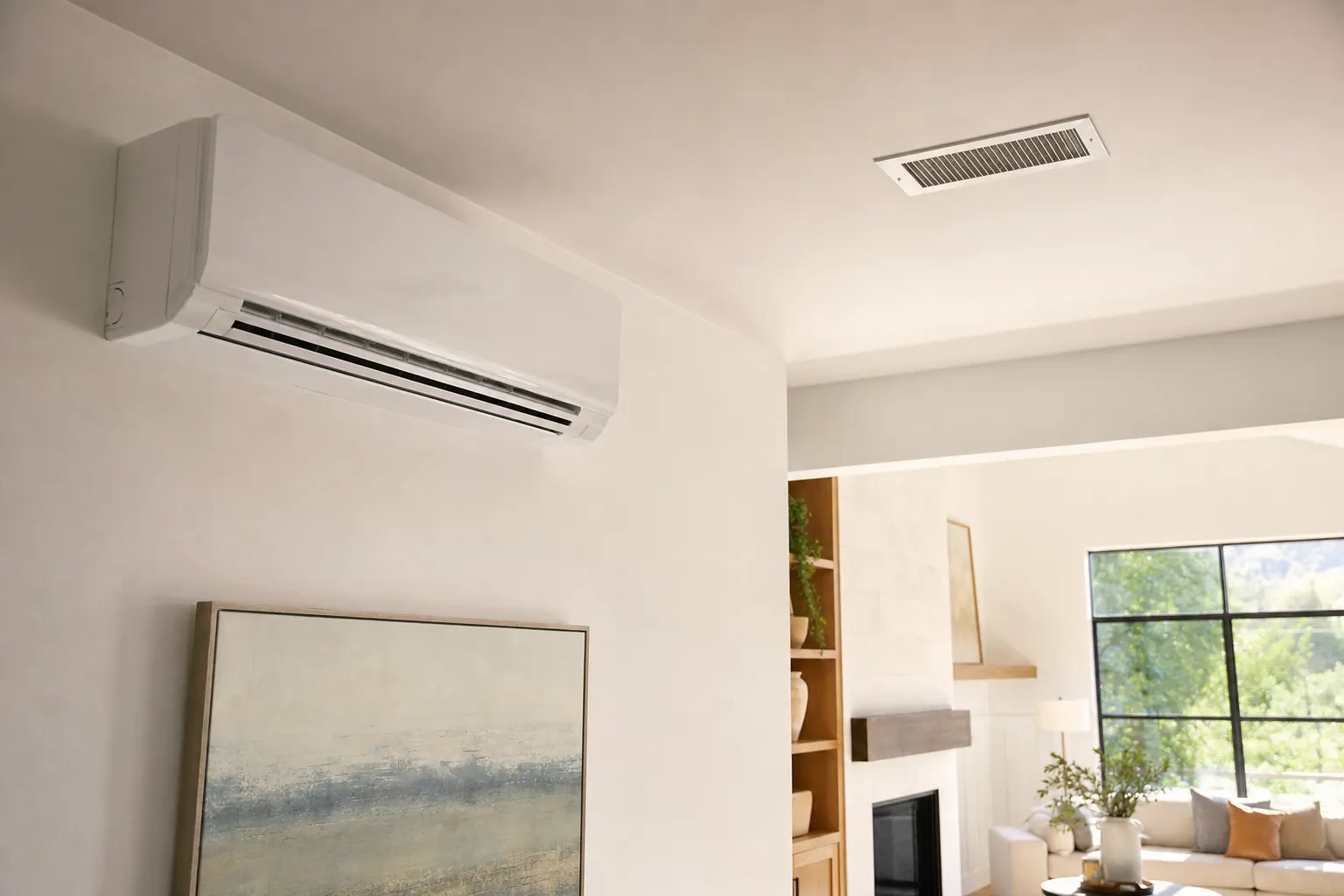
- A heat pump provides both heating and cooling from one outdoor unit and one indoor air handler or coil arrangement.
- A gas furnace has combustion, venting, and gas piping to consider; a heat pump has no on-site combustion.
- Both systems can use the same ducts if the duct system is properly sized and in good condition.
- Neither option performs well if the home has major air leaks, poor insulation, or undersized ductwork.
How climate changes the answer
Climate is usually the first filter. In mild and moderate climates, a heat pump is often an efficient all-in-one choice because winter temperatures spend many hours above freezing, where air-source heat pumps operate very well. In colder regions, modern cold-climate heat pumps can still provide useful heat at low outdoor temperatures, but output drops as the weather gets more severe, and some homes need backup heat to cover the coldest hours of the year.
That backup can be electric resistance strips in the air handler or a dual-fuel setup that pairs a heat pump with a gas furnace. In a dual-fuel system, the heat pump handles milder weather and the furnace takes over when outdoor conditions make the furnace the more practical or less expensive heat source. The switch point is not guesswork; a contractor can set a balance point based on equipment performance data, local utility rates, and your design temperatures.
A furnace remains a strong performer in places with long stretches of subfreezing weather, especially where natural gas is available and reasonably priced. It also produces hotter supply air than a heat pump, which some homeowners prefer during cold snaps. That said, a cold-climate heat pump can still make sense in northern states if the home is weatherized, electrical service is adequate, and the owner values lower fossil-fuel use or wants to replace both heating and cooling equipment at once.
Efficiency and operating cost in real terms
A heat pump can be very efficient because it moves heat instead of creating it directly. Its heating efficiency is often described with HSPF2, while cooling efficiency uses SEER2. A typical 2025-2026 central heat pump might range from roughly 8. 1 to 10. 5 HSPF2 and about 14. 3 to 20+ SEER2, with premium systems going higher. A standard gas furnace is rated by AFUE, commonly from 80% up to 96% or more, meaning that percentage of the fuel becomes usable heat in the home.
Those ratings do not tell the whole operating-cost story. Your utility prices matter just as much. In one market, natural gas may make a high-efficiency furnace inexpensive to run. In another, electric rates combined with a good heat pump may compare favorably for much of the season. Once auxiliary electric heat strips turn on, however, a heat pump system can become much more expensive to operate for those hours. That is why homeowners should ask for a simple annual operating-cost comparison, not just efficiency labels.
Sizing matters too. Oversized equipment can short-cycle, reducing efficiency and comfort. Undersized equipment may run constantly and still struggle on peak days. A proper Manual J load calculation and a review of duct capacity are more valuable than broad rules like "one ton per X square feet. " The same home can support very different equipment choices depending on insulation, windows, orientation, air leakage, and whether parts of the house are over- or under-supplied with airflow.
- Ask for projected annual heating and cooling costs using your local electric and gas rates, not national averages.
- Ask which temperatures trigger auxiliary heat or dual-fuel switchover, because those hours can change your winter bills substantially.
- Compare like with like: replacing both a furnace and an aging air conditioner is different from replacing only one failed component.
- Remember that a very high efficiency rating may not pay back quickly if upfront cost rises sharply and utility rates are favorable to the simpler option.
Comfort is not just about indoor temperature
Many homeowners notice the comfort difference before they notice the efficiency difference. A furnace usually delivers warmer supply air, often well above 110°F at the registers depending on the system, so rooms may feel like they heat up quickly. A heat pump usually delivers lower-temperature air, sometimes around the 85°F to 100°F range depending on conditions. That air is still warm enough to heat the home, but it can feel less dramatic at the vent and may run for longer cycles.
Longer cycles are not automatically a bad thing. Steadier run times can even out room temperatures and reduce the hot-cold swings associated with short bursts of high heat. Variable-speed heat pumps can be especially good at maintaining stable indoor temperature and managing humidity in cooling season. On the other hand, if ductwork is leaky, poorly insulated, or undersized, either system can leave certain rooms uncomfortable, and a new unit alone may not fix the problem.
Noise also differs. Furnaces have burner ignition and blower sound; heat pumps have outdoor compressor and fan sound year-round because the same outdoor unit runs in summer and winter. Defrost cycles are another factor with heat pumps. In cold, damp weather, the outdoor unit may periodically reverse operation to clear frost, and you may notice steam or a temporary change in airflow temperature. That can be normal, but a contractor should explain what normal operation looks and sounds like before installation.
Installation, home fit, and electrical or gas requirements
Your existing house may lean naturally toward one option. If you already have a gas line, venting path, and a modern duct system, replacing a furnace with another furnace can be straightforward. If your central air conditioner is also old, replacing the furnace and AC together may make sense because the indoor coil, refrigerant line sizing, and airflow settings all need to work as a matched system. For a heat pump, the outdoor unit, indoor air handler or compatible furnace coil, thermostat controls, and backup heat strategy all need to be coordinated.
Electrical capacity matters more than some homeowners expect. A heat pump with electric backup heat may require panel space or electrical upgrades, especially in older homes. A gas furnace needs combustion air, venting, and safe flue design, all of which must be checked carefully. Sealed-system refrigerant work, gas valve and burner work, flue work, and high-voltage electrical work are all jobs for a qualified licensed technician, not a homeowner project.
Ductwork deserves special attention. Heat pumps often need higher airflow than an older furnace system was delivering, and airflow problems can drag down efficiency and comfort. If the house has rooms that have always been too hot, too cold, or too weak at the registers, ask for a duct evaluation along with the equipment quote. In some homes, the best answer is not just new equipment but also duct sealing, added returns, insulation improvements, or zoning changes.
Typical installed cost ranges and what moves the price
Installed cost depends on region, home size, efficiency tier, brand, controls, labor conditions, and how much of the system is being replaced. A central gas furnace replacement, a combined furnace-and-air-conditioner replacement, and a central air-source heat pump are separate standardized scenarios. Compare each option with its matching pricing-table scope rather than using the nearest numerical range from another equipment type. Higher-end furnaces and cold-climate or variable-speed heat pumps can extend beyond their standard scenarios.
Dual-fuel systems often cost more upfront because you are effectively combining heat-pump and furnace components with controls that manage both. Electrical panel work, condensate changes, venting modifications, thermostat upgrades, line-set replacement, crane access, and duct repairs can all add materially to the total. That is why a low headline number is not very meaningful unless you know what was included: thermostat, filter cabinet, surge protection, permit handling, commissioning, and any airflow corrections should be spelled out.
Homeowners should also consider maintenance and repair context, not just first cost. A furnace and a separate AC mean two seasonal roles across two pieces of equipment. A heat pump handles both seasons, so it runs more months per year and maintenance is still important. Ask what filters the system uses, how often they typically need replacement, whether parts availability is normal in your area, and what maintenance tasks are recommended to preserve efficiency and warranty terms.
Who should lean toward each option
A heat pump often makes sense for homeowners in mild to moderate climates, for homes without natural gas service, for people replacing both heating and cooling equipment, and for owners who want one system to handle both seasons. It can also be a strong choice after weatherization work, especially if the home has good insulation, tight ducts, and electric rates that do not heavily penalize winter usage. Variable-speed models are particularly appealing where consistent comfort and humidity control matter.
A furnace may be the better fit if winters are long and severe, natural gas is available at favorable rates, or the household strongly prefers hotter supply air and quick recovery. It can also be practical if the existing gas infrastructure and venting are already in good shape and the cooling system is relatively new. In some homes, the best answer is neither/or but dual fuel: let the heat pump cover much of the season and let the furnace handle the coldest weather efficiently and comfortably.
The most useful next step is to compare proposals based on the same scope: load calculation, duct review, efficiency ratings, backup-heat strategy, projected operating cost, and total installed scope. HVAC Rescue can help homeowners find local independent HVAC contractors for those comparisons. The goal is not to chase a universal winner, because there is not one. The right system is the one that fits the house, the climate, the utility rates, and the way the household actually uses heating and cooling.
Sources and fact-checking
Reviewed July 25, 2026. We favor primary government and standards sources for safety, efficiency, and regulatory claims. These references support the technical and consumer guidance on this page.
- Heat pumpsU.S. Department of EnergyHeat-pump operation, system types, climate considerations, and backup heat.
- FurnacesENERGY STARResidential furnace efficiency, equipment features, buying guidance, and replacement considerations.
- Consumer central air conditioners and heat pumpsU.S. Department of EnergySEER2, EER2, HSPF2, test procedures, and current federal efficiency standards.