
Reviewed July 22, 2026
HVAC Rescue Editorial Team
Editorial StandardsTypical cost ranges
Approved national ranges grouped by comparable project scope.
Standard single-stage heat pump
Entry-level efficiency, like-for-like swap
$5,967 – $12,000
Mid-range / higher-efficiency
Higher SEER2/HSPF2 for typical homes
$8,267 – $16,167
Cold-climate or multi-stage
Enhanced low-temperature performance or variable-speed equipment
$11,000 – $21,500
Premium or complex install
Top-tier equipment, ductwork, or backup heat integration
$15,667 – $32,333
Cost ranges are estimates developed from standardized project scopes and reviewed pricing inputs. Government labor and regional cost data are used where applicable. See our Pricing Methodology for the exact sources, calculations, and review date. Actual prices vary by property, scope, materials or equipment, location, and provider.
What affects the price
Capacity / tonnage
Heat pumps are sized to your home's heating and cooling loads, and larger units cost more.
Efficiency rating (SEER2 / HSPF2)
Higher-efficiency and variable-speed models cost more up front but can lower year-round energy use.
Climate and cold-weather performance
Cold-climate heat pumps designed for low temperatures generally cost more than standard models.
Backup or supplemental heat
Adding electric strip heat or integrating with an existing furnace affects equipment and labor.
Existing ductwork condition
Ducted heat pumps may need duct sealing or modifications for proper airflow.
Electrical and line-set work
New circuits, disconnects, or refrigerant lines can add to the total depending on the setup.
Permits and inspection
Most installs require permits; requirements can vary by city, county, and state.
What a heat pump installation quote usually includes on paper
A real heat pump installation quote should read more like a parts-and-labor worksheet than a one-line number. For a ducted split system, the base scope usually includes the outdoor heat pump condenser, the matched indoor coil or air handler, refrigerant piping connections, a pad or wall bracket, basic control wiring, thermostat setup, evacuation and charge, startup, and disposal of the old unit if one is being removed. In many markets, that core scope lands somewhere inside the national estimate bands shown on this page, but the line items inside the quote matter as much as the final total.
The quote should also say whether permit fees, crane or lift charges, condensate drain work, electrical whip and disconnect, new breakers, surge protection, and duct transitions are included. A heat pump install often triggers small add-ons that do not show up on a basic AC changeout, especially if the home is switching from a straight cool system or from gas heat to an all-electric setup. If the proposal mentions auxiliary strip heat, dual-fuel controls, or a new air handler, those are not minor accessories; they can move the job by hundreds to a few thousand dollars.
What is commonly excluded is just as important. Drywall repair, painting, asbestos or vermiculite abatement, major service-panel upgrades, trenching for a long electrical run, structural framing changes, and extensive duct replacement are often left out unless specifically written in. If a contractor expects the existing line set to be reusable, ask what happens if it fails pressure testing or is the wrong size for the new heat pump. On this type of installation, unclear exclusions are one of the biggest reasons the final invoice ends up higher than the original estimate.
Why one heat pump bid is $6,800 and another is $10,900
Two contractors can look at the same house and produce very different heat pump installation numbers without either one being dishonest. One may be quoting a basic single-stage unit with standard low-temperature capacity, while another is quoting variable-speed equipment that holds output better in freezing weather and runs quieter in summer. One may be reusing the existing line set, pad, disconnect, and thermostat; another may be replacing them because they do not meet the new manufacturer requirements. Those choices can easily explain a spread of $2,000 to $4,000 on a heat pump job.
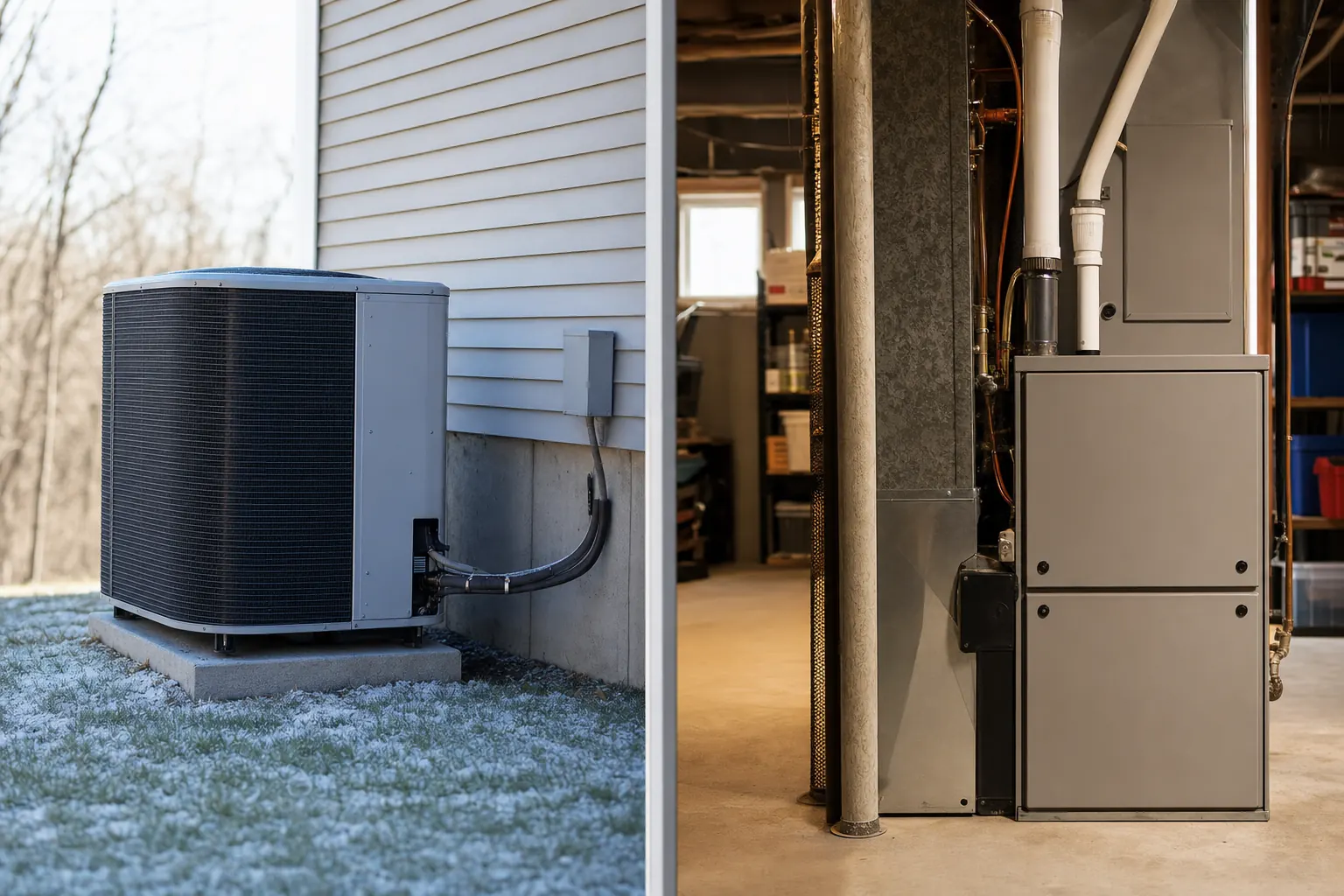
The labor assumptions also differ. A first-floor side-yard condenser with easy air-handler access in a garage is not priced the same as a roof-mounted condenser, a tight attic air handler, or a finished basement mechanical room with difficult drain routing. Some bids include permit handling, load calculation, commissioning paperwork, and a longer labor allowance for duct static testing or airflow correction. Others price a quick swap only. On heat pumps, startup and setup matter because defrost control, airflow, charge, and auxiliary heat staging affect both comfort and winter operating cost.
Red flags are not simply 'the high quote' or 'the low quote. ' Red flags are mismatched indoor and outdoor equipment, vague language like 'heat pump install complete' with no model numbers, no mention of auxiliary heat or thermostat compatibility, and no written plan for electrical scope. A suspiciously low bid may also skip a permit, omit condensate upgrades, or assume the existing duct system is acceptable without checking airflow. On the expensive side, be cautious if the proposal loads in premium accessories that do not solve a real problem in your house or climate.
The parts of the house that push heat pump installation cost up or down
Heat pump pricing moves with the equipment tier, but the house itself often decides where the final number lands. Capacity is not just square footage; it depends on insulation, windows, duct losses, and the local design temperature. A properly sized 2-ton or 3-ton system for a moderate-climate home may fit the lower or middle estimate bands already listed here. A 4-ton or 5-ton system, or one chosen for strong low-ambient heating, more often lands toward the upper bands because the outdoor unit, indoor section, and electrical requirements all grow together.
Access changes labor faster than homeowners expect. Replacing a heat pump where the outdoor unit sits on a clear ground pad and the indoor section is in an open utility closet is straightforward. Running a new line set through finished walls, lifting a condenser onto a roof, squeezing an air handler into a low attic, or rebuilding a return transition can add many labor hours. In practice, difficult access often adds roughly several hundred to a few thousand dollars, even when the equipment size does not change.
Regional labor and code requirements matter too. Markets with higher wage rates, longer permit processes, and stricter electrical enforcement generally produce higher installation estimates than rural or lower-cost areas. A heat pump that needs a new 240-volt circuit, disconnect, whip, and breaker space may stay near the low end if the panel is nearby and has room, or jump significantly if the panel is full and a subpanel or service work is needed. Those are jobsite realities, not just markup.
How to lower the bill without downgrading the workmanship
The safest way to lower heat pump installation cost is to simplify the project, not strip out the important steps. Reusing a sound pad location, keeping equipment in the same spot, and choosing a straightforward thermostat if you do not need advanced zoning can reduce labor and accessory cost. If the existing duct system is in decent shape, basic sealing and minor transitions are usually cheaper than a larger redesign. Scheduling before extreme summer or winter rush periods can also help, since some contractors have more flexibility in shoulder seasons even though pricing is still market-dependent.
It also helps to ask for alternate good-better-best proposals on the same load calculation. For example, a homeowner might compare a standard efficiency single-stage heat pump, a mid-tier two-stage model, and a cold-climate variable-speed option using the same duct system and electrical assumptions. That makes the price difference visible without changing the scope. If rebates or tax credits apply, ask that they be shown separately from the contract total so you can compare quotes honestly. Incentives can offset part of the installed cost, but they rarely make an oversized or poorly matched system a bargain.
Do not save money by skipping the permit, reusing an incompatible thermostat, or hiring someone to 'just hook it up' without commissioning. On heat pump installations, the corners that look cheap at signing often show up later as weak winter performance, nuisance defrost behavior, high strip-heat use, or short cycling in cooling mode. Refrigerant charging, airflow setup, and electrical work should be handled by a qualified licensed technician. The right place to economize is scope clarity and equipment tier, not workmanship basics.
When paying more for a heat pump is actually the cheaper choice
Spending more up front can be justified when the upgraded heat pump solves an operating-cost problem that a basic system will not. In colder regions, a model with better low-temperature capacity and HSPF2 performance can reduce how often expensive electric strip heat takes over. That matters because auxiliary heat can noticeably raise winter electric bills. If a basic unit loses too much heating output in the teens or single digits, the cheaper installed price may not stay cheaper over the next 5 to 10 years.
A higher-tier system can also make sense in homes where comfort swings are the main complaint. Variable-speed or multi-stage heat pumps usually control temperature more evenly, run longer at lower output, and manage humidity better in cooling season than single-stage equipment. If the house has hot and cold room complaints, a bargain install that ignores airflow and staging may lead to repeated service calls, thermostat fiddling, and early owner frustration. In that case, the better quote is not just about efficiency ratings; it is buying a more appropriate system for the home.
There are also cases where paying for related work during the install is cheaper than postponing it. Replacing a deteriorated line set while the walls or chase are already open, adding a surge protector when new equipment goes in, or fixing a condensate drain slope during the air-handler swap often costs less than returning later. The same logic applies to duct sealing if static pressure is borderline. Small add-ons in the low hundreds during a heat pump install can prevent much larger comfort or reliability problems after the system is commissioned.
Design for the climate, not just nominal tonnage
A heat pump should be selected from the home’s heating and cooling loads and checked at local winter design conditions. Nominal capacity does not show how much heat a model delivers as outdoor temperature falls. Ask for the proposed model’s low-temperature capacity, the balance-point assumptions, and how auxiliary or backup heat will be sized and controlled.
Duct condition, electrical capacity, thermostat and control strategy, outdoor-unit placement, condensate drainage, and defrost operation can all change the installed scope. A cold-climate model may cost more but reduce backup-heat use; whether that investment makes sense depends on the load, climate, utility rates, and equipment performance rather than the label alone.
Rebates and quote comparisons
Compare matched indoor and outdoor model numbers, rated efficiency, low-temperature performance, heat-strip size, electrical work, duct changes, permits, commissioning, and warranty terms. If a contractor proposes dual fuel, the quote should explain the changeover controls and which system operates at different outdoor conditions.
Do not subtract a rebate until the program administrator confirms that the household, property, contractor, equipment model, and installation date qualify and that funding remains available. Federal HVAC tax-credit rules changed after 2025, while state, Tribal, territory, and utility programs differ. Treat incentives as verified project inputs, not guaranteed national discounts.
Estimate methodology
How we built these ranges
We develop these ranges from standardized residential project scopes and reviewed pricing inputs, then keep materially different scopes separate instead of presenting one misleading average. Government data supports labor and location adjustments where applicable; it does not publish the final HVAC project range. This page was reviewed on July 22, 2026.
The approved scenario definitions distinguish factors such as capacity / tonnage, efficiency rating (seer2 / hspf2), climate and cold-weather performance, backup or supplemental heat. Equipment capacity, model, access, and documented labor and material assumptions define each scope. Unsupported permit, tax, rebate, utility, insurance, financing, and warranty amounts are excluded from the canonical calculation.
Compare written, itemized proposals for the same model numbers and scope. Ask whether diagnosis, labor, refrigerant, permits, disposal, warranty registration, and any required supporting work are included.
Sources and fact-checking
Reviewed July 22, 2026. We favor primary government and standards sources for safety, efficiency, and regulatory claims. These references support only the specific technical, safety, efficiency, regulatory, or consumer-guidance claims described on their cards. They do not establish the displayed price ranges.
Want a real number for your system?
Connect with HVAC professionals that service your area for an accurate, no-obligation estimate.