
Reviewed July 25, 2026
HVAC Rescue Editorial Team
Editorial StandardsStart with safety and a realistic plan
Heating and cooling are usually among the largest energy loads in a home, so HVAC is a sensible place to look for savings. The good news is that the best first steps are usually simple: better thermostat habits, cleaner airflow, fewer air leaks, and routine maintenance. Those changes do not require you to tolerate an uncomfortable house, and they often work best in combination rather than as one big fix.
Before anything else, treat obvious safety issues as emergencies, not efficiency problems. If you smell gas, a carbon monoxide alarm sounds, or you notice smoke or a burning-electrical smell, everyone should leave the building and call the gas utility or emergency services from outside. Do not keep troubleshooting, reset equipment, or try to force the system to run. Once safety is handled, you can work through lower-bill improvements in a sensible order: no-cost habits first, then low-cost maintenance, then air sealing and insulation, and finally larger repairs or equipment replacement if needed.
Use the thermostat to reduce run time, not to force the system
How you use the thermostat has a direct effect on energy use because it determines how long the system runs. A common mistake is setting the thermostat much lower in summer or much higher in winter in hopes of faster cooling or heating. Most residential systems do not work that way. They heat or cool at about the same rate regardless of how extreme the setting is, so overshooting the setpoint usually just increases run time and can make the house less comfortable.
Setbacks help because they reduce the difference between indoor and outdoor temperature for part of the day. In many homes, raising the cooling setpoint by several degrees when you are away, or lowering the heating setpoint while you sleep, trims energy use without much comfort loss. The exact savings depend on climate, insulation, and house leakage, but the principle is simple: fewer hours maintaining a tight indoor temperature usually means lower bills. A programmable or smart thermostat is useful because it removes the need to remember daily adjustments and can help avoid accidental all-day heating or cooling.
- Use AUTO for the blower fan unless there is a specific reason to run it continuously. ON can improve air mixing, but it also uses more electricity and can increase humidity in cooling season on some systems.
- Make small setpoint changes you can live with consistently. A steady 2 to 4 degree adjustment for many hours is usually more useful than a dramatic change you override the same day.
- If parts of the house are rarely used, do not close most supply registers to them. Many systems are designed for a certain airflow, and heavily restricting vents can reduce efficiency or strain equipment.
- If you have a heat pump, use thermostat setbacks carefully in very cold weather. Large recoveries can trigger more expensive auxiliary heat on some systems, which can erase expected savings.
- Review smart thermostat schedules at the start of each season. Occupancy routines change, and old settings can keep conditioning the house when no one is home.
Humidity matters too. In summer, a slightly warmer house can still feel comfortable if indoor humidity is controlled. Ceiling fans can help people feel cooler, but they cool occupants rather than rooms, so turn them off when a room is empty. If your air conditioner short-cycles and the house feels clammy, lowering the thermostat may not solve the real problem. Oversized equipment, a dirty system, poor airflow, or duct leakage can all limit moisture removal.
Keep airflow clean and unobstructed
Airflow problems are one of the most common reasons a system uses more energy than it should. Your equipment is built around moving a certain amount of air across the indoor coil or heat exchanger. If the filter is clogged, return grilles are blocked, furniture covers supply registers, or the blower compartment is dirty, the system has to work harder to move that air. That can reduce comfort, raise power use, and in some cases shorten equipment life.
The air filter is the easiest place to start, but not every filter should be changed on the same schedule. A 1-inch filter in a home with pets, dust, or frequent system use may need replacement every 1 to 2 months, while a thicker media filter may last 6 to 12 months. The right timing depends on the filter type, your house, and how quickly it loads up. The practical rule is to check monthly until you learn your home’s pattern. A filter that is visibly dirty or causing noticeable airflow reduction should be replaced.
- Keep supply and return registers open and clear. Rugs, drapes, beds, and sofas commonly block airflow without homeowners realizing how much it matters.
- Use the filter size and type specified for the system if known. A very high-MERV filter can be helpful in some homes, but only if the system can handle the added resistance.
- Vacuum dust from return grilles and around registers so loose debris is not repeatedly pulled into the system.
- For central air systems, keep at least a couple feet of clear space around the outdoor unit and remove leaves, grass clippings, and cottonwood fluff gently from the cabinet exterior.
- Do not hose electrical compartments or open sealed equipment panels unless the manufacturer and a qualified technician say it is appropriate.
Some airflow issues are not visible. Undersized ductwork, dirty blower wheels, a matted evaporator coil, or a failing blower motor can all increase operating cost. Those are technician-level findings, but homeowners usually notice the symptoms first: weak airflow, rooms that never quite get comfortable, longer run times, hot or cold spots, and a bill increase that does not match the weather. If the simple items are handled and performance still seems off, a professional evaluation is often more cost-effective than guessing.
Tune up the house so the HVAC system has less work to do
An efficient HVAC system cannot overcome a leaky house cheaply. If conditioned air escapes and outdoor air sneaks in, the equipment has to reheat or recool that replacement air over and over. That is why sealing the building envelope can produce lasting savings. Focus first on the obvious leakage points: door weatherstripping, window trim gaps, attic hatch edges, plumbing and wiring penetrations, recessed light penetrations into attics where applicable, and gaps where foundations, framing, and siding meet.
Insulation matters most where the temperature difference is greatest and where access is reasonable. In many homes, the attic offers one of the best opportunities because low insulation levels there can drive large heat gains in summer and heat loss in winter. Air sealing should generally come before adding insulation so you are not burying leaks under new material. Window replacement is not always the fastest payback purely for energy savings; often, carefully sealing existing windows and adding insulated curtains or shades does more per dollar, especially if the old windows are otherwise functional.
- Use caulk for small, stationary gaps and weatherstripping for moving parts like doors and operable windows.
- Close curtains, blinds, or shades on sun-facing windows during the hottest part of summer afternoons to reduce solar heat gain.
- In winter, open south-facing coverings during sunny periods if that helps warm the space, then close them after dark to reduce heat loss.
- Seal and insulate attic access panels if they are drafty. They are often overlooked and can leak surprisingly large amounts of air.
- If parts of the home are unusually drafty, an energy audit or blower door test can help identify leaks that are not obvious by feel alone.
Typical 2025-2026 costs vary widely by home size and scope, but basic weatherstripping and caulk are usually low-cost DIY purchases, while professional air sealing and attic insulation improvements often range from hundreds to a few thousand dollars. The point is not that every project pays back quickly. It is that the best envelope work reduces HVAC load every hour of every season, improves comfort, and can make future equipment sizing more accurate. A less leaky, better-insulated home may not need as much capacity as it once did.
Do not ignore duct losses and hidden distribution problems
Leaky ductwork is a common source of wasted energy because conditioned air may never reach the rooms it was meant to serve. That matters even more when ducts run through attics, crawl spaces, garages, or other unconditioned areas. Supply leaks can dump cooled or heated air into those spaces, while return leaks can pull in hot, dusty, or humid air that the system then has to treat. The result can be higher bills, uneven room temperatures, and poor humidity control even when the equipment itself is in decent shape.
Duct sealing is usually not a tape-from-the-hardware-store project. Much of the duct system is concealed, and durable sealing often requires access, pressure testing, proper materials, and attention to joints, boots, plenums, and return pathways. In some homes, the bigger problem is not leakage but design: long branch runs, crushed flex duct, disconnected sections, poor balancing, or inadequate returns. Those issues can make one bedroom freeze while another barely gets any airflow, pushing occupants to adjust the thermostat for the whole house and increasing overall energy use.
Professional duct sealing and repairs can range from a few hundred dollars for limited accessible work to several thousand for larger systems or difficult access. Ask for a diagnosis tied to symptoms, not just a blanket recommendation. Useful evidence may include airflow measurements, static pressure readings, duct leakage testing, or visible faults such as disconnected runs. The goal is better delivery of conditioned air, not simply adding more equipment run time to compensate for distribution losses.
Maintain the equipment so it can operate efficiently
Routine maintenance is less about magic tune-up savings and more about preserving proper operation. A neglected system may still run, but it often does so with poorer heat transfer, weaker airflow, and more wear. On an air conditioner or heat pump, dirty coils and incorrect airflow can reduce capacity and moisture removal. On a furnace, maintenance helps confirm safe combustion, proper venting, and component condition. Preventive service also catches small issues before they become expensive failures during extreme weather.
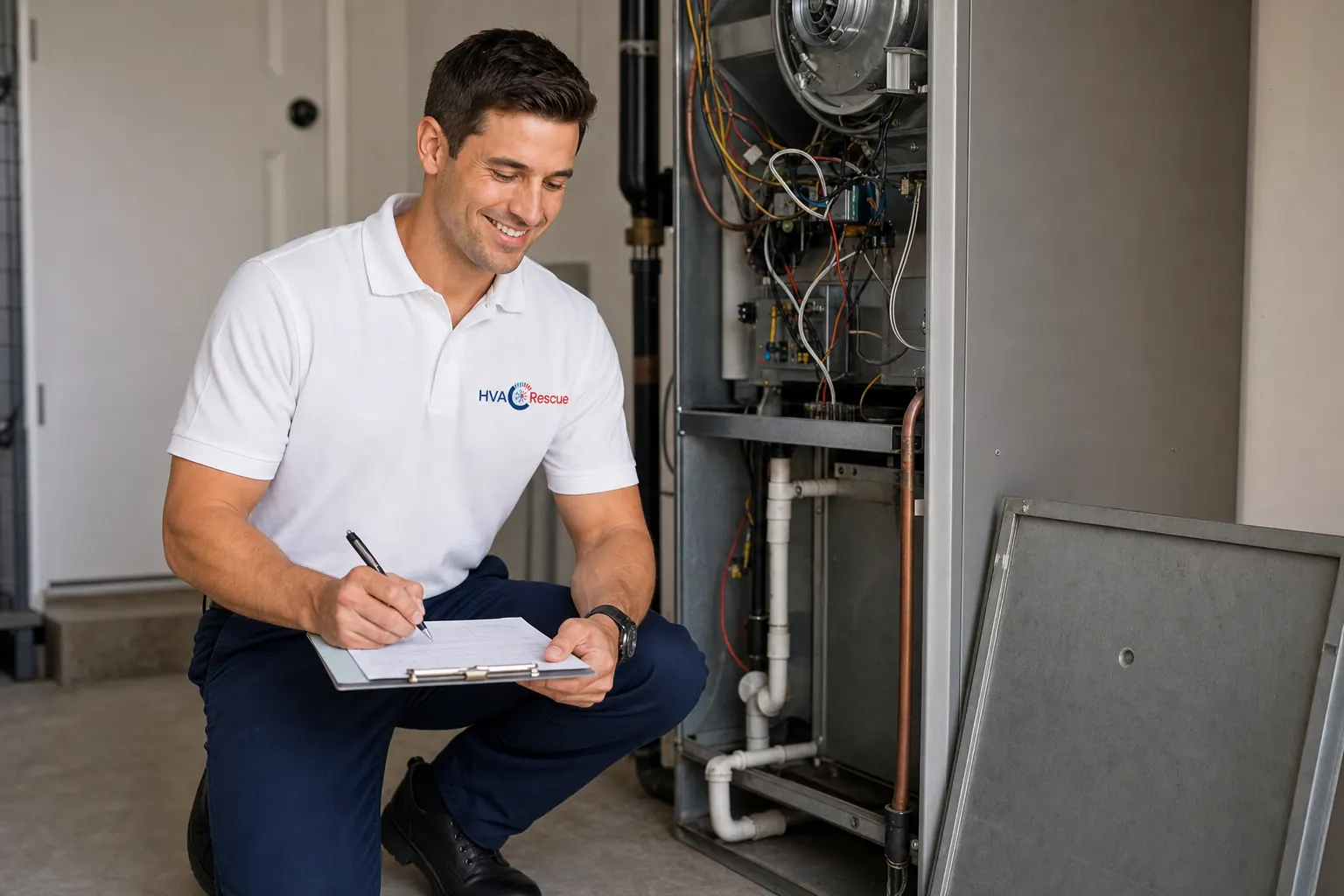
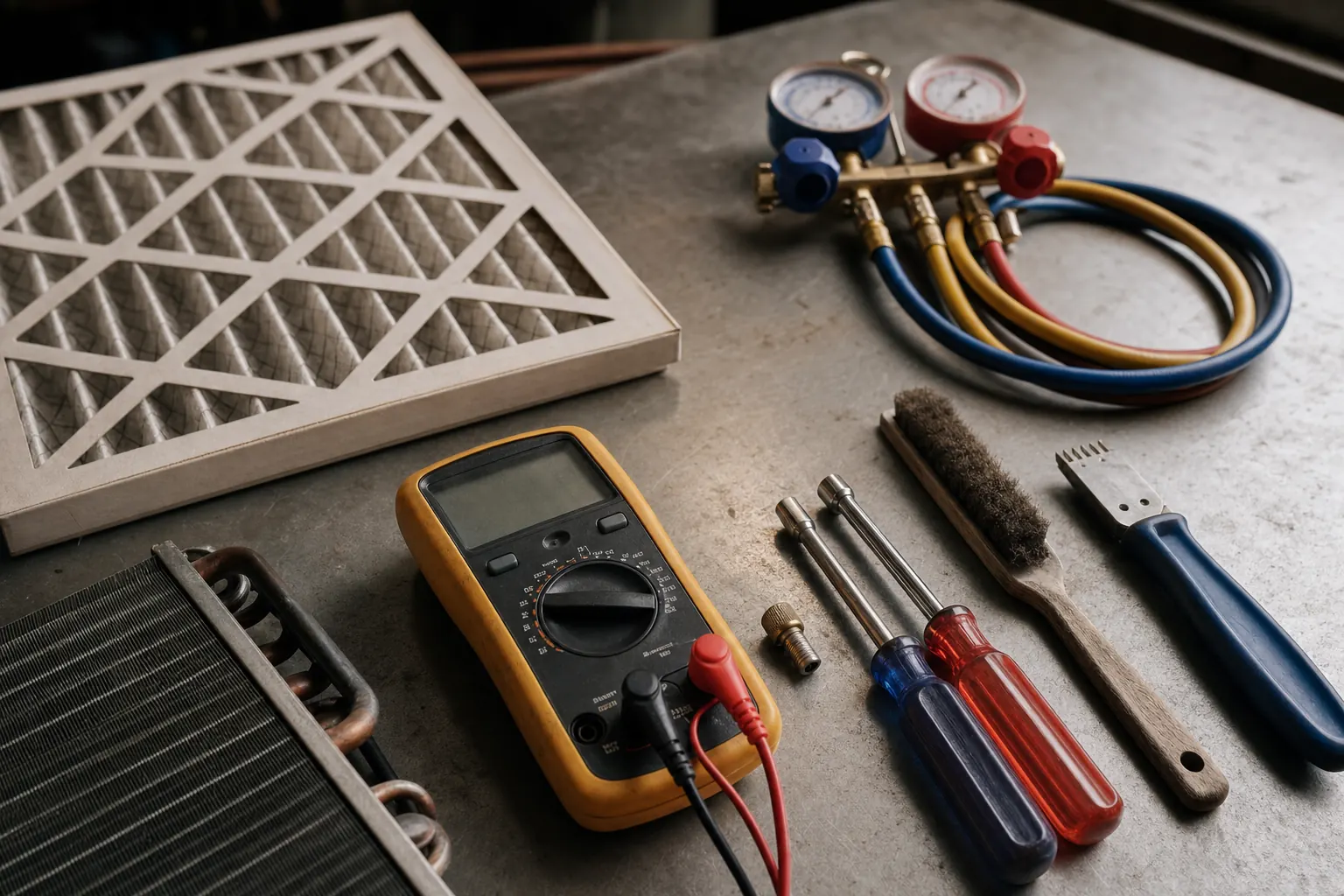
Homeowners can safely handle basic upkeep such as changing filters, clearing debris around the outdoor unit, and making sure vents are unobstructed. Work involving refrigerant, sealed-system components, burners, gas valves, flues, or high-voltage electrical parts belongs to a qualified licensed technician. The same goes for opening equipment in ways that expose hazardous components. A proper service visit may include checking temperature split, electrical draw, drain condition, blower operation, refrigerant performance indicators, combustion-related safety on fuel-fired equipment, and thermostat operation.
Typical 2025-2026 maintenance pricing varies by region and equipment type, but a single seasonal tune-up commonly falls in the roughly $100 to $250 range, with higher costs for complex systems or combined visits. That does not guarantee a specific bill reduction. What it often does is restore lost performance, reduce the chance of breakdowns, and give you a clearer picture of whether your money should go toward maintenance, duct work, envelope improvements, or replacement planning.
Cost ranges are estimates developed from standardized project scopes and reviewed pricing inputs. Government labor and regional cost data are used where applicable. See our Pricing Methodology for the exact sources, calculations, and review date. Actual prices vary by property, scope, materials or equipment, location, and provider.
Know when upgrades make sense and when they do not
Equipment replacement can lower bills, but it is not automatically the first or best move. If the home leaks badly, ducts are failing, airflow is poor, or thermostat habits are wasteful, a new system may deliver less savings than expected. In some cases, those lower-cost fixes make the existing system perform acceptably for several more years. Replacement starts to make more sense when the current equipment is near end of life, needs major repairs, uses older low-efficiency technology, or has chronic comfort and reliability issues that good maintenance and duct improvements have not solved.
For air conditioners and heat pumps, efficiency ratings such as SEER2 and HSPF2 help compare models, but the installed result matters as much as the equipment label. Correct sizing, airflow setup, duct compatibility, and thermostat configuration all affect real-world performance. Bigger is not better. Oversized cooling equipment can short-cycle, reduce dehumidification, and leave the house feeling cool but clammy. A load calculation is the right basis for sizing, especially if air sealing or insulation upgrades have changed the home’s needs.
Typical 2025-2026 installed replacement costs in the U. S. often range from several thousand dollars for simpler changeouts to well into five figures for higher-efficiency systems, heat pumps, major duct modifications, or difficult installations. The practical takeaway is to avoid replacing on bill frustration alone. Compare the cost of repairs, the condition of ducts, the age of the system, your utility rates, and the likely length of time you will stay in the home. HVAC Rescue can help homeowners find independent contractors for evaluations when technician-level work is needed.
Track results so you know which changes are actually helping
It is easy to spend money on improvements and never really know what made a difference. Track your thermostat settings, filter changes, maintenance dates, and monthly utility use so you can compare bills against weather and habits. A hotter summer or colder winter can hide the effect of a useful upgrade, while mild weather can make a weak strategy look successful. Some utility portals provide daily use graphs that make it easier to spot changes after a thermostat adjustment or repair.
Comfort is part of the result, not a separate issue. If a step lowers bills but leaves bedrooms too hot, increases humidity, or causes the system to run in a way that worries you, it may not be the right step. The best savings plan is usually a sequence: run the thermostat sensibly, keep airflow clean, seal obvious leaks, improve insulation where it counts, fix duct losses, and then consider upgrades based on actual performance. That approach avoids chasing a single miracle fix and gives each dollar a better chance of doing useful work.
Sources and fact-checking
Reviewed July 25, 2026. We favor primary government and standards sources for safety, efficiency, and regulatory claims. These references support the technical and consumer guidance on this page.
- Heating and cooling maintenance checklistENERGY STARProfessional tune-up scope, filters, airflow, coils, drains, and safety checks.
- Duct sealingENERGY STARHow duct leakage affects comfort and energy use, and appropriate sealing materials.
- Heat pumpsU.S. Department of EnergyHeat-pump operation, system types, climate considerations, and backup heat.