Quick summary
Match what you notice to a safe next step
These observations can narrow the starting service, but they do not confirm which part has failed.
What you notice
Airflow restriction at the indoor unit
What it may point to
A clogged indoor coil, closed supply registers, blocked return, or weak blower can keep heat from moving across the coil, so the heat pump runs longer and longer while the house warms or cools very slowly.
Safe next action
Check the setpoint and note outdoor conditions
What you notice
Low refrigerant charge or another sealed-system problem
What it may point to
If the heat pump is low on refrigerant, it can run almost continuously without delivering normal heating or cooling, and you may also notice ice on the outdoor unit or lines.
Safe next action
Inspect the filter and arrange service
What you notice
Thermostat fan setting or control issue
What it may point to
If the thermostat is set to FAN ON instead of AUTO, or if a relay or thermostat contact is stuck, the indoor fan can keep running after heating or cooling has already stopped, making it seem like the heat pump never shuts off.
Safe next action
Confirm the fan is set to Auto
What you notice
Defrost control fault or sensor problem
What it may point to
In heating mode, a heat pump that is not defrosting correctly can stay iced over and run for very long stretches while output drops, especially in cold, damp weather.
Safe next action
Turn the system off and request service
Safe things to check
- Confirm the thermostat mode and setpoint
- Inspect the air filter and replace it if visibly dirty
- Make sure visible supply and return vents are open
Do not attempt
- Do not handle, vent, or add refrigerant
- Do not open sealed electrical or equipment panels
- Do not bypass a safety switch or force repeated restarts
A few quick questions
Refine the best next step
Question 1 of 3
- 1How much of the home is affected?
- 2What is the system doing right now?
- 3When did this begin?
What this symptom can mean
Use the evidence you can observe
What constant heat pump operation usually means
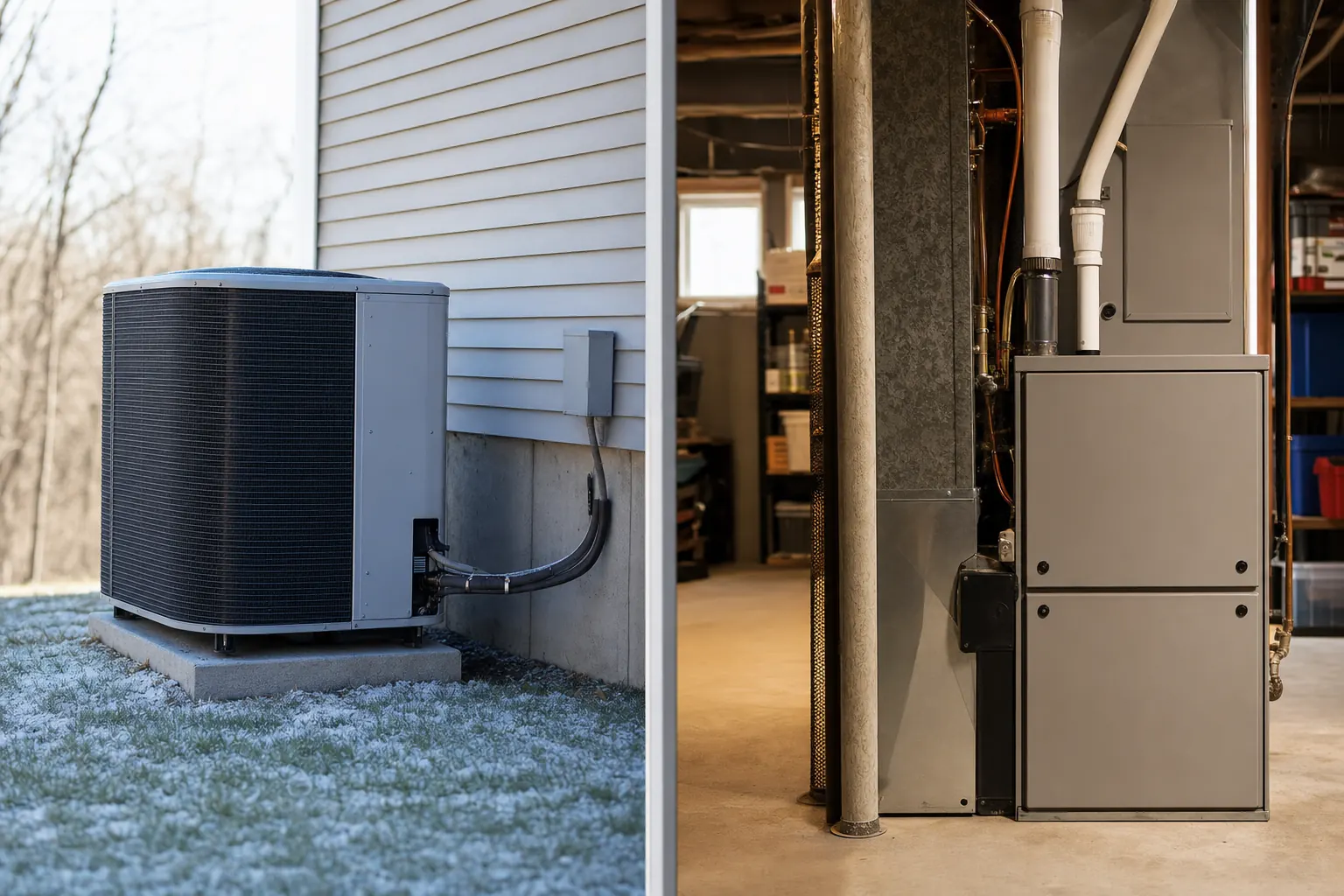
A heat pump that runs constantly is usually not simply “working hard.” In most homes, it should cycle off after it reaches the thermostat setting, even if run times are longer during very hot or very cold weather. When it keeps operating without catching up, the system is either struggling to transfer heat, being told to keep part of the system running, or failing to complete a normal operating sequence such as defrost.
How to tell which version of this symptom you have
Start by noticing whether the outdoor unit and indoor unit both keep running, or whether only the indoor fan continues after the heating or cooling ends. If room comfort improves slowly while the system runs, airflow problems, low refrigerant, or performance loss at the outdoor unit are common suspects. If comfort does not improve at all, the problem is usually more serious, such as a sealed-system issue, outdoor component failure, or a control problem. If you see ice, water around the unit from repeated thawing, or hot electrical smells from overheating components, the nonstop operation is often a side effect of the system fighting another fault.
Clues homeowners can observe without opening equipment
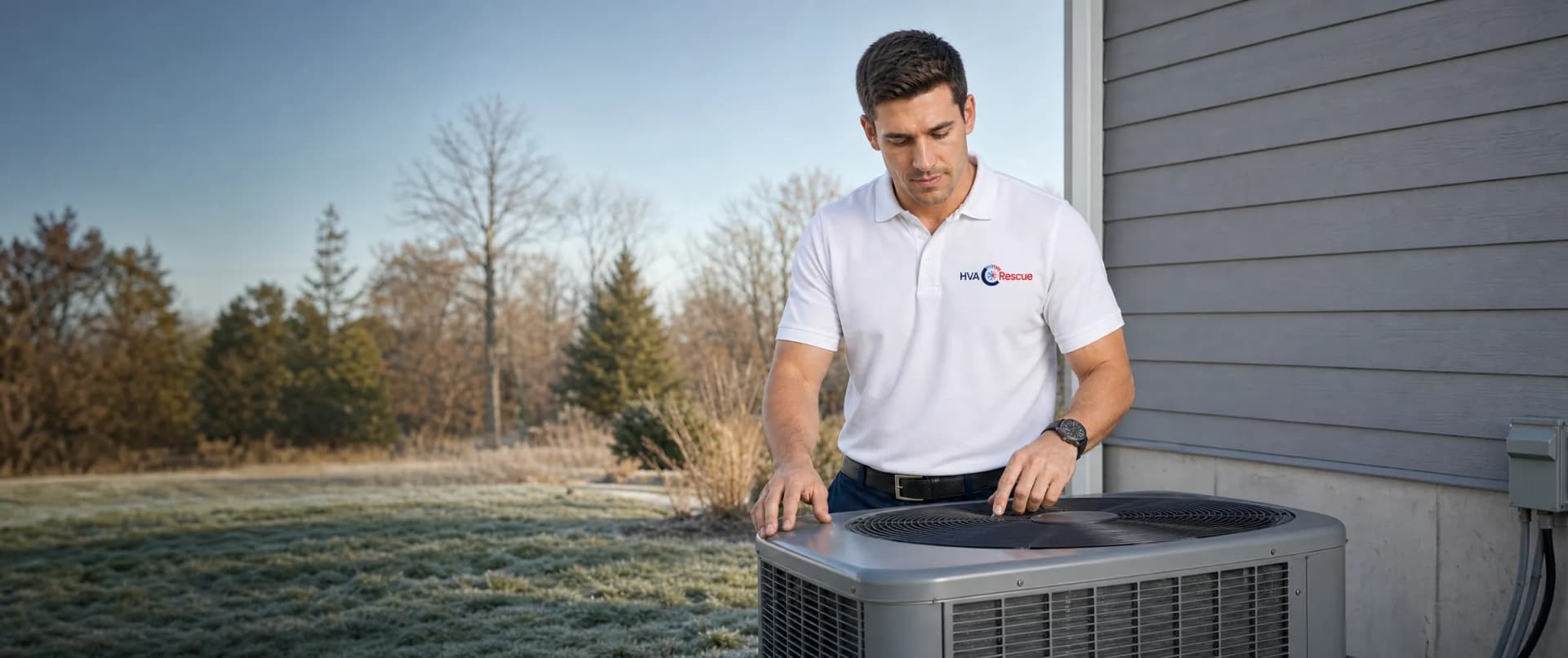
A blower-only problem often shows up as air still coming from the vents after the heating or cooling sound stops outside; that points toward the fan being commanded on or a relay stuck closed. If the outdoor unit is frosted over in heating mode and the heat pump never seems to recover, a defrost failure moves higher on the list. If some rooms have weak airflow, the indoor coil can get too cold or too hot because not enough air is moving across it, which extends run time dramatically. If the thermostat remains several degrees away from the setpoint for hours, low refrigerant or a compressor-side performance issue becomes more likely than a simple fan setting issue.
What a technician typically checks on a service visit
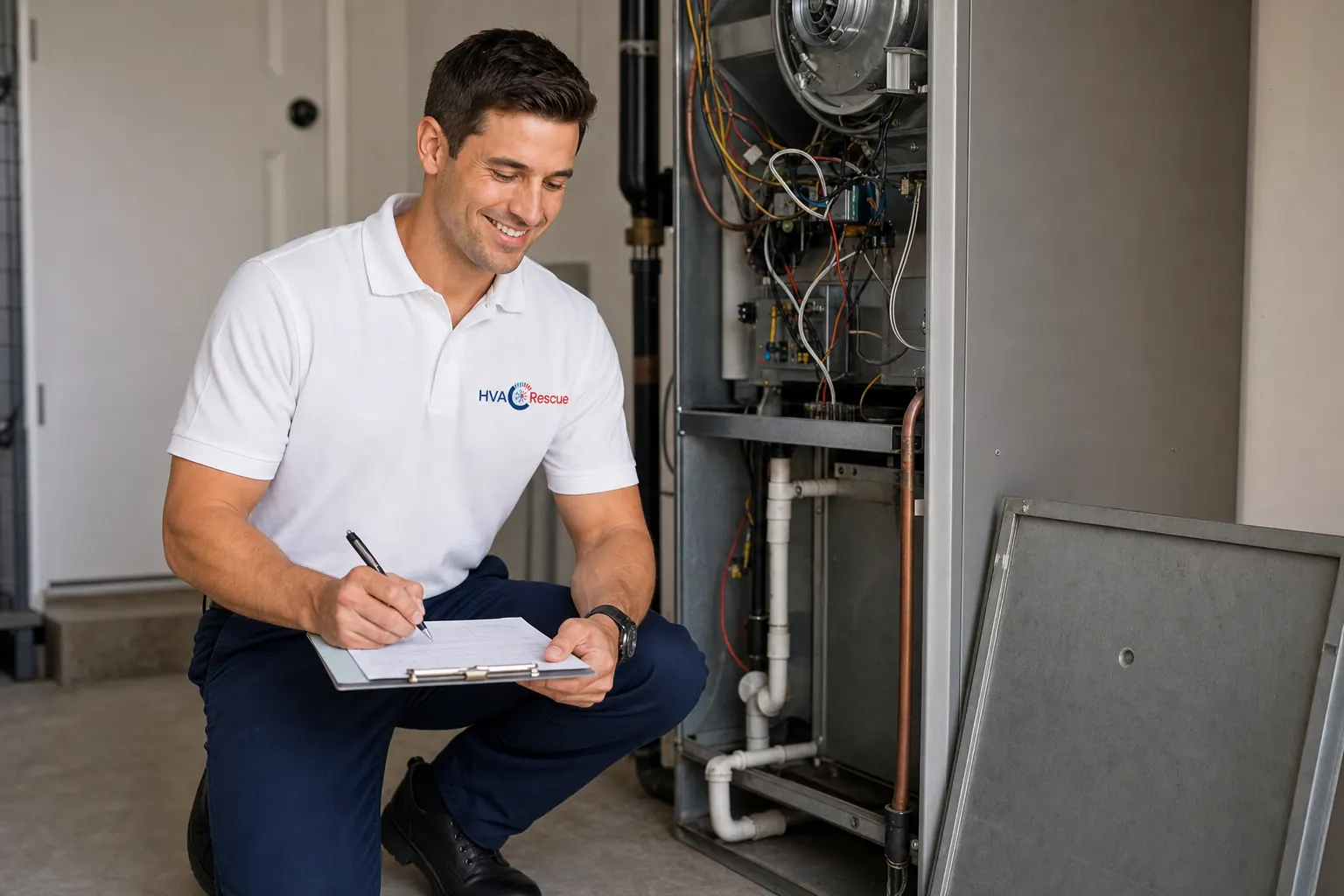
A technician will usually verify whether the thermostat is correctly calling for heating, cooling, or fan only, then measure temperature split, airflow, and amp draw to see whether the system is moving heat normally. They may inspect the indoor coil and blower, check whether the outdoor fan and compressor are both operating, and test defrost controls and sensors if icing is involved. If the readings suggest a sealed-system problem, they will check operating pressures and look for signs of refrigerant loss or poor compressor performance rather than just assuming the long run time is weather-related.
What affects repair cost for a heat pump that will not shut off
Cost depends on whether the system is running nonstop because of a control issue, an airflow problem, or a refrigeration/performance fault. Thermostat replacement or fan relay/control repairs often land around $150-$600, while blower motor or capacitor-related repairs are commonly higher depending on equipment type. Defrost board or sensor repairs often fall in the mid-hundreds, and refrigerant leak diagnosis and sealed-system repairs can range from several hundred dollars into the thousands once leak repair, refrigerant, and component replacement are involved. Older systems with repeated icing, poor capacity, or compressor wear can make replacement discussions more likely than a minor repair.
Cost ranges are estimates developed from standardized project scopes and reviewed pricing inputs. Government labor and regional cost data are used where applicable. See our Pricing Methodology for the exact sources, calculations, and review date. Actual prices vary by property, scope, materials or equipment, location, and provider.
When to turn the system off
- Stop if you smell gas, see smoke or sparks, or hear a carbon-monoxide alarm
- Stop if water reaches powered equipment or a breaker trips again
- Stop if loud grinding, booming, or heavy ice appears
When to call for help
- Call when the symptom continues after the safe checks
- Call promptly when comfort is lost for the whole home
- Describe when it started and any water, ice, noise, odor, alert, or breaker activity
Cost guidance
What could this cost to fix?
Price depends on the actual cause, equipment, access, and local labor. Compare the national ranges in the HVAC Repair Cost guide, or check service availability for your system.
Find local help for Heat Pump Repair
We will keep this problem and recommended service selected while you answer a few quick availability questions.
Browse HVAC help by stateFrequently asked questions
Heat pump runs constantly or will not turn off: common questions
Why does my heat pump run all day but only change the temperature a little?
Why does the fan keep blowing after the heat pump stops?
Is it normal for a heat pump to run constantly in very cold or very hot weather?
Can a thermostat cause my heat pump to never turn off?
How long does it take to diagnose a heat pump that won't shut off?
Sources and review standard
Last updated July 18, 2026. Last reviewed July 18, 2026. HVAC Rescue reviews problem pages for homeowner-safe boundaries, service routing, source quality, and unsupported claims. No named technical reviewer is shown unless a qualified HVAC reviewer has completed that review.