Reviewed July 27, 2026
HVAC Rescue Editorial Team
Editorial StandardsWhen you need duct replacement
Duct replacement is the right starting point when the duct system itself appears worn out or failing in multiple places. Rooms may stay too hot or too cold no matter how the thermostat is set, airflow at the vents may feel weak even while the system runs, and older ducts may be crushed, torn, disconnected, or sagging. It can also fit when energy bills keep rising without another clear cause and past repairs no longer hold.
This service is different from ductwork repair, which makes more sense for one isolated problem such as a single loose or damaged section. It is also different from replacing the heating or cooling equipment. A furnace, air conditioner, or heat pump can still produce conditioned air, but old or poorly functioning ducts can keep that air from reaching the rooms evenly.
The decision this service should answer
Decide whether the duct system needs selective repair, sealing and balancing, partial replacement, or a redesigned full replacement based on measurements and access.
Duct replacement should begin with room loads, airflow and pressure, return paths, layout, material condition, insulation, leakage, moisture, and access rather than replacing runs by appearance alone.
Common causes
- Loose joints and seams
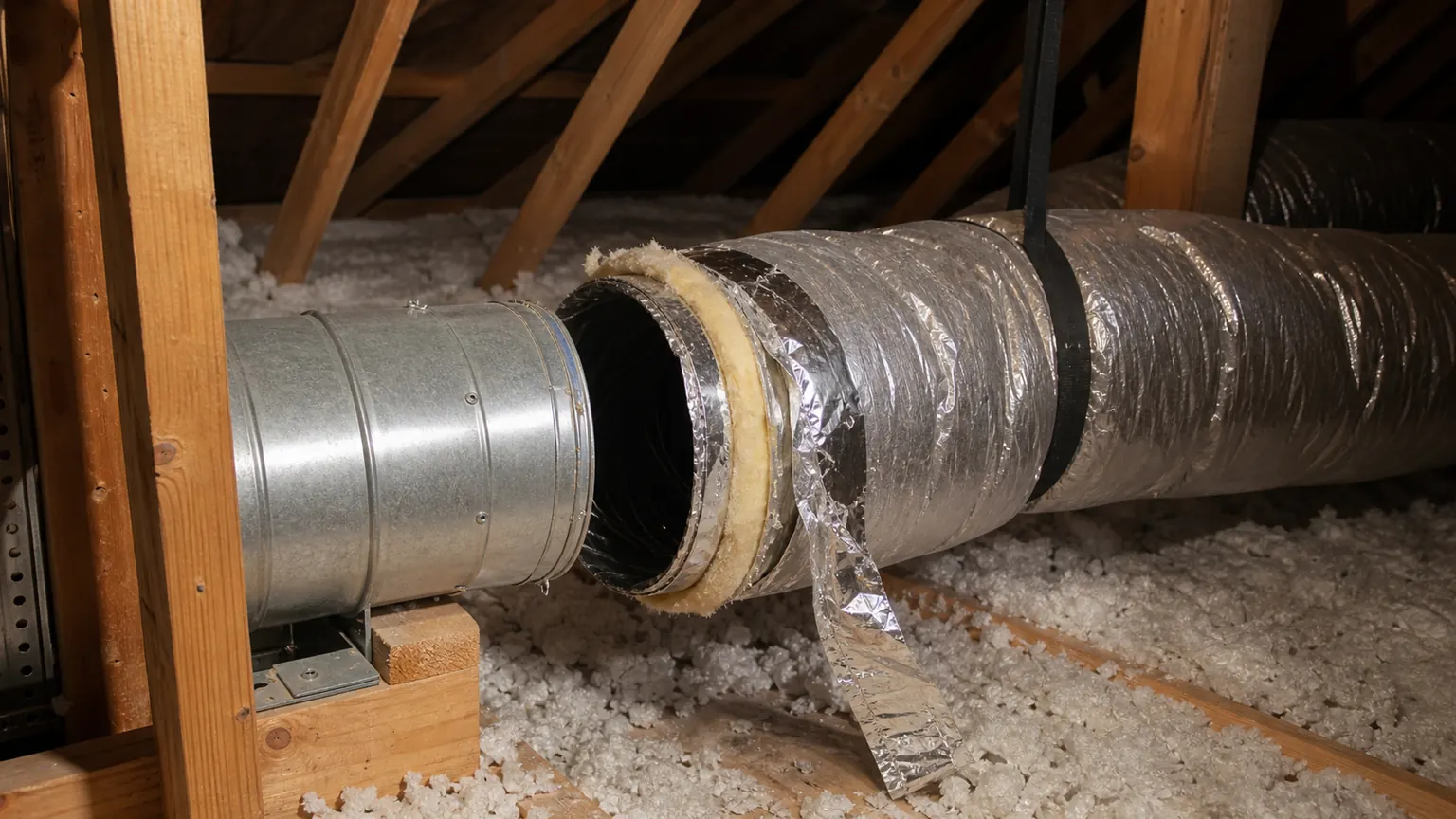
- As connections age, sections can separate or gaps can open at seams. That lets conditioned air escape before it reaches the rooms and can leave some vents blowing weakly even though the system is operating.
- Crushed flex duct
- Flexible duct that has been kinked, compressed, or sharply bent can restrict the path of air. The result is reduced airflow to certain rooms and a system that struggles to deliver even comfort.
- Deteriorated duct material
- Older duct materials can crack, tear, or break down over time. Once the duct wall or outer layer fails in many areas, patching may stop working and airflow losses can become more widespread.
- Poor original layout
- A past installation may have used undersized ducts or a layout that does not move enough air where it is needed. That can show up as rooms that are uncomfortable year after year rather than a single sudden problem.
- Pest, moisture, or settling damage
- Moisture, pest activity, or normal movement in the home can damage or shift duct runs. Sections may disconnect, sag, or wear through, which can reduce delivered air and make comfort less consistent.
What you can safely check first
Homeowner checks should stay basic and visual. The goal is to rule out simple airflow blockers and notice obvious damage, not to diagnose hidden duct problems inside walls, ceilings, attics, or crawlspaces that may be unsafe or hard to access.
Open and clear vents
Make sure supply and return vents are fully open and not blocked by rugs, furniture, or other items. If airflow improves after clearing them, the issue may be at the room level rather than a failed duct section.
Replace the air filter
A dirty filter can reduce airflow enough to mimic duct trouble. Install a clean filter if the current one is clogged, then see whether airflow at the vents improves over the next normal cycle.
Check thermostat settings
Confirm the thermostat is set to the correct mode and fan setting for the season. If the settings were wrong, correcting them may restore normal operation without pointing to a duct replacement issue.
Look at accessible ducts
If any ductwork is easy to see safely, look for obvious disconnections, crushed spots, or sagging sections. Visible damage does not confirm the full scope, but it is a strong sign that professional evaluation is needed.
When to call a professional
Professional help makes sense when the simple checks are done and the comfort or airflow problem remains, or when visible damage suggests the duct system is failing beyond a minor fix. The main question is whether the issue is isolated repair work or broader replacement.
- Weak airflow continues
- If vents still blow weakly after the filter, vents, and thermostat have been checked, the problem may be inside the duct system or its layout. The system does not usually need to be shut off for this sign alone unless other hazards are present.
- Visible duct damage
- Disconnected, crushed, sagging, or badly deteriorated ducts matter because they can waste conditioned air and keep rooms uncomfortable. The system may still run, but a professional should assess the damage before more patching is attempted.
- Rooms stay uneven
- If certain rooms remain uncomfortable across seasons, that points to a delivery problem rather than a one-time thermostat adjustment. This pattern matters because it can indicate undersized, leaking, or poorly routed ducts that repairs may not fully solve.
- Hidden runs are involved
- Ductwork in walls, ceilings, attics, or crawlspaces can be difficult to inspect safely. If the suspected problem is in those areas, professional access and evaluation are the safer next step; do not open finished areas or enter unsafe spaces to investigate.
How much does duct replacement cost?
Whole-home ductwork replacement scope varies with home size, access, layout redesign, hazardous-material work, and finish repairs. Compare the same scope measured in runs or linear feet, with materials, insulation, sealing, returns, access, and testing clearly identified. An inspection should also confirm that replacement — rather than targeted repair, sealing, or balancing — addresses the airflow problem.
Duct replacement quotes can vary widely because the scope can range from limited runs to a full-home system with more complicated access. Home size, total duct length, the material used, the number of returns and zones, removal of old damaged ductwork, and the amount of sealing and insulation all affect labor and materials. Access through attics, crawlspaces, or finished areas can also change the difficulty, so it helps to compare estimates with the same scope clearly described.
| Ductwork Replacement | Typical range |
|---|---|
| Partial / smaller-home replacementLimited runs or a compact home with good access | $2,600 – $7,600 |
| Mid-size whole-home replacementTypical home with average duct length and access | $6,500 – $16,667 |
| Larger-home replacementMore square footage, longer runs, or multiple zones | $12,000 – $29,000 |
| Complex replacementDifficult access, full redesign, or specialty materials | $19,333 – $47,333 |
Cost ranges are estimates developed from standardized project scopes and reviewed pricing inputs. Government labor and regional cost data are used where applicable. See our Pricing Methodology for the exact sources, calculations, and review date. Actual prices vary by property, scope, materials or equipment, location, and provider.
See the full ductwork replacement cost guide for the complete breakdown, then call to get a real quote for your home.
Repairing vs. Replacing Ductwork
Not every duct problem calls for a full replacement. Isolated leaks, a few loose joints, or a single damaged section can often be repaired, which can be a sensible first step when the rest of the system is in good shape.
When ducts are old, widely leaking, poorly designed, or damaged throughout, replacement may deliver better airflow and efficiency than patching the same system again and again. An HVAC professional can weigh the condition of your ducts and recommend whether targeted repairs or a full replacement makes more sense for your home.
Repair often makes sense when
- Only a few joints or short sections are leaking
- The overall duct layout is sound and properly sized
- Damage is limited and easy to reach
- The ductwork is relatively new and otherwise in good shape
Consider replacement when
- Ducts are old and leaking in many places
- The existing layout is undersized or poorly designed
- Material has deteriorated, torn, or collapsed throughout
- Repeated repairs have failed to restore comfort and airflow
Get help with duct replacement
One quick call connects you with HVAC pros who service your area. No pressure, no obligation.
Efficiency standards, rebates & the rules that matter
A few federal rules shape any heating or cooling project today. Knowing them helps you buy the right system and avoid surprises.
Efficiency standards changed in 2023 (SEER2)
Since January 1, 2023 the U.S. Department of Energy rates cooling efficiency as SEER2 and sets regional minimums — higher in the South and Southwest than in the North. New equipment has to meet the floor for its region, so a system installed today starts at a higher efficiency baseline than one from a few years ago.
New equipment is moving to lower-GWP refrigerants
EPA technology-transition rules restrict new residential and light-commercial equipment that uses high-global-warming-potential HFCs. Most newly manufactured split systems now use A2L refrigerants such as R-454B or R-32, while existing R-410A systems and qualifying repair components remain serviceable. Ask which refrigerant a proposed system uses and confirm that every indoor and outdoor component is listed as a compatible match.
Current incentives are state, utility, and program specific
The federal Energy Efficient Home Improvement Credit (Section 25C) generally ended for property placed in service after December 31, 2025. Home Energy Rebate programs may still be available through participating states, territories, and Tribes, and some utilities offer separate incentives. Program status, eligible equipment, income limits, and funding can change, so verify the current rules before treating an incentive as part of a project budget.
Anyone handling refrigerant must be EPA-certified
Federal law (EPA Section 608) requires any technician who opens a refrigerant circuit to hold EPA certification. Confirming it is a quick, fair check before you hire — alongside proof of license where your state requires one, and insurance.
Sources: U.S. DOE — central AC & heat pump regional efficiency standards · eCFR — 10 CFR 430.32 minimum efficiency standards · U.S. EPA — Technology Transitions Program · IRS — Energy Efficient Home Improvement Credit (§25C) · U.S. DOE — Home Energy Rebates · DSIRE — database of state & utility energy incentives · U.S. EPA — Section 608 technician certification
What happens during service
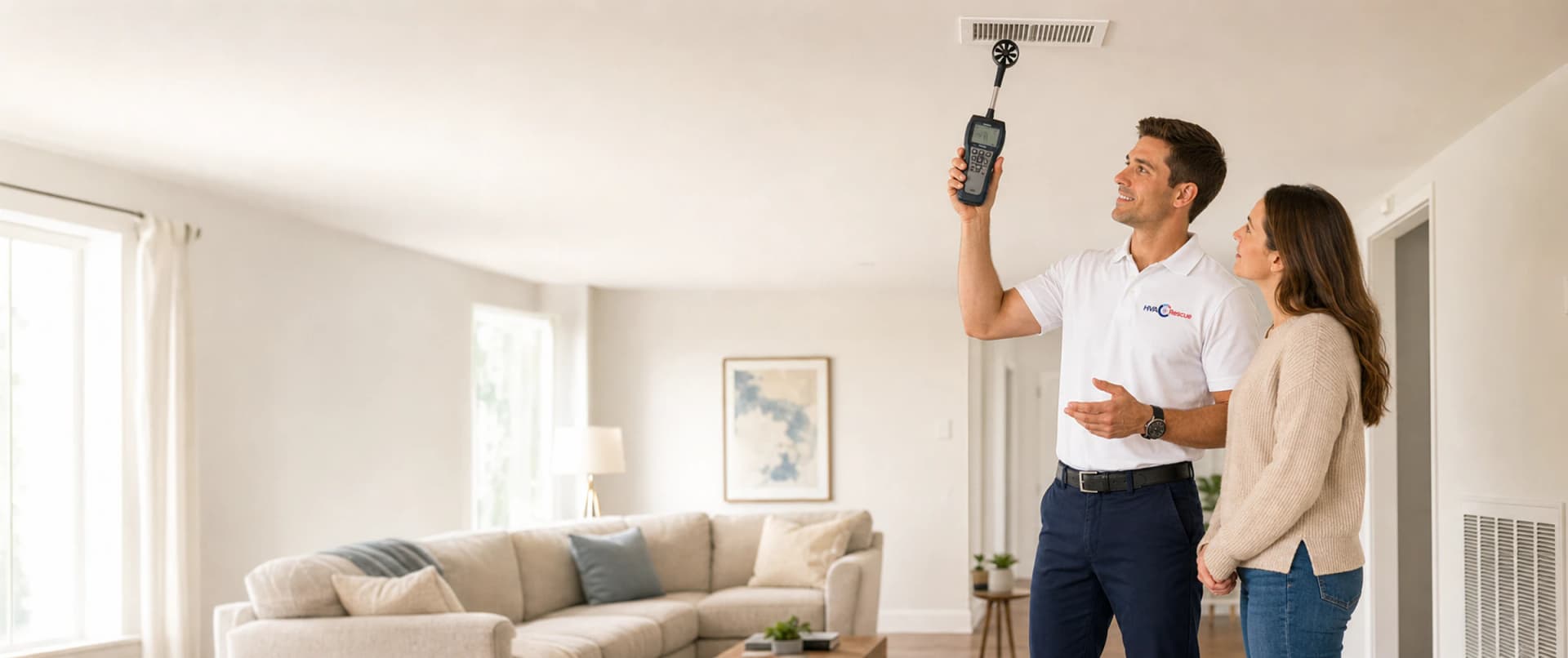
A qualified technician should confirm that the airflow problem really points to failing ductwork before replacement is recommended. That evaluation may include the condition of accessible sections, the overall layout, whether supply and return paths make sense, and whether the damage is isolated or spread across enough of the system that replacement is the more durable answer.
- 1
Describe the symptoms
Tell us which rooms struggle, how the airflow feels, and whether you have noticed rising bills or visible duct damage.
- 2
Get connected locally
We help match you with HVAC professionals that service your area so your duct system can be assessed in person. Availability may vary by location and provider.
- 3
Duct evaluation
A professional inspects the existing ductwork, airflow, and layout to determine whether sections or the full system need replacement.
- 4
Plan and proposal
You get a clear explanation of the recommended work, the materials involved, and the scope before anything is replaced.
- 5
Replacement and testing
Once approved, the new ductwork is installed and the system is tested to confirm improved airflow and more even comfort.
Why homeowners use HVAC Rescue
- One call connects you with HVAC pros who service your area
- Help for repair, maintenance, replacement, and emergencies
- Plain-English guidance on what is likely wrong before anyone visits
- No pressure and no obligation to book
- Available nationwide, year-round
- We point you to the right service for your system, not an upsell
Duct Replacement: common questions
How do I know if I need duct replacement instead of duct repair?
Will replacing my furnace or AC fix bad airflow in certain rooms?
What happens during a duct replacement evaluation?
Can old ductwork raise energy bills?
How long does duct replacement usually take?
Sources and fact-checking
Reviewed July 27, 2026. We favor primary government and standards sources for safety, efficiency, and regulatory claims. These references support the technical and consumer guidance on this page.
- Duct sealingENERGY STARHow duct leakage affects comfort and energy use, and appropriate sealing materials.
- HVAC ducted returnsU.S. Department of Energy Building Science EducationReturn-air pathways, room pressure balance, drafts, and temperature differences between rooms.
- Should you have the air ducts in your home cleaned?U.S. Environmental Protection AgencyWhen duct cleaning may be warranted, limitations, and consumer cautions.
- How to avoid a home improvement scamFederal Trade CommissionWritten estimates, contractor verification, payment cautions, and fraud warning signs.