
Reviewed July 27, 2026
HVAC Rescue Editorial Team
Editorial StandardsWhy duct replacement matters for comfort and system performance
Duct replacement is the right starting point when the duct system itself appears worn out or failing in multiple places. Rooms may stay too hot or too cold no matter how the thermostat is set, airflow at the vents may feel weak even while the system runs, and older ducts may be crushed, torn, disconnected, or sagging. It can also fit when energy bills keep rising without another clear cause and past repairs no longer hold.
This service is different from ductwork repair, which makes more sense for one isolated problem such as a single loose or damaged section. It is also different from replacing the heating or cooling equipment. A furnace, air conditioner, or heat pump can still produce conditioned air, but old or poorly functioning ducts can keep that air from reaching the rooms evenly.
Duct Replacement in South Carolina: what’s different here
South Carolina’s humid subtropical weather means air conditioning does most of the heavy lifting from spring into fall, so duct condition has a big effect on airflow and humidity control. Coastal areas also deal with salt air, while inland homes may see different wear patterns, but across the state, duct replacement often becomes part of solving comfort and efficiency problems.
In South Carolina, damaged or leaky ducts can make already hard-working cooling systems struggle even more during long humid summers. Homeowners may notice sticky rooms, musty odors, or moisture-related issues in ductwork, especially when condensate and humidity are both part of the picture.
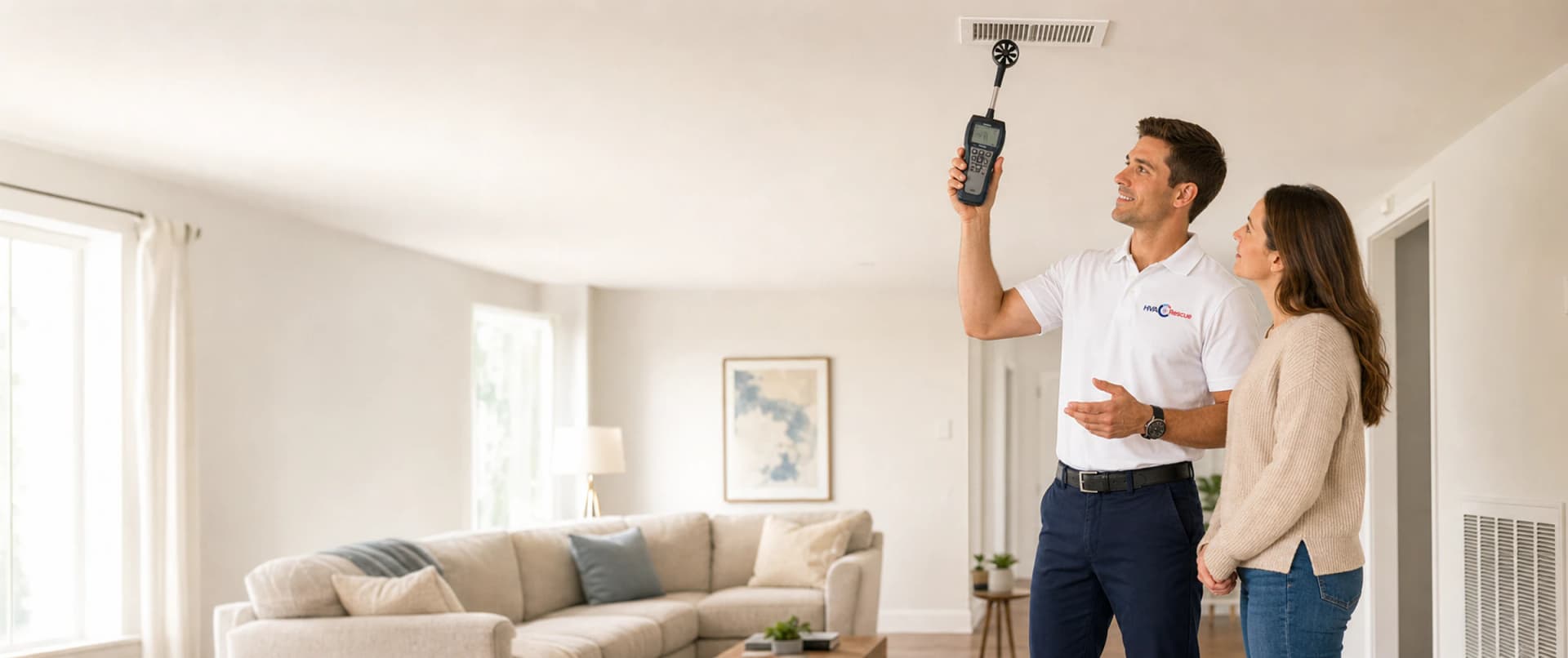
For duct replacement in South Carolina, a professional scope should begin by tell us which rooms struggle, how the airflow feels, and whether you have noticed rising bills or visible duct damage. Replace only the scope justified by condition and design; compare alternatives when repair can restore sound sections or when layout and access make a larger redesign necessary. The written scope should also explain a qualified technician should confirm that the airflow problem really points to failing ductwork before replacement is recommended. that evaluation may include the condition of accessible sections, the overall layout, whether supply and return paths make sense, and whether the damage is isolated or spread across enough of the system that replacement is the more durable answer. If vents still blow weakly after the filter, vents, and thermostat have been checked, the problem may be inside the duct system or its layout. The system does not usually need to be shut off for this sign alone unless other hazards are present.
- Long cooling seasons make duct condition a major comfort issue in South Carolina.
- Humidity and moisture can expose duct leaks, odors, and airflow problems.
- Coastal salt air can add wear near the Lowcountry.
- Heat pumps are common, so duct performance matters in both cooling and mild winter weather.
Duct Replacement decisions for South Carolina homes
Decide whether the duct system needs selective repair, sealing and balancing, partial replacement, or a redesigned full replacement based on measurements and access. For South Carolina, the relevant state focus is climate zone, duct location, insulation, condensation, climate-zone duct location insulation condensation and code context. Replace only the scope justified by condition and design; compare alternatives when repair can restore sound sections or when layout and access make a larger redesign necessary.
Repair or replace your system?
Repair often makes sense when
Some duct problems are limited to a few loose joints, damaged connections, or isolated crushed sections. In those cases, targeted repair may restore airflow without replacing large portions of the system.
- Problems are limited to a few accessible sections or connections
- The overall duct layout and sizing are appropriate for the home
- Most duct material is still structurally sound
- Insulation is intact on the majority of the system
- Airflow issues trace back to a specific damaged run or fitting
- Previous performance was acceptable before the recent problem developed
Consider replacement when
Replacement becomes the better long-term option when the issues are widespread, the layout is flawed, or the materials are breaking down across much of the duct network. A professional can help you compare short-term patching with a more complete fix for your home in South Carolina.
- Leaks, damage, or deterioration affect many sections of the system
- Ducts are undersized, poorly routed, or restrict airflow throughout the home
- Old materials are torn, brittle, or failing in multiple areas
- Comfort problems persist even after prior repairs
- Insulation and sealing are degraded across much of the ductwork
- A larger redesign is needed to improve airflow balance and delivery
System & efficiency options for South Carolina homes
Targeted section replacement
Best when only certain runs, branches, or trunk sections have failed while the rest of the system remains serviceable. A technician may recommend replacing the worst sections and reconnecting them to the existing duct layout.
Partial duct system replacement
Useful when one zone, floor, or major branch of the home has chronic airflow or leakage issues. This approach focuses on the most problematic portions without replacing every run.
Full like-for-like duct replacement
Replaces aging or damaged ducts throughout the home while keeping the general layout similar. This option can make sense when the existing routing works reasonably well but the materials and sealing no longer do.
Full redesign and replacement
Recommended when the original duct system is undersized, poorly routed, or delivers uneven airflow across the house. The new layout may include revised trunk lines, branch sizing, and register connections to improve balance.
Replacement with upgraded insulation and sealing
Adds attention to insulation levels, sealed connections, and transitions in spaces like attics or crawl spaces. This can help reduce energy losses as air moves through unconditioned areas.
How much does duct replacement cost in South Carolina?
Duct replacement scope in South Carolina varies with layout, home size, access, materials, insulation, returns, redesign, sealing, and testing. The factors below define the work.
- Whether only a few sections or the full duct system need replacement
- The size of the home and total amount of ductwork involved
- How accessible the ducts are in attics, crawl spaces, basements, or walls
- Whether the current layout can be reused or needs redesign
- The duct material being installed, such as sheet metal, flexible duct, or duct board
- How much sealing and insulation work is included with the replacement
- Whether trunk lines, branch lines, boots, or transitions also need to be rebuilt
- The condition of existing supports, hangers, and connection points
- Whether airflow balancing is needed after installation
- Any permit, inspection, or code-related requirements in your area
- The complexity of working around finished spaces or tight access points
- Seasonal demand and provider availability in South Carolina
| Ductwork Replacement | Typical range |
|---|---|
| Partial / smaller-home replacementLimited runs or a compact home with good access | $2,500 – $7,300 |
| Mid-size whole-home replacementTypical home with average duct length and access | $6,200 – $15,900 |
| Larger-home replacementMore square footage, longer runs, or multiple zones | $11,500 – $27,800 |
| Complex replacementDifficult access, full redesign, or specialty materials | $18,400 – $45,100 |
Cost ranges are estimates developed from standardized project scopes and reviewed pricing inputs. Government labor and regional cost data are used where applicable. See our Pricing Methodology for the exact sources, calculations, and review date. Actual prices vary by property, scope, materials or equipment, location, and provider.
See the full ductwork replacement cost guide for the complete breakdown, then call to get a real quote for your South Carolina home.
Get duct replacement help in South Carolina
One quick call connects you with HVAC pros who service your area. No pressure, no obligation.
South Carolina: efficiency standards, rebates & the rules that matter
A few national rules and South Carolina realities shape any heating or cooling project. Knowing them helps you buy the right system and avoid surprises.
Efficiency standards (SEER2)
South Carolina sits in the DOE's Southeast region, where new split-system central air conditioners must meet a higher minimum of 14.3 SEER2 (versus 13.4 in the North) — so the efficiency floor here is above the national base.
New equipment is moving to lower-GWP refrigerants
EPA technology-transition rules restrict new residential and light-commercial equipment that uses high-global-warming-potential HFCs. Most newly manufactured split systems now use A2L refrigerants such as R-454B or R-32, while existing R-410A systems and qualifying repair components remain serviceable. Ask which refrigerant a proposed system uses and confirm that every indoor and outdoor component is listed as a compatible match.
Rebates & tax credits
For equipment placed in service after December 31, 2025, do not assume the former federal Section 25C HVAC credit still applies. South Carolina households may have access to a state-administered Home Energy Rebate program, utility incentives, or local financing programs, but availability, income rules, eligible models, and funding vary. Check the U.S. Department of Energy program page, the South Carolina energy office, DSIRE, and the serving utility before signing a contract; use a tax professional for tax advice.
Licensing, permits & EPA 608
HVAC contractor licensing varies by state and sometimes by city or county. In South Carolina, confirm your contractor is licensed where required, carries liability and workers'-compensation insurance, and that anyone handling refrigerant holds EPA Section 608 certification. Replacements typically need a local permit and inspection.
South Carolina specifics
South Carolina's long, humid cooling season dominates, and coastal salt air shortens the life of outdoor equipment.
Sources: U.S. DOE — central AC & heat pump regional efficiency standards · eCFR — 10 CFR 430.32 minimum efficiency standards · U.S. EPA — Technology Transitions Program · IRS — Energy Efficient Home Improvement Credit (§25C) · U.S. DOE — Home Energy Rebates · DSIRE — database of state & utility energy incentives · U.S. EPA — Section 608 technician certification
These references support the national regulatory, efficiency, and incentive notes above. State planning context does not represent a local office or guaranteed provider coverage.
South Carolina climate & seasonal demand
Cooling dominates much of the year in South Carolina, with air conditioners running hard against heat and humidity from spring into fall. Heating demand is modest, so heat pumps are popular for handling both seasons. The long cooling season, coastal humidity, and salt air make moisture control and equipment care important.
South Carolina has a humid subtropical climate with long, hot, humid summers and short, mild winters. The Lowcountry coast is especially muggy, while the upstate is somewhat cooler.
Because the cooling season is so long, duct replacement is often best planned before peak summer demand arrives. Short, mild winters matter too, since many South Carolina homes rely on heat pumps, and duct condition still affects how well they handle the occasional cold snap.
When ducts are worn, homes can lose conditioned air before it reaches the rooms that need it, which hurts comfort and can make humidity feel worse. Replacing failing ductwork can help restore more even airflow, better temperature control, and a system that doesn’t have to fight as hard in South Carolina’s sticky climate.
- AC systems overworked by long, humid summers
- Poor humidity control leaving homes feeling sticky
- Salt air affecting outdoor units near the coast
- Clogged condensate drains in muggy weather
- Musty odors and moisture in ductwork
- Heat pumps needing backup heat on the coldest nights
Before you call: what to have ready
Before scheduling duct replacement, note which rooms feel warm, cool, or stuffy, and check for visible signs like loose registers, damaged insulation, or musty smells near vents. Make sure access areas around attics, crawlspaces, or utility spaces are clear so HVAC professionals can inspect the duct system safely. For Duct Replacement in South Carolina, relate this guidance to the actual equipment, property, and written scope.
Questions to ask before approving work
- Are you licensed and insured for HVAC work in this state?
- Will a technician give a written, itemized estimate before any work starts?
- Is the diagnostic fee waived or credited if I approve the repair?
- For a new system, will you run a Manual J load calculation to size it correctly?
- What parts and labor warranties come with the repair or installation?
- Are your technicians NATE-certified or manufacturer-trained?
- Can you pull the required permits and schedule any needed inspection?
- Do you offer financing or maintenance plans, and what do they cover?
What happens during service
- 1
Connect with a local pro
Reach out and we help you connect with HVAC professionals that service your area. Availability may vary by location and provider, and the local pro handles scheduling, inspection, and pricing directly.
- 2
Evaluate the existing duct system
A technician inspects accessible duct runs, connections, insulation, and overall layout to understand where air is being lost or restricted.
- 3
Identify replacement needs
Based on the condition of the system, the pro determines whether the job calls for replacing isolated sections, major branches, or the full duct network.
- 4
Review layout and recommendations
You receive an explanation of the recommended replacement approach, including any sizing, routing, insulation, or airflow issues that should be addressed.
- 5
Remove failing duct sections
The damaged, deteriorated, or poorly performing duct sections are removed so the new components can be installed in their place.
- 6
Install new ductwork
New ducts, fittings, and connections are installed and secured based on the approved scope, with attention to support, routing, and sealed joints.
- 7
Check airflow and system response
After installation, the technician verifies airflow at the registers and checks that the new ductwork is delivering air more effectively through the home.
- 8
Final walkthrough and next steps
The pro reviews what was replaced, explains any remaining limitations, and shares maintenance or monitoring suggestions for the system in your South Carolina home.
Duct Replacement in South Carolina: common questions
When should I consider duct replacement in South Carolina?
Does South Carolina humidity affect duct replacement needs?
Are coastal homes in South Carolina more likely to need duct replacement?
Can HVAC Rescue help with duct replacement in South Carolina metros like Charleston, Columbia, or Greenville?
Sources and fact-checking
Reviewed July 27, 2026. We favor primary government and standards sources for safety, efficiency, and regulatory claims. These references support the technical and consumer guidance on this page.
- Duct sealingENERGY STARHow duct leakage affects comfort and energy use, and appropriate sealing materials.
- HVAC ducted returnsU.S. Department of Energy Building Science EducationReturn-air pathways, room pressure balance, drafts, and temperature differences between rooms.
- Should you have the air ducts in your home cleaned?U.S. Environmental Protection AgencyWhen duct cleaning may be warranted, limitations, and consumer cautions.
- How to avoid a home improvement scamFederal Trade CommissionWritten estimates, contractor verification, payment cautions, and fraud warning signs.