Quick summary
Match what you notice to a safe next step
These observations can narrow the starting service, but they do not confirm which part has failed.
What you notice
Loose condenser panel, screws, or fan guard
What it may point to
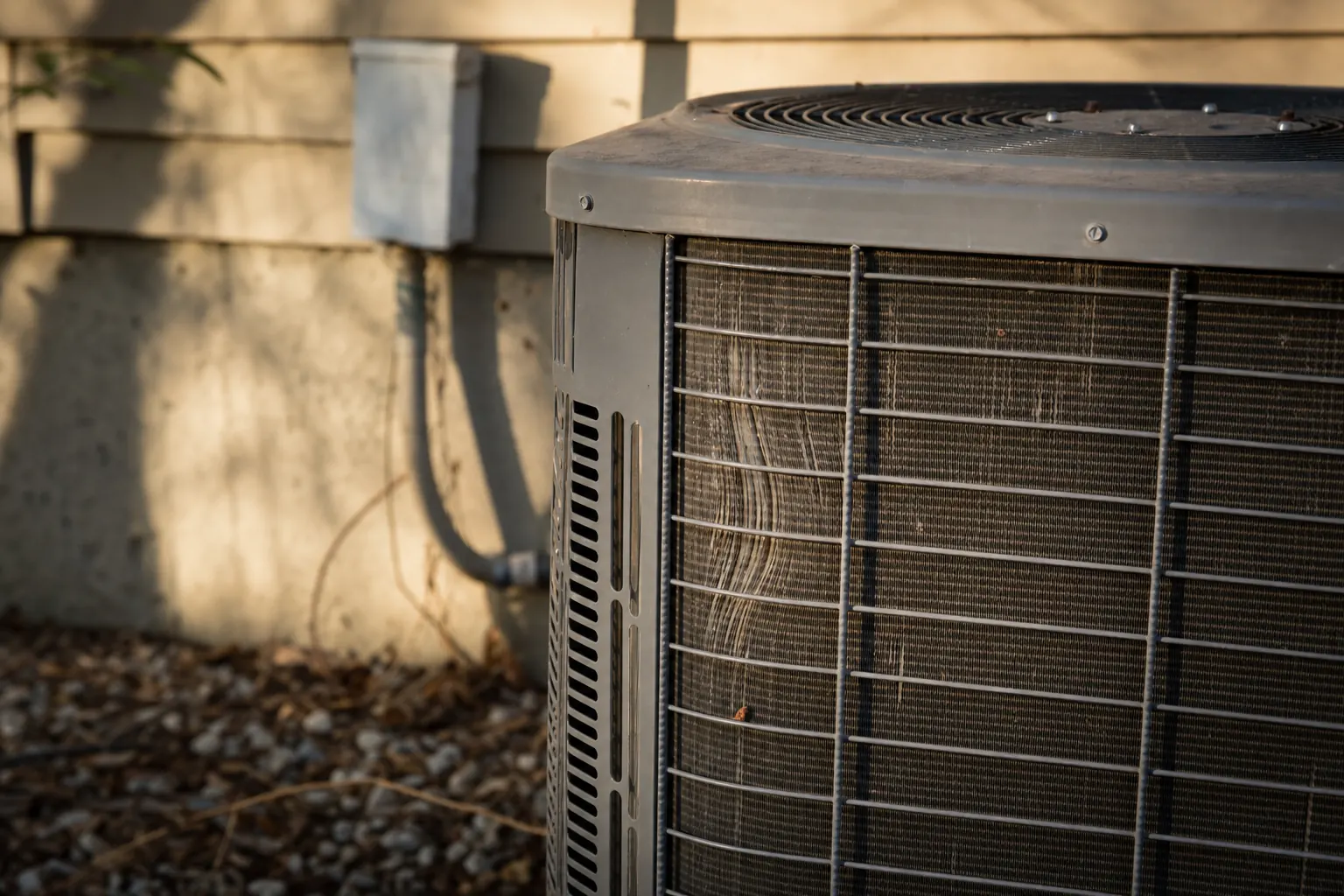
A light metallic rattle from the outdoor unit usually means a panel, top grille, or fan guard has loosened from vibration. Left alone, the vibration can worsen and start damaging the cabinet or fan assembly.
Safe next action
Turn the system off before visually checking the exterior
What you notice
Worn condenser or blower fan motor bearings
What it may point to
Scraping, grinding, or a rough roaring sound often points to motor bearings wearing out. That can let the fan blade wobble, eventually striking nearby metal and leading to a no-cooling breakdown.
Safe next action
Stop the system to prevent additional damage
What you notice
Compressor internal failure or failing compressor mounts
What it may point to
Repeated banging, hard knocking, or heavy clunking can come from a compressor with failing internal parts or broken isolation mounts. This is one of the more expensive AC noises because the compressor is a major sealed-system component.
Safe next action
Turn the heating equipment off and request furnace or boiler service
What you notice
Electrical contactor buzzing or weak capacitor preventing startup
What it may point to
A steady buzz or hum when the unit tries to start but does not get going often means the contactor is chattering or the capacitor is too weak to help the motor/compressor start. Continued attempts can overheat the motor or compressor.
Safe next action
Do not open panels; arrange professional testing
Safe things to check
- Confirm the thermostat mode and setpoint
- Inspect the air filter and replace it if visibly dirty
- Make sure visible supply and return vents are open
Do not attempt
- Do not handle, vent, or add refrigerant
- Do not open sealed electrical or equipment panels
- Do not bypass a safety switch or force repeated restarts
A few quick questions
Refine the best next step
Question 1 of 3
- 1How much of the home is affected?
- 2What is the system doing right now?
- 3When did this begin?
What this symptom can mean
Use the evidence you can observe
What this noise usually tells you
Noise is one of the few AC symptoms that can point to a specific moving part. A light rattle from an accessible outdoor panel is commonly cabinet vibration. Grinding or scraping usually means something rotating—most often a fan motor or blade—is no longer running true. Repeated banging is more serious and often involves the compressor or a fan assembly striking metal. A buzz or hum without a clean startup usually means the unit is energized but a motor or compressor is not getting the help it needs to start.
How to tell the common sounds apart
Start with where and when the sound happens. If you only hear a light rattle at the outdoor cabinet while the system runs, a loose panel or guard is more likely than an internal compressor problem. If the sound is a harsh scrape, grind, or repeated metal-on-metal noise, suspect a fan motor bearing or misaligned blade, especially if the noise gets louder as the unit runs. If the noise is a low electrical hum and the outdoor unit does not fully start, a weak capacitor or chattering contactor is more likely. If you hear a boom at ignition on a gas/electric package unit, treat that as a gas-combustion safety issue, not a normal AC nuisance noise.
The difference between banging and rattling matters. Rattling is often lighter, faster, and panel-like. Banging is heavier and more rhythmic, and homeowners often describe it as a thud, knock, or hammering sound coming from the compressor section. Grinding is usually continuous while a motor is trying to spin. Buzzing is often present right at startup and may stop when the unit gives up trying.
What happens on a service visit for AC noise
A technician will usually listen for the sound during startup and while the system is running, then isolate whether it is coming from the indoor blower, outdoor fan, compressor compartment, contactor, or cabinet. They may check fan blade play, motor amperage, capacitor readings, contactor condition, compressor sound and vibration, and whether the cabinet or top grille is loose. If the sound is tied to a gas package unit igniting, combustion components and ignition timing are checked instead of treating it like a standard cooling-only noise complaint.
What affects repair cost
Cost depends heavily on which sound you have. Tightening panels or replacing missing hardware is usually a minor repair, while replacing a capacitor or contactor is still relatively modest compared with motor or compressor work. Fan motor repairs commonly fall in the mid-hundreds, while compressor-related repairs can run into the high hundreds or several thousands depending on warranty status, refrigerant type, and whether the entire outdoor unit is a better value. Typical 2025-2026 US ranges are about $150-$400 for loose hardware or minor vibration fixes, $200-$700 for many capacitor/contactor repairs, $450-$1,200 for many fan motor replacements, and $1,800-$4,500+ for major compressor-related work.
Cost ranges are estimates developed from standardized project scopes and reviewed pricing inputs. Government labor and regional cost data are used where applicable. See our Pricing Methodology for the exact sources, calculations, and review date. Actual prices vary by property, scope, materials or equipment, location, and provider.
Age and run time matter too. A 12- to 15-year-old system with a loud compressor knock is often evaluated differently than a newer system with one loose panel screw, because a major sealed-system repair on an older unit may not be cost-effective. The exact sound, its location, and whether cooling has also dropped are the details that most change the diagnosis and the price.
When to turn the system off
- Stop if you smell gas, see smoke or sparks, or hear a carbon-monoxide alarm
- Stop if water reaches powered equipment or a breaker trips again
- Stop if loud grinding, booming, or heavy ice appears
When to call for help
- Call when the symptom continues after the safe checks
- Call promptly when comfort is lost for the whole home
- Describe when it started and any water, ice, noise, odor, alert, or breaker activity
Cost guidance
What could this cost to fix?
Price depends on the actual cause, equipment, access, and local labor. Compare the national ranges in the AC Repair Cost guide, or check service availability for your system.
Find local help for AC Repair
We will keep this problem and recommended service selected while you answer a few quick availability questions.
Browse HVAC help by stateFrequently asked questions
AC is making a strange or loud noise: common questions
Why does my AC make a loud banging noise when it starts?
Is a rattling outdoor AC panel something I can ignore for a while?
What does it mean when my AC just hums or buzzes but the fan does not really get going?
How can I tell if the noise is coming from the indoor unit or the outside condenser?
How long does an AC noise diagnosis usually take?
Sources and review standard
Last updated July 18, 2026. Last reviewed July 18, 2026. HVAC Rescue reviews problem pages for homeowner-safe boundaries, service routing, source quality, and unsupported claims. No named technical reviewer is shown unless a qualified HVAC reviewer has completed that review.