Quick summary
Match what you notice to a safe next step
These observations can narrow the starting service, but they do not confirm which part has failed.
What you notice
Disconnected, crushed, or torn flexible duct
What it may point to
Conditioned air is dumping into an attic, crawlspace, or wall cavity instead of reaching the rooms, which often causes weak airflow at vents and can create sweating, staining, or moisture nearby.
Safe next action
Turn the system off if water is spreading and note the source
What you notice
Leaking duct joints, seams, or register boots
What it may point to
Air is escaping at connections around the air handler, trunk line, or ceiling boots, so some rooms feel under-supplied and humid air can be pulled into the duct system where it does not belong.
Safe next action
Leave cooling off and inspect the filter
What you notice
Missing or damaged duct insulation in an unconditioned area
What it may point to
Cold duct surfaces are exposed to warm humid air, so water can form on the outside of the duct and drip onto framing, ceilings, or around the equipment even though the duct itself is not carrying liquid water.
Safe next action
Do not touch wet equipment; shut power off only if safely accessible
What you notice
Blocked condensate drain, cracked drain pan, or poor trap/slope near the air handler
What it may point to
The water you see may be normal cooling condensate backing up and spilling near the unit, especially if the system is also icing from reduced airflow or a separate duct restriction.
Safe next action
Protect the area from damage and request an inspection
Safe things to check
- Confirm the thermostat mode and setpoint
- Inspect the air filter and replace it if visibly dirty
- Make sure visible supply and return vents are open
Do not attempt
- Do not open sealed electrical or equipment panels
- Do not bypass a safety switch or force repeated restarts
A few quick questions
Refine the best next step
Question 1 of 3
- 1How much of the home is affected?
- 2What is the system doing right now?
- 3When did this begin?
What this symptom can mean
Use the evidence you can observe
What leaking ductwork usually means
When homeowners say they see signs of leaking ductwork, they are often noticing one of two very specific things: air leaking out of the duct system, or water forming around ducts because cold air is escaping where it should not. A torn or unsealed duct does not usually release water from inside the duct like a plumbing leak. Instead, it wastes airflow, changes pressure in the house, and can create condensation on duct surfaces, at ceiling boots, or around the air handler.
How to tell the likely causes apart
Weak airflow at one or more vents along with higher utility bills points more toward a disconnected, crushed, or torn duct run. If the water is only near the indoor unit or drain connection, especially during cooling season, a clogged condensate line or cracked pan is more likely than the ducts themselves. If you see ceiling stains around vent openings, damp insulation in the attic, or moisture appearing in several rooms, leaking boots or uninsulated ducts in a humid space are common causes. If the evaporator is icing and some rooms are barely getting air, a return leak or major supply restriction can be part of the same problem.
What you can safely look for
You can note where the moisture first appears and whether it happens only when cooling is running. Water around a floor drain or condensate pipe usually starts at the air handler area, while damp drywall around vent grilles often points to boot leakage or missing insulation above the ceiling. If water is touching wiring, the furnace cabinet, or any powered accessory such as a condensate pump, leave the system off and arrange service soon rather than trying to trace the leak yourself.
What a service visit usually includes
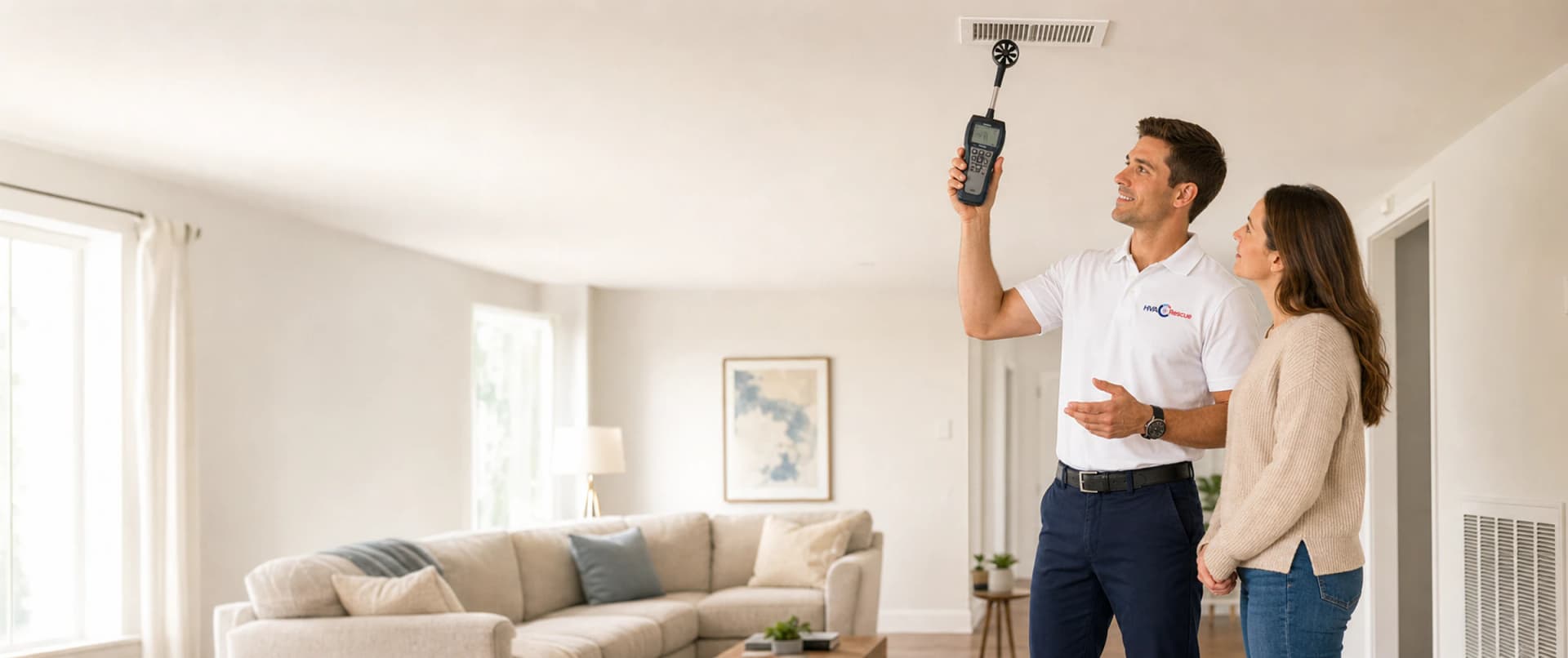
A technician typically checks static pressure and airflow, inspects accessible supply and return ducts, looks for separated flex duct, tests for leakage at joints and boots, and verifies whether the moisture source is condensation or condensate overflow. They may also inspect the evaporator coil, drain pan, trap, and condensate line because drain problems are commonly mistaken for leaking ducts. In attics and crawlspaces, they will usually look closely at insulation condition, support straps, kinks, and any sections that have pulled loose from collars or plenums.
What affects repair cost
Cost depends on whether the fix is simple sealing at a few joints, reconnecting one loose flex run, replacing damaged insulated duct sections, or opening finished surfaces to reach hidden boots or returns. Minor sealing or an accessible reconnection is a different standardized scope from replacing several damaged runs or correcting poorly installed attic ductwork; neither should be priced as duct cleaning. If the real source is a condensate issue, drain clearing or pan-related repairs are separate line items, and water damage to ceilings or walls is usually outside HVAC scope.
When to turn the system off
- Stop if you smell gas, see smoke or sparks, or hear a carbon-monoxide alarm
- Stop if water reaches powered equipment or a breaker trips again
- Stop if loud grinding, booming, or heavy ice appears
When to call for help
- Call when the symptom continues after the safe checks
- Call promptly when comfort is lost for the whole home
- Describe when it started and any water, ice, noise, odor, alert, or breaker activity
Cost guidance
What could this cost to fix?
Price depends on the actual cause, equipment, access, and local labor. Compare the national ranges in the Duct Repair Cost guide, or check service availability for your system.
Find local help for Ductwork Repair
We will keep this problem and recommended service selected while you answer a few quick availability questions.
Browse HVAC help by stateFrequently asked questions
Signs of leaking ductwork: common questions
Why is there water near my HVAC unit if the issue is leaking ductwork?
Can leaky ductwork cause ice on the indoor coil?
Why do I have ceiling stains around some vents but not others?
How long does duct leak testing and repair usually take?
Will sealing duct leaks lower humidity in the house?
Sources and review standard
Last updated July 18, 2026. Last reviewed July 18, 2026. HVAC Rescue reviews problem pages for homeowner-safe boundaries, service routing, source quality, and unsupported claims. No named technical reviewer is shown unless a qualified HVAC reviewer has completed that review.