Quick summary
Match what you notice to a safe next step
These observations can narrow the starting service, but they do not confirm which part has failed.
What you notice
Overloaded or incorrect air filter
What it may point to
A filter that is packed with dust, collapsed, or too loose in its slot can let particles bypass the filter and get carried into supply vents, so you keep seeing fresh dust shortly after the system starts.
Safe next action
Check the filter and look for visible moisture without opening equipment
What you notice
Dust buildup inside supply ducts and registers
What it may point to
When dust has collected inside branch ducts or around vent boots, normal blower airflow can shake it loose and send visible puffs or fine residue into the room, especially at startup.
Safe next action
Turn the system off and request prompt service
What you notice
Leaky return ductwork or return plenum
What it may point to
Open seams or disconnected sections on the suction side of the system can pull insulation fibers, attic dust, crawlspace dirt, or basement debris into the HVAC stream and spread it through multiple rooms.
Safe next action
Stop the furnace or boiler and arrange qualified inspection
What you notice
Dirty blower compartment or evaporator coil area
What it may point to
If dust has built up inside the air handler, the blower wheel can re-aerosolize it and distribute it through the vents, often along with reduced airflow and a stale smell.
Safe next action
Check filter condition and whether ventilation controls are enabled
Safe things to check
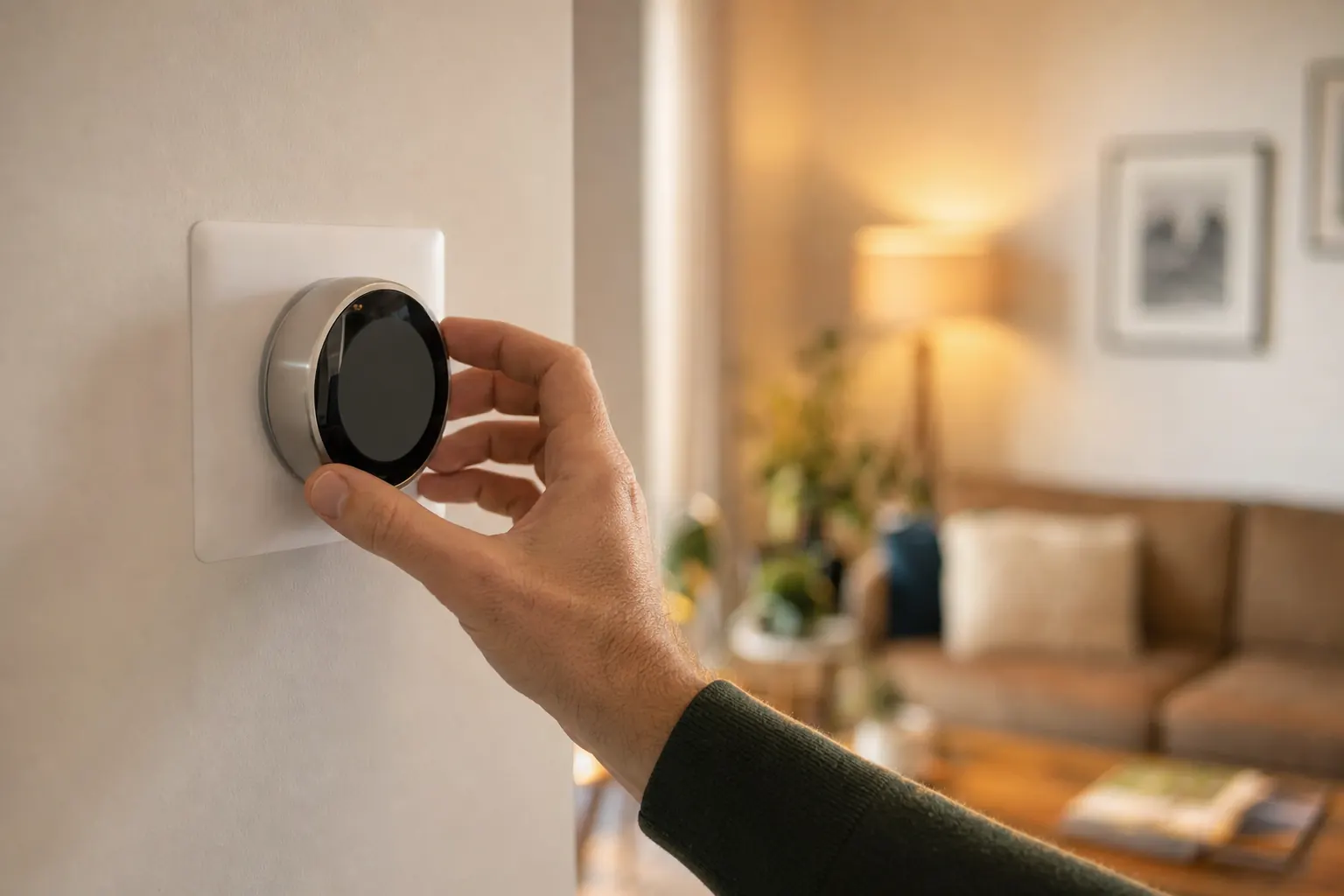
- Confirm the thermostat mode and setpoint
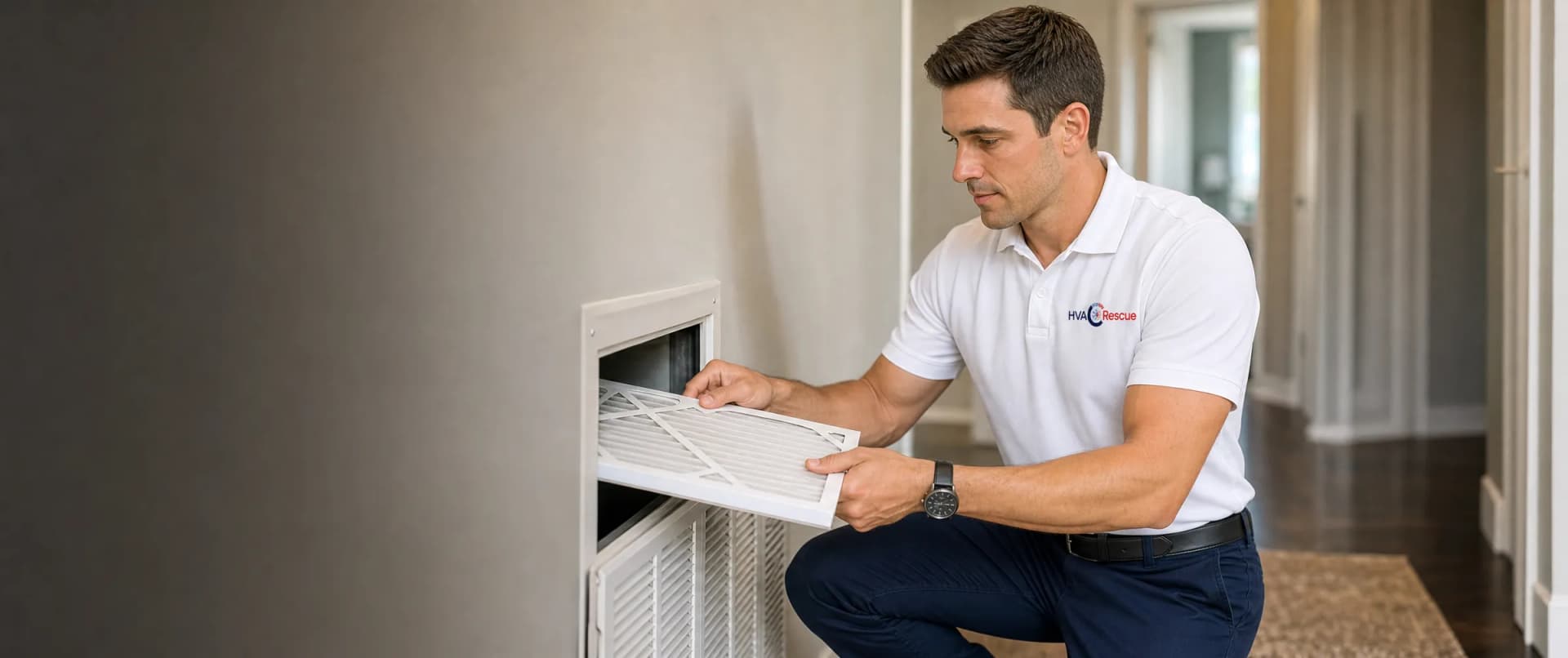
- Inspect the air filter and replace it if visibly dirty
- Make sure visible supply and return vents are open
Do not attempt
- Do not open sealed electrical or equipment panels
- Do not bypass a safety switch or force repeated restarts
A few quick questions
Refine the best next step
Question 1 of 3
- 1How much of the home is affected?
- 2What is the system doing right now?
- 3When did this begin?
What this symptom can mean
Use the evidence you can observe
What dust coming from vents usually means
Visible dust blowing out of supply registers is different from normal household dust settling on furniture. It usually means particles are getting into the air stream somewhere between the return grille, the filter slot, the blower cabinet, and the supply ducts. If the dust appears mainly when the system first turns on, that often points to dust resting in ducts or registers; if it happens every cycle and in several rooms, bypass at the filter or return-side leakage is more likely.
Clues that help tell the likely causes apart
Start with what the dust looks and smells like. Light gray lint-like dust usually comes from ordinary household debris, overloaded filtration, or dirty ducts. A musty or damp odor with the dust can mean dust is collecting on a damp evaporator coil or inside duct sections where moisture has been present. If the odor smells electrical or like melting plastic, stop using the system and arrange service right away, because dust may be baking on overheating electrical parts or a failing blower motor. If you see soot or black residue near heating equipment, treat that as combustion-related rather than simple dust buildup.
The pattern around the house also matters. Dust from one or two vents tends to point to local buildup in that branch run or register boot. Dust from many vents at once suggests a central source such as the filter rack, blower compartment, return plenum, or a return duct leak pulling dirt from an attic, crawlspace, garage-adjacent space, or unfinished basement.
What a technician usually checks on a service visit
A technician will typically inspect the filter size, fit, and condition first, then open the air handler or furnace cabinet to check the blower wheel, coil area, and any dust trails that show bypass. They may inspect the return plenum and accessible duct seams for gaps, disconnected sections, insulation shedding, or signs that the system is pulling in unconditioned air. If black residue is present, they may also examine the furnace burner area and venting for soot, because that is a different problem from routine dust.
What affects the repair cost
Costs depend on where the dust is entering the system and how much disassembly is needed to confirm it. A basic maintenance or diagnostic visit is often in the roughly $100 to $250 range, while sealing accessible return leaks or correcting a loose filter rack can add a few hundred dollars. Blower cleaning, coil cleaning, or more involved cabinet cleanup commonly falls in the low hundreds, while furnace soot diagnosis or duct repairs in tight attic or crawlspace spaces can raise labor noticeably. If the system has an electrical burning smell or soot around the furnace, the cost depends on the failed component and should not be guessed until the equipment is inspected.
Cost ranges are estimates developed from standardized project scopes and reviewed pricing inputs. Government labor and regional cost data are used where applicable. See our Pricing Methodology for the exact sources, calculations, and review date. Actual prices vary by property, scope, materials or equipment, location, and provider.
When to turn the system off
- Stop if you smell gas, see smoke or sparks, or hear a carbon-monoxide alarm
- Stop if water reaches powered equipment or a breaker trips again
- Stop if loud grinding, booming, or heavy ice appears
When to call for help
- Call when the symptom continues after the safe checks
- Call promptly when comfort is lost for the whole home
- Describe when it started and any water, ice, noise, odor, alert, or breaker activity
Cost guidance
What could this cost to fix?
Price depends on the actual cause, equipment, access, and local labor. Compare the national ranges in the HVAC Tune-Up Cost guide, or check service availability for your system.
Find local help for HVAC Maintenance
We will keep this problem and recommended service selected while you answer a few quick availability questions.
Browse HVAC help by stateFrequently asked questions
Excessive dust is coming from vents: common questions
Why do I get a puff of dust from vents when the heat or AC first starts?
Is black dust from air vents normal, or is it soot?
How can I tell if my vents are blowing attic or crawlspace dust into the house?
Will duct cleaning fix dust coming out of my vents?
How quickly should dust from vents improve after I replace the filter?
Sources and review standard
Last updated July 18, 2026. Last reviewed July 18, 2026. HVAC Rescue reviews problem pages for homeowner-safe boundaries, service routing, source quality, and unsupported claims. No named technical reviewer is shown unless a qualified HVAC reviewer has completed that review.