Quick summary
Match what you notice to a safe next step
These observations can narrow the starting service, but they do not confirm which part has failed.
What you notice
The heat pump is underperforming, so the backup electric heat is taking over
What it may point to
If the house warms only a little even though the system runs for long stretches, the outdoor heat pump may not be moving enough heat and the more expensive auxiliary strips are being used to make up the difference.
Safe next action
Check the setpoint and note outdoor conditions
What you notice
A defrost problem or outdoor-unit fault is forcing repeated auxiliary heat operation
What it may point to
If constant AUX heat comes with frost, ice, or water around the outdoor unit, the system may be stuck in or between defrost cycles, which makes the backup heat run more than it should.
Safe next action
Inspect the filter and arrange service
What you notice
The thermostat is set up incorrectly or is calling for auxiliary heat too soon
What it may point to
If AUX appears quickly after a temperature setback or after changing thermostat settings, the thermostat may be bringing on backup heat before the heat pump has had a fair chance to recover on its own.
Safe next action
Confirm the fan is set to Auto
What you notice
A heat-strip sequencer or relay is stuck closed
What it may point to
If the supply air feels unusually hot and the indoor unit seems to keep producing strong heat even after the heat pump cycle should have ended, the electric resistance heat may be staying energized when it should drop out.
Safe next action
Turn the system off and request service
Safe things to check
- Confirm the thermostat mode and setpoint
- Inspect the air filter and replace it if visibly dirty
- Make sure visible supply and return vents are open
Do not attempt
- Do not handle, vent, or add refrigerant
- Do not open sealed electrical or equipment panels
- Do not bypass a safety switch or force repeated restarts
A few quick questions
Refine the best next step
Question 1 of 3
- 1How much of the home is affected?
- 2What is the system doing right now?
- 3When did this begin?
What this symptom can mean
Use the evidence you can observe
What this symptom usually means
When auxiliary heat keeps running, the system is telling you the heat pump alone is not meeting demand or the controls are failing to release the backup heat. On a heat pump, AUX heat is normally a short-term helper during very cold weather, defrost, or recovery after a big thermostat setback. If it stays on for long periods, your home often heats slowly, electric usage climbs, and the equipment may be compensating for a specific fault rather than simply working harder.
What to notice before service
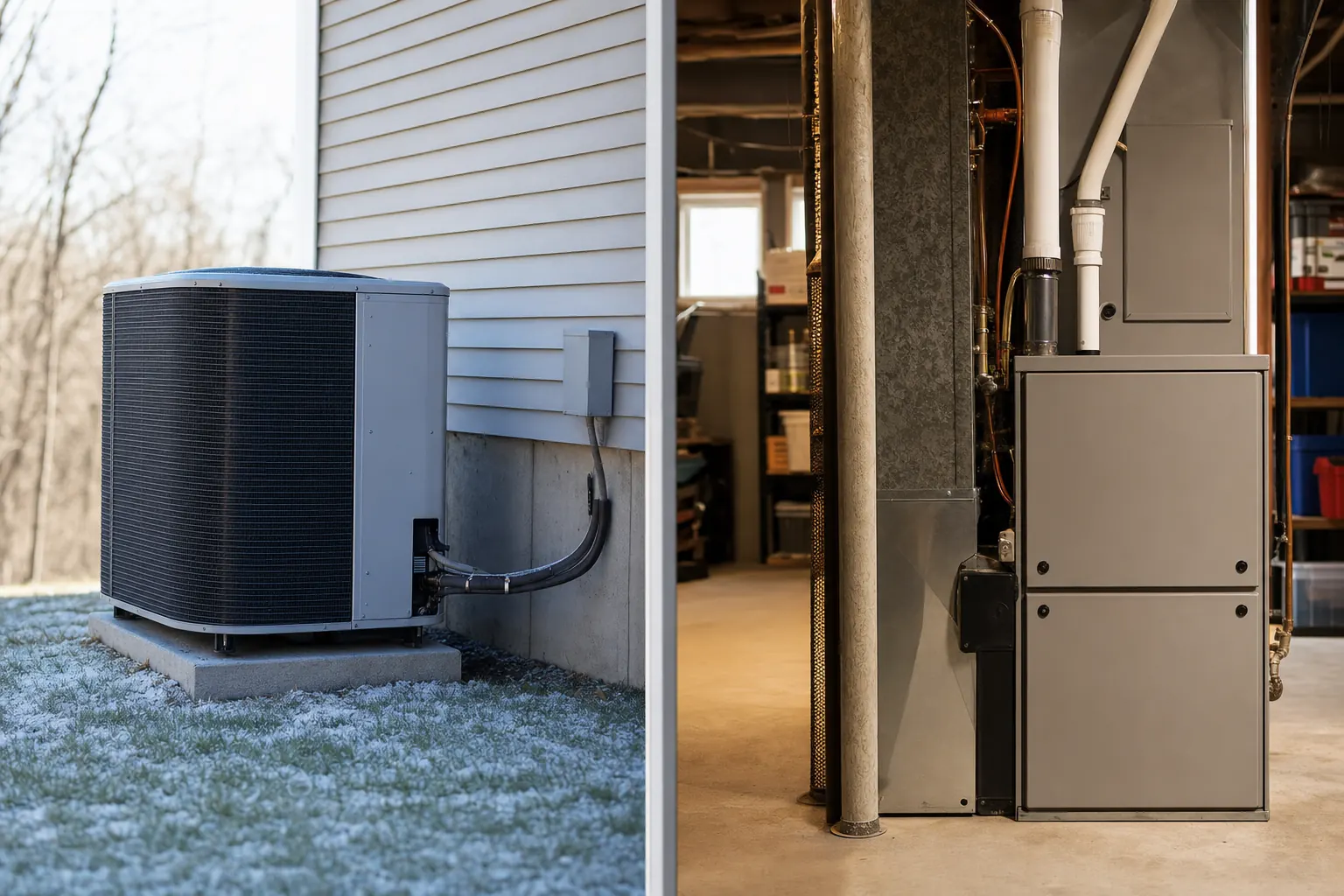
Look at when AUX heat appears and what the system is doing at the same time. If it comes on mainly during early-morning recovery after you raise the thermostat several degrees, that points more toward thermostat staging or aggressive recovery settings. If AUX stays on even in milder weather and the house still struggles to warm, the heat pump itself is likely underperforming. If you also see frost or sheets of ice on the outdoor coil, hear the outdoor unit stop and restart oddly, or notice water around the base after long run times, a defrost or outdoor-unit problem moves higher on the list.
The feel of the air can also help separate causes. Air from auxiliary electric heat is usually noticeably hotter at the registers than normal heat-pump air. If the vents keep blowing very hot air long after the thermostat should be satisfied, a stuck sequencer or relay can keep the strip heat energized too long. If the air is only lukewarm and the house barely gains temperature, that points more toward low heat-pump capacity from refrigerant, airflow, or outdoor-unit trouble rather than a heat strip stuck on.
What a technician usually checks
A service visit for constant auxiliary heat is more specific than a general no-heat call. The technician will verify whether the thermostat is calling for Y, O/B, and W/AUX in the correct sequence, check whether the system is accidentally in Emergency Heat, measure temperature rise with and without strip heat, inspect the outdoor coil and defrost controls, and test relays or sequencers that switch the electric heat banks on and off. If capacity is low, they may also check refrigerant pressures and other sealed-system performance readings, which is technician-only work.
What affects repair cost
Cost depends on whether the problem is control-related, electric-heat related, or a true heat-pump capacity problem. Thermostat reprogramming, low-voltage control diagnosis, or replacing a sequencer/relay is often less expensive than correcting a defrost board failure or sealed-system issue. Typical 2025-2026 U.S. repair ranges are roughly $150-$450 for many thermostat/control fixes, about $200-$700 for relays, contactors, or sequencers tied to auxiliary heat, and around $600-$2,500+ if the underlying cause is defrost controls, refrigerant leaks, or other heat-pump mechanical repairs. Final price varies with equipment type, access, parts availability, and how long the backup heat has been masking the real problem.
Cost ranges are estimates developed from standardized project scopes and reviewed pricing inputs. Government labor and regional cost data are used where applicable. See our Pricing Methodology for the exact sources, calculations, and review date. Actual prices vary by property, scope, materials or equipment, location, and provider.
Until service, avoid large thermostat setbacks that force the system into long recovery periods, and make sure the thermostat is not set to Emergency Heat unless a contractor specifically told you to use that mode. If you notice scorched smells, discoloration near the air handler, breakers tripping, or the cabinet becoming abnormally hot, stop using the system and arrange service promptly, because those signs suggest the electric backup heat components themselves may be failing.
When to turn the system off
- Stop if you smell gas, see smoke or sparks, or hear a carbon-monoxide alarm
- Stop if water reaches powered equipment or a breaker trips again
- Stop if loud grinding, booming, or heavy ice appears
When to call for help
- Call when the symptom continues after the safe checks
- Call promptly when comfort is lost for the whole home
- Describe when it started and any water, ice, noise, odor, alert, or breaker activity
Cost guidance
What could this cost to fix?
Price depends on the actual cause, equipment, access, and local labor. Compare the national ranges in the HVAC Repair Cost guide, or check service availability for your system.
Find local help for Heat Pump Repair
We will keep this problem and recommended service selected while you answer a few quick availability questions.
Browse HVAC help by stateFrequently asked questions
Auxiliary heat keeps running: common questions
Why does my AUX heat stay on even when it is not that cold outside?
Is it normal for auxiliary heat to run all night?
What is the difference between Auxiliary Heat and Emergency Heat?
Can a thermostat cause auxiliary heat to run constantly?
Why does my heat pump run and run, but the house only warms a little while AUX heat is on?
Sources and review standard
Last updated July 18, 2026. Last reviewed July 18, 2026. HVAC Rescue reviews problem pages for homeowner-safe boundaries, service routing, source quality, and unsupported claims. No named technical reviewer is shown unless a qualified HVAC reviewer has completed that review.