
Reviewed July 22, 2026
HVAC Rescue Editorial Team
Editorial StandardsHeat pump repair for year-round comfort in Pennsylvania
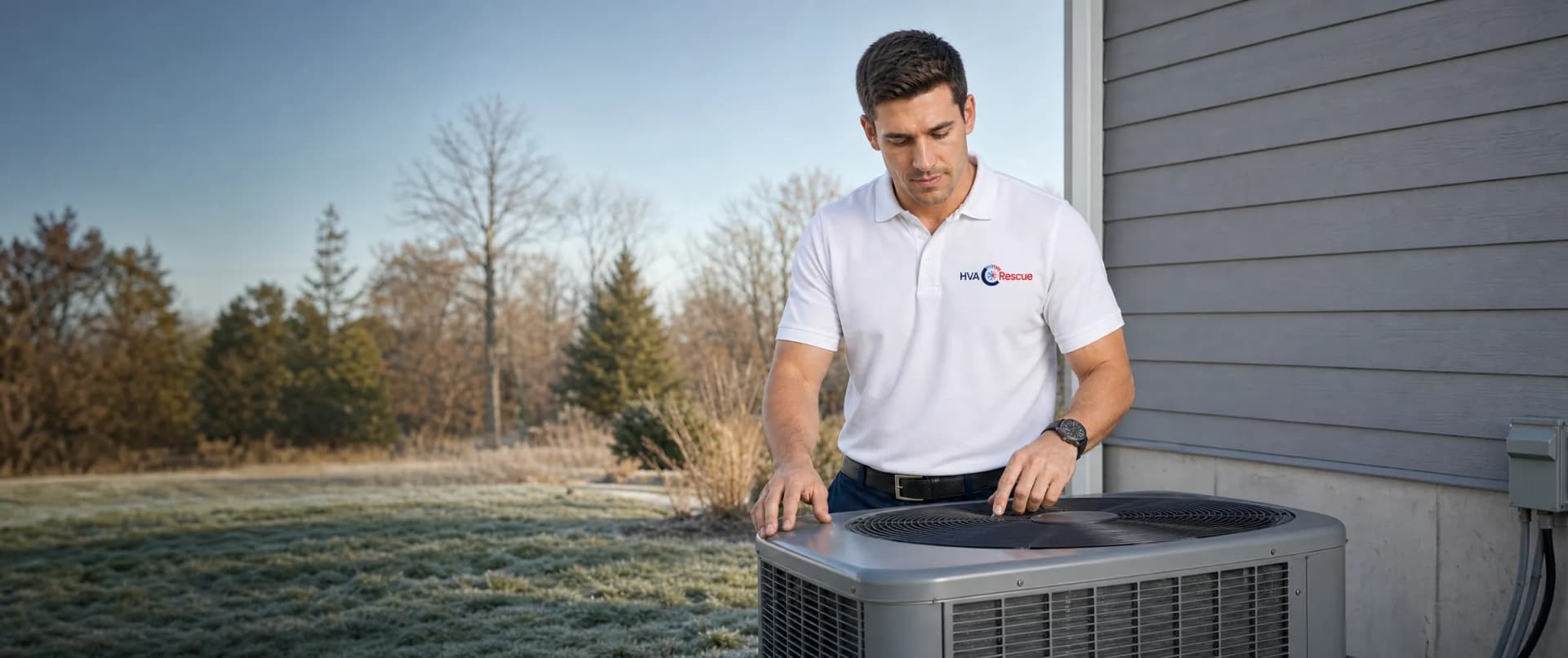
Heat pump repair is the right starting point when the same system that cools your home in summer also heats it in winter, and one or both modes stop working the way they should. Common examples are cool air from the vents in heat mode beyond a normal defrost cycle, weak or missing cooling in summer, auxiliary heat that seems to run all the time, or an outdoor unit that is iced over, humming loudly, or not running at all.
This page is for diagnosing a fault in an existing heat pump, not installing a new one or replacing the whole system. It is also different from furnace or boiler repair because the outdoor unit matters during heating season on a heat pump. If the equipment used to work and now has a clear symptom tied to heating, cooling, defrost, or auxiliary heat behavior, repair is the most useful next step.
Heat Pump Repair in Pennsylvania: what’s different here
Pennsylvania's humid continental climate puts real pressure on heat pumps because they have to manage both cold-season heating and warm-season cooling across a wide range of conditions. The northwest near Lake Erie and the mountainous areas tend to see harsher winter demands, while the urban and suburban corridors still need dependable cooling when summer humidity settles in.
In Pennsylvania, heat pumps are often called out for not heating well during cold snaps, struggling to switch modes, or relying too heavily on auxiliary heat when outdoor conditions get rough. Older homes, row homes, and multi-level layouts can also reveal uneven temperatures, while long seasonal swings can wear down outdoor components and make performance less consistent.
For Pennsylvania heat pump repair, it helps to address warning signs early rather than waiting for the first major cold snap or humid stretch to expose a bigger failure.
- Cold winters make reliable heat pump performance especially important in Pennsylvania.
- Humidity in warmer months can still expose cooling and moisture-control problems.
- Older homes and multi-level layouts often show uneven heating first.
- Outdoor unit issues and auxiliary heat strain are common repair triggers.
Heat Pump Repair decisions for Pennsylvania homes
Determine whether the heat pump fault is in heating, cooling, defrost, reversing, airflow, controls, refrigerant performance, or backup heat. For Pennsylvania, the relevant state focus is design temperature, capacity retention, backup heat, incentives, low-temperature capacity defrost and backup-heat context. Repair a measured fault when the matched system remains viable; compare replacement when major components, repeated failures, low-temperature performance, or compatibility make repair a poor value.
Repair or replace your system?
Repair often makes sense when
A targeted repair often makes sense when the system is relatively young, the fault is isolated, and the rest of the unit is in good shape. Many heat pump issues come down to a single component, and replacing it can restore reliable heating and cooling without the cost of a full system.
- The unit is within its expected service life and otherwise running well
- The problem is a single component such as a capacitor, contactor, or sensor
- A reversing valve or defrost control fault that can be isolated and corrected
- A refrigerant or electrical issue caught early before it damages other parts
- Airflow problems traced to filters, a blower motor, or a clogged drain
- The system still uses a refrigerant that remains readily serviceable
Consider replacement when
Replacement tends to enter the conversation when the heat pump is older, has a major or repeat failure, or relies on a refrigerant that is being phased down. A professional can help you weigh the cost of a big repair against a newer, more efficient system. These are factors to discuss with a pro, not automatic rules.
- The heat pump is near or past the end of its typical service life
- The compressor has failed, which is often a major and costly repair
- Repairs are becoming frequent and the running total keeps climbing
- The unit uses an older refrigerant that is increasingly hard to source
- Efficiency has dropped and energy bills keep rising season over season
- An upgrade may qualify for state or utility heat pump rebates, including income-qualified programs
How much does heat pump repair cost in Pennsylvania?
Heat pump repair scope in Pennsylvania varies with the failed component, system configuration, diagnosis, access, refrigerant work, controls, and electrical testing. The factors below define the work.
- Which component failed and whether it is electrical, mechanical, or refrigerant-related
- The diagnostic time needed to trace an intermittent or hidden fault
- Whether the reversing valve or defrost control is involved
- The type and current availability of the system's refrigerant
- Parts availability for the specific brand, model, and age of the unit
- Accessibility of the outdoor unit, air handler, and electrical connections
- Whether the air handler, blower, or backup heat strips are affected
- The age of the system and how well it has been maintained
- Whether airflow or ductwork issues are contributing to the symptoms
- Local labor rates and the provider you connect with
- Whether emergency or after-hours service is requested
- Any code-required updates triggered by the repair
| HVAC Repair Cost | Typical range |
|---|---|
| Minor repair (capacitor, filter, simple part)Small, common fixes. | $175 – $650 |
| Moderate repair (motor, sensor, control board)Mid-range components and labor. | $450 – $1,675 |
| Major repair (compressor, heat exchanger work)Significant parts and labor; sometimes points toward replacement. | $1,875 – $6,675 |
Cost ranges are estimates developed from standardized project scopes and reviewed pricing inputs. Government labor and regional cost data are used where applicable. See our Pricing Methodology for the exact sources, calculations, and review date. Actual prices vary by property, scope, materials or equipment, location, and provider.
See the full hvac repair cost guide for the complete breakdown, then call to get a real quote for your Pennsylvania home.
Get heat pump repair help in Pennsylvania
One quick call connects you with HVAC pros who service your area. No pressure, no obligation.
Pennsylvania climate & seasonal demand
Winters are cold and snowy, especially in the mountains and northwest, making reliable heating essential. Furnaces and boilers are common, and seasonal maintenance helps reduce breakdowns.
Summers are warm and humid, so cooling and moisture control both matter in the warm months. The cooling season is meaningful though shorter than in the South.
Pennsylvania has a humid continental climate with cold, snowy winters and warm, humid summers. The mountainous areas and the northwest near Lake Erie see colder, snowier conditions.
Winter is the biggest stress test for heat pump repair in Pennsylvania, especially when snow, wind, and prolonged cold push systems harder than usual. Summer still matters too, because warm, humid weather can expose cooling and moisture-control issues even if the cooling season is shorter than in southern states.
Pennsylvania homeowners often use heat pumps as part of a broader comfort strategy that has to work across both heating and cooling seasons. When a system is underperforming, it can affect more than temperature control, since humidity, airflow, and room-to-room balance all matter in older homes and mixed-layout properties.
- Heating systems strained through cold, snowy winters
- Summer humidity adding load to cooling systems
- Older homes with aging boilers or limited ductwork
- No-heat issues during winter cold snaps
- Uneven heating in multi-level or older homes
- Equipment wear from wide seasonal swings
Before you call: what to have ready
If you notice ice buildup, unusual noises, weak airflow, or frequent switching to auxiliary heat, share those details so the provider can better assess the issue. For Heat Pump Repair in Pennsylvania, relate this guidance to the actual equipment, property, and written scope.
Questions to ask before approving work
- Are you licensed and insured for HVAC work in this state?
- Will a technician give a written, itemized estimate before any work starts?
- Is the diagnostic fee waived or credited if I approve the repair?
- For a new system, will you run a Manual J load calculation to size it correctly?
- What parts and labor warranties come with the repair or installation?
- Are your technicians NATE-certified or manufacturer-trained?
- Can you pull the required permits and schedule any needed inspection?
- Do you offer financing or maintenance plans, and what do they cover?
What happens during service
- 1
Tell us what's happening
Describe the symptoms, whether it's a heating or cooling problem, and any sounds or error codes. The more detail you share, the better the match with a pro who services your Pennsylvania area.
- 2
Connect with a heat pump pro
HVAC Rescue connects you with heat pump repair professionals that service your area. Availability may vary by location and provider, so timing is confirmed directly with them.
- 3
On-site diagnosis
A technician inspects the system, checks electrical components, airflow, and the refrigeration cycle, and tests the reversing valve and defrost controls to find the actual cause.
- 4
Clear explanation and options
You get an explanation of what's wrong and your options, including a straight repair-versus-replace discussion when the fault is major or the unit is older.
- 5
The repair
With your approval, the technician completes the repair, handling refrigerant, electrical, and control work safely and to code rather than with guesswork.
- 6
Test and verify
The system is cycled through both heating and cooling, defrost is confirmed, and airflow and temperatures are checked so you know comfort is actually restored.
- 7
Maintenance guidance
You get tips on filters, outdoor unit clearance, and seasonal upkeep to help the heat pump run reliably and reduce the odds of another breakdown.
Heat Pump Repair in Pennsylvania: common questions
Why do Pennsylvania heat pumps struggle during winter?
What heat pump repair issues are common in Philadelphia and Pittsburgh homes?
Can Pennsylvania humidity affect heat pump cooling performance?
Should older Pennsylvania homes handle heat pump repair differently?
Sources and fact-checking
Reviewed July 22, 2026. We favor primary government and standards sources for safety, efficiency, and regulatory claims. These references support the technical and consumer guidance on this page.
- Heat pumpsU.S. Department of EnergyHeat-pump operation, system types, climate considerations, and backup heat.
- Heat pump equipment key product criteriaENERGY STARCurrent cold-climate heat-pump efficiency, capacity-retention, and low-ambient performance criteria.
- Heating and cooling maintenance checklistENERGY STARProfessional tune-up scope, filters, airflow, coils, drains, and safety checks.
- ENERGY STAR heating and cooling guidanceENERGY STAREfficiency, replacement planning, qualified equipment, and contractor questions.