Quick summary
Match what you notice to a safe next step
These observations can narrow the starting service, but they do not confirm which part has failed.
What you notice
Multi-zone mode conflict or branch control lockout
What it may point to
On many ductless systems, one indoor unit calling for heat can prevent another from switching to cool, so the system may be obeying a system-wide mode rule rather than responding to the room you are in.
Safe next action
Note when the change began and whether the system is running
What you notice
Indoor-to-outdoor communication or control board fault
What it may point to
If the heads respond to the remote but the outdoor unit does not change operating mode, the signal path or a control board may not be processing the command correctly.
Safe next action
Compare nearby rooms and keep vents open
What you notice
Reversing valve or reversing-valve coil failure
What it may point to
The unit can run, but the refrigerant flow stays stuck in heating or cooling, so air still comes out at the old temperature even after you select the opposite mode.
Safe next action
Record any code, sound, smell, or weather event
What you notice
Room temperature sensor or coil thermistor reading incorrectly
What it may point to
A sensor that is misreading can make the control board think the room or coil is already at the target condition, which can block or delay a proper changeover.
Safe next action
Check the filter and arrange an evaluation if it persists
Safe things to check
- Clean the user-accessible filter as the owner manual directs
- Confirm the remote mode and setpoint
- Make sure the indoor and outdoor units are not visibly blocked
Do not attempt
- Do not handle, vent, or add refrigerant
- Do not open sealed electrical or equipment panels
- Do not bypass a safety switch or force repeated restarts
A few quick questions
Refine the best next step
Question 1 of 3
- 1How much of the home is affected?
- 2What is the system doing right now?
- 3When did this begin?
What this symptom can mean
Use the evidence you can observe
What this symptom usually points to
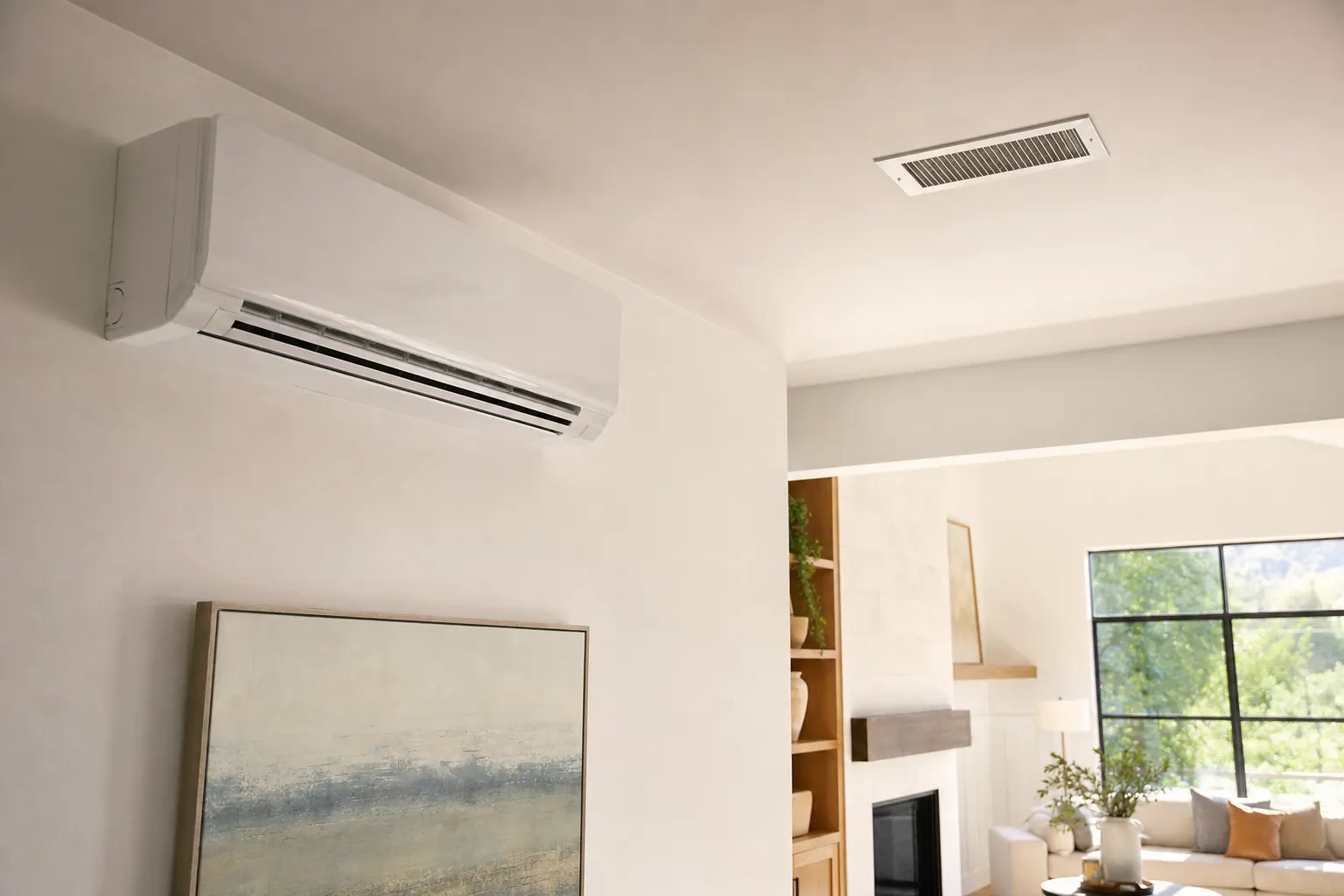
A mini-split that will not switch between heat and cool is different from one that simply is not heating or not cooling. Here, the key clue is that the equipment accepts a mode change on the remote or wall control, yet the delivered air stays in the previous mode, only one mode is available, or one zone refuses to change while another zone keeps running. That pattern points first to changeover controls, communication, or refrigerant-direction components rather than to basic airflow problems.
What you can observe before service
Start with the system layout. If you have more than one indoor head on one outdoor unit, check whether another room is set to the opposite mode; many multi-zone systems cannot heat one zone and cool another at the same time unless they are a special heat-recovery design. If the whole home is affected and every head is stuck in heat or stuck in cool, that leans more toward a reversing valve problem, an outdoor control issue, or a communication fault. If the problem began suddenly after a power outage, battery change, or remote replacement, a control setting or board issue becomes more likely than a mechanical refrigerant fault.
Clues that help separate the likely causes
A normal mini-split often takes 3 to 10 minutes to change modes because the compressor protects itself with built-in delays, so a brief pause is not the same as a failure to switch. If the louvers move, the display changes from heat to cool, and the fan runs, but the air temperature never changes after 10 to 15 minutes, the command is reaching the indoor unit but the refrigerant circuit may not be reversing. If one room will not switch but the others behave normally, a zone board, head control, or sensor issue is more likely than a system-wide valve failure. If the unit switches modes only sometimes, especially during very cold weather, a control lockout or defrost-related issue can be involved.
What a technician usually checks on this call
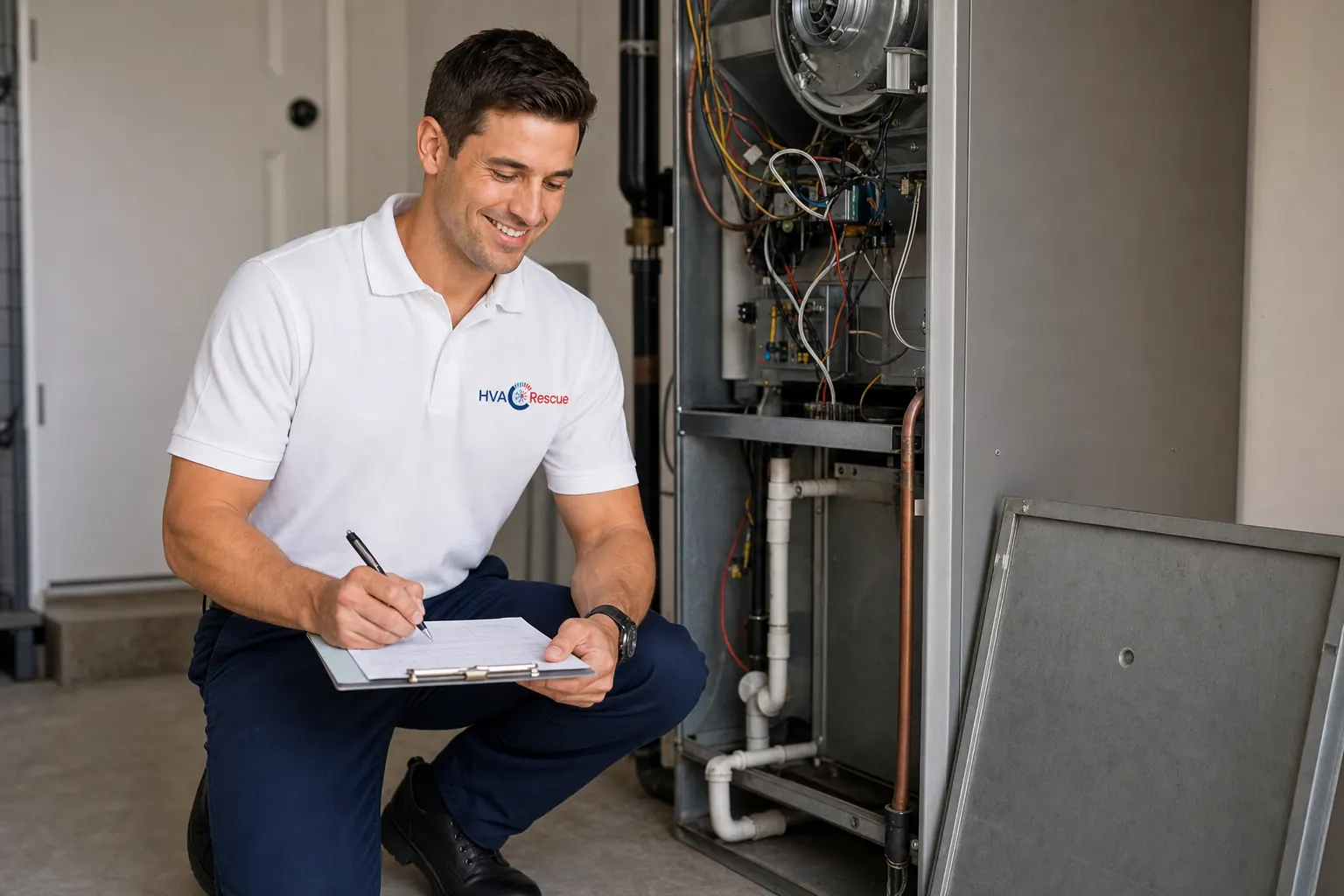
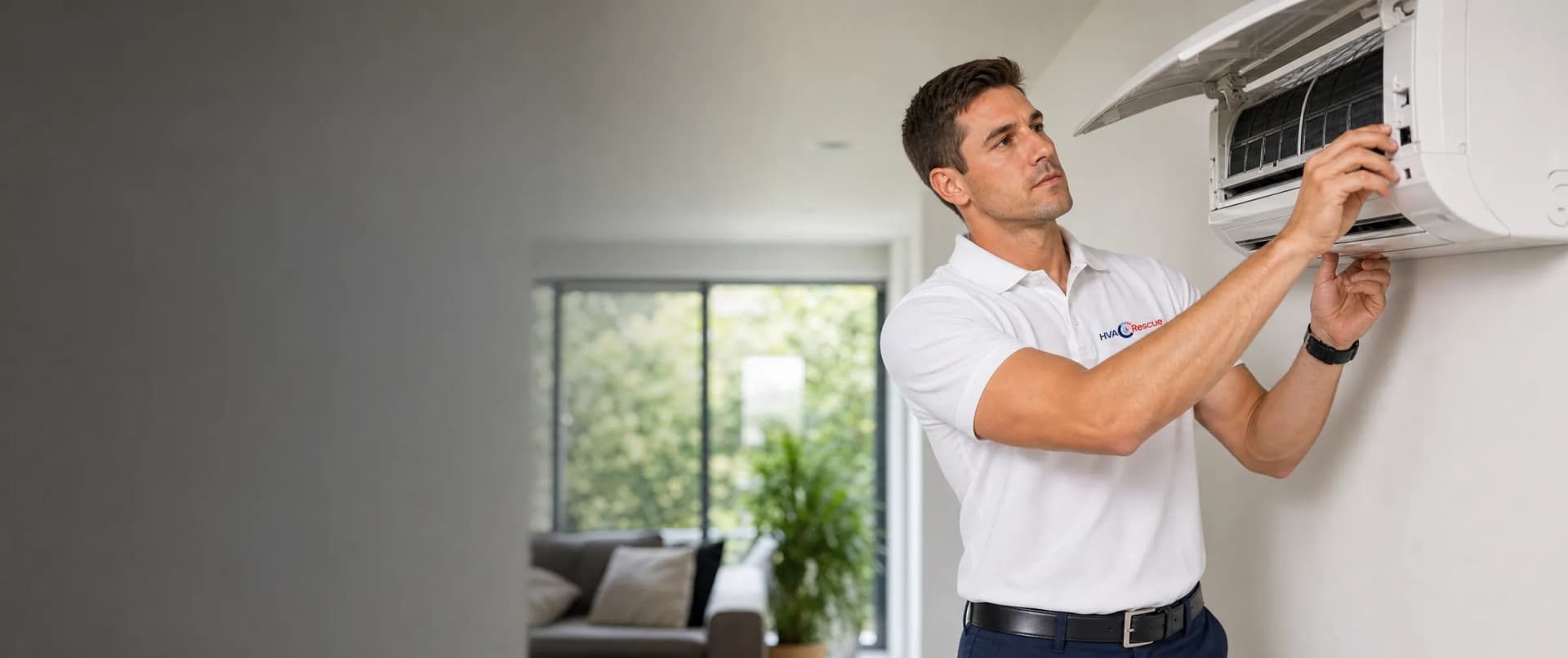
A service visit for this symptom usually starts with confirming the model's changeover logic, because many homeowners are seeing normal multi-zone operating rules rather than a broken part. The technician will verify command signals from the remote or wall controller, compare what each indoor head is requesting, and check for fault codes in the indoor and outdoor boards. If the controls are asking for the correct mode, they will test the reversing-valve coil and associated voltage, inspect communication wiring, and compare temperature-sensor readings to actual room and coil temperatures. On some systems, they may also confirm that branch boxes or selector components are responding properly if the equipment is designed for more complex zoning.
What affects repair cost
Cost depends heavily on whether the problem is a settings or control issue, an accessible electrical part, or a sealed-system component. Typical 2025-2026 U.S. pricing is often about $150 to $400 for diagnosis-only or a minor control correction, roughly $250 to $900 for a sensor, communication wiring repair, or smaller board-related fix, and about $500 to $1,500 or more for a control board or reversing-valve electrical repair depending on brand and access. If the reversing valve itself is mechanically stuck or a sealed-system repair is required, costs can rise significantly because refrigerant recovery, brazing, evacuation, and recharge are specialized labor.
Cost ranges are estimates developed from standardized project scopes and reviewed pricing inputs. Government labor and regional cost data are used where applicable. See our Pricing Methodology for the exact sources, calculations, and review date. Actual prices vary by property, scope, materials or equipment, location, and provider.
Because this symptom can affect one room or the whole home, exact pricing also depends on the number of indoor units, whether the system is single-zone or multi-zone, and whether the failure is intermittent. Brand-specific parts availability can add days or weeks on some ductless systems, especially for proprietary boards and sensors. If the unit is older and the repair involves major sealed-system work, the contractor may also discuss whether replacement makes more sense than repairing a mode-change failure.
When to turn the system off
- Stop if you smell gas, see smoke or sparks, or hear a carbon-monoxide alarm
- Stop if water reaches powered equipment or a breaker trips again
- Stop if loud grinding, booming, or heavy ice appears
When to call for help
- Call when the symptom continues after the safe checks
- Call promptly when comfort is lost for the whole home
- Describe when it started and any water, ice, noise, odor, alert, or breaker activity
Cost guidance
What could this cost to fix?
Price depends on the actual cause, equipment, access, and local labor. Compare the national ranges in the HVAC Repair Cost guide, or check service availability for your system.
Find local help for Mini-Split Repair
We will keep this problem and recommended service selected while you answer a few quick availability questions.
Browse HVAC help by stateFrequently asked questions
Mini-split will not switch between heat and cool: common questions
Why is my mini-split stuck in heat mode even when I set it to cool?
How long should a mini-split take to switch from cool to heat or heat to cool?
Can one ductless head stop the others from changing modes?
Why does my mini-split remote show the new mode, but the air coming out never changes?
Will resetting power fix a mini-split that will not switch between heat and cool?
Sources and review standard
Last updated July 18, 2026. Last reviewed July 18, 2026. HVAC Rescue reviews problem pages for homeowner-safe boundaries, service routing, source quality, and unsupported claims. No named technical reviewer is shown unless a qualified HVAC reviewer has completed that review.