Quick summary
Match what you notice to a safe next step
These observations can narrow the starting service, but they do not confirm which part has failed.
What you notice
Mold or biofilm on the indoor coil and blower wheel
What it may point to
Moisture is lingering inside the wall-mounted air handler, letting growth build up on the wet surfaces that air passes over, which is why the odor is often strongest right after the unit starts.
Safe next action
Check the filter and look for visible moisture without opening equipment
What you notice
Clogged or poorly draining condensate line or pump
What it may point to
Condensation is not leaving the mini-split properly, so stale water sits in the drain pan or hose and creates a damp, sour, or swampy smell that can spread through one room.
Safe next action
Turn the system off and request prompt service
What you notice
Dust, pet hair, or pest material trapped inside the indoor unit
What it may point to
Debris on the blower wheel, coil, or in the casing can hold moisture and create a stale or dirty odor, and in some cases dead insects or rodents create a stronger foul smell near one head only.
Safe next action
Stop the furnace or boiler and arrange qualified inspection
What you notice
Overheating wire connection, control board, or plastic component
What it may point to
A sharp electrical or melting-plastic smell points to heat damage inside the mini-split head or disconnect, which can worsen quickly and needs immediate professional attention.
Safe next action
Check filter condition and whether ventilation controls are enabled
Safe things to check
- Clean the user-accessible filter as the owner manual directs
- Confirm the remote mode and setpoint
- Make sure the indoor and outdoor units are not visibly blocked
Do not attempt
- Do not handle, vent, or add refrigerant
- Do not open sealed electrical or equipment panels
- Do not bypass a safety switch or force repeated restarts
A few quick questions
Refine the best next step
Question 1 of 3
- 1How much of the home is affected?
- 2What is the system doing right now?
- 3When did this begin?
What this symptom can mean
Use the evidence you can observe
What a bad odor from a mini-split usually means
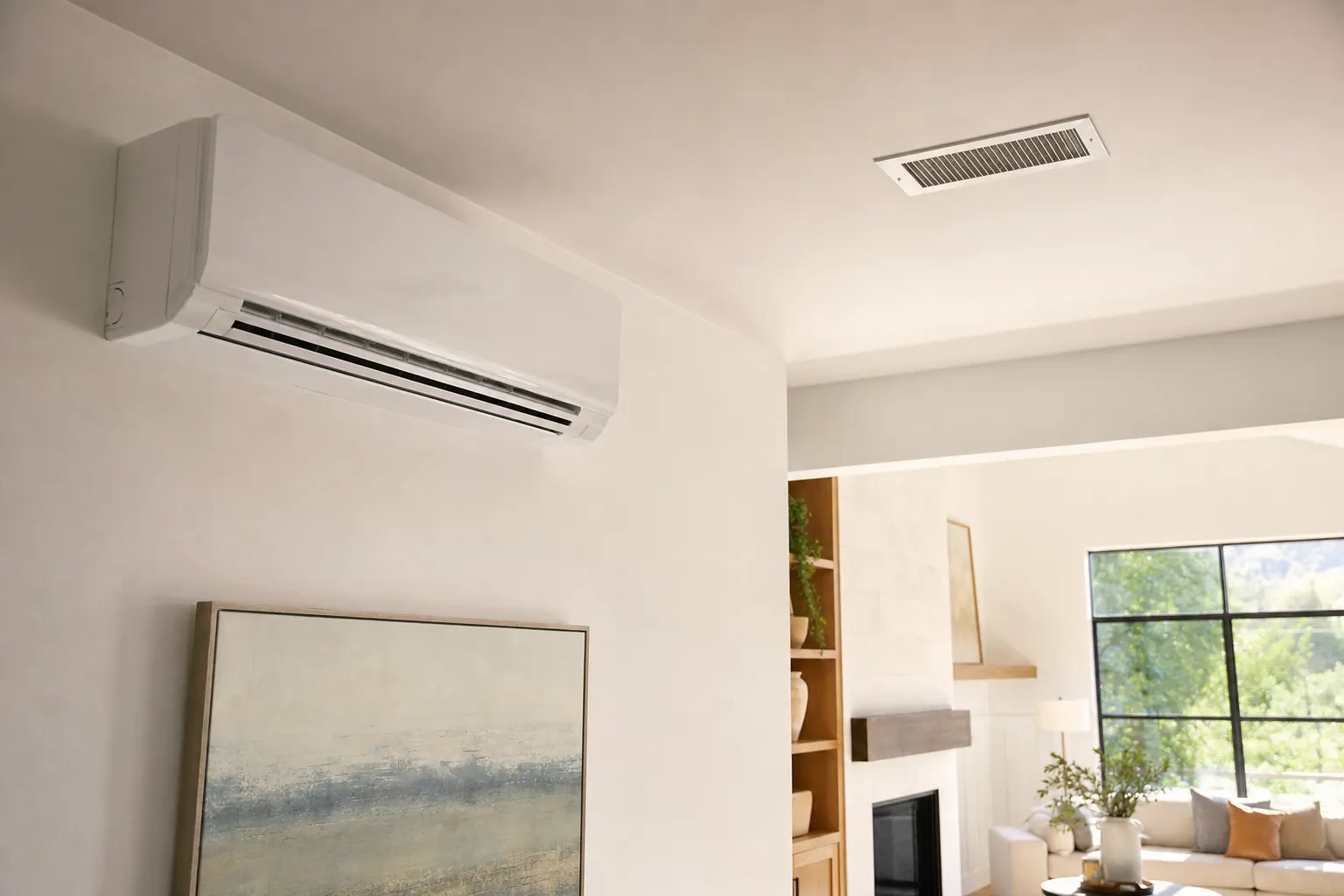
A mini-split that smells bad is usually moving air across something wet, dirty, overheated, or contaminated inside the indoor head. Musty and damp odors usually come from biological growth on the evaporator coil, blower wheel, or drain pan. A stale smell without a strong single note often points to old condensate, dust buildup, or poor room air circulation through a dirty interior. An electrical or melting-plastic smell is different: that suggests overheating parts or wiring, not just dirt.
How to tell the likely causes apart
A musty smell that is strongest for the first 5 to 20 minutes after startup usually fits mold or slime on the coil and blower because moisture sat in the unit between cycles. If the odor is more swampy or sour and you have also noticed occasional dripping, gurgling, or past water staining below the head, a partially blocked condensate drain is more likely. If only one indoor unit smells while others on the same system do not, the issue is usually inside that specific head, not the outdoor unit. If the smell is sharp, hot, acrid, or like melting insulation, stop using the system and leave the building; that is treated as a potential electrical fire risk.
Black dust or soot changes the picture. Mini-splits do not normally create soot, so black residue near heating equipment suggests the system may be picking up contaminated indoor air from a combustion problem elsewhere in the home. In that case, the odor is not just a cleaning issue for the ductless head. If you suspect smoke, active scorching, gas, or combustion exhaust, leave the building and call the gas utility or emergency services from outside.
What a technician usually does on a smell complaint
A qualified technician will identify which indoor head is affected, remove the cover, inspect the coil face, blower wheel, drain pan, and condensate line, and look for slime, standing water, or debris packed around the fan barrel. If the odor is electrical, the visit usually includes checking wiring terminations, boards, motors, and disconnects for heat damage or arcing. On systems with a condensate pump, they will test whether the pump actually lifts and discharges water. If soot or smoke contamination is present, they may advise stopping mini-split use until the combustion source is evaluated separately.
What affects repair cost
Cost depends on whether the fix is cleaning, drainage correction, or an electrical repair. A basic diagnostic visit for mini-split repair commonly falls around $99 to $250, depending on market and time of day. Deep cleaning of a mini-split indoor head, including the blower wheel and coil, often runs about $200 to $600 per head; condensate drain clearing or pump work is often about $150 to $500; replacing a failed pump can be higher. If the smell comes from a burned control board, fan motor, or wiring damage, repairs can range from roughly $300 to $1,200 or more based on brand, part availability, and whether the damaged parts are in the indoor unit, outdoor unit, or disconnect.
Cost ranges are estimates developed from standardized project scopes and reviewed pricing inputs. Government labor and regional cost data are used where applicable. See our Pricing Methodology for the exact sources, calculations, and review date. Actual prices vary by property, scope, materials or equipment, location, and provider.
When to turn the system off
- Stop if you smell gas, see smoke or sparks, or hear a carbon-monoxide alarm
- Stop if water reaches powered equipment or a breaker trips again
- Stop if loud grinding, booming, or heavy ice appears
When to call for help
- Call when the symptom continues after the safe checks
- Call promptly when comfort is lost for the whole home
- Describe when it started and any water, ice, noise, odor, alert, or breaker activity
Cost guidance
What could this cost to fix?
Price depends on the actual cause, equipment, access, and local labor. Compare the national ranges in the HVAC Repair Cost guide, or check service availability for your system.
Find local help for Mini-Split Repair
We will keep this problem and recommended service selected while you answer a few quick availability questions.
Browse HVAC help by stateFrequently asked questions
Mini-split smells bad: common questions
Why does my mini-split smell musty when it first turns on?
Why does only one ductless head smell bad when the others don't?
Can a mini-split smell like vinegar, dirty socks, or a swamp?
What if my mini-split smells like burning plastic or hot electrical parts?
How long does mini-split odor removal usually take?
Sources and review standard
Last updated July 18, 2026. Last reviewed July 18, 2026. HVAC Rescue reviews problem pages for homeowner-safe boundaries, service routing, source quality, and unsupported claims. No named technical reviewer is shown unless a qualified HVAC reviewer has completed that review.