
Reviewed July 22, 2026
HVAC Rescue Editorial Team
Editorial StandardsStart with the need
When HVAC maintenance is the right next step
The useful first question for HVAC maintenance in Hot Springs is what decision the evidence supports. Plan preventive service around the equipment present, seasonal workload, recent symptoms, filter and drainage needs, and manufacturer requirements. The local context includes this: Cooling season in Hot Springs is about more than lowering the temperature; it is also about pulling moisture out of the air so Downtown apartments and lakeside homes do not feel damp and sluggish. Around Lakeshore Estates... HVAC maintenance should document condition and operating measurements before peak seasons; it is not a substitute for diagnosing an active failure or a safety complaint.
HVAC maintenance should document condition and operating measurements before peak seasons; it is not a substitute for diagnosing an active failure or a safety complaint.
Understand the possibilities
What hvac maintenance should inspect
Dirty filters and coils
When airflow is restricted or heat-transfer surfaces are coated with dirt, the system has to work harder to move heat. That can show up as longer run times, weaker airflow, uneven temperatures, and higher utility bills.
Loose electrical connections
Electrical terminals and connections can loosen gradually from vibration and normal operation. That can affect controls and motors, leading to intermittent operation, reduced performance, or wear that gets worse over time.
Developing refrigerant leak
Low refrigerant changes how the cooling side performs. The system may still run, but cooling can weaken, humidity control can slip, and run times may get longer because the equipment is not moving heat as effectively.
Aging belts or capacitors
Wear parts can weaken before they fully fail. As that happens, motors may start less smoothly or run less efficiently, which can lead to sluggish performance, unusual behavior at startup, or a breakdown during heavy use.
Clogged condensate drain
The drain system carries away moisture removed during cooling. When it starts to clog, water may back up near the indoor equipment and cooling performance can be affected if the system shuts itself down to prevent overflow.
Homeowner-safe boundary
HVAC Maintenance safety boundaries
Homeowner checks should stay on the simple, low-risk side: airflow, filter condition, and obvious outdoor blockage. Do not open service panels or try to test electrical, gas, refrigerant, burner, or high-voltage components. The goal is to notice changes early and decide whether routine service is due.
- 1
Check the air filter
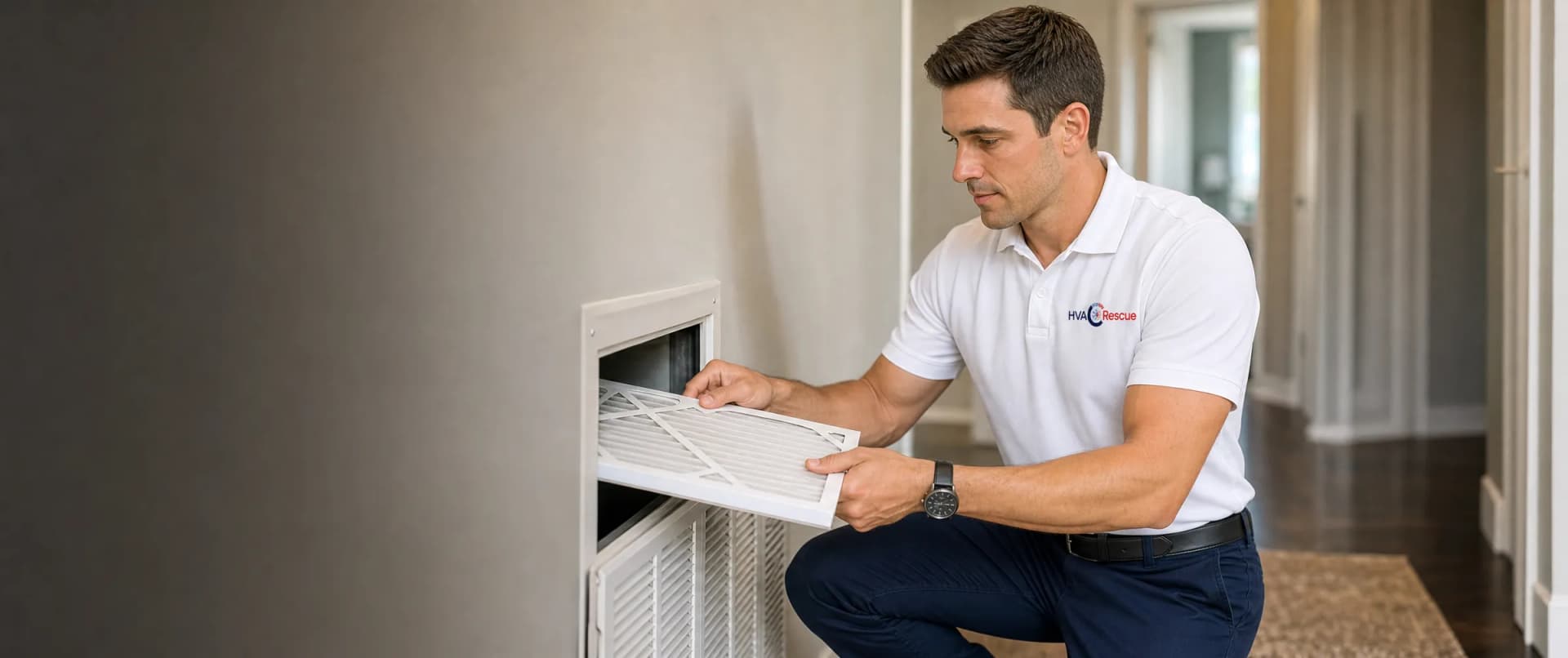
Look at the filter on a regular schedule and replace or clean it if it is visibly dirty, following the equipment guidance for the correct type and size. A dirty filter often points to restricted airflow, which can reduce comfort and efficiency.
- 2
Clear around the outdoor unit
Make sure plants, leaves, and debris are not crowding the outdoor equipment. Open space around the unit helps airflow through the coil, while blockage can make cooling less efficient and increase system strain.
- 3
Walk the supply and return vents
Check that supply and return vents inside the home are open and not blocked by rugs, furniture, or storage. Blocked vents can reduce airflow to rooms and make the system seem weaker than it is.
- 4
Watch airflow and bills
Notice whether rooms are taking longer to reach temperature, airflow feels weaker, or utility bills are climbing without another clear reason. Those changes do not confirm a specific fault, but they are strong signs that seasonal service is overdue.
Stop and use the appropriate emergency or professional help for
- Do not wait for routine maintenance when there is a gas odor, carbon-monoxide alarm, smoke, arcing, repeated breaker trip, or active water-electrical risk.
- Escalate when maintenance is associated with an immediate safety risk or dangerous loss of comfort.
- Escalate when tune-up is associated with an immediate safety risk or dangerous loss of comfort.
- Escalate when inspection is associated with an immediate safety risk or dangerous loss of comfort.
- Escalate when filter is associated with an immediate safety risk or dangerous loss of comfort.
- Escalate when seasonal is associated with an immediate safety risk or dangerous loss of comfort.
Call for professional HVAC maintenance when the issue is broader than a simple filter change or outdoor cleanup, or when it has been a long time since the last service. Seasonal maintenance is meant to catch wear, measure performance, and document the condition of the system before small problems grow.
A year or more
If the system has gone a year or longer without service, routine wear and dirt buildup may already be affecting efficiency and reliability. The system does not usually need to be shut off for this reason alone, but service should move up the list.
Pre-season service due
If spring or fall is approaching, a tune-up is timely even when the system seems to be working normally. This matters because maintenance is most useful before heavy summer or winter demand, not after comfort is already slipping.
Comfort or efficiency slipping
If temperatures feel less even, airflow seems weaker, or operating costs are rising, a technician should inspect the system and verify performance. The system can often stay on while you arrange service, unless operation becomes clearly abnormal.
Warranty or full inspection
If you need regular service records for warranty purposes or want a complete check after a long gap, seasonal maintenance is the right visit type. The system usually does not need to be shut off unless another serious problem is present.
Diagnosis before scope
How hvac maintenance should be evaluated
- Step 1
Inspect the system
The technician checks the equipment, electrical connections, and controls.
- Step 2
Clean key components
Coils, drains, and other parts are cleaned for better efficiency.
- Step 3
Check performance
Refrigerant, airflow, and temperatures are measured and verified.
- Step 4
Replace or adjust
Filters are replaced and minor adjustments are made as needed.
Relevant local context
HVAC Maintenance conditions that matter locally in Hot Springs
For HVAC maintenance, select only local facts about seasonal workload filter drainage coils and equipment exposure; omit unrelated parts of the generic city HVAC profile.
Seasonal operating context
Cooling season in Hot Springs is about more than lowering the temperature; it is also about pulling moisture out of the air so Downtown apartments and lakeside homes do not feel damp and sluggish. Around Lakeshore Estates and Lake Hamilton, air conditioners often work harder because of the water and the way homes sit in sun or shade.
Relevant local scenario
For HVAC maintenance in Hot Springs, this is one useful planning scenario: Outdoor unit wear from moisture and heavy seasonal use. Pair that context with the actual goal or symptom: Keeping efficiency up and bills down. The next step is to verify how the specific system responds rather than treating a citywide condition as a diagnosis.
Property and access
Historic buildings near Downtown and Bathhouse Row often have older systems tucked into tight mechanical spaces
Planning consideration
To prepare for HVAC maintenance in Hot Springs, gather the system history, access constraints, observed need, and project goals. The selected city consideration is this: Zoning or airflow balancing can help larger homes in Hot Springs Village and similar layouts avoid overcooling one area while another lags. At the state level, arkansas homes need both solid cooling and dependable heating, since summers are hot and humid while winters bring real cold spells. Air conditioners work against heat and moisture for much of Use maintenance for inspection, cleaning, adjustment, and trend detection; route active no-heat, no-cool, leak, electrical, combustion, or severe-noise symptoms to repair.
What can affect HVAC maintenance cost?
An HVAC tune-up may cover one system or both heating and cooling, while annual maintenance plans commonly include separate seasonal visits. Deep-cleaning services such as a blower pull-and-clean or evaporator-coil chemical wash are separate scopes; equipment type, condition, and included testing also affect the work.
Maintenance pricing can vary because not every visit covers the same checklist or the same equipment. The final quote depends on the system type, how many systems are being serviced, whether the visit is a one-time appointment or part of a maintenance plan, the timing of the season, the condition and age of the equipment, how easy it is to access, and local labor rates. A deeper cleaning service is also different from a standard seasonal tune-up.
| HVAC Tune-Up | Typical range |
|---|---|
| AC tune-up (single cooling system)Standalone spring visit for the standardized single-system cooling scope | $75 – $225 |
| Furnace tune-up (single heating system)Fall visit with burner cleaning, combustion check, and heat exchanger inspection | $75 – $225 |
| Heat pump tune-up (single visit)Heat pumps run year-round, so most pros recommend two visits per year | $100 – $250 |
| Full-system tune-up (AC + furnace, one visit)Both sides of a split system checked in one appointment | $125 – $350 |
| Comprehensive deep-clean serviceAdds blower pull-and-clean or evaporator coil chemical cleaning; several hours of labor | $275 – $775 |
| Annual maintenance plan (two visits)Per year; usually includes spring and fall visits plus repair discounts | $150 – $300 |
| Advertised coupon specialMarketing-priced visit — legitimate work is possible, but expect upsell pressure (see below) | $29 – $79 |
Cost ranges are estimates developed from standardized project scopes and reviewed pricing inputs. Government labor and regional cost data are used where applicable. See our Pricing Methodology for the exact sources, calculations, and review date. Actual prices vary by property, scope, materials or equipment, location, and provider.
See the full HVAC tune-up cost guide for the complete breakdown, then call to get a real quote for your home.
What to expect
From symptom to a clear next step
A qualified technician uses maintenance to narrow down condition and performance issues before suggesting parts. That means inspecting the equipment, checking controls and electrical connections, cleaning key components, and comparing airflow, temperature, and refrigerant-related performance to what the system should be doing. The result should be a clear summary of what was serviced, what was observed, and whether any repairs are recommended.
- Step 1
Tell us about your system
Describe your equipment and when it was last serviced in Arkansas so the right professional can be matched to your maintenance needs.
- Step 2
Connect with a pro
We help you reach HVAC professionals that service your area. Availability may vary by location and provider.
- Step 3
Inspection
The technician inspects the system's major components and overall operation to establish how it's performing.
- Step 4
Cleaning and adjustments
Filters, coils, and airflow are addressed as needed, and the professional makes adjustments to help the system run efficiently.
- Step 5
Safety and performance check
The technician confirms the system is operating safely and performing as expected, with special attention to fuel-burning equipment.
Common questions
HVAC Maintenance in Hot Springs: questions and answers
Which local fact is relevant to HVAC maintenance in Hot Springs?
Which property and system details matter before HVAC maintenance in Hot Springs?
How often should I have HVAC maintenance done?
What's typically included in a tune-up?
Is maintenance really worth it if nothing seems wrong?
Technical and safety guidance is supported by the sources below. Local context is limited to the service-relevant city facts selected by the repository and is not evidence that a particular component has failed.
Sources and fact-checking
Reviewed July 22, 2026. We favor primary government and standards sources for safety, efficiency, and regulatory claims. These references support the technical and consumer guidance on this page.
- Heating and cooling maintenance checklistENERGY STARProfessional tune-up scope, filters, airflow, coils, drains, and safety checks.
- Clean heating and coolingENERGY STARCentral-system sizing, efficiency, replacement planning, installation, and maintenance.
- Air cleaners and air filters in the homeU.S. Environmental Protection AgencyFilter performance, indoor-air limitations, and proper use of portable and HVAC filters.