Reviewed July 22, 2026
HVAC Rescue Editorial Team
Editorial StandardsFor most homes, routine air duct cleaning is not worth the money. That is not a contrarian take — it is the position of the U. S. Environmental Protection Agency, whose published guidance states that duct cleaning 'has never been shown to actually prevent health problems' and recommends cleaning ducts not on a schedule, but only as needed. The EPA also notes that much of the dust inside ductwork adheres to the duct walls and never reaches the air you breathe. The standardized single-system scenario used for this guide places a full-system cleaning of roughly 10 to 15 vents at about $408 to $983, so paying for one 'just because' usually means spending several hundred dollars on a problem you do not have.
Cost ranges are estimates developed from standardized project scopes and reviewed pricing inputs. Government labor and regional cost data are used where applicable. See our Pricing Methodology for the exact sources, calculations, and review date. Actual prices vary by property, scope, materials or equipment, location, and provider.
That said, 'usually not worth it' is not 'never worth it. ' EPA identifies specific situations where cleaning is justified: substantial visible mold inside sheet-metal ducts, vermin infestation, and ducts so loaded with debris that particles actually blow out of the supply registers. Heavy construction dust after a renovation can push a system into that territory too. This guide covers how to tell whether your home is one of the exceptions, how the ubiquitous $99 duct-cleaning special really works, what a legitimate cleaning includes and costs, and the cheaper upgrades that typically do more for your indoor air than a cleaning would.
When Duct Cleaning Is Actually Worth It
- Substantial visible mold inside the ducts or on other system components. Note the word visible — growth a technician can point to on the sheet metal or show you inside the air handler in person, not a blurry phone photo of 'suspicious dust. ' EPA specifically lists visible mold growth inside hard-surface (sheet metal) ducts as a legitimate reason to clean.
- Vermin in the ductwork. If rodents or insects have gotten in — droppings, nesting material, or a dead-animal smell when the blower runs — cleaning is warranted, along with sealing the entry points so the problem does not come back.
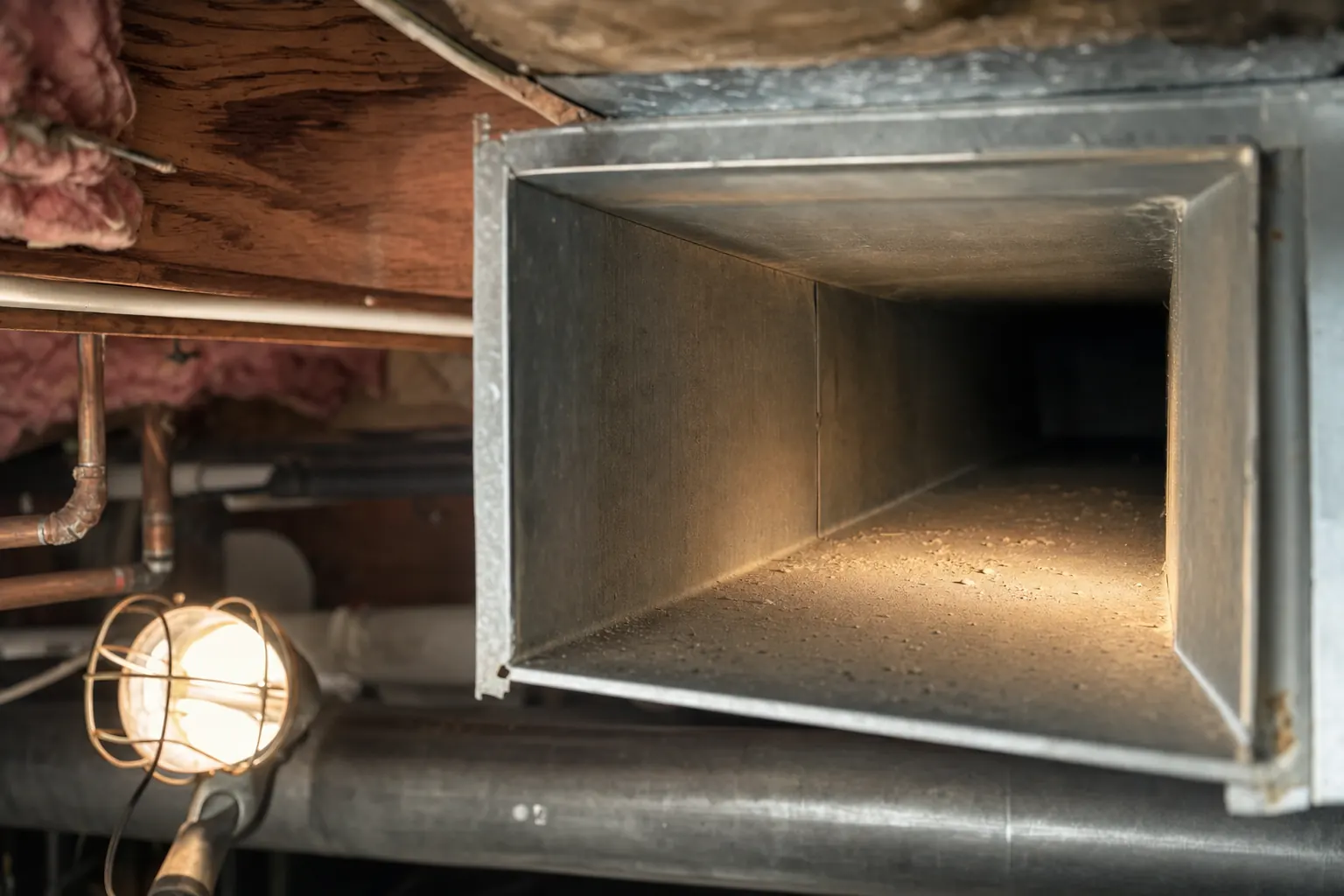
- Debris actually blowing out of the registers. EPA's threshold is ducts 'clogged with excessive amounts of dust and debris' with particles released into the home. Puffs of dust when the system starts, or debris you can see and touch just inside the supply registers, meet that bar. A thin coating of dust on duct walls does not — EPA notes there is no evidence that light dust in ducts poses a health risk.
- Heavy renovation or construction dust. Drywall sanding, floor refinishing, or a remodel done without sealing the registers can load a duct system with fine dust in a way normal living never will. If the system ran during the messy phase of a project, an inspection — and often a cleaning — makes sense.
Be careful with the mold trigger, because it is the one scammers exploit. Two facts from EPA guidance are worth memorizing. First, many substances look like mold: for about $50, a microbiology lab can test a sample lifted with clear sticky tape and tell you whether it actually is mold or just something that resembles it. Second, if your ducts are lined with fiberglass insulation (duct board) and that insulation gets wet or moldy, it cannot be effectively cleaned — EPA says it should be removed and replaced. Any company offering to 'kill' mold in insulated ducts with a spray is selling something that does not work. Get the lab result first, then decide.
The $99 Special: Anatomy of a Bait-and-Switch
The $99 whole-house duct cleaning ad is one of the most durable bait-and-switch schemes in home services, and consumer-protection groups including the Better Business Bureau have warned about it for years. The math tells you everything: a legitimate cleaning ties up a crew, a truck-mounted or portable HEPA vacuum system, and several hours of labor. Nobody can deliver that complete scope for $99. The low price exists to get a technician into your house, and from there the visit tends to follow one of two scripts. In the 'blow-and-go' version, the crew vacuums around a few registers for half an hour, touches nothing inside the actual duct runs or air handler, and leaves after cosmetic work. In the upsell version, the tech 'discovers' mold, often via a phone photo of the blower wheel, and the pressure starts: sanitizing fog, on-the-spot 'remediation,' and add-on charges per vent or per system. Consumer complaints about this pattern describe high-pressure additions and final bills far above the advertised price.
- An advertised price far below the standardized single-system range of about $408–$983 for 10–15 vents — the gap between the ad and the complete scope is the tell.
- A mold 'diagnosis' made by sight or phone photo, with no lab sample and no written report.
- Per-vent or per-system pricing that multiplies once the crew is inside ('the $99 covers one unit — you have two systems and 14 vents').
- High-pressure add-ons pushed before any cleaning happens: fogging, 'sanitizing,' UV lights, or chemical treatments.
- No mention of the air handler, blower, or coil — cleaning duct runs while skipping the equipment that moves the air misses much of the buildup.
- The company cannot say whether it follows NADCA's ACR cleaning standard, or refuses to put the scope of work in writing.
If your system is showing the real warning signs — visible mold, pests, or dust blowing from the registers — talk to a qualified pro before a coupon crew talks you into something. HVAC Rescue can connect you with independent HVAC professionals in your area who can inspect the whole system and put a scope of work in writing.
(866) 373-0169What Legitimate Duct Cleaning Includes — and What It Costs
A legitimate cleaning is a source-removal job performed to NADCA's ACR standard, and it treats the duct system as one connected machine. The crew puts the system under negative pressure with a truck-mounted or portable HEPA vacuum, then works agitation tools — rotating brushes, air whips, compressed-air devices — through every supply and return run, so dislodged debris is pulled into the collection unit instead of your living room. A proper job also covers the components coupon crews skip: registers and grilles, the blower motor and housing, the evaporator coil, and the drain pan, with any access holes cut into the ductwork sealed correctly afterward. Expect the work to take several hours rather than 45 minutes. The standardized single-system scenario used for this guide covers roughly 10 to 15 vents at about $408 to $983, with system size, vent count, and access defining the comparable scope. Before hiring anyone, ask three questions: Is the company a NADCA member or does it work to the ACR standard? Will it provide a written, itemized scope covering the full system? And will it show before-and-after photos or camera footage of your ducts — not stock images?
Better Ways to Spend $500 on Your Air
- 1
Upgrade your air filter
A pleated MERV 11–13 filter captures far more fine dust, pollen, and smoke than the basic fiberglass pad many systems ship with, and typically costs $10 to $40. Check your equipment manual first — some blowers strain against the added resistance of a high-MERV filter — and ask a technician if you are not sure what your system can handle.
- 2
Replace it on schedule
Even a good filter stops working when it is loaded. Check it monthly during heavy cooling and heating season and replace it roughly every 1 to 3 months — more often with pets, allergies, or construction nearby. A clean filter is also the single best defense against ducts getting dirty in the first place.
- 3
Seal the ducts instead of cleaning them
According to ENERGY STAR guidance, a typical house loses about 20 to 30 percent of the air moving through its duct system to leaks, holes, and poorly connected sections. Sealing accessible runs with mastic or foil-backed metal tape (never fabric duct tape) keeps conditioned air in and attic or crawl-space dust out, and often pays for itself in energy savings — something duct cleaning does not claim to do.
- 4
Vacuum what you can see
Pull the supply registers and return grilles, wash or vacuum them, and run a vacuum hose a few feet into the duct boots. It is free, takes about ten minutes per register, and removes the dust that is actually close enough to your living space to matter.
- 5
Fix the source, not the symptom
Ducts get dirty because of what the system inhales: leaky return runs, an undersized or bypassed filter, remodeling dust, or persistent humidity problems. If your ducts keep loading up, have a professional find out why — a cleaning without that diagnosis buys you a year or two before the same buildup returns.
Sources and fact-checking
Reviewed July 22, 2026. We favor primary government and standards sources for safety, efficiency, and regulatory claims. These references support the technical and consumer guidance on this page.
- Should you have the air ducts in your home cleaned?U.S. Environmental Protection AgencyWhen duct cleaning may be warranted, limitations, and consumer cautions.
- ACR standard for HVAC assessment, cleaning, and restorationNational Air Duct Cleaners AssociationMinimum procedural requirements and verification practices for HVAC-system cleaning and restoration.
- Duct sealingENERGY STARHow duct leakage affects comfort and energy use, and appropriate sealing materials.