Quick summary
Match what you notice to a safe next step
These observations can narrow the starting service, but they do not confirm which part has failed.
What you notice
Dead or weak thermostat batteries
What it may point to
If your thermostat uses batteries, the display can go completely dark even though the heating or cooling equipment itself is otherwise fine. A fresh set of the correct batteries often restores the screen immediately.
Safe next action
Check the thermostat display and the normal service switch
What you notice
Tripped breaker or furnace/air-handler power switch turned off
What it may point to
A blank screen often means the thermostat is no longer getting power from the indoor unit. That can happen after a breaker trips, a disconnect is switched off, or the furnace service switch near the unit is accidentally bumped.
Safe next action
Turn it off and describe the sound to a technician
What you notice
Blown low-voltage fuse or failed 24-volt transformer
What it may point to
The thermostat depends on low-voltage power from the furnace or air handler. If the control fuse opens or the transformer fails, the thermostat goes dark and the system usually will not respond to heating or cooling calls.
Safe next action
Reset it no more than once; stop if it trips again
What you notice
Condensate safety switch opened
What it may point to
On many systems, a clogged drain line or full drain pan shuts off 24-volt power to prevent water damage. When that safety opens, the thermostat screen can go blank or the equipment can appear completely dead.
Safe next action
Record the exact code and consult the owner manual without opening panels
Safe things to check
- Replace thermostat batteries if the model uses them
- Confirm the display mode, schedule, and setpoint
- Note any alert exactly as shown
Do not attempt
- Do not open sealed electrical or equipment panels
- Do not bypass a safety switch or force repeated restarts
A few quick questions
Refine the best next step
Question 1 of 3
- 1How much of the home is affected?
- 2What is the system doing right now?
- 3When did this begin?
What this symptom can mean
Use the evidence you can observe
What a blank thermostat screen usually means
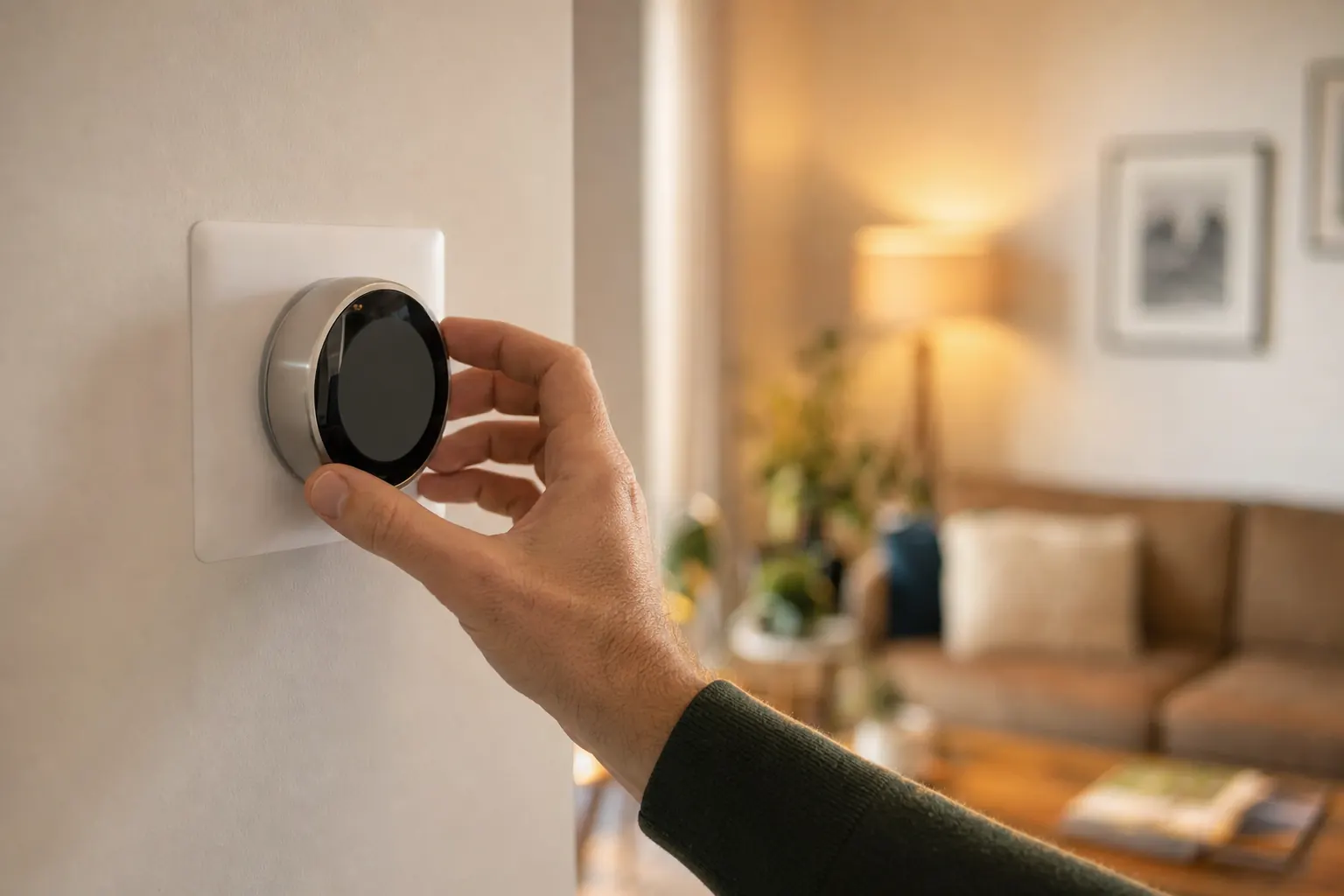
A thermostat display that is fully dark is different from a thermostat that is lit but unresponsive or showing the wrong room temperature. In most homes, a blank screen means the thermostat has lost its power source entirely, either from internal batteries or from the 24-volt control power supplied by the furnace or air handler. That is why this symptom often points to a power interruption, a protective safety switch, or a failed thermostat rather than a simple programming problem.
How to narrow it down from what you can see
If the screen went blank and the system is completely silent, start by checking whether the thermostat uses batteries and whether the HVAC breaker or furnace switch is off. If a breaker is tripped, reset it once; if it trips again, stop there and arrange service, because repeated tripping suggests an electrical fault rather than a thermostat setting issue. If you see a drain pan with standing water or know the indoor unit has been dripping, a condensate safety switch may have cut power to the thermostat on purpose.
If the equipment clicks, hums, or tries to start while the thermostat screen is blank, the problem can be more specific than dead batteries. That pattern can happen when the indoor control power is unstable, a low-voltage fuse has partially failed after a short, or the outdoor and indoor equipment are not powering up together. If the thermostat briefly lights up and then goes dark again, technicians often look for an overloaded transformer, damaged control wiring, or a safety switch opening intermittently.
What a technician usually checks on this call
On a service visit for a blank thermostat screen, the technician typically verifies line voltage to the furnace or air handler, then checks for the 24-volt control power that should be feeding the thermostat. They will inspect the low-voltage fuse on the control board, test the transformer, look for an open condensate switch, and inspect thermostat wiring for shorts, loose terminals, or damaged insulation. If power is reaching the thermostat but the display remains dark, the thermostat itself is usually the failed part.
What affects repair cost
Cost depends mostly on where power is being lost. A battery replacement is minor, while a failed basic, programmable, or smart thermostat belongs to the matching thermostat-replacement scenario. Control-side electrical work such as a fuse, transformer, wiring repair, or condensate safety issue is a separate repair scope. Diagnosing a recurring breaker trip or a short in concealed low-voltage wiring can push the total higher because of added labor and tracing time.
When to turn the system off
- Stop if you smell gas, see smoke or sparks, or hear a carbon-monoxide alarm
- Stop if water reaches powered equipment or a breaker trips again
- Stop if loud grinding, booming, or heavy ice appears
When to call for help
- Call when the symptom continues after the safe checks
- Call promptly when comfort is lost for the whole home
- Describe when it started and any water, ice, noise, odor, alert, or breaker activity
Cost guidance
What could this cost to fix?
Price depends on the actual cause, equipment, access, and local labor. Compare the national ranges in the HVAC Repair Cost guide, or check service availability for your system.
Find local help for HVAC Repair
We will keep this problem and recommended service selected while you answer a few quick availability questions.
Browse HVAC help by stateFrequently asked questions
Thermostat screen is blank: common questions
Why did my thermostat go completely blank all of a sudden?
Can I just replace the batteries if my thermostat screen is blank?
My thermostat is blank and the breaker is tripped. What does that usually mean?
Can a clogged drain make my thermostat screen go blank?
How long does it take to diagnose a blank thermostat screen?
Sources and review standard
Last updated July 18, 2026. Last reviewed July 18, 2026. HVAC Rescue reviews problem pages for homeowner-safe boundaries, service routing, source quality, and unsupported claims. No named technical reviewer is shown unless a qualified HVAC reviewer has completed that review.