Quick summary
Match what you notice to a safe next step
These observations can narrow the starting service, but they do not confirm which part has failed.
What you notice
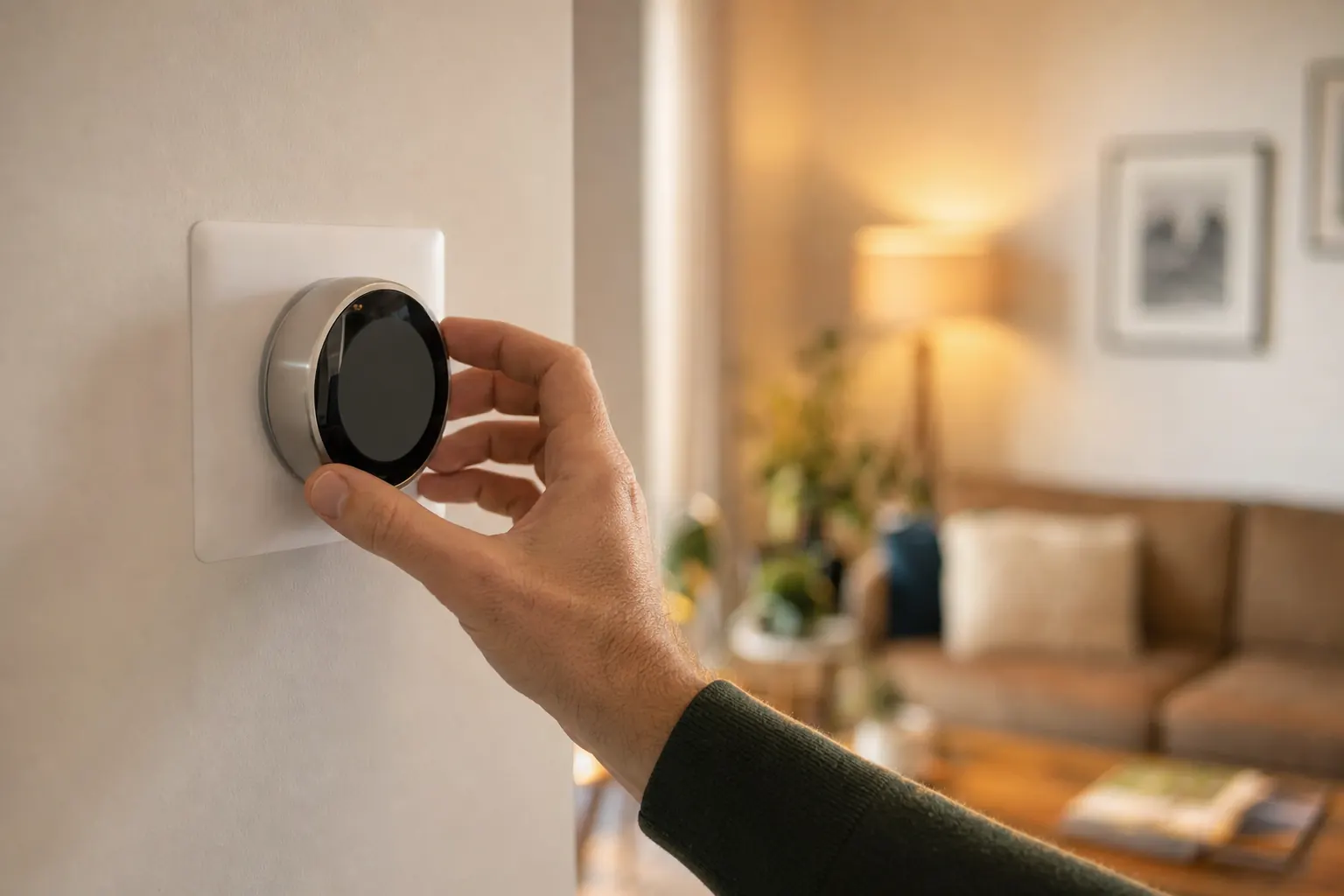
Thermostat location is influencing the reading
What it may point to
If the thermostat sits in direct sun, above a supply register, near a kitchen, exterior door, TV, lamp, or behind a closed door, it can sense a hotter or colder microclimate than the rest of the home and display the wrong temperature.
Safe next action
Note when the change began and whether the system is running
What you notice
Faulty internal temperature sensor or remote room sensor
What it may point to
A failed thermistor inside the thermostat, or a bad wireless/remote sensor on zoned or smart systems, can make the display drift several degrees from the actual room temperature even when the system is otherwise working.
Safe next action
Compare nearby rooms and keep vents open
What you notice
Low batteries, aging electronics, or calibration offset
What it may point to
Some thermostats read inaccurately when battery voltage drops or when an internal sensor drifts over time; the thermostat still lights up and runs equipment, but the displayed temperature no longer matches the room.
Safe next action
Record any code, sound, smell, or weather event
What you notice
Thermostat wiring problem or loose sub-base connection
What it may point to
A loose wire, poor wall contact, or corrosion at the thermostat terminals can cause unstable sensor readings, especially if the incorrect reading started suddenly after painting, replacement, or other wall work.
Safe next action
Check the filter and arrange an evaluation if it persists
Safe things to check
- Replace thermostat batteries if the model uses them
- Confirm the display mode, schedule, and setpoint
- Note any alert exactly as shown
Do not attempt
- Do not open sealed electrical or equipment panels
- Do not bypass a safety switch or force repeated restarts
A few quick questions
Refine the best next step
Question 1 of 3
- 1How much of the home is affected?
- 2What is the system doing right now?
- 3When did this begin?
What this symptom can mean
Use the evidence you can observe
What this symptom usually means
When a thermostat shows the wrong temperature, the problem is often with how that thermostat is sensing the room rather than with heating or cooling production itself. The display is reading a local condition at the wall, an incorrect remote sensor, or a miscalibrated temperature sensor. That is different from a blank screen, a thermostat that will not respond, or a schedule problem where the setting changes on its own.
How to narrow it down from what you can observe
Set a small digital thermometer next to the thermostat, but not touching it or the wall, and leave both undisturbed for 15 to 20 minutes. If the thermostat is off by a similar amount all day, a calibration issue, bad sensor, or installer offset is more likely. If it reads wrong only at certain times, look for sunlight through a window, warm air from a nearby supply register, drafts from an exterior door, or heat from lamps, TVs, ovens, or fireplaces affecting that exact spot.
If the wrong reading affects only one room or one zone, pay special attention to remote sensors and zoning controls. Many modern thermostats average multiple sensors or can be set to follow one sensor only; if one remote sensor has failed or lost communication, one area can feel normal while the displayed temperature is clearly off. If the issue affects the whole home, the thermostat's own sensor or wall location is more suspect.
What changed matters
A reading that became wrong suddenly often points to a battery problem, loose thermostat mounting, wiring disturbed during painting or remodeling, a recent thermostat replacement, or a failed sensor. A reading that has worsened gradually is more consistent with sensor drift, electronics aging, or a location problem that became more noticeable after seasonal sun angle changes, a new lamp or TV, or furniture blocking airflow around the thermostat.
What a technician typically checks
On a service visit, the technician usually compares the thermostat display to a known accurate thermometer, checks whether the thermostat is level and firmly attached, verifies battery condition, inspects low-voltage wiring and terminal connections, and reviews installer setup for sensor selection, offsets, and averaging. If the system uses remote room sensors, they may test each sensor's reported temperature and communication status. If the thermostat itself is reading inaccurately and cannot be recalibrated within manufacturer limits, replacement is often more practical than repair.
What affects repair cost
Cost depends on whether the fix is simple setup work or replacement hardware. A thermostat diagnostic or service visit may include re-securing wiring, changing batteries, or adjusting settings. Basic thermostat replacement, smart or communicating equipment, and remote-sensor work are separate standardized scenarios. Compare the quote with the thermostat scenario that matches brand compatibility, sensor count, wiring, and any zoning controls rather than a generic HVAC motor or control-board range.
When to turn the system off
- Stop if you smell gas, see smoke or sparks, or hear a carbon-monoxide alarm
- Stop if water reaches powered equipment or a breaker trips again
- Stop if loud grinding, booming, or heavy ice appears
When to call for help
- Call when the symptom continues after the safe checks
- Call promptly when comfort is lost for the whole home
- Describe when it started and any water, ice, noise, odor, alert, or breaker activity
Cost guidance
What could this cost to fix?
Price depends on the actual cause, equipment, access, and local labor. Compare the national ranges in the HVAC Repair Cost guide, or check service availability for your system.
Find local help for HVAC Repair
We will keep this problem and recommended service selected while you answer a few quick availability questions.
Browse HVAC help by stateFrequently asked questions
Thermostat shows the wrong temperature: common questions
How far off can a thermostat be before it is considered a problem?
Why does my thermostat read the wrong temperature only in the afternoon?
Can a low battery make a thermostat show the wrong temperature without going blank?
Why does my thermostat say 72 but the room feels like 68?
Can a bad remote sensor make my thermostat display the wrong temperature?
Sources and review standard
Last updated July 18, 2026. Last reviewed July 18, 2026. HVAC Rescue reviews problem pages for homeowner-safe boundaries, service routing, source quality, and unsupported claims. No named technical reviewer is shown unless a qualified HVAC reviewer has completed that review.