Quick summary
Match what you notice to a safe next step
These observations can narrow the starting service, but they do not confirm which part has failed.
What you notice
Loose panel, grille, or mounting hardware
What it may point to
A light rattle from an accessible cover or front panel usually means screws, clips, or the panel itself are vibrating during fan operation, which is often a smaller repair if handled before parts wear further.
Safe next action
Turn the system off before visually checking the exterior
What you notice
Debris or an out-of-balance indoor or outdoor fan
What it may point to
Scraping, ticking, or rhythmic tapping often means the blower wheel or condenser fan is hitting dust buildup, a shifted shroud, or debris, and continued operation can bend blades or damage the motor.
Safe next action
Stop the system to prevent additional damage
What you notice
Worn fan motor bearings or a failing blower motor
What it may point to
Grinding, squealing, or a rough humming sound can point to motor bearing wear, which usually gets louder over days or weeks and can end in a no-airflow breakdown if ignored.
Safe next action
Turn the heating equipment off and request furnace or boiler service
What you notice
Contactor, capacitor, or compressor electrical issue in the outdoor unit
What it may point to
Buzzing or humming without a proper start often means the unit is being told to run but the fan or compressor cannot start correctly, which can overheat components and raise repair cost if it keeps happening.
Safe next action
Do not open panels; arrange professional testing
Safe things to check
- Clean the user-accessible filter as the owner manual directs
- Confirm the remote mode and setpoint
- Make sure the indoor and outdoor units are not visibly blocked
Do not attempt
- Do not handle, vent, or add refrigerant
- Do not open sealed electrical or equipment panels
- Do not bypass a safety switch or force repeated restarts
A few quick questions
Refine the best next step
Question 1 of 3
- 1How much of the home is affected?
- 2What is the system doing right now?
- 3When did this begin?
What this symptom can mean
Use the evidence you can observe
What a strange mini-split noise usually points to
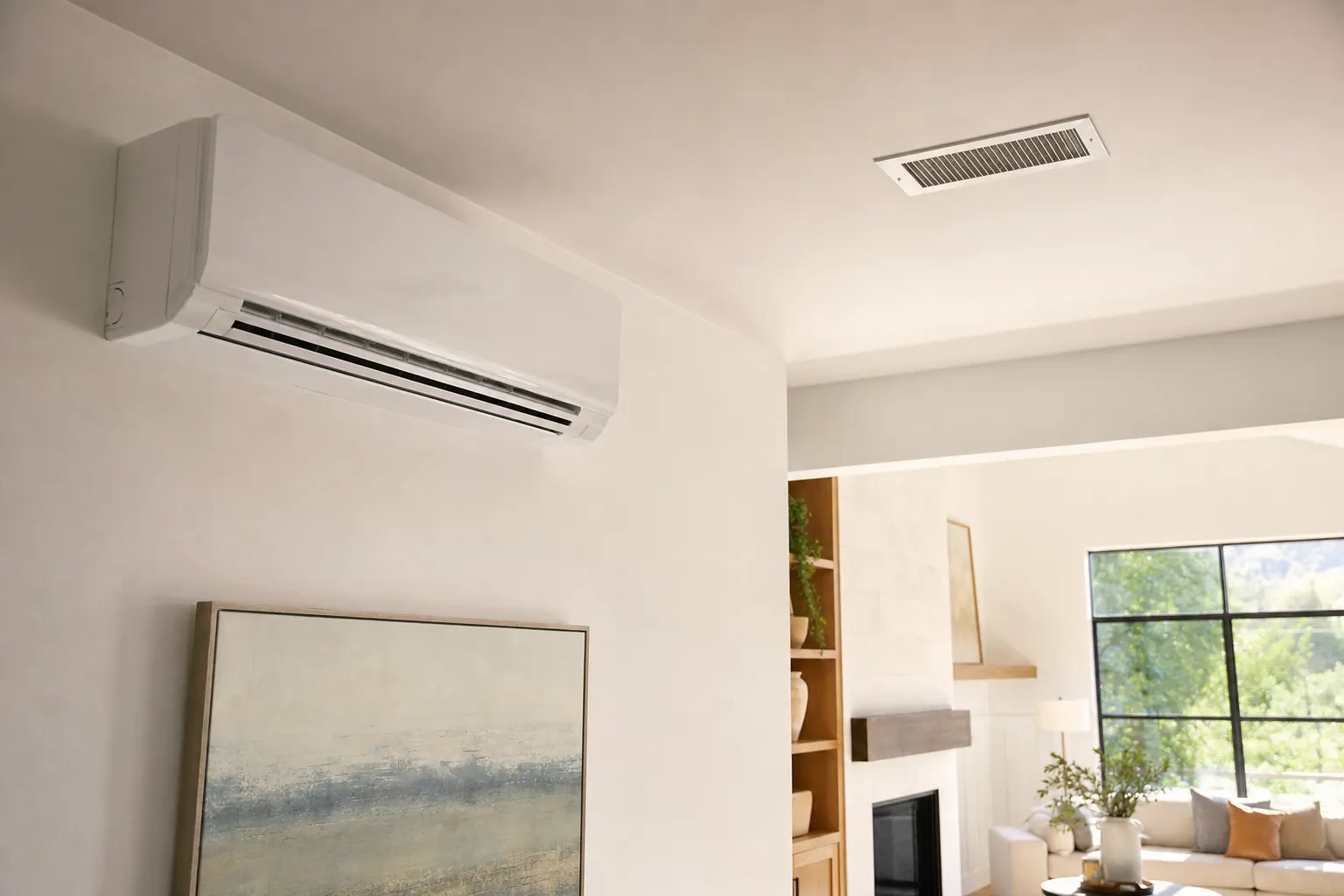
Noise is one of the few symptoms that tells you where to start looking by sound pattern alone. A light rattle from an accessible outer panel is usually vibration from a loose cover or fastener, while scraping, grinding, or repeated banging points more toward a moving part contacting something it should not. Buzzing or humming without a normal startup is different again: that often means an electrical component is energizing but the fan or compressor is not getting up to speed.
How to tell the likely causes apart
If the noise is a faint rattle and you can localize it to the indoor face panel or an outdoor service cover, loose cabinet pieces are more likely than a refrigerant or temperature problem. If the sound is rhythmic and changes with fan speed, think blower wheel, fan blade, debris, or a shroud rubbing. If it is a deeper metallic knock from the outdoor section, especially during startup, the concern shifts toward compressor mounts or compressor wear. If you hear only a buzz or hum and the unit does not fully start, that pattern fits a capacitor, contactor, motor, or compressor starting problem much more than an airflow complaint.
What to pay attention to before service
The most helpful notes are when the noise happens and whether performance changes at the same time. Write down whether it occurs only in cooling, only in heating, during defrost, right at startup, after shutdown, or continuously while the fan runs. Also note whether the sound is indoors or outdoors, and whether it is getting louder each day. That timeline helps a technician separate a loose panel from a failing motor or compressor before they even open the unit.
What happens on a mini-split noise service visit
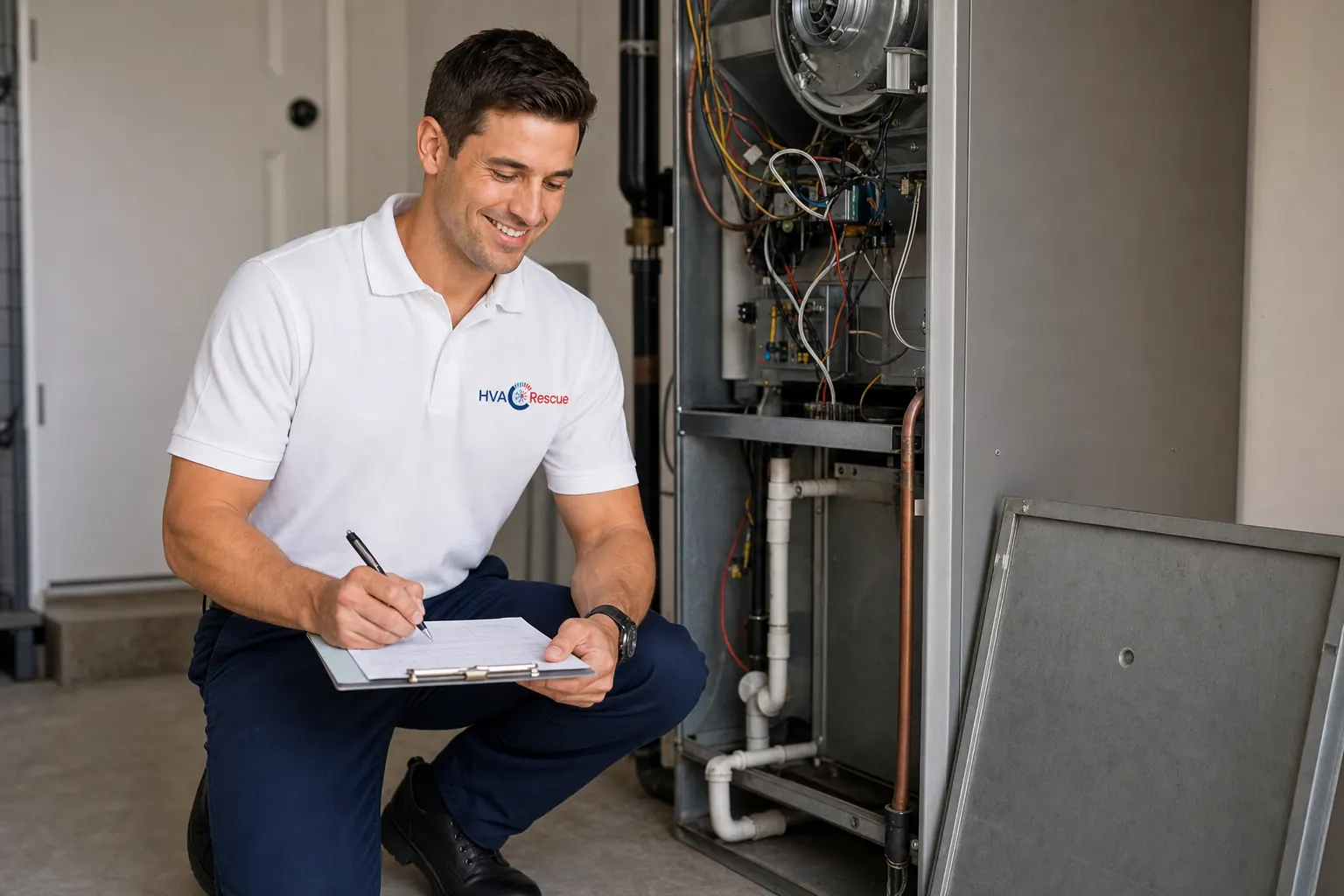
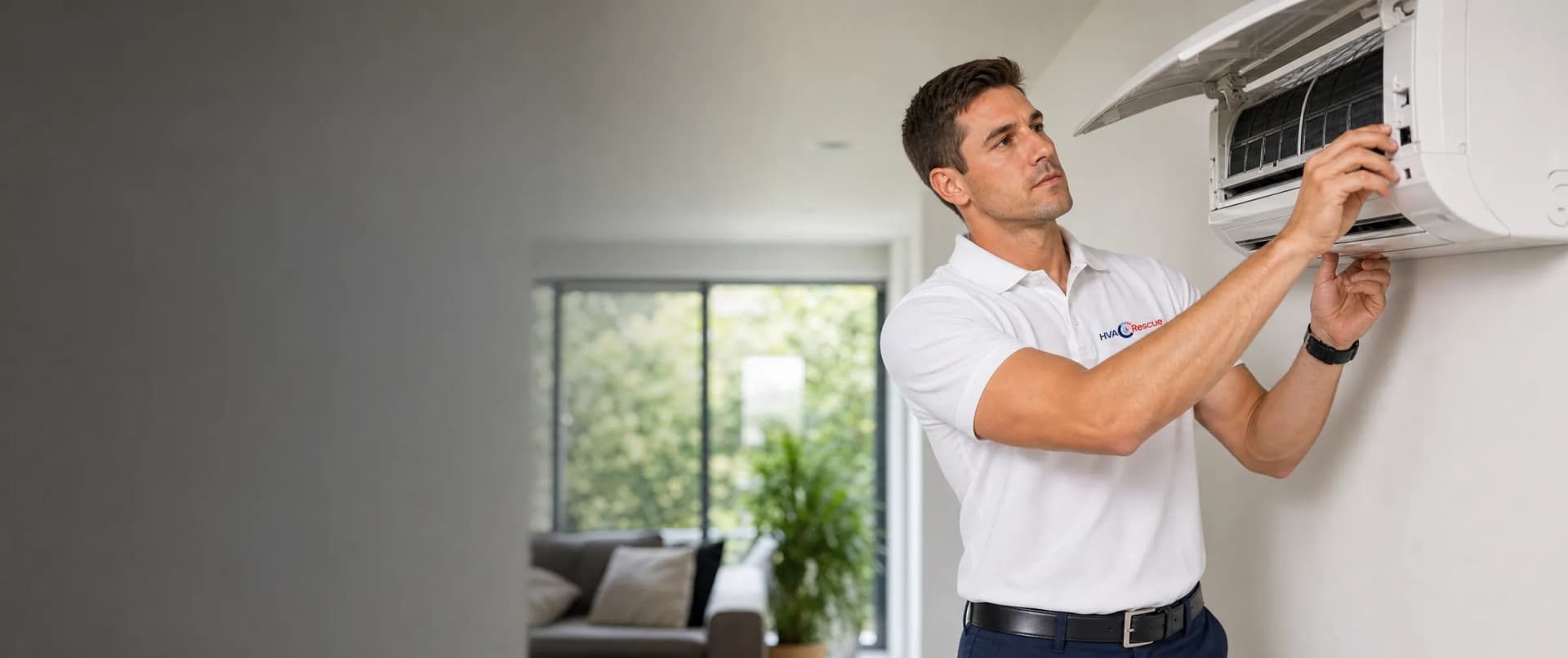
A technician will usually run the system through the mode that produces the noise, remove the necessary covers, and inspect the blower wheel, fan blades, shrouds, motor bearings, mounts, and electrical starting components. On heat-pump mini-splits, they may also check whether the sound is tied to defrost or reversing-valve operation. If the noise is a buzz without startup, electrical testing often focuses on the outdoor unit first because that is where capacitors, contactors, fan motors, and the compressor are concentrated.
What affects repair cost
Noise repairs range widely because the sound can come from a simple vibration issue or from a major rotating component. Tightening or re-securing a panel or replacing small hardware is often at the low end of a service call, while fan motor repairs commonly land in the moderate range. Compressor-related noise is usually the most expensive outcome because diagnosis is more involved and replacement can run into the high hundreds or several thousands depending on brand, warranty status, access, and whether the outdoor unit or matched system must be replaced. Typical 2025-2026 U.S. repair estimates are roughly $150-$400 for minor cabinet or hardware fixes, $300-$900 for many fan-motor or fan-blade repairs, and $1,500-$4,500+ when the compressor is the confirmed source.
Cost ranges are estimates developed from standardized project scopes and reviewed pricing inputs. Government labor and regional cost data are used where applicable. See our Pricing Methodology for the exact sources, calculations, and review date. Actual prices vary by property, scope, materials or equipment, location, and provider.
When to turn the system off
- Stop if you smell gas, see smoke or sparks, or hear a carbon-monoxide alarm
- Stop if water reaches powered equipment or a breaker trips again
- Stop if loud grinding, booming, or heavy ice appears
When to call for help
- Call when the symptom continues after the safe checks
- Call promptly when comfort is lost for the whole home
- Describe when it started and any water, ice, noise, odor, alert, or breaker activity
Cost guidance
What could this cost to fix?
Price depends on the actual cause, equipment, access, and local labor. Compare the national ranges in the HVAC Repair Cost guide, or check service availability for your system.
Find local help for Mini-Split Repair
We will keep this problem and recommended service selected while you answer a few quick availability questions.
Browse HVAC help by stateFrequently asked questions
Mini-split is making a strange noise: common questions
Why does my mini-split buzz but not start?
Is a rattling mini-split panel a big repair?
Why is my ductless unit making a scraping or grinding sound?
Are mini-split noises different in heating mode than in cooling mode?
How long does it take to diagnose a strange mini-split noise?
Sources and review standard
Last updated July 18, 2026. Last reviewed July 18, 2026. HVAC Rescue reviews problem pages for homeowner-safe boundaries, service routing, source quality, and unsupported claims. No named technical reviewer is shown unless a qualified HVAC reviewer has completed that review.