Reviewed July 22, 2026
HVAC Rescue Editorial Team
Editorial StandardsWhen you need furnace replacement
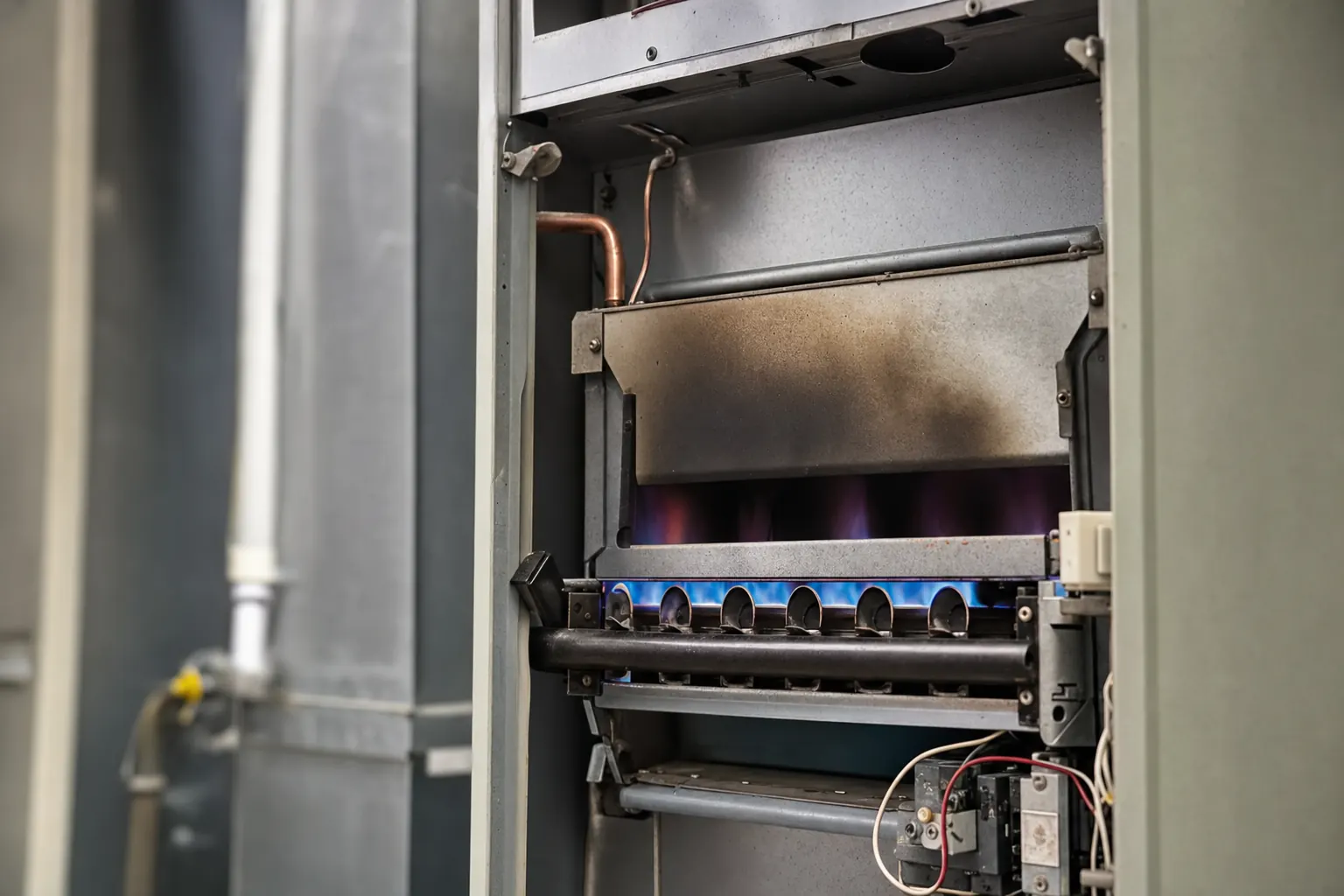
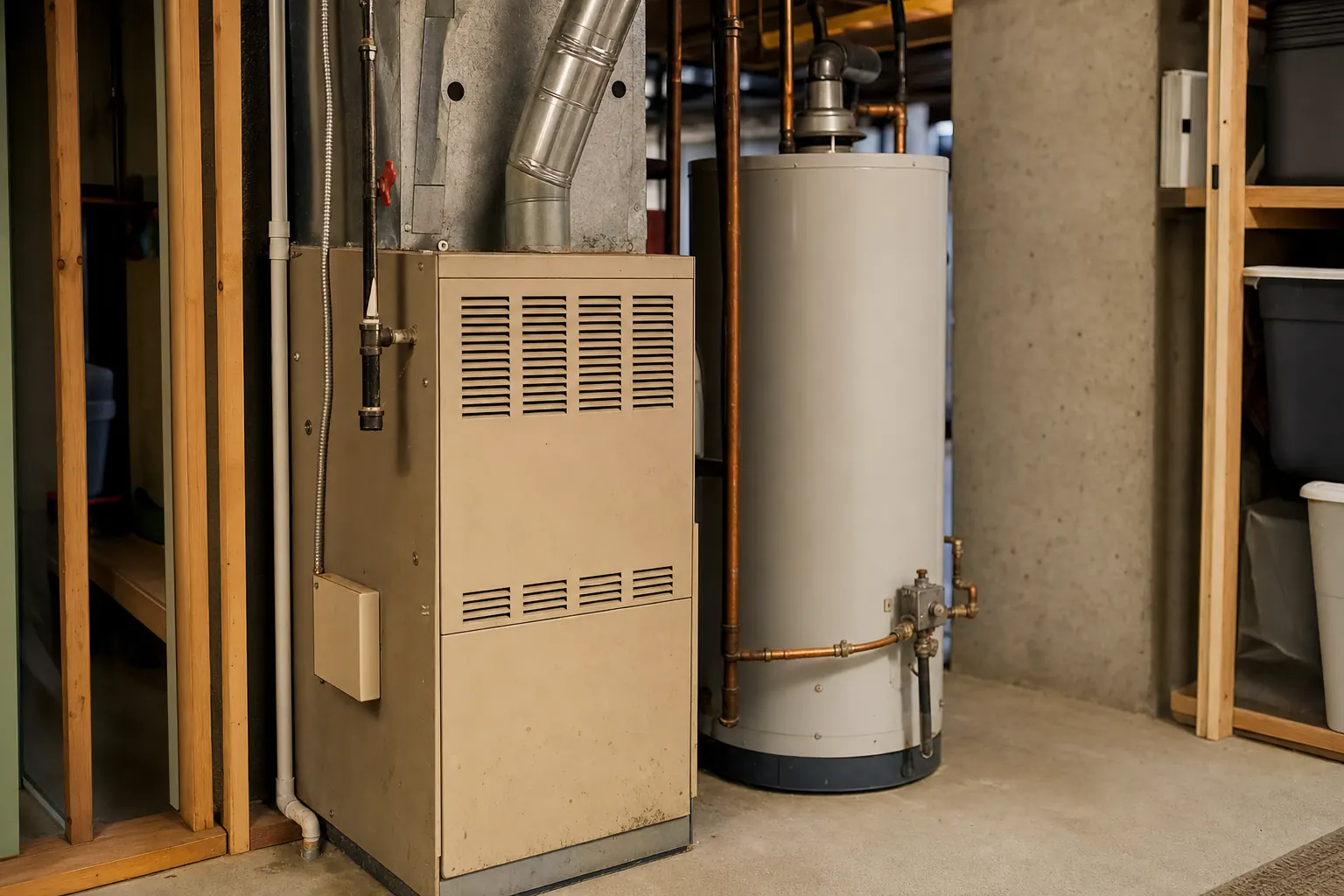
Furnace replacement is the right starting point when the problem is bigger than a routine repair. This usually happens when the furnace is old, breaks down repeatedly, struggles to keep the house warm, or has a major safety concern such as a cracked or failing heat exchanger. It can also make sense when parts are hard to find or repair costs are no longer reasonable compared with the age and condition of the unit.
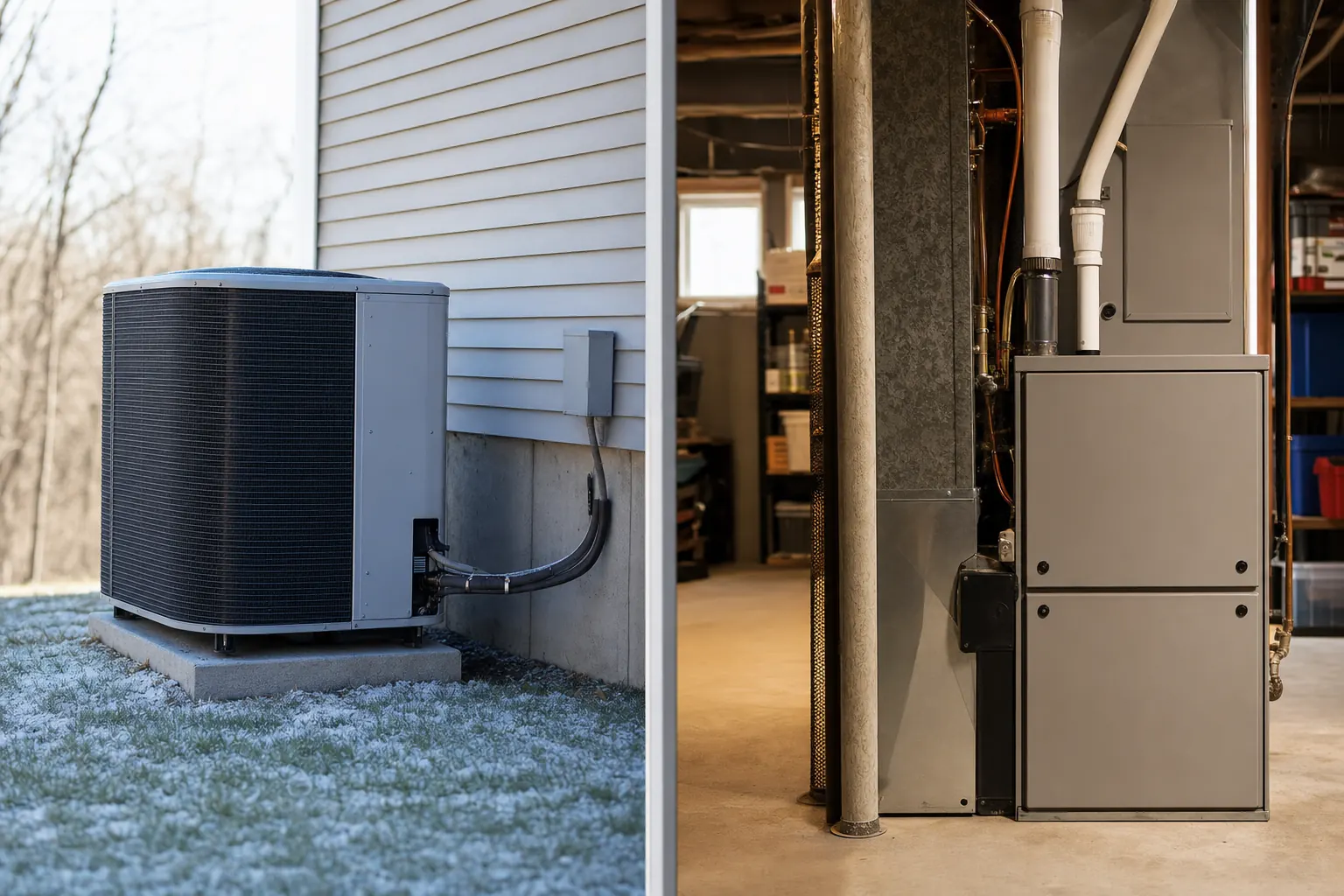
This page is different from furnace repair and furnace installation. Repair fits a furnace with a specific fixable fault. Installation usually refers to putting in a furnace where the focus is the new equipment setup itself. Replacement is about removing an existing furnace that is unsafe, worn out, or no longer practical to keep, then choosing a properly sized new unit that matches the home.
The decision this service should answer
Compare a safe furnace repair with replacement using heat-exchanger condition, failure scope, age, reliability, load, venting, and matched-system needs.
Furnace replacement should verify heating load, airflow, fuel, venting, combustion air, controls, cooling-system compatibility, and commissioning instead of repeating the old input rating.
Common causes
- Years of normal wear
- As a furnace ages, the heat section, blower, and other major components wear down together. That can lead to repeat service calls, longer run times, and uneven heating instead of one simple part failure.
- Failed heat exchanger
- A damaged or failing heat exchanger changes the conversation from repair to safety. Because it is part of the furnace's core heat section, this kind of defect can make replacement the safer path than continued patchwork repairs.
- Skipped maintenance over time
- Deferred maintenance can shorten furnace life by allowing airflow and operating problems to continue season after season. The result may be higher utility bills, more strain on the equipment, and earlier failure of major components.
- Wrong furnace size
- A furnace that is too large or too small for the home may never heat well. Poor sizing can show up as short cycling, rooms that stay cold, or a system that runs hard without keeping up in colder weather.
- Outdated low-efficiency equipment
- Older furnace designs can use more fuel while delivering less comfort than newer equipment. Homeowners often notice this as rising heating bills, longer heating cycles, and a house that still does not feel consistently warm.
What you can safely check first
Homeowner checks should stay simple and external. The goal is only to rule out obvious airflow, thermostat, or power issues before deciding whether the furnace is likely at the end of its useful life. Do not open panels or try to inspect combustion, gas, venting, or electrical parts.
Check the furnace age
Look for the approximate age on a label or in past records. An older furnace that is now breaking down often points toward replacement rather than another repair, especially if comfort and efficiency have also declined.
Replace a dirty filter
A clogged filter can restrict airflow and make a furnace seem weak or unreliable. If a new filter improves airflow or comfort, the problem may be simpler than it first appeared. If nothing changes, replacement may still need to be considered.
Confirm thermostat settings
Make sure the thermostat is set to heat and the temperature setting is above the current room temperature. This helps rule out a control setting issue before assuming the furnace itself has failed.
Check power and vents
If the furnace is unresponsive, reset the breaker one time. Then make sure supply and return vents are open and not blocked by furniture or rugs. If power and airflow basics are normal but the home still will not heat well, a professional evaluation is warranted.
When to call a professional
Call a qualified professional when the problem points to safety, repeated major failure, or a furnace that can no longer do its job. Replacement decisions should be based on the condition of the heat section, the home's heating needs, and whether a new unit must be sized differently from the old one.
- Heat exchanger concern
- If a professional suspects a cracked or failing heat exchanger, the issue is serious because it involves the furnace's core heating section. Do not keep using the furnace until it has been evaluated and a safe plan has been made.
- Gas or combustion signs
- If the furnace shows signs of a gas or combustion problem, stop using it and have it assessed by a qualified professional. Gas and combustion issues are not homeowner troubleshooting items and can make continued operation unsafe.
- Repairs keep piling up
- Frequent repairs on an aging furnace usually mean several major parts are wearing out together. When repair costs are approaching the value of the unit, replacement becomes the more practical path.
- Home will not stay warm
- If the furnace cannot keep the home comfortable even after basic checks, the issue may be age, loss of capacity, poor efficiency, or improper sizing. A professional can determine whether the old furnace is simply no longer the right fit for the home.
How much does furnace replacement cost?
Replacing a gas furnace includes removing the old unit and installing one matched to the home's heating needs; capacity, AFUE, venting, gas, electrical, and duct transitions shape the project scope.
Furnace replacement quotes vary because the job is not only about the box being swapped. Price moves with the furnace efficiency level, the heating capacity needed for the home, and the equipment tier chosen. The quote can also change if the replacement requires venting updates, gas or electrical changes, difficult access, or other installation work needed to remove the old unit and set up the new one safely.
| Furnace Replacement | Typical range |
|---|---|
| Standard-efficiency furnaceEntry-level AFUE, like-for-like swap in an accessible spot | $3,300 – $6,533 |
| Mid-efficiency furnaceHigher AFUE for typical home sizes | $4,100 – $7,933 |
| High-efficiency furnaceCondensing high-AFUE units, larger homes | $5,333 – $10,500 |
| Complex high-efficiency replacementVenting changes, difficult access, or premium equipment | $8,100 – $16,333 |
Cost ranges are estimates developed from standardized project scopes and reviewed pricing inputs. Government labor and regional cost data are used where applicable. See our Pricing Methodology for the exact sources, calculations, and review date. Actual prices vary by property, scope, materials or equipment, location, and provider.
See the full furnace replacement cost guide for the complete breakdown, then call to get a real quote for your home.
Repair or Replace Your Furnace?
A furnace repair is often the right move when the unit is reasonably young, well maintained, and facing an isolated, affordable fix. The decision shifts toward replacement as the furnace ages, repairs pile up, or a safety-critical component like the heat exchanger fails.
Because furnaces involve combustion, safety is part of the equation, not just cost. A qualified professional can inspect the furnace and help you decide. HVAC Rescue connects you with HVAC professionals that service your area to make that assessment.
Repair often makes sense when
- The furnace is relatively new and well maintained
- The failed part is minor and affordable
- It is a one-time issue, not a recurring pattern
- The furnace still heats the home safely and effectively
Consider replacement when
- A professional has found a cracked or failing heat exchanger
- Repairs are frequent and increasingly expensive
- The furnace can no longer keep the home warm
- You want a more efficient, reliable heating system
Get help with furnace replacement
One quick call connects you with HVAC pros who service your area. No pressure, no obligation.
Efficiency standards, rebates & the rules that matter
A few federal rules shape any heating or cooling project today. Knowing them helps you buy the right system and avoid surprises.
Efficiency standards changed in 2023 (SEER2)
Since January 1, 2023 the U.S. Department of Energy rates cooling efficiency as SEER2 and sets regional minimums — higher in the South and Southwest than in the North. New equipment has to meet the floor for its region, so a system installed today starts at a higher efficiency baseline than one from a few years ago.
New equipment is moving to lower-GWP refrigerants
EPA technology-transition rules restrict new residential and light-commercial equipment that uses high-global-warming-potential HFCs. Most newly manufactured split systems now use A2L refrigerants such as R-454B or R-32, while existing R-410A systems and qualifying repair components remain serviceable. Ask which refrigerant a proposed system uses and confirm that every indoor and outdoor component is listed as a compatible match.
Current incentives are state, utility, and program specific
The federal Energy Efficient Home Improvement Credit (Section 25C) generally ended for property placed in service after December 31, 2025. Home Energy Rebate programs may still be available through participating states, territories, and Tribes, and some utilities offer separate incentives. Program status, eligible equipment, income limits, and funding can change, so verify the current rules before treating an incentive as part of a project budget.
Anyone handling refrigerant must be EPA-certified
Federal law (EPA Section 608) requires any technician who opens a refrigerant circuit to hold EPA certification. Confirming it is a quick, fair check before you hire — alongside proof of license where your state requires one, and insurance.
Sources: U.S. DOE — central AC & heat pump regional efficiency standards · eCFR — 10 CFR 430.32 minimum efficiency standards · U.S. EPA — Technology Transitions Program · IRS — Energy Efficient Home Improvement Credit (§25C) · U.S. DOE — Home Energy Rebates · DSIRE — database of state & utility energy incentives · U.S. EPA — Section 608 technician certification
What happens during service
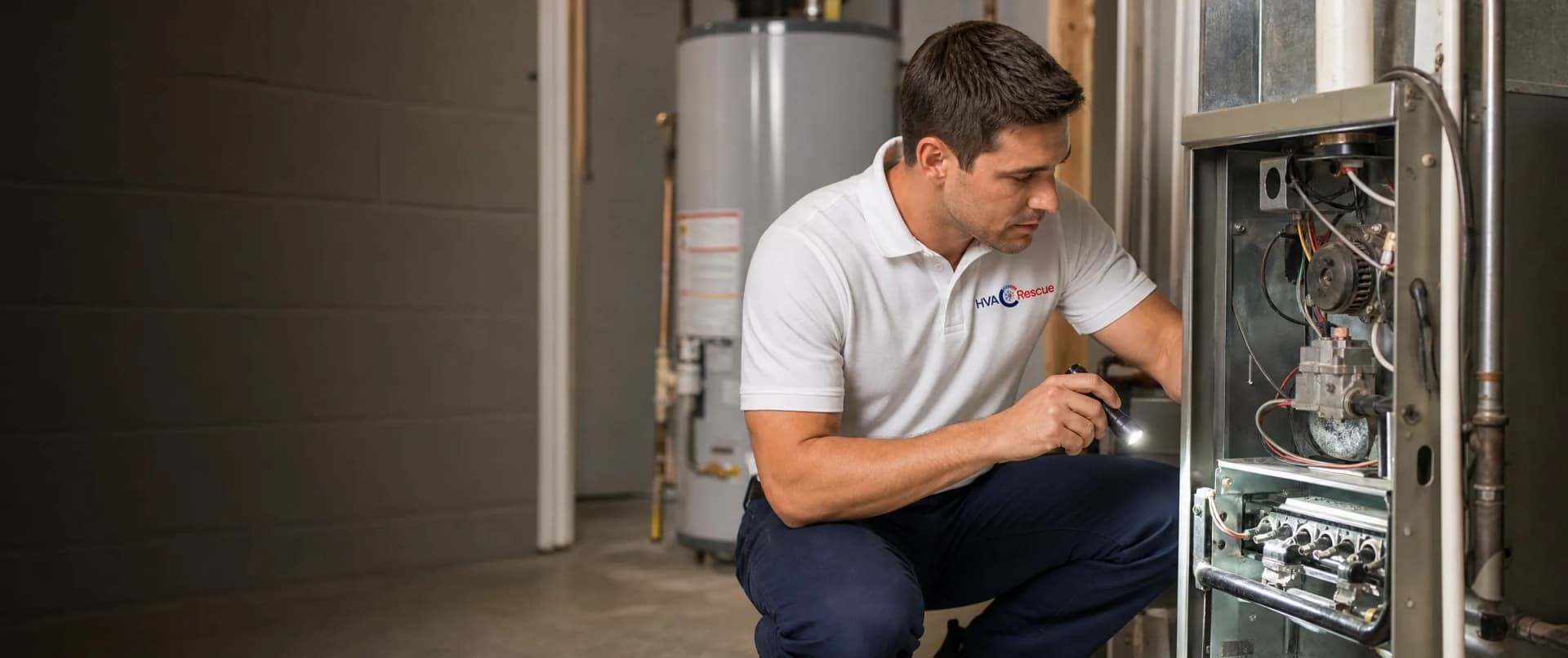
A qualified technician should confirm that replacement is truly the right job before a new furnace is selected. That process usually includes identifying the furnace type, checking the condition of the existing unit and connections, looking for safety issues, and reviewing whether the current size is appropriate for the home rather than automatically matching the old nameplate. A careful evaluation helps separate a worn-out furnace from one that still has a reasonable repair path.
- 1
Describe your furnace
Tell us about your current furnace, its age, and the heating problems you are facing.
- 2
Get connected
We connect you with HVAC professionals that service your area, subject to availability by location and provider.
- 3
Inspection and sizing
A professional inspects the furnace, checks for safety issues, and sizes a suitable replacement.
- 4
Compare options
Review furnace choices, efficiency levels, and quotes before deciding.
- 5
Replacement and start-up
The chosen provider removes the old furnace, installs the new one, and verifies safe operation.
Why homeowners use HVAC Rescue
- One call connects you with HVAC pros who service your area
- Help for repair, maintenance, replacement, and emergencies
- Plain-English guidance on what is likely wrong before anyone visits
- No pressure and no obligation to book
- Available nationwide, year-round
- We point you to the right service for your system, not an upsell
Furnace Replacement: common questions
How do I know if I need furnace replacement instead of furnace repair?
Can a new furnace just be matched to the size of the old one?
What happens during a furnace replacement evaluation?
Why does furnace replacement cost vary so much?
Should I replace my furnace before it fully stops working?
Sources and fact-checking
Reviewed July 22, 2026. We favor primary government and standards sources for safety, efficiency, and regulatory claims. These references support the technical and consumer guidance on this page.
- ENERGY STAR heating and cooling guidanceENERGY STAREfficiency, replacement planning, qualified equipment, and contractor questions.
- Clean heating and coolingENERGY STARCentral-system sizing, efficiency, replacement planning, installation, and maintenance.
- Manual J residential load calculationAir Conditioning Contractors of AmericaRoom-by-room heating and cooling load calculations used for equipment sizing.
- Consumer central air conditioners and heat pumpsU.S. Department of EnergySEER2, EER2, HSPF2, test procedures, and current federal efficiency standards.
- How to avoid a home improvement scamFederal Trade CommissionWritten estimates, contractor verification, payment cautions, and fraud warning signs.