Reviewed July 22, 2026
HVAC Rescue Editorial Team
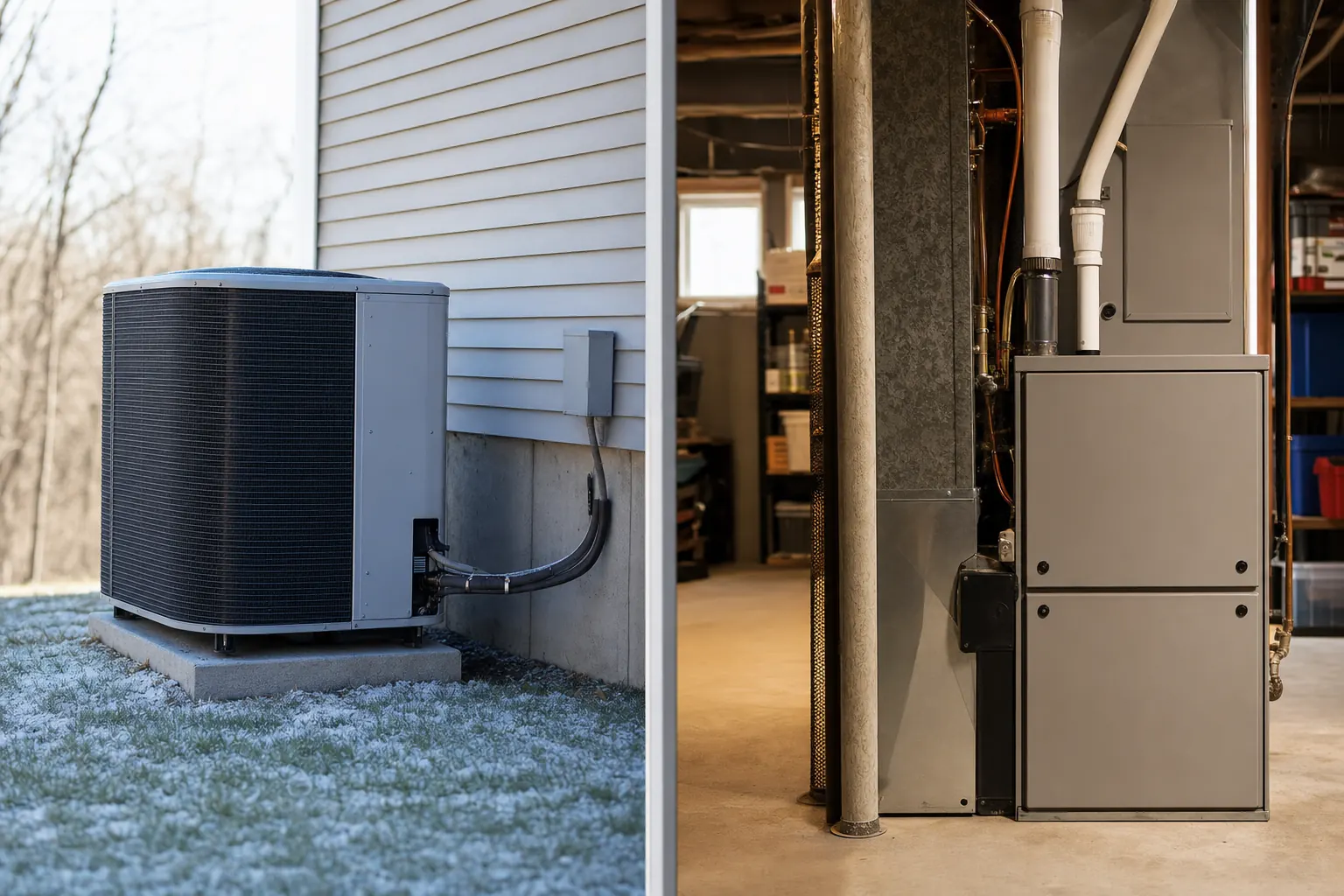
Editorial StandardsMostly, no — the big federal HVAC tax credits are gone. The Section 25C Energy Efficient Home Improvement Credit, which was worth up to $2,000 per year toward a qualifying heat pump and up to $1,200 for other efficiency upgrades, expired for equipment placed in service after December 31, 2025. Congress ended it seven years early — it had been scheduled to run through 2032 — as part of the One Big Beautiful Bill Act (P. L. 119-21), signed July 4, 2025. If your new system was installed and running in 2026, there is no federal tax credit to claim for it.
Cost ranges are estimates developed from standardized project scopes and reviewed pricing inputs. Government labor and regional cost data are used where applicable. See our Pricing Methodology for the exact sources, calculations, and review date. Actual prices vary by property, scope, materials or equipment, location, and provider.
That is not the end of the savings story, though. Income-qualified rebates created by the Inflation Reduction Act — up to $8,000 toward a heat pump under the Home Electrification and Appliance Rebates (HEAR) program — are still funded and live in a growing list of states, and utility and state rebate programs continue on their own schedules. Because the law changed recently, much of what ranks in search results is out of date. This guide reflects the rules as of July 2026, with the load-bearing facts drawn from IRS guidance, a Congressional Research Service summary of the law, and state energy office program pages.
What Expired at the End of 2025
The 25C credit covered 30% of the cost of qualifying high-efficiency equipment, with annual caps: up to $2,000 for heat pumps and heat pump water heaters, plus up to $1,200 for other improvements — including $600 for a qualifying central air conditioner or furnace and $150 for a home energy audit. Under IRS rules, eligibility follows the placed-in-service date, not the purchase or contract date. A heat pump bought in December 2025 but installed in January 2026 does not qualify. Homeowners whose systems were up and running by December 31, 2025 claim the credit on IRS Form 5695 with their 2025 tax return. Note that 25C is nonrefundable with no carryforward, so it can only offset tax you actually owed for 2025.
The Section 25D Residential Clean Energy Credit — the uncapped 30% credit that covered geothermal heat pumps and rooftop solar — was terminated on the same timeline. According to the Congressional Research Service, 25D no longer applies to expenditures made after December 31, 2025, and the tax code treats an expenditure as made when the original installation is completed. A geothermal system finished in 2026 gets no federal credit, even though many older articles still describe that credit as running through 2032 — that was the pre-2025 law. One piece survives: homeowners who earned a 25D credit on an earlier installation and could not use all of it may still carry the unused portion forward on future returns.
What You Can Still Get in 2026
The largest remaining incentive is the Home Electrification and Appliance Rebates program (HEAR, branded HEEHRA in some states), funded by the Inflation Reduction Act and run by state energy offices. It was not affected by the 2025 tax law and continues until each state's allocation runs out. HEAR is income-based: households below 80% of area median income (AMI) can have up to 100% of project costs covered, households between 80% and 150% of AMI up to 50%, and households above 150% of AMI are not eligible. Rebates are applied at the point of sale through a participating contractor — a discount on the invoice, not a check you chase later. As of mid-2026, HEAR programs are live in roughly a dozen states plus Washington, D. C. — including Arizona, Colorado, Georgia, Maine, Michigan, New Mexico, New York, North Carolina, Rhode Island, and Wisconsin — with more launching through the year. Funding is finite and moves fast: California waitlisted new single-family reservations in February 2026, and Colorado's Front Range region fully reserved its single-family funding in April 2026, so timing matters.
- Heat pump for heating and cooling: up to $8,000
- Heat pump water heater: up to $1,750
- Electrical panel upgrade: up to $4,000
- Electrical wiring: up to $2,500
- Insulation, air sealing, and ventilation: up to $1,600
- Electric or induction stove, or heat pump clothes dryer: up to $840
- Household maximum across all HEAR rebates: $14,000
A second IRA program, the Home Efficiency Rebates (HOMES), pays for whole-home energy savings rather than specific equipment. Amounts scale with how much energy the retrofit saves and are doubled for lower-income households — up to $8,000 in many states for the deepest income-qualified retrofits. Beyond the federal rebate programs, utility rebates never went away: many electric utilities pay a few hundred to a few thousand dollars toward a qualifying heat pump, smart thermostat, or duct sealing project, and several states layer their own credits or rebates on top. Stacking rules vary — some programs let you combine a utility rebate with HEAR, others reduce one by the other — so confirm with the program administrator before assuming the totals add up.
Planning a replacement this year? HVAC Rescue can help you connect with HVAC professionals that service your area — ask each one which rebate programs they are registered for.
(866) 373-0169Buying a Heat Pump in 2026: How to Decide
The math has genuinely changed. For a household above 150% of area median income in a state without its own incentives, losing the $2,000 federal credit raises the net cost of a typical heat pump installation by exactly that much, and there is no federal replacement. For income-qualified households in a live HEAR state, the picture is the opposite: a point-of-sale rebate of up to $8,000 is worth far more than the old tax credit ever was, and it arrives as an upfront discount rather than months later at tax time. Heat pumps can still make sense on operating costs alone — especially if you currently heat with electric resistance, oil, or propane — but in 2026 the incentive side of the decision depends almost entirely on your income, your state, and your utility. Here is how to pin that down before you sign anything.
- 1
Check your income against area median income
HEAR eligibility hinges on whether your household is below 80% or 150% of AMI. Most state program sites link an eligibility checker — run it before you get attached to a rebate number.
- 2
Confirm your state's program status
Look up your state energy office's HEAR/HOMES page directly. Check whether the program is live, waitlisted, or fully reserved, and whether your region within the state still has funding.
- 3
Pull your utility's rebate list
Search your electric utility's website for heat pump, thermostat, and weatherization rebates. These are usually not income-restricted and often stack with other incentives.
- 4
Get two or three itemized quotes
Ask each contractor which rebate programs they are registered with — HEAR rebates only flow through participating contractors — and have them itemize every incentive on the quote.
- 5
Run the repair-versus-replace math honestly
If your current system works and no meaningful incentives apply to you this year, replacing early has a weaker case than it did in 2025. If it is failing anyway, compare total installed cost after rebates across quotes.
- 6
Keep every document
Save invoices, rebate reservation confirmations, and equipment certificates. Rebate programs audit projects, and paperwork gaps are the most common reason a reservation falls through.
Sources and fact-checking
Reviewed July 22, 2026. We favor primary government and standards sources for safety, efficiency, and regulatory claims. These references support the technical and consumer guidance on this page.
- Energy Efficient Home Improvement CreditInternal Revenue ServiceThe placed-in-service deadline and historical eligibility rules for Section 25C.
- Residential Clean Energy CreditInternal Revenue ServiceThe December 31, 2025 termination date, historical eligibility, and carryforward rules for Section 25D.
- Tax provisions in P.L. 119-21Congressional Research ServiceStatutory changes to Sections 25C and 25D and their post-2025 termination provisions.
- Home Energy RebatesU.S. Department of EnergyState, territory, and Tribal program status and homeowner eligibility pathways.
- Database of State Incentives for Renewables & EfficiencyN.C. Clean Energy Technology CenterState, local, and utility incentive discovery; program terms still require direct verification.