Reviewed July 22, 2026
HVAC Rescue Editorial Team
Editorial StandardsTypical cost ranges
Approved national ranges grouped by comparable project scope.
Basic system swap (standard efficiency)
Like-for-like replacement, existing ductwork in good shape
$4,900 – $10,167
Mid-range complete system
Higher-efficiency equipment, minor ductwork or electrical work
$8,100 – $16,333
Premium / high-efficiency system
Top-tier SEER2/AFUE, larger homes or multi-stage equipment
$14,000 – $29,000
Complex install with major add-ons
New ductwork, zoning, difficult access, or specialty equipment
$22,000 – $48,500
Cost ranges are estimates developed from standardized project scopes and reviewed pricing inputs. Government labor and regional cost data are used where applicable. See our Pricing Methodology for the exact sources, calculations, and review date. Actual prices vary by property, scope, materials or equipment, location, and provider.
What affects the price
System type
A matched gas furnace and AC, an all-electric heat pump system, or a ductless setup each carry different equipment and labor costs.
Capacity / size
Tonnage and BTU output are sized to your home's square footage and load; larger or improperly matched systems cost more and may not perform well.
Efficiency rating
Higher SEER2, AFUE, and HSPF2 ratings raise equipment cost up front but can lower operating bills over time.
Existing ductwork condition
Leaky, undersized, or aged ducts may need sealing, repair, or replacement, which adds to the total.
Electrical, gas, and line-set work
Panel upgrades, new gas lines, or refrigerant line-set changes add labor and materials depending on the equipment chosen.
Accessibility
Tight attics, crawlspaces, rooftop units, or long line runs increase labor time and difficulty.
Permits and inspection
Most full installs require permits and inspections; requirements can vary by city, county, and state.
What a full HVAC installation quote should actually break out
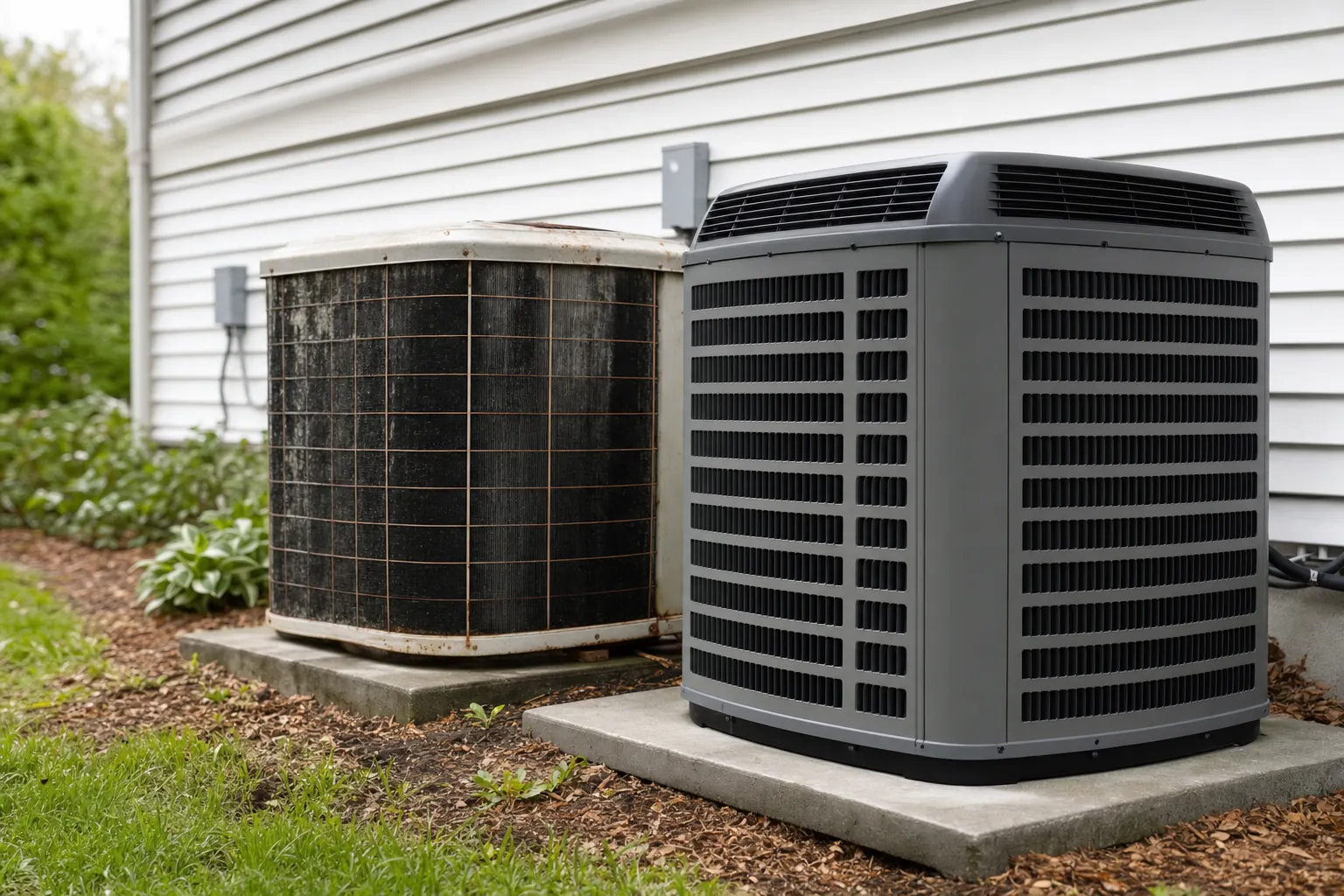
A real HVAC installation quote should show more than one bottom-line number. For a split-system install, the line items usually start with the indoor unit and outdoor unit, the evaporator coil, thermostat, equipment pad or brackets, basic sheet-metal transitions, drain materials, refrigerant line connection work, electrical whip and disconnect, start-up, and haul-away of the old equipment if there is any. Labor is often folded into a system price, but better proposals still describe the scope: remove existing equipment, set new equipment, connect gas or electric service, evacuate and charge the system, test airflow, and commission the system.
What many homeowners assume is included often is not. Duct replacement, asbestos abatement, major duct sealing, a new return drop, electrical panel upgrades, condensate pump relocation, crane service, permits, and drywall or carpentry repairs are commonly separate charges on an HVAC installation proposal. If the home needs a new flue liner for a high-efficiency furnace, a larger filter cabinet, or a new line set because the old refrigerant piping is contaminated or undersized, those items may appear as add-ons rather than part of the base install.
Accessory items can expand the job even when the main equipment looks similar. A media filter cabinet, thermostat, condensate pump, and permit or inspection requirements should be itemized separately, with unsupported permit amounts excluded from the canonical calculation. New ductwork is a materially different supporting-work scope. A homeowner comparing bids should be able to identify each included component and whether the proposal covers only equipment replacement or a complete HVAC installation.
Why one install bid is $8,500 and another is $13,500 for what sounds like the same system
Two contractors can look at the same house and arrive at different legitimate numbers because they are not necessarily quoting the same job. One may be pricing a basic like-for-like furnace and AC installation using existing line set, existing return, and standard-efficiency equipment, while another includes a load calculation, code updates, a new pad, new safety pan, duct modifications, and permit handling. The homeowner hears "3-ton system" from both, but the second proposal may include several hundred to several thousand dollars of scope the first one leaves out.
Labor assumptions also differ. A crew installing a new air handler in a tight attic, replacing a rusted secondary drain pan, hanging new supports, and correcting poor return air can spend much more time than a crew swapping equipment in a basement with open access. Regional labor rates matter too: the same HVAC installation estimate is commonly higher in dense coastal metros than in smaller inland markets. Brand family, communicating controls, staging, and warranty terms can also explain a spread without either quote being dishonest.
The red flags are less about the number and more about what is missing. Be cautious if an HVAC installation quote has no model numbers, no mention of permits, no AHRI-matched system reference where applicable, no load discussion, and no explanation of whether the installer is reusing old refrigerant piping. Another warning sign is a price that is dramatically lower only because the contractor plans to skip commissioning steps such as nitrogen pressure testing, deep vacuum, airflow setup, and temperature or static-pressure checks. Those details affect how the new system performs for years.
How system type, efficiency, and the house itself move installation cost
HVAC installation cost changes first with the kind of system being put in. A straightforward gas furnace and central AC combination can price differently from an all-electric heat pump with auxiliary heat, and both price differently from a ductless multi-zone setup. Within the same house size, a single-stage system typically estimates lower up front than a two-stage or variable-capacity system because the equipment, controls, and setup are more complex. A simple equipment swap in an accessible utility closet is a different job from building out a new system in a home that never had central heating and cooling before.
Home characteristics matter as much as the equipment label. If the house has undersized returns, leaky branch runs, long line-set distances, low attic clearance, crawlspace moisture damage, or no nearby service platform, the HVAC installation estimate rises because the crew has to create proper conditions for the equipment to work. In older homes, electrical service can be a surprise cost. A disconnect, whip, breaker changes, or a small subpanel addition may add hundreds or more, while a larger panel upgrade can add much more and is usually coordinated separately with electrical work.
Efficiency tier changes both hardware cost and install details. Moving from standard efficiency to higher SEER2, AFUE, or HSPF2 levels often means more expensive condensers, furnaces, coils, controls, and venting arrangements. For 2025-2026 estimates, stepping from an entry-level single-stage matched system to a mid-tier two-stage or higher-efficiency package often shifts the project by several thousand dollars, especially once code-required updates are included. That does not mean premium equipment is automatically the best buy; it means the installation quote should explain exactly what extra features and operating savings the higher tier is intended to deliver.
Ways to lower the install price without buying a bad installation
The cheapest quote is not the same as the lowest cost project. The better way to control HVAC installation cost is to reduce optional scope that does not affect safe operation while keeping the core install standards intact. For example, using a proven non-communicating thermostat instead of a premium touchscreen model, choosing a solid single-stage system instead of variable capacity in a home with modest run time, or scheduling the work before an emergency summer failure can all lower the estimate without automatically lowering quality. Ask which items are performance-critical and which are comfort upgrades.
Homeowners can also save by preparing the job site. Clear access to the attic hatch, basement mechanical room, crawlspace entry, outdoor pad area, and electrical panel before the crew arrives. If stored items have to be moved, labor time goes up. If there are pets, gate issues, or locked utility rooms, avoid day-of-install delays. None of that changes equipment pricing, but on full HVAC installation jobs, easier access can keep labor from stretching into a second day or adding extra helpers.
Another smart move is comparing proposals at equal scope instead of simply asking one company to beat another's price. Ask each bidder to state whether the quote includes permits, thermostat, condensate safety switches, line-set replacement or flush, filter cabinet, duct transitions, and startup/commissioning. Sometimes a middle quote becomes the best value because it includes work that the cheapest quote leaves for change orders later. Financing terms, manufacturer promotions, and off-season scheduling can also influence the total, but they should not replace careful review of the actual installation scope.
When paying more up front is the cheaper decision over the next decade
Spending more on an HVAC installation can make financial sense when the added cost solves a problem that would otherwise keep hurting comfort, reliability, or operating cost. If the existing duct system is badly undersized, a bargain equipment-only install may leave rooms starved for airflow and shorten blower or compressor life. Paying extra now for return improvements, duct sealing, proper filtration, and commissioning is often cheaper than living with a new system that short-cycles, freezes coils, or struggles to heat and cool the house for the next 5 to 10 years.
Higher-efficiency equipment can also pencil out, but only in the right house and climate. A homeowner planning to move in two years may not recover the premium for top-tier variable equipment, while someone expecting to stay 10 years in a region with long cooling or heating seasons may see enough utility savings and comfort benefit to justify it. As a rough 2025-2026 estimate, the jump from a basic standard-efficiency install to a premium high-efficiency system often lands in the low-thousands to several-thousand-dollar range, so the decision should be based on run time, energy rates, and repair-risk tolerance, not sales language alone.
The place where spending more is most often worth it is the installation quality itself. A full HVAC installation that includes correct sizing, refrigerant setup, static-pressure checks, combustion setup where applicable, and permit inspection usually costs more than a hurried swap. But that extra labor is what protects the equipment you just bought. Refrigerant charging, sealed-system work, gas piping, burner adjustment, and high-voltage connections are jobs for a qualified licensed technician, and they are not good places to save a few hundred dollars.
Turn the estimate into a defined project
A whole-system installation should be based on calculated heating and cooling loads and a review of the home’s ducts, electrical service, fuel and venting, drainage, equipment access, and local permit requirements. The design must coordinate heating, cooling, airflow, controls, and any backup heat rather than pricing each cabinet in isolation.
Ask for exact model numbers and rated combinations. The proposal should state capacity, efficiency, staging or modulation, blower type, thermostat, filtration, included accessories, removal, supporting modifications, permits, startup testing, and warranty terms. Undefined allowances should explain what would cause the final price to change.
Evaluate efficiency without relying on a sales claim
Higher rated efficiency can reduce energy use, but savings depend on climate, utility prices, equipment sizing, duct performance, controls, installation quality, and how the home is used. Request an estimate based on your current usage and the proposed system rather than a guaranteed percentage. Comfort, noise, humidity control, and low-temperature performance may be as important as annual energy cost.
Verify incentives separately with the state, utility, or program administrator using the exact model and planned installation date. Program funding and rules can change, and federal HVAC tax-credit availability changed after 2025. A proposal should show the contract price before unconfirmed incentives so the budget remains clear if eligibility changes.
Estimate methodology
How we built these ranges
We develop these ranges from standardized residential project scopes and reviewed pricing inputs, then keep materially different scopes separate instead of presenting one misleading average. Government data supports labor and location adjustments where applicable; it does not publish the final HVAC project range. This page was reviewed on July 22, 2026.
The approved scenario definitions distinguish factors such as system type, capacity / size, efficiency rating, existing ductwork condition. Equipment capacity, model, access, and documented labor and material assumptions define each scope. Unsupported permit, tax, rebate, utility, insurance, financing, and warranty amounts are excluded from the canonical calculation.
Compare written, itemized proposals for the same model numbers and scope. Ask whether diagnosis, labor, refrigerant, permits, disposal, warranty registration, and any required supporting work are included.
Sources and fact-checking
Reviewed July 22, 2026. We favor primary government and standards sources for safety, efficiency, and regulatory claims. These references support only the specific technical, safety, efficiency, regulatory, or consumer-guidance claims described on their cards. They do not establish the displayed price ranges.
- Manual J residential load calculationAir Conditioning Contractors of AmericaRoom-by-room heating and cooling load calculations used for equipment sizing.
- Consumer central air conditioners and heat pumpsU.S. Department of EnergySEER2, EER2, HSPF2, test procedures, and current federal efficiency standards.
Want a real number for your system?
Connect with HVAC professionals that service your area for an accurate, no-obligation estimate.