Quick summary
Match what you notice to a safe next step
These observations can narrow the starting service, but they do not confirm which part has failed.
What you notice
Low or empty heating oil supply
What it may point to
If the tank is out of oil, the burner cannot build a stable spray pattern or ignite at all, and the system often clicks or runs briefly before going into safety lockout.
Safe next action
Check the thermostat display and the normal service switch
What you notice
Burner lockout after ignition failure
What it may point to
The control has detected that the burner did not light or did not prove flame, so it shuts the burner down to prevent repeated raw-oil firing attempts.
Safe next action
Turn it off and describe the sound to a technician
What you notice
Clogged oil filter, strainer, or nozzle
What it may point to
Restricted oil flow can let the motor run and transformer energize without delivering the fine oil mist needed for ignition, especially after a delivery delay or with sludge in the tank.
Safe next action
Reset it no more than once; stop if it trips again
What you notice
Failed ignition components or flame sensor/cad cell problem
What it may point to
The burner may have oil and power but still not fire because the igniter is weak, the electrodes are misadjusted, or the cad cell is not proving flame and the control locks out.
Safe next action
Record the exact code and consult the owner manual without opening panels
Safe things to check
- Confirm the thermostat mode and setpoint
- Inspect the air filter and replace it if visibly dirty
- Make sure visible supply and return vents are open
Do not attempt
- Do not adjust gas valves, burners, ignition parts, or venting
- Do not open sealed electrical or equipment panels
- Do not bypass a safety switch or force repeated restarts
A few quick questions
Refine the best next step
Question 1 of 3
- 1How much of the home is affected?
- 2What is the system doing right now?
- 3When did this begin?
What this symptom can mean
Use the evidence you can observe
What this symptom usually means on an oil furnace
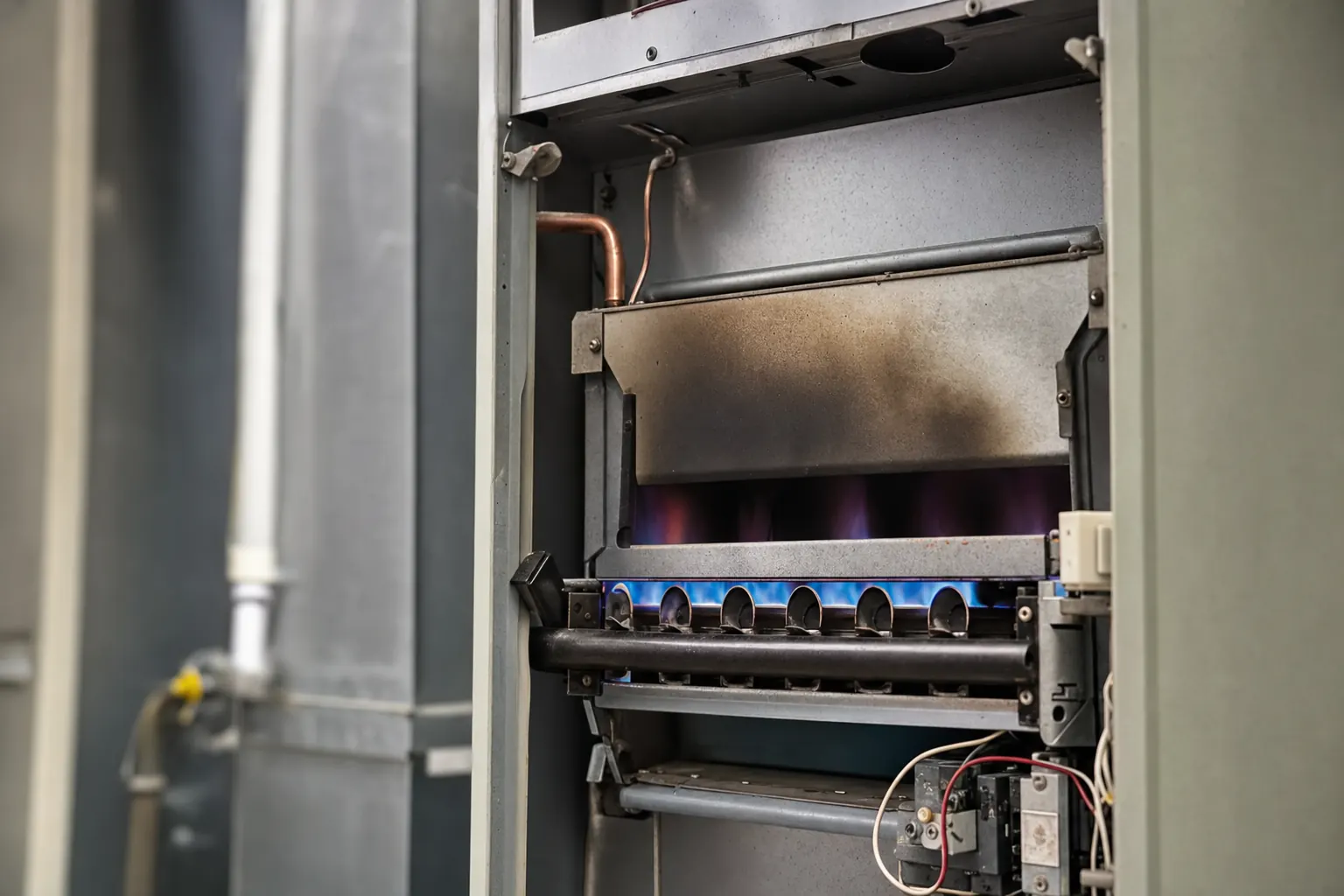
When an oil furnace is not firing, the problem is usually in the burner sequence itself: no oil reaching the nozzle, no spark at the electrodes, or no flame being proven by the safety control. That is different from a furnace that runs but blows cold air, because here the burner never establishes a normal oil flame. Homeowners often notice either total silence at the burner, or a short start attempt with a hum, click, or motor sound followed by shutdown.
What you can tell from the sounds and indicators
A completely silent oil furnace points first to lost power at the breaker, emergency switch, burner service switch, or a failed primary control. If the burner motor starts or you hear a click but there is no sustained flame sound, that points more toward no oil flow, a clogged nozzle/filter, weak ignition, or lockout after a failed start. If the control display or reset indicator shows an alert, the unit is often doing exactly what it was designed to do: stopping further firing attempts because flame was not detected in the trial-for-ignition period.
The homeowner checks that actually help
The most useful safe checks are specific to oil heat: look at the oil tank gauge, and if your system has a visible oil shutoff valve near the tank or filter, make sure it has not been closed. Check whether the breaker or furnace switch is off, and note any code or flashing light on the burner control. Avoid repeated pushes of the burner reset button; one press after confirming oil supply is generally the practical limit, because multiple resets can pump unburned oil into the chamber and make the eventual startup unsafe.
What an oil-burner technician typically does
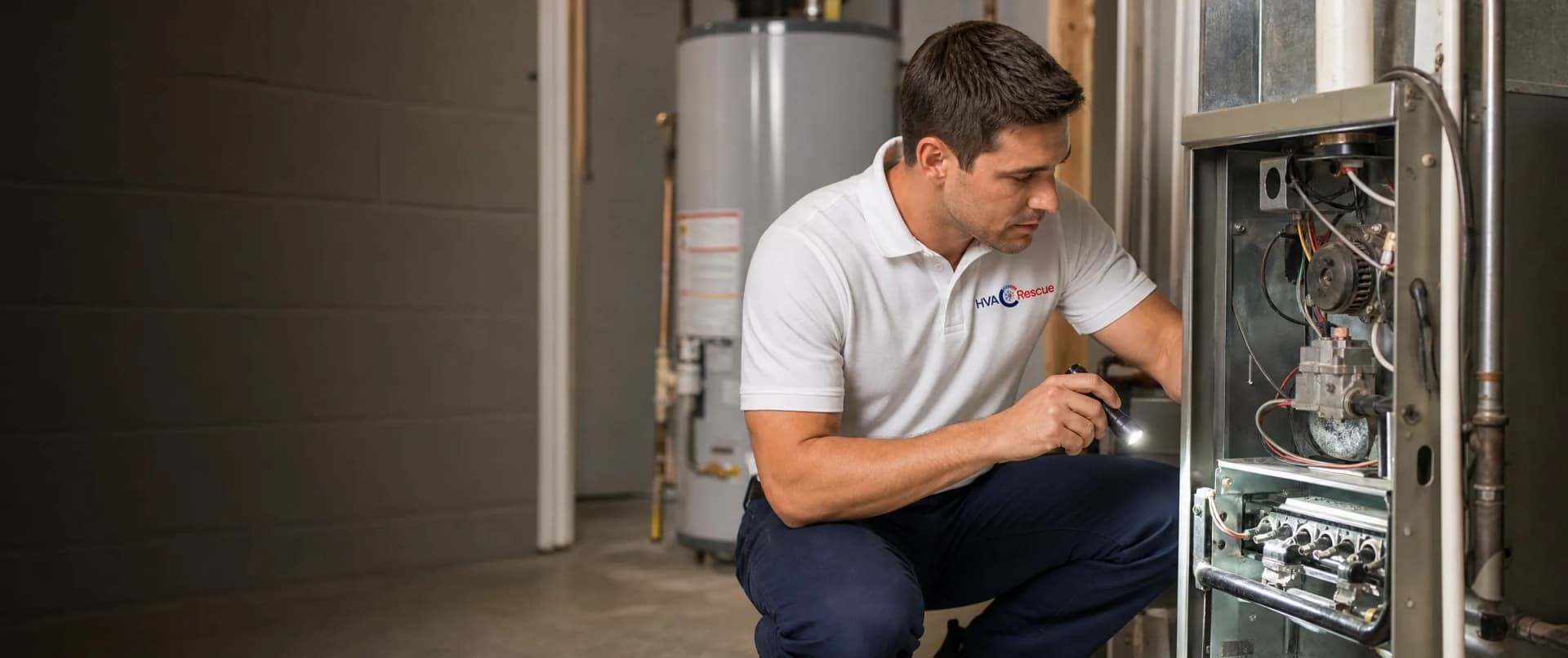
On a service visit, the technician will usually verify line voltage and control operation, inspect the burner for lockout history, confirm oil supply and vacuum at the pump, and check the filter, pump strainer, and nozzle for restriction. They may test the igniter, electrode setting, and cad cell flame-sensing circuit, then run the burner and measure combustion with instruments after any repair. If the tank ran empty, the oil line may need to be bled and the burner re-primed before normal firing can resume.
What affects the repair cost
Cost depends heavily on whether the fix is a straightforward restore-and-clean job or a deeper burner repair. Typical 2025-2026 US ranges are roughly $150-$350 for a basic diagnostic/service call, about $200-$500 for common parts and labor such as a nozzle, filter, cad cell, or ignition tune-up, and around $400-$900+ if the primary control, igniter, or oil pump needs replacement. Running out of oil can add time if the line must be bled and the burner reset safely, and sludge-contaminated tanks can turn a simple no-fire call into a larger fuel-delivery and cleanup issue.
Cost ranges are estimates developed from standardized project scopes and reviewed pricing inputs. Government labor and regional cost data are used where applicable. See our Pricing Methodology for the exact sources, calculations, and review date. Actual prices vary by property, scope, materials or equipment, location, and provider.
When to turn the system off
- Stop if you smell gas, see smoke or sparks, or hear a carbon-monoxide alarm
- Stop if water reaches powered equipment or a breaker trips again
- Stop if loud grinding, booming, or heavy ice appears
When to call for help
- Call when the symptom continues after the safe checks
- Call promptly when comfort is lost for the whole home
- Describe when it started and any water, ice, noise, odor, alert, or breaker activity
Cost guidance
What could this cost to fix?
Price depends on the actual cause, equipment, access, and local labor. Compare the national ranges in the Furnace Repair Cost guide, or check service availability for your system.
Find local help for Heating Repair
We will keep this problem and recommended service selected while you answer a few quick availability questions.
Browse HVAC help by stateFrequently asked questions
Oil furnace is not firing: common questions
Why does my oil furnace click or hum but never actually fire?
Can I press the reset button on my oil furnace more than once?
Will an empty oil tank make the furnace completely silent?
How long does it take to fix an oil furnace that won't fire?
Why is my oil burner showing a lockout light or fault code?
Sources and review standard
Last updated July 18, 2026. Last reviewed July 18, 2026. HVAC Rescue reviews problem pages for homeowner-safe boundaries, service routing, source quality, and unsupported claims. No named technical reviewer is shown unless a qualified HVAC reviewer has completed that review.