Quick summary
Match what you notice to a safe next step
These observations can narrow the starting service, but they do not confirm which part has failed.
What you notice
Loose outer panel, door, or nearby sheet-metal connection
What it may point to
A light rattle from the cabinet usually means vibration is shaking an access panel, screw, or metal joint. That is often a smaller repair, but the noise can mask a deeper vibration problem if it started suddenly.
Safe next action
Turn the system off before visually checking the exterior
What you notice
Blower wheel damage or worn blower motor bearings
What it may point to
Scraping, grinding, or a rumbling sound during the heat cycle often points to the blower assembly contacting its housing or a motor that is wearing out. If it keeps running this way, the motor can seize and leave you without heat.
Safe next action
Stop the system to prevent additional damage
What you notice
Delayed ignition in a gas furnace
What it may point to
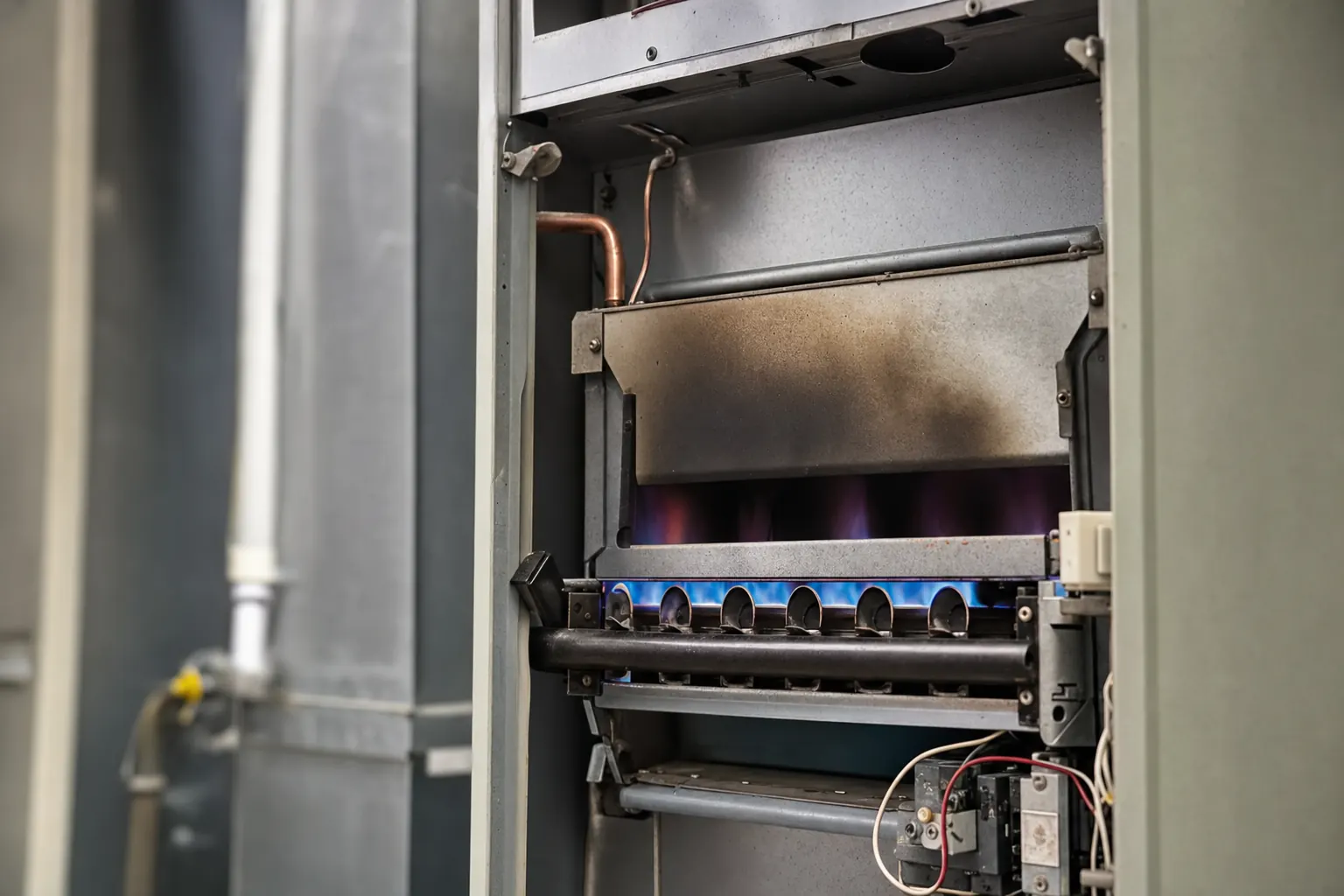
A boom or hard bang right as the burners light usually means gas is building up before ignition because the burners are dirty, crossover ports are restricted, or the ignition system is not lighting smoothly. That is a burner-combustion issue that should be checked soon by a qualified technician.
Safe next action
Turn the heating equipment off and request furnace or boiler service
What you notice
Failing run capacitor, stuck relay, or inducer/blower motor that cannot start
What it may point to
A buzzing or humming sound without the furnace actually starting often means the control is calling for a motor to run, but the motor is stalled or the electrical starting component is weak. Repeated attempts can overheat the motor or damage the control board.
Safe next action
Do not open panels; arrange professional testing
Safe things to check
- Confirm the thermostat mode and setpoint
- Inspect the air filter and replace it if visibly dirty
- Make sure visible supply and return vents are open
Do not attempt
- Do not adjust gas valves, burners, ignition parts, or venting
- Do not open sealed electrical or equipment panels
- Do not bypass a safety switch or force repeated restarts
A few quick questions
Refine the best next step
Question 1 of 3
- 1How much of the home is affected?
- 2What is the system doing right now?
- 3When did this begin?
What this symptom can mean
Use the evidence you can observe
What this noise usually points to
Unusual furnace noises are valuable clues because the timing and sound quality often identify the failing part. A faint rattle from an accessible panel is usually vibration from sheet metal or a loose fastener, while scraping or grinding is more consistent with a blower wheel or motor bearing problem inside the cabinet. A single boom at ignition is different from both of those: it points to delayed burner ignition rather than a loose panel or bad blower.
How to tell the common causes apart
Start with when the sound happens. If you hear a light metallic rattle only while the blower is moving air, and it seems to come from the outside skin of the furnace, the cabinet or nearby duct connection is a likely source. If the sound is loud, harsh, and continues while the furnace runs, especially as scraping, grinding, or repeated banging, the blower assembly is more likely than the burners.
If the noise is a brief boom exactly when heat starts, that pattern fits delayed ignition in a gas furnace. If the furnace only buzzes or hums and never fully starts a heat cycle, that points more toward a stalled inducer motor, blower motor, contactor/relay issue, or a weak capacitor rather than a loose panel. These are different failures, which is why the sequence of events matters more than the volume alone.
What a technician usually checks on this call
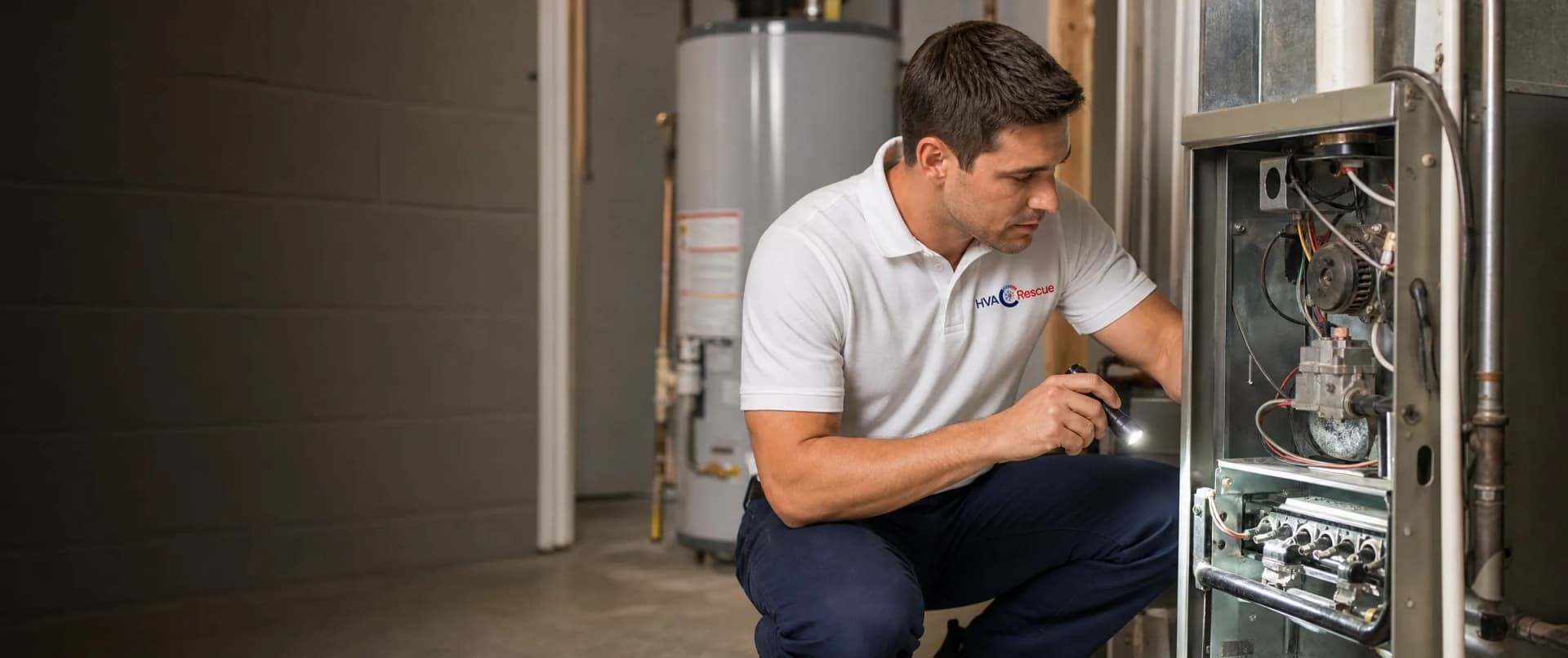
A service visit for a noisy furnace usually begins with reproducing the sound and identifying which stage of operation it occurs in: inducer start, ignition, burner run, blower start, or shutdown. The technician will typically inspect and secure cabinet panels, check the blower wheel for looseness or rubbing, test motor bearings and amp draw, and inspect the first section of duct for movement. If the noise is a boom at startup, they will inspect the burners, ignition components, flame carryover, and combustion setup rather than treating it like a simple vibration complaint.
What affects repair cost
Cost depends heavily on what kind of noise you have. Tightening panels or adding support to vibrating sheet metal is usually at the low end, while replacing a blower motor, wheel, inducer motor, or capacitor is more involved because parts and labor both increase. Delayed ignition repairs can range from burner cleaning and adjustment to replacing ignition-related parts; typical 2025-2026 US repair estimates often run about $150-$400 for minor vibration or capacitor issues, $400-$1,200 for many motor-related repairs, and roughly $200-$900 for common ignition-related furnace repairs depending on the exact part and access.
Cost ranges are estimates developed from standardized project scopes and reviewed pricing inputs. Government labor and regional cost data are used where applicable. See our Pricing Methodology for the exact sources, calculations, and review date. Actual prices vary by property, scope, materials or equipment, location, and provider.
Do not keep running the furnace just to see if the noise gets better. Mechanical noises usually get louder as a motor, wheel, or mounting point wears further, and ignition booms do not resolve safely on their own. If you ever also notice gas odor, smoke, signs of burning, or carbon monoxide alarm activity, leave the building and call the gas utility or emergency services from outside.
When to turn the system off
- Stop if you smell gas, see smoke or sparks, or hear a carbon-monoxide alarm
- Stop if water reaches powered equipment or a breaker trips again
- Stop if loud grinding, booming, or heavy ice appears
When to call for help
- Call when the symptom continues after the safe checks
- Call promptly when comfort is lost for the whole home
- Describe when it started and any water, ice, noise, odor, alert, or breaker activity
Cost guidance
What could this cost to fix?
Price depends on the actual cause, equipment, access, and local labor. Compare the national ranges in the Furnace Repair Cost guide, or check service availability for your system.
Find local help for Furnace Repair
We will keep this problem and recommended service selected while you answer a few quick availability questions.
Browse HVAC help by stateFrequently asked questions
Furnace is making a strange noise: common questions
Why does my furnace make a booming sound when it first lights?
My furnace is humming but not starting. What part usually causes that?
Is a rattling furnace panel a small issue or a sign of something bigger?
How can I tell furnace duct popping from an actual furnace bang?
How long does a noisy furnace diagnosis usually take?
Sources and review standard
Last updated July 18, 2026. Last reviewed July 18, 2026. HVAC Rescue reviews problem pages for homeowner-safe boundaries, service routing, source quality, and unsupported claims. No named technical reviewer is shown unless a qualified HVAC reviewer has completed that review.