Quick summary
Match what you notice to a safe next step
These observations can narrow the starting service, but they do not confirm which part has failed.
What you notice
Dust and debris burning on the heat exchanger or burners
What it may point to
A brief dusty odor at the first few cycles of the season is common, but a smell that lingers for days usually means heavy buildup inside the furnace that needs cleaning and inspection.
Safe next action
Check the filter and look for visible moisture without opening equipment
What you notice
Overheating blower motor, capacitor, or belt-related friction
What it may point to
A hot, sharp burning smell during every heat call can mean the air-moving parts are running too hot, which can lead to motor failure and a no-heat breakdown if service is delayed.
Safe next action
Turn the system off and request prompt service
What you notice
Scorched wiring, failing control board, or melted wire insulation
What it may point to
An electrical or melting-plastic smell points to overheating components or arcing inside the furnace cabinet, which is a fire risk and not something to keep running.
Safe next action
Stop the furnace or boiler and arrange qualified inspection
What you notice
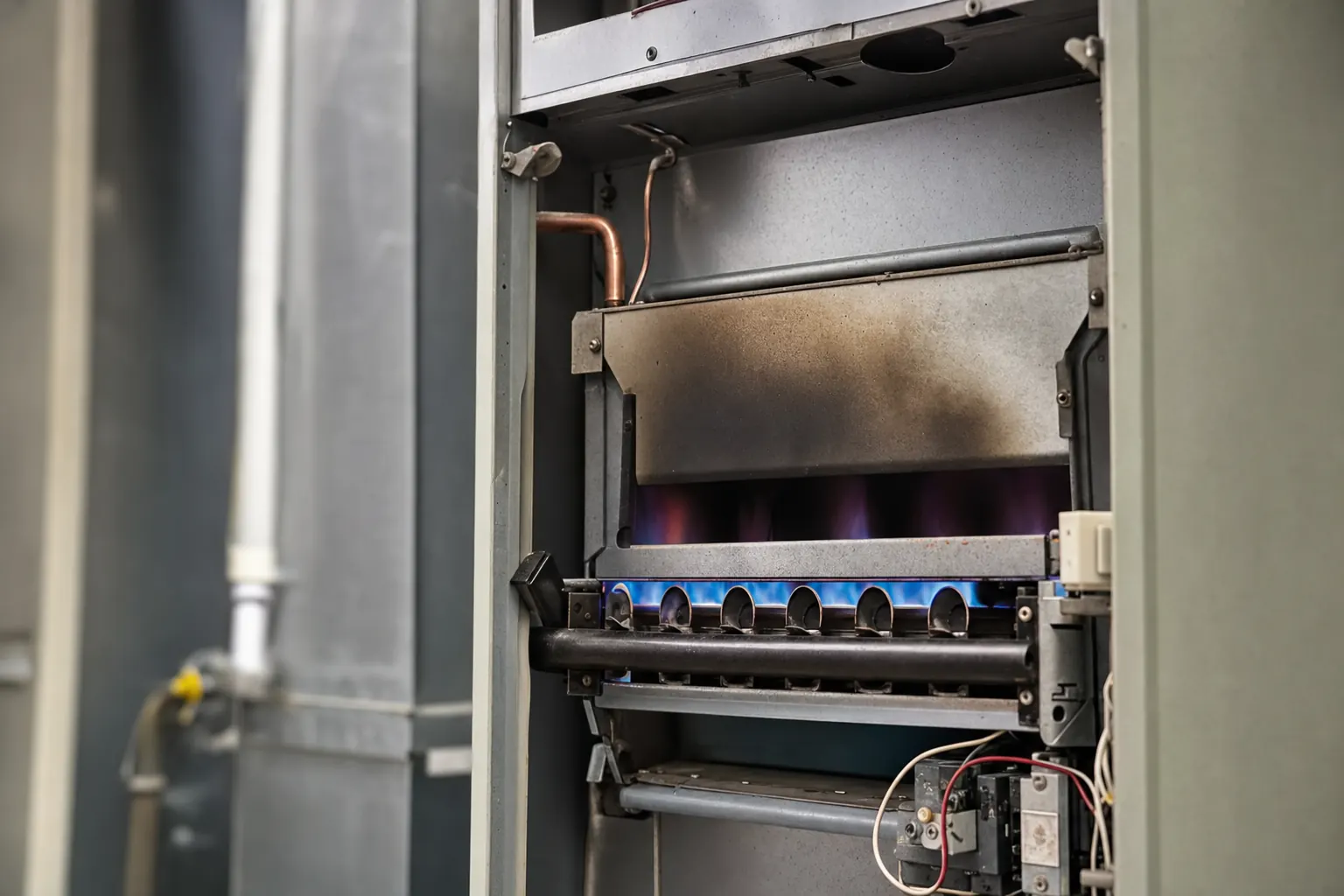
Improper burner combustion or a cracked heat exchanger causing soot
What it may point to
Black residue around the furnace or venting suggests incomplete combustion, which can damage the furnace and create a carbon monoxide hazard requiring immediate professional attention.
Safe next action
Check filter condition and whether ventilation controls are enabled
Safe things to check
- Confirm the thermostat mode and setpoint
- Inspect the air filter and replace it if visibly dirty
- Make sure visible supply and return vents are open
Do not attempt
- Do not adjust gas valves, burners, ignition parts, or venting
- Do not open sealed electrical or equipment panels
- Do not bypass a safety switch or force repeated restarts
A few quick questions
Refine the best next step
Question 1 of 3
- 1How much of the home is affected?
- 2What is the system doing right now?
- 3When did this begin?
What this symptom can mean
Use the evidence you can observe
What a persistent burning smell from a furnace usually means
A furnace that keeps smelling burnt is not behaving like one that simply sat unused all summer. A normal first-use dust smell usually fades within a few heating cycles or by the end of the day. When the odor returns every time the heat runs, smells like hot plastic or wiring, or leaves black residue near the equipment, the smell is coming from something inside the heating process or the electrical components that power it.
What you can tell from the kind of odor
A dry, dusty smell that gradually gets lighter is more consistent with dirt on the heat exchanger or burners. A sharp electrical odor or a melting-plastic smell points more toward overheated wiring, a failing capacitor, a control board, or a blower motor running too hot. A musty or stale heated smell often means the furnace is warming dust, debris, or contamination in the cabinet or nearby ductwork rather than producing clean heated air.
Soot or black residue around the furnace, burner area, or vent connector is a different warning sign than odor alone. That points to improper combustion, burner issues, or venting problems rather than ordinary dust. Because combustion problems can involve carbon monoxide, any soot, smoke, or fumes means you should leave the building and call the gas utility or emergency services from outside instead of trying to inspect the furnace yourself.
What happens during a furnace repair visit for this symptom
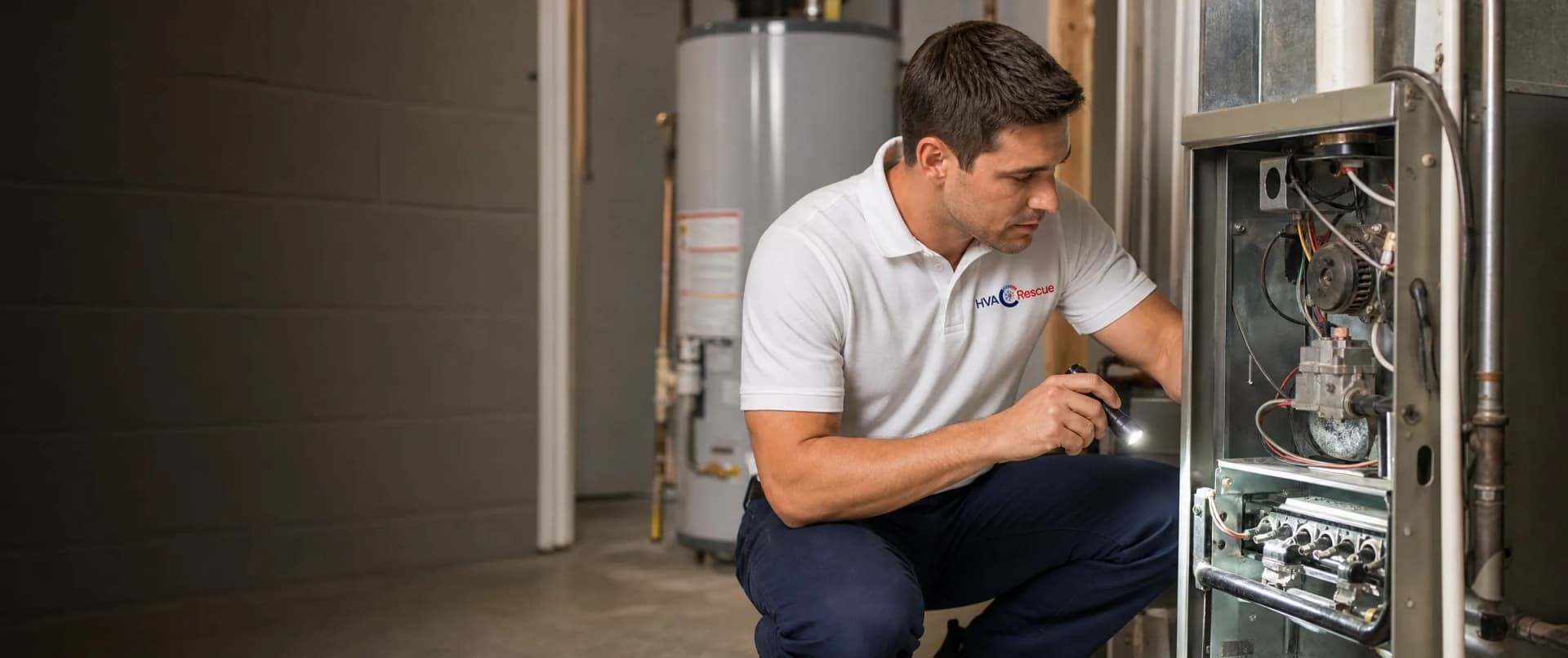
A technician will usually start by identifying whether the smell is coming from the burner compartment, blower section, control area, or duct connection. They may inspect for soot, test electrical components for overheating, check amp draw on the blower motor, examine wiring and the control board for scorching, and inspect the burners and heat exchanger for signs of poor combustion or damage. If the smell is strongest at startup, they will often run the furnace through multiple cycles to pinpoint exactly when the odor appears.
What affects repair cost
Cost depends heavily on what is actually burning. Cleaning accumulated debris is usually less expensive than replacing an overheated blower motor, capacitor, wiring harness, or control board. Typical 2025-2026 US ranges are roughly $150-$400 for cleaning and minor adjustments, about $200-$700 for capacitor or small electrical repairs, around $500-$1,575+ for blower motor or control board replacement, and substantially more if combustion damage, heat exchanger failure, or venting corrections are involved.
Cost ranges are estimates developed from standardized project scopes and reviewed pricing inputs. Government labor and regional cost data are used where applicable. See our Pricing Methodology for the exact sources, calculations, and review date. Actual prices vary by property, scope, materials or equipment, location, and provider.
This symptom is worth scheduling soon even if the furnace still heats the house. Burning smells tend to get worse under repeated heat cycles, and electrical insulation, motors, or combustion components usually do not recover on their own. If the odor changes from dusty to electrical, or if you notice soot, smoke, headaches, or nausea, treat it as a leave-the-house situation rather than a routine repair.
When to turn the system off
- Stop if you smell gas, see smoke or sparks, or hear a carbon-monoxide alarm
- Stop if water reaches powered equipment or a breaker trips again
- Stop if loud grinding, booming, or heavy ice appears
When to call for help
- Call when the symptom continues after the safe checks
- Call promptly when comfort is lost for the whole home
- Describe when it started and any water, ice, noise, odor, alert, or breaker activity
Cost guidance
What could this cost to fix?
Price depends on the actual cause, equipment, access, and local labor. Compare the national ranges in the Furnace Repair Cost guide, or check service availability for your system.
Find local help for Furnace Repair
We will keep this problem and recommended service selected while you answer a few quick availability questions.
Browse HVAC help by stateFrequently asked questions
Furnace has a persistent burning smell: common questions
Why does my furnace smell burnt every time it turns on, not just the first day of the season?
What does it mean if my furnace smells like burning plastic?
Is black soot near my furnace related to the burning smell?
How long should a normal furnace dust smell last?
Can a furnace burning smell go away on its own?
Sources and review standard
Last updated July 18, 2026. Last reviewed July 18, 2026. HVAC Rescue reviews problem pages for homeowner-safe boundaries, service routing, source quality, and unsupported claims. No named technical reviewer is shown unless a qualified HVAC reviewer has completed that review.