
Reviewed July 22, 2026
HVAC Rescue Editorial Team
Editorial StandardsStart with the need
When furnace tune-up is the right next step
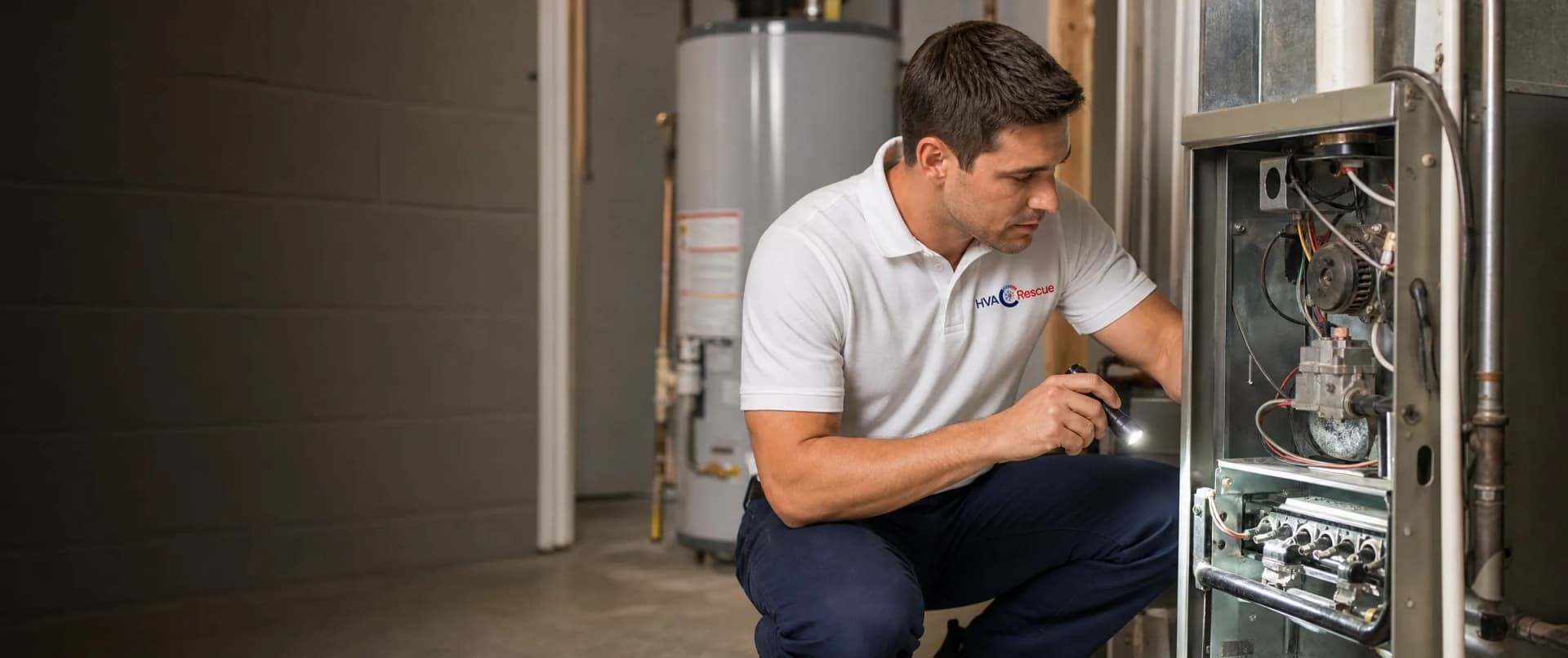
Bangor conditions can shape a visit for furnace tune-up without proving a particular failure. Heating season is the main event in Bangor, and it puts real pressure on furnaces, boilers, and heat pumps that have to keep up for a long stretch. In Penobscot County, a pre-season check is especially useful because... Prepare a functioning furnace for heating season while separating routine inspection from any active ignition, combustion, airflow, or control failure. A furnace tune-up should document the startup sequence, burners and flame, venting, safeties, temperature rise, blower, filter, electrical operation, and applicable fuel conditions without suggesting that future performance is certain.
A furnace tune-up should document the startup sequence, burners and flame, venting, safeties, temperature rise, blower, filter, electrical operation, and applicable fuel conditions without suggesting that future performance is certain.
Understand the possibilities
What furnace tune-up should inspect
Dirty air filter
A clogged filter restricts airflow through the furnace. That can make heating feel weak, cause some rooms to stay cool, and sometimes contribute to short cycling because the system cannot move heat as intended.
Dust on components
Dust and debris can build up on internal parts over time. That buildup can affect how smoothly the furnace starts and runs, and it may show up as reduced efficiency, odd smells at startup, or performance that seems worse than last season.
Loose or worn parts
Normal use can let connections loosen or parts drift out of adjustment. The furnace may still run, but you might notice new noises, uneven heating, or operation that seems less consistent than before.
Thermostat issues
If thermostat settings are wrong or the thermostat needs batteries or calibration attention, the furnace may not run when expected or may cycle at the wrong times. The result can feel like unreliable heat even when the furnace itself is capable of running.
Seasonal wear
A furnace can develop small changes over a heating season even without a single obvious failure. Annual inspection and cleaning help catch wear that affects efficiency, startup, shutdown, or overall reliability before colder weather increases the strain.
Homeowner-safe boundary
Furnace Tune-Up safety boundaries
Homeowner checks should stay simple and external. They can rule out common airflow, thermostat, and power issues, but they are not a substitute for opening the furnace, testing controls, or inspecting gas-burning components. If a basic check does not clearly restore normal operation, the safer next step is professional service.
- 1
Check the air filter
Look at the furnace filter and replace or clean it on its regular schedule. A dirty filter can limit airflow and make heat feel weak or uneven. If a fresh filter improves airflow, that points to a maintenance issue rather than a major failure.
- 2
Set the thermostat
Confirm the thermostat is set to heat mode and a comfortable temperature above the current room temperature. Replace thermostat batteries if needed. If the furnace responds normally after that, the problem may have been a control setting rather than the furnace itself.
- 3
Open vents and returns
Make sure supply and return vents are open and not blocked by furniture, rugs, or other items. Closed or obstructed vents can make some rooms feel colder and can reduce overall airflow through the system.
- 4
Confirm power is on
Check that the furnace switch and breaker are on. If the breaker has tripped, reset it once. If it trips again or the furnace still does not run normally, stop there and arrange professional service rather than continuing to reset power.
Stop and use the appropriate emergency or professional help for
- A gas odor, carbon-monoxide alarm, soot, flame rollout, combustion fumes, or damaged venting is not a tune-up item and requires immediate safety action.
- Escalate when maintenance is associated with an immediate safety risk or dangerous loss of comfort.
- Escalate when tune-up is associated with an immediate safety risk or dangerous loss of comfort.
- Escalate when inspection is associated with an immediate safety risk or dangerous loss of comfort.
- Escalate when filter is associated with an immediate safety risk or dangerous loss of comfort.
- Escalate when seasonal is associated with an immediate safety risk or dangerous loss of comfort.
Call a qualified HVAC professional when the furnace is overdue for service, basic checks do not explain the problem, or the concern involves parts tied to combustion, venting, or safety controls. Routine maintenance is also the right time to have the furnace inspected before heavy seasonal use.
Annual service is overdue
If it has been a year or more since the last professional furnace service, schedule a tune-up. Annual maintenance helps catch wear, dirt buildup, and adjustments that are easy to miss from outside the cabinet. The system usually does not need to be shut off for this alone if it is operating normally.
New noises or smells
Unusual noises, odd smells, or short cycling can signal airflow problems, drifting components, or other developing faults. Because these symptoms can have more than one cause, they should be inspected rather than guessed at. If the smell is a gas smell, smoke, a carbon-monoxide alarm, or a burning-electrical smell, leave the building and contact the gas utility or emergency services from outside.
Weak or uneven heating
If heat feels weak across the home or some rooms stay cool while the furnace runs, a professional can check airflow, thermostat operation, and how the furnace is performing through a heating cycle. The furnace does not always need to be shut off, but continued poor performance should not be ignored.
Gas or heat-exchanger concerns
Any concern involving gas, the burner assembly, or the heat exchanger belongs to a qualified professional. These parts affect safe operation, and they are not suitable for homeowner troubleshooting. If operation seems unsafe, stop using the furnace until it can be evaluated.
Diagnosis before scope
How furnace tune-up should be evaluated
- Step 1
Schedule your tune-up
Tell us about your furnace and any symptoms so the visit can be focused on what matters for your system.
- Step 2
Get connected locally
We help match you with HVAC professionals that service your area for seasonal furnace maintenance. Availability may vary by location and provider.
- Step 3
Inspection and testing
A professional inspects key components, checks safety controls, and tests how the furnace starts, runs, and shuts down.
- Step 4
Cleaning and adjustment
Accessible parts are cleaned and adjusted as needed, and the filter and airflow are checked to support efficient operation.
Relevant local context
Furnace Tune-Up conditions that matter locally in Bangor
For furnace tune-up, select only local facts about pre-heating-season runtime venting filter and envelope; omit unrelated parts of the generic city HVAC profile.
Seasonal operating context
Heating season is the main event in Bangor, and it puts real pressure on furnaces, boilers, and heat pumps that have to keep up for a long stretch. In Penobscot County, a pre-season check is especially useful because small issues can turn into bigger comfort problems once the cold settles in.
Relevant local scenario
One Bangor scenario that can change a visit for furnace tune-up is documented here: Tree Streets homes with older layouts and heating systems that may not match modern comfort expectations. The homeowner can also describe this need: Strange furnace noises. Together, those details provide useful context while leaving equipment diagnosis and project scope to measurements at the property.
Property and access
Tree Streets homes with older layouts and heating systems that may not match modern comfort expectations
Planning consideration
To prepare for furnace tune-up in Bangor, gather the system history, access constraints, observed need, and project goals. The selected city consideration is this: A well-tuned heat pump can be a strong fit for many Bangor homes, but cold-season performance should be evaluated by a professional. At the state level, heating is the central HVAC concern in Maine, where long, cold winters demand reliable warmth for much of the year. Furnaces, boilers, and heat pumps are all used, and a failure during Use maintenance for a working furnace that needs inspection and cleaning; route no heat, gas odor, soot, rollout, limit cycling, unusual flame, or recurring shutdown to repair or emergency response.
Cost and scope
What can affect the final scope?
Tune-up quotes can vary based on the furnace type, how easy the system is to access, and how much inspection, cleaning, and testing the visit includes. A basic seasonal visit may differ from one that also addresses noticeable symptoms, a neglected filter, or conditions that require more time to document and explain. If follow-up repairs are recommended, those are typically separate from routine maintenance.
What to expect
From symptom to a clear next step
A qualified technician narrows the issue by observing how the furnace starts, runs, and shuts down, then checking key components and safety controls that affect airflow, ignition, and normal heating performance. That process helps separate simple maintenance needs from signs that a repair may be developing, so recommendations are based on the furnace's actual condition rather than guesswork.
- Step 1
Tell us you need furnace maintenance
Let us know you're looking for a furnace tune-up so we can route your request appropriately.
- Step 2
Share your location
Tell us where you are in Maine so we can match you with providers that service your area.
- Step 3
Get connected to a provider
We connect you with an independent provider for seasonal heating maintenance. Because HVAC Rescue is a nationwide connection service, availability may vary by location and provider.
- Step 4
Discuss scope and timing
Confirm what the tune-up includes, ask any questions about your heating system, and schedule the visit directly with the provider.
- Step 5
On-site tune-up visit
The provider inspects the furnace, cleans accessible components, checks operation, and reviews key heating and safety functions as part of the maintenance appointment.
Common questions
Furnace Tune-Up in Bangor: questions and answers
What local conditions matter for furnace tune-up in Bangor?
What should I document before furnace tune-up help in Bangor?
How often should I get a furnace tune-up in Maine?
What does a furnace tune-up include in Maine?
Does HVAC Rescue perform furnace tune-ups itself in Maine?
Technical and safety guidance is supported by the sources below. Local context is limited to the service-relevant city facts selected by the repository and is not evidence that a particular component has failed.
Sources and fact-checking
Reviewed July 22, 2026. We favor primary government and standards sources for safety, efficiency, and regulatory claims. These references support the technical and consumer guidance on this page.
- Heating and cooling maintenance checklistENERGY STARProfessional tune-up scope, filters, airflow, coils, drains, and safety checks.
- Clean heating and coolingENERGY STARCentral-system sizing, efficiency, replacement planning, installation, and maintenance.
- Air cleaners and air filters in the homeU.S. Environmental Protection AgencyFilter performance, indoor-air limitations, and proper use of portable and HVAC filters.