
Reviewed July 27, 2026
HVAC Rescue Editorial Team
Editorial StandardsStart with the need
When furnace repair is the right next step
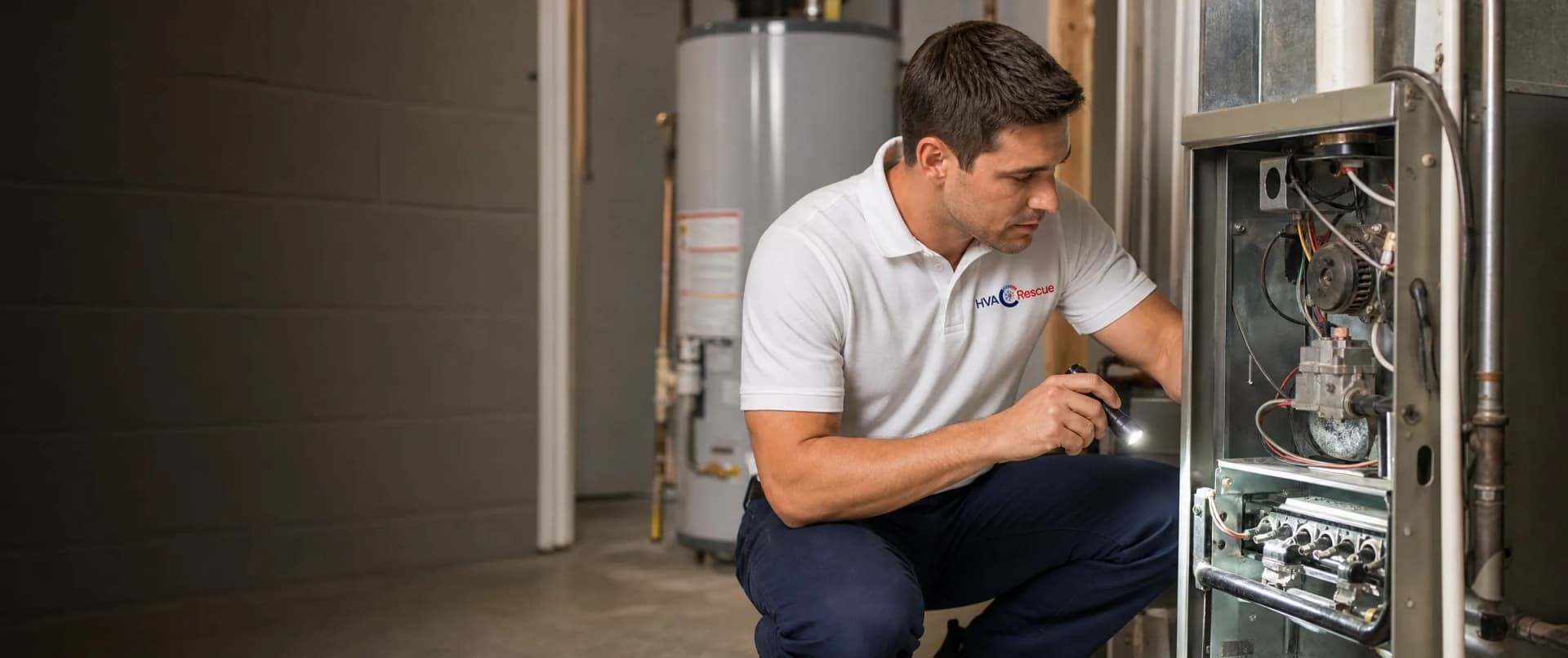
Furnace Repair is the right starting point in Rutland when the observed need matches its scope. Determine which part of the furnace startup, combustion, airflow, or limit sequence is interrupting heat. A relevant local factor is documented here: Heating carries the load for much of the year in Rutland, especially in older houses where drafts and uneven heat show up fast once temperatures drop. In Downtown, Northwest, and older pockets of the city, homeowners often want... Furnace repair should verify the call for heat, inducer and pressure proving, ignition, flame sensing, blower timing, temperature rise, venting, and safeties in sequence.
Furnace repair should verify the call for heat, inducer and pressure proving, ignition, flame sensing, blower timing, temperature rise, venting, and safeties in sequence.
Understand the possibilities
What can shape a furnace repair diagnosis
Ignition or flame sensing
On a gas furnace, the burners must light correctly and the control must confirm that flame is present. A dirty flame sensor or ignition problem can let the furnace start and then shut down within seconds, or prevent heating from starting at all.
Restricted airflow
A clogged air filter or blocked airflow can make the furnace overheat. When that happens, a safety limit may shut the burners or heating elements off early, which can cause short cycling, weak heat, or air that feels cool at the vents.
Blower motor problems
The blower has to move heated air through the home at the right time. If the blower motor or capacitor fails, the furnace may make noise, move little air, or stop delivering heat even if part of the heating sequence begins normally.
Thermostat or control fault
The thermostat and control board tell the furnace when to start and how long to run. If either one fails, the furnace may stay silent, run at the wrong time, or stop heat before the home reaches the set temperature.
Venting or condensate issues
Some furnaces depend on a clear flue path and proper drainage to run safely. A blocked flue area or condensate problem can interrupt the heating cycle and lead to shutdowns, especially when the furnace tries to ignite and then quits.
Homeowner-safe boundary
Furnace Repair safety boundaries
Homeowner checks should stay basic and external. The goal is to rule out simple setup or airflow problems, not to open panels, test electrical parts, or work around burners, venting, or controls. If a basic check does not restore normal heat, the next step is professional diagnosis.
- 1
Set the thermostat correctly
Switch the thermostat to heat and set it above the current room temperature. If the furnace starts after that, the issue may have been a setting problem. If nothing changes, the problem is likely elsewhere in the system.
- 2
Replace a dirty filter
If the air filter looks dirty, replace it with the correct size and type for the system. A heavily loaded filter can restrict airflow enough to cause overheating, weak heat, or repeated short cycles.
- 3
Confirm power to the furnace
Make sure the furnace power switch is on and check whether the breaker has tripped. If power was off and the furnace starts normally after it is restored, the interruption may have been the cause. If the breaker trips again, leave the system off and arrange service.
- 4
Clear vents and flue area
Make sure supply vents are open and not blocked by furniture or rugs, and check that the area around the flue is clear. Good airflow and clear venting support normal operation. If the furnace still blows cold air or shuts down, the cause is likely internal.
Stop and use the appropriate emergency or professional help for
- Shut the furnace down and leave for a gas odor or carbon-monoxide alarm; soot, flame rollout, or suspected heat-exchanger damage also require professional safety evaluation.
- Escalate when heating is associated with an immediate safety risk or dangerous loss of comfort.
- Escalate when furnace is associated with an immediate safety risk or dangerous loss of comfort.
- Escalate when boiler is associated with an immediate safety risk or dangerous loss of comfort.
- Escalate when no heat is associated with an immediate safety risk or dangerous loss of comfort.
- Escalate when cold weather is associated with an immediate safety risk or dangerous loss of comfort.
- Escalate when combustion is associated with an immediate safety risk or dangerous loss of comfort.
Call for professional help when the furnace still will not heat after the safe checks, or when the symptoms suggest a safety or component failure. Repeated shutdowns, ignition noises, soot, scorch marks, or abnormal flame appearance can point to problems that should not be handled by a homeowner.
Gas smell or alarm
If you smell gas, a carbon-monoxide alarm sounds, there is smoke, or there is a burning-electrical smell, leave the building and contact the gas utility or emergency services from outside. Do not continue troubleshooting or stay inside to shut the system down.
Boom on ignition
A boom when the furnace lights can mean delayed ignition. That is not a normal startup sound and should be treated as a reason to stop using the furnace until a qualified professional evaluates it.
Soot, scorching, yellow flame
Visible soot, scorch marks, or a yellow burner flame can point to combustion or venting trouble. Shut the furnace off and have it inspected, because those signs go beyond a simple comfort problem.
Repeated short cycling
If the furnace starts and stops over and over, the issue may involve flame sensing, overheating, controls, or venting. Repeated cycling adds wear and can turn a limited fault into a full no-heat breakdown, so the system should be checked soon.
Diagnosis before scope
How furnace repair should be evaluated
- Step 1
Describe the symptom
Note whether the furnace ignites, blows cold, short cycles, or is silent.
- Step 2
Run safe checks
Thermostat, filter, power switch, and breaker.
- Step 3
Connect with a pro
HVAC Rescue helps connect you with furnace repair professionals that service your area.
- Step 4
Inspect the furnace
The technician checks ignition, the flame sensor, the blower, controls, and safety components.
Relevant local context
Furnace Repair conditions that matter locally in Rutland
For furnace repair, select only local facts about cold exposure furnace runtime venting and envelope; omit unrelated parts of the generic city HVAC profile.
Seasonal operating context
Heating carries the load for much of the year in Rutland, especially in older houses where drafts and uneven heat show up fast once temperatures drop. In Downtown, Northwest, and older pockets of the city, homeowners often want a professional to look at furnaces, boilers, ductwork, and distribution before deep cold arrives.
Relevant local scenario
The local scenario for this furnace repair page is specific: Drafty older homes in Downtown and the Gut that lose heat quickly. In a Rutland home, relate that fact to this observed goal or symptom: Blower running but no heat. It is a planning clue, not evidence that every home has the same equipment condition or failure.
Property and access
Northwest and Northeast neighborhoods include older houses that can be drafty and uneven
Planning consideration
For a Rutland appointment involving furnace repair, prepare the equipment history, access details, and decision-changing conditions. The selected city consideration is this: Air sealing matters in older Rutland homes where winter heat slips out fast. At the state level, the heating season is long and demanding, making a reliable system essential through deep winter cold. Seasonal maintenance helps reduce the risk of a failure when it is coldest Repair isolated controls, ignition, airflow, or motor faults when the heat exchanger and system remain safe; discuss replacement when safety, major components, condition, or repeated failure support it.
A balanced decision
Repair or replace?
Repair may be reasonable when
Plenty of furnace faults are clean, contained repairs, especially on a unit that is still within its service life. When the rest of the furnace is sound, replacing the failed part is usually the practical choice.
- The furnace is still within its typical service life and has been maintained
- The problem traces to one part, such as an igniter, flame sensor, or capacitor
- The heat exchanger is intact and there is no combustion safety concern
- The furnace heats efficiently when it runs, without a string of recent failures
- Replacement parts for the model are available and reasonably priced
- The repair cost is small compared with the value the furnace has remaining
Replacement deserves evaluation when
There are situations where pouring money into an aging furnace stops making sense. When age, repeat failures, or a combustion-safety issue appear, a technician can help you weigh whether a new furnace is the better long-term move for your Vermont home.
- The furnace is near or beyond the end of its expected lifespan
- A technician confirms a cracked or corroded heat exchanger
- Service calls have become frequent and the running total keeps climbing
- The unit's efficiency is low, keeping energy bills stubbornly high
- Needed parts are obsolete, back-ordered, or costly to obtain
- A modern high-efficiency furnace could qualify for state or utility incentives
What can affect furnace repair cost?
Furnace repair scope depends on the failed component, furnace type, diagnosis, access, controls, venting, labor, and urgency. This guide explains the common cost drivers and comparison questions.
Furnace repair quotes vary because the underlying failure can range from a simple ignition-related fix to a major internal component problem. The furnace type matters, since gas and electric models use different parts and involve different safety considerations. Age can affect parts availability, local labor rates change by area, and pricing may rise during peak winter demand or after-hours service.
| Furnace Repair Cost | Typical range |
|---|---|
| Minor repair (igniter, flame sensor, filter)Common, affordable fixes. | $175 – $575 |
| Moderate repair (blower motor, control board)Mid-range parts and labor. | $500 – $1,600 |
| Major repair (heat exchanger)A cracked heat exchanger often points toward replacement. | $1,325 – $3,950 |
Cost ranges are estimates developed from standardized project scopes and reviewed pricing inputs. Government labor and regional cost data are used where applicable. See our Pricing Methodology for the exact sources, calculations, and review date. Actual prices vary by property, scope, materials or equipment, location, and provider.
See the full furnace repair cost guide for the complete breakdown, then call to get a real quote for your home.
What to expect
From symptom to a clear next step
A qualified technician narrows the fault by confirming the symptom and watching the furnace sequence before replacing parts. On a gas furnace, that may include checking whether ignition begins, whether flame is proven, whether the blower starts on time, and whether safeties are interrupting the cycle. On an electric furnace, the focus shifts to heat elements, relays, controls, and blower operation. Careful diagnosis helps separate a failed part from an airflow, venting, or control problem that is causing the symptom.
- Step 1
You describe the furnace problem
Let us know the symptoms, the furnace type if you know it, and how long the issue has been happening so we can route your request appropriately.
- Step 2
We connect you with a local pro
HVAC Rescue helps you connect with HVAC professionals that service your area. Availability may vary by location and provider as we work to match you with someone nearby.
- Step 3
The technician inspects the unit
The pro examines the burners, igniter, blower, controls, and venting, and checks the thermostat to begin narrowing down the cause of the failure.
- Step 4
Combustion and safety checks
On gas furnaces, the technician evaluates the flame, venting, and heat exchanger for safety, since combustion faults can pose a carbon monoxide risk.
- Step 5
Diagnosis is confirmed
Using meters and the furnace's heat-call sequence, the pro identifies the failed component precisely rather than swapping parts on a hunch.
Common questions
Furnace Repair in Rutland: questions and answers
What local conditions matter for furnace repair in Rutland?
What should I document before furnace repair help in Rutland?
Why won't my furnace turn on in Vermont?
Is it safe to keep running a furnace that smells like burning?
What is a cracked heat exchanger and why is it serious?
Technical and safety guidance is supported by the sources below. Local context is limited to the service-relevant city facts selected by the repository and is not evidence that a particular component has failed.
Sources and fact-checking
Reviewed July 27, 2026. We favor primary government and standards sources for safety, efficiency, and regulatory claims. These references support the technical and consumer guidance on this page.
- Heating and cooling maintenance checklistENERGY STARProfessional tune-up scope, filters, airflow, coils, drains, and safety checks.
- FurnacesENERGY STARResidential furnace efficiency, equipment features, buying guidance, and replacement considerations.
- Carbon monoxide fact sheetU.S. Consumer Product Safety CommissionCarbon-monoxide sources, alarm placement, annual heating-system inspection, and emergency precautions.
- Stay safe while staying warm this winterU.S. Consumer Product Safety CommissionFuel-burning heating-system inspection, blocked-vent risks, and carbon-monoxide safety precautions.
- How to avoid a home improvement scamFederal Trade CommissionWritten estimates, contractor verification, payment cautions, and fraud warning signs.