
Reviewed July 27, 2026
HVAC Rescue Editorial Team
Editorial StandardsFixing a furnace that won't do its job
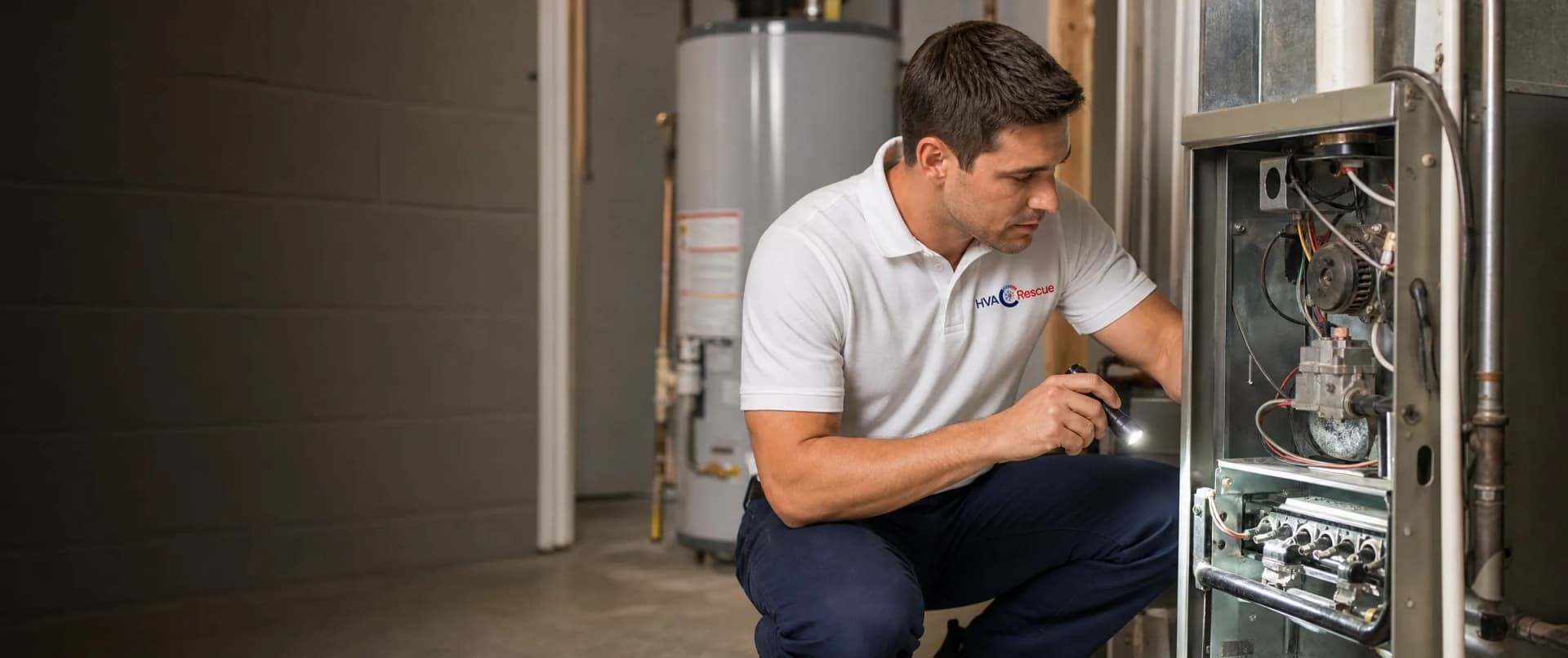
Furnace repair is the right starting point when a gas or electric forced-air furnace is acting up now. Common examples are a furnace that will not turn on, lights and shuts off quickly, blows cold air in heat mode, makes booming or grinding noises, or delivers weak heat through the house. Those symptoms usually point to a fault in a specific part, control, safety device, or airflow path rather than a planned system change.
This page is not for routine maintenance or for replacing the whole furnace. A tune-up is preventive service on a furnace that is still heating normally. Replacement becomes a separate discussion when a major internal failure is found, such as a heat exchanger problem, or when repair costs and overall condition push the decision in that direction. If the issue is tied to ignition, blower operation, short cycling, or no heat from an existing furnace, repair is the clearest next step.
Furnace Repair in Idaho: what’s different here
In Idaho, heating carries more of the load than cooling, with long cold stretches making dependable furnace performance a priority from the valleys to higher elevations. Warm, dry summers are usually easier on HVAC systems, but the dry air still shapes indoor comfort and can make steady heat feel even more important when temperatures drop at night.
Furnaces in Idaho often work hard through snowy weather, so no-heat calls tend to show up right when families need heat most. Uneven heat in multi-level homes, aging equipment losing efficiency, and dry indoor air can all make a furnace feel like it is underperforming even before it fails completely.
For furnace repair in Idaho, a professional scope should begin by note whether the furnace ignites, blows cold, short cycles, or is silent. Repair isolated controls, ignition, airflow, or motor faults when the heat exchanger and system remain safe; discuss replacement when safety, major components, condition, or repeated failure support it. The written scope should also explain a qualified technician narrows the fault by confirming the symptom and watching the furnace sequence before replacing parts. on a gas furnace, that may include checking whether ignition begins, whether flame is proven, whether the blower starts on time, and whether safeties are interrupting the cycle. on an electric furnace, the focus shifts to heat elements, relays, controls, and blower operation. careful diagnosis helps separate a failed part from an airflow, venting, or control problem that is causing the symptom. If you smell gas, a carbon-monoxide alarm sounds, there is smoke, or there is a burning-electrical smell, leave the building and contact the gas utility or emergency services from outside. Do not continue troubleshooting or stay inside to shut the system down.
- Idaho winters make furnace reliability a top home comfort priority.
- Mountain areas often need heat to hold up through longer, harsher cold stretches.
- Dry indoor air can make heating comfort feel uneven even when the furnace is running.
- Short cycling, ignition trouble, and blower issues are common reasons to seek repair.
Furnace Repair decisions for Idaho homes
Determine which part of the furnace startup, combustion, airflow, or limit sequence is interrupting heat. For Idaho, the relevant state focus is climate zone, heating season, fuel, combustion safety, heating season fuel venting and combustion safety. Repair isolated controls, ignition, airflow, or motor faults when the heat exchanger and system remain safe; discuss replacement when safety, major components, condition, or repeated failure support it.
Repair or replace your system?
Repair often makes sense when
Plenty of furnace faults are clean, contained repairs, especially on a unit that is still within its service life. When the rest of the furnace is sound, replacing the failed part is usually the practical choice.
- The furnace is still within its typical service life and has been maintained
- The problem traces to one part, such as an igniter, flame sensor, or capacitor
- The heat exchanger is intact and there is no combustion safety concern
- The furnace heats efficiently when it runs, without a string of recent failures
- Replacement parts for the model are available and reasonably priced
- The repair cost is small compared with the value the furnace has remaining
Consider replacement when
There are situations where pouring money into an aging furnace stops making sense. When age, repeat failures, or a combustion-safety issue appear, a technician can help you weigh whether a new furnace is the better long-term move for your Idaho home.
- The furnace is near or beyond the end of its expected lifespan
- A technician confirms a cracked or corroded heat exchanger
- Service calls have become frequent and the running total keeps climbing
- The unit's efficiency is low, keeping energy bills stubbornly high
- Needed parts are obsolete, back-ordered, or costly to obtain
- A modern high-efficiency furnace could qualify for state or utility incentives
How much does furnace repair cost in Idaho?
Furnace repair scope varies with the fault, furnace type, diagnosis, access, controls, venting, parts, and urgency. The factors below define the work.
- Whether the furnace is gas-fired or electric, since the components differ
- Which part has failed, from an inexpensive sensor to a major motor or board
- Whether the part is a common stock item or a model-specific special order
- The furnace's age and how easily parts for it can still be sourced
- How accessible the furnace is, such as a cramped attic, closet, or crawlspace
- Whether diagnosis turns up a single fault or several related issues
- The labor time the repair genuinely requires from start to finish
- Combustion testing and safety verification needed on gas units
- Any electrical diagnosis required for ignition, controls, or the blower circuit
- Local labor rates and the specific provider's pricing in your area
- Whether a manufacturer parts warranty or labor warranty still applies
- Seasonal demand, which can affect scheduling and pricing during cold spells
| Furnace Repair Cost | Typical range |
|---|---|
| Minor repair (igniter, flame sensor, filter)Common, affordable fixes. | $150 – $550 |
| Moderate repair (blower motor, control board)Mid-range parts and labor. | $475 – $1,525 |
| Major repair (heat exchanger)A cracked heat exchanger often points toward replacement. | $1,250 – $3,750 |
Cost ranges are estimates developed from standardized project scopes and reviewed pricing inputs. Government labor and regional cost data are used where applicable. See our Pricing Methodology for the exact sources, calculations, and review date. Actual prices vary by property, scope, materials or equipment, location, and provider.
See the full furnace repair cost guide for the complete breakdown, then call to get a real quote for your Idaho home.
Get furnace repair help in Idaho
One quick call connects you with HVAC pros who service your area. No pressure, no obligation.
Idaho climate & seasonal demand
Winters are cold and snowy, especially in the mountains, making dependable heating a priority. Seasonal maintenance helps reduce the risk of a breakdown in deep cold.
Idaho has a generally dry climate with cold, snowy winters and warm summers that cool off at night. Mountainous areas see harsher, longer winters than the lower valleys.
The heating season in Idaho can be long and demanding, especially in mountainous areas where winters are harsher and last longer. Seasonal maintenance is especially helpful before cold snaps arrive, because a small issue can become a bigger problem once the furnace is running constantly in deep cold.
Because Idaho homes often depend on furnaces for most of the year, efficiency and comfort are closely tied to reliable heating performance. Dry air in both winter and summer can affect how warm a home feels, and an aging furnace may struggle to keep temperatures even from room to room.
- Furnaces working hard through cold, snowy winters
- No-heat issues surfacing during cold snaps
- Dry indoor air affecting comfort
- Cooling systems handling warm, dry summer afternoons
- Uneven heat in multi-level or mountain homes
- Aging equipment losing efficiency over time
Before you call: what to have ready
Before requesting service, note what the furnace is doing: whether it is not heating, short cycling, making unusual noises, or having blower trouble. Also check simple homeowner items like the thermostat setting, filter condition, and whether vents and returns are clear, but leave gas, electrical, and burner-related issues to qualified professionals. For Furnace Repair in Idaho, relate this guidance to the actual equipment, property, and written scope.
Questions to ask before approving work
- Are you licensed and insured for HVAC work in this state?
- Will a technician give a written, itemized estimate before any work starts?
- Is the diagnostic fee waived or credited if I approve the repair?
- For a new system, will you run a Manual J load calculation to size it correctly?
- What parts and labor warranties come with the repair or installation?
- Are your technicians NATE-certified or manufacturer-trained?
- Can you pull the required permits and schedule any needed inspection?
- Do you offer financing or maintenance plans, and what do they cover?
What happens during service
- 1
You describe the furnace problem
Let us know the symptoms, the furnace type if you know it, and how long the issue has been happening so we can route your request appropriately.
- 2
We connect you with a local pro
HVAC Rescue helps you connect with HVAC professionals that service your area. Availability may vary by location and provider as we work to match you with someone nearby.
- 3
The technician inspects the unit
The pro examines the burners, igniter, blower, controls, and venting, and checks the thermostat to begin narrowing down the cause of the failure.
- 4
Combustion and safety checks
On gas furnaces, the technician evaluates the flame, venting, and heat exchanger for safety, since combustion faults can pose a carbon monoxide risk.
- 5
Diagnosis is confirmed
Using meters and the furnace's heat-call sequence, the pro identifies the failed component precisely rather than swapping parts on a hunch.
- 6
You receive options and pricing
The technician explains what is wrong, what the repair involves, and whether repair or replacement is the more sensible path for your furnace.
- 7
Approved repairs are completed
With your approval, the pro performs the work with appropriate parts, following safety practices for gas, electrical, and combustion components.
- 8
Operation is verified
The technician runs the furnace through a full cycle, confirms it produces warm air and reaches the set temperature, and checks for safe, stable operation.
Furnace Repair in Idaho: common questions
Why do Idaho homeowners search for Furnace Repair so often in winter?
Is Furnace Repair different in Boise than in mountain areas of Idaho?
What furnace problems are common in Idaho homes?
Can HVAC Rescue help with Furnace Repair in Idaho?
Sources and fact-checking
Reviewed July 27, 2026. We favor primary government and standards sources for safety, efficiency, and regulatory claims. These references support the technical and consumer guidance on this page.
- Heating and cooling maintenance checklistENERGY STARProfessional tune-up scope, filters, airflow, coils, drains, and safety checks.
- FurnacesENERGY STARResidential furnace efficiency, equipment features, buying guidance, and replacement considerations.
- Carbon monoxide fact sheetU.S. Consumer Product Safety CommissionCarbon-monoxide sources, alarm placement, annual heating-system inspection, and emergency precautions.
- Stay safe while staying warm this winterU.S. Consumer Product Safety CommissionFuel-burning heating-system inspection, blocked-vent risks, and carbon-monoxide safety precautions.
- How to avoid a home improvement scamFederal Trade CommissionWritten estimates, contractor verification, payment cautions, and fraud warning signs.