Reviewed July 25, 2026
HVAC Rescue Editorial Team
Editorial StandardsHow can you tell if your boiler needs repair before it fails?
Usually, a boiler gives warning signs before a no-heat breakdown. Homeowners commonly notice pressure that will not stay in range, banging or kettling noises, radiators that stay cold or partly cold, frequent on-off cycling, trouble with the pilot or electronic ignition, or visible water around the unit. Those symptoms do not all mean the same thing. Some point to trapped air or low system pressure that a homeowner may be able to observe safely, while others point to failed controls, scaling, pump problems, or combustion issues that need a licensed technician.
The key is to separate what you can observe from what you should repair. Read the pressure gauge. Notice whether every radiator is cold or just one. Listen for the difference between a few pipe ticks and sharp banging from the boiler. Check for water under the unit or from a relief valve discharge pipe. But if there is a gas smell, a carbon monoxide alarm, smoke, or a burning-electrical smell, everyone should leave the building immediately and call the gas utility or emergency services from outside. That is not a wait-and-see situation.
- A normal cold boiler often sits around 12 to 15 psi in a two-story home, and many systems run roughly 18 to 22 psi when hot.
- Pressure repeatedly dropping below about 10 to 12 psi can keep heat from circulating properly and may shut some boilers down.
- Pressure climbing near 30 psi, or any discharge from the pressure relief valve, points to a problem that needs prompt professional diagnosis.
- A boiler that starts and stops every few minutes is short cycling, which raises wear and usually means a control, flow, sizing, or heat-transfer problem.
- Visible leaking water, ignition failures, or repeated lockouts are service issues, not routine homeowner maintenance.
What the pressure gauge is telling you
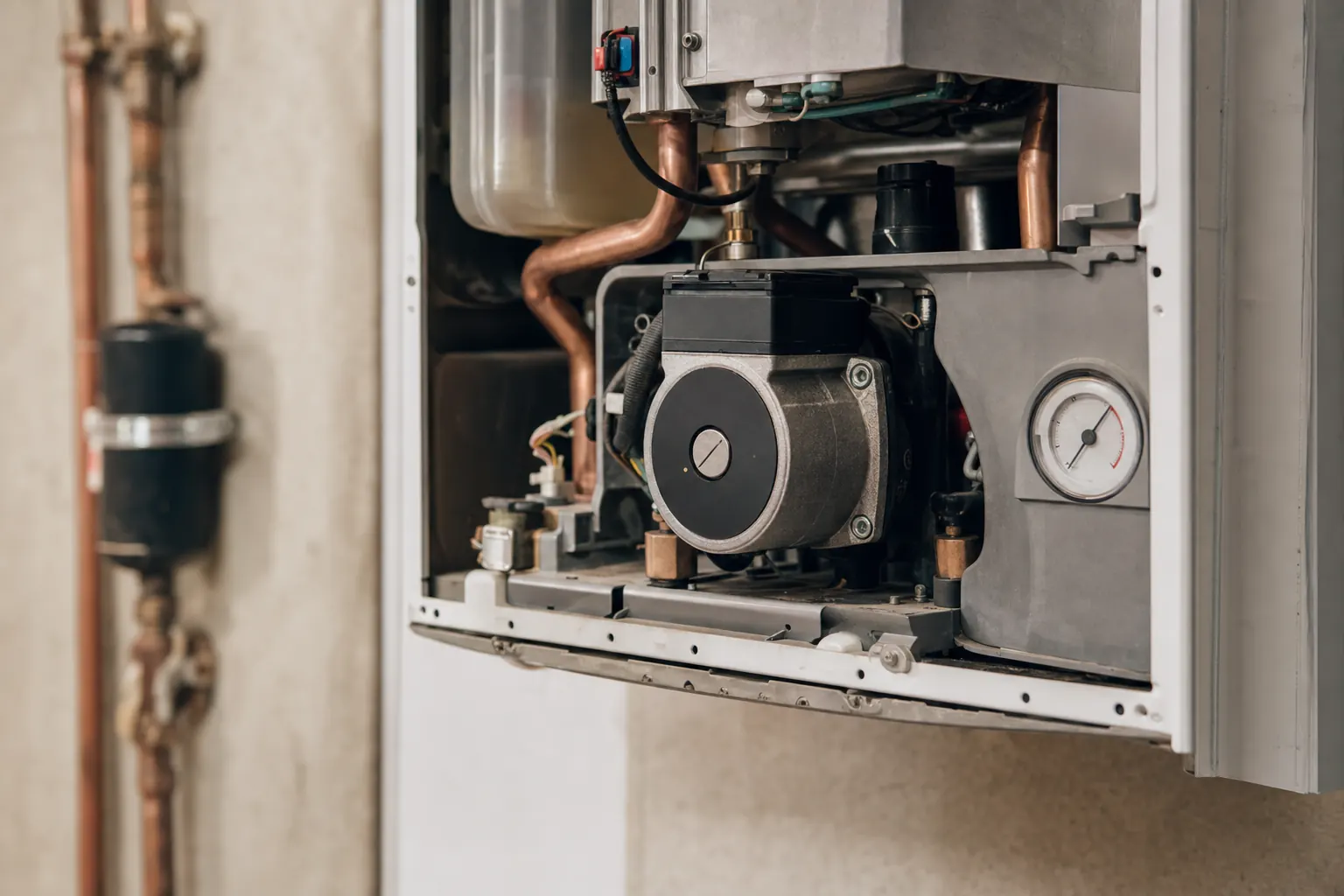
The pressure gauge is one of the most useful clues on a hot-water boiler. On many residential systems, the boiler needs enough static pressure to push water to the top of the house. That is why a typical two-story home often needs about 12 psi when the system is cold. As water heats and expands, pressure rises. Seeing something like 18 to low 20s psi while the boiler is hot is common. The exact normal range depends on the home height, system design, and the boiler manual, but a gauge that is far outside its usual range is worth attention.
Low pressure often points to a water loss problem, an automatic fill valve issue, recent bleeding of radiators, or a gauge problem. High pressure often points to an expansion tank issue, overfilling, or a fill valve that is feeding too much water. If the gauge climbs close to 30 psi and the relief valve drips or discharges, stop treating it as a minor nuisance. Relief valves open for a reason, and repeated discharge can mean the expansion tank has failed or the system is overpressurizing. A licensed technician should diagnose the cause before more water damage or component failure follows.
A single low reading does not always mean a major repair, but pressure that will not stay stable usually does. If you recently bled radiators and pressure dropped, the system may simply need proper refilling and air removal. If pressure keeps falling over days or weeks, think leak, relief valve seepage, air vent leakage, or a hidden problem inside the boiler. If pressure rises fast from normal cold pressure to very high pressure after a heating call starts, think expansion tank or fill control trouble. Those are mechanical faults, not just quirks.
Banging, kettling, and other noises that should not be ignored
Boilers are not silent, but the type of noise matters. Soft clicking from relays, a circulator hum, or occasional pipe ticks from expansion can be normal. Kettling is different. It is often described as a rumbling, boiling, or tea-kettle sound from the boiler heat exchanger. In many older or hard-water areas, kettling can mean mineral scale has built up on heat-transfer surfaces. That scale traps heat, lets small pockets of water flash into steam, and makes the boiler work hotter and less efficiently than it should.
Sharp banging may come from several places. In steam systems, banging can be caused by condensate not draining correctly, improperly pitched pipes, or pressure problems. In hydronic hot-water systems, banging may come from overheating, circulation issues, air pockets, or rapid expansion in loose pipe runs. If the noise is coming from inside the boiler jacket, that is more concerning than a single ticking baseboard. Persistent rumbling or banging usually means the boiler is not transferring heat or moving water the way it should, and that can shorten component life.
Homeowners can note when the noise happens: only at startup, only when the burner fires, only in one zone, or all through the cycle. That information helps a contractor narrow the cause. What a homeowner should not do is open combustion components, adjust burner settings, or try to flush or chemically descale a boiler without proper training. Kettling can overlap with circulation, scaling, sensor, and firing issues, and improper handling can turn a noisy boiler into a disabled one.
Cold radiators, uneven heat, and poor circulation
If some radiators or baseboards stay cold while the boiler appears to be running, the problem is usually circulation, air, zoning, or pressure related. One cold radiator in an otherwise warm house often points to trapped air, a closed valve, a stuck thermostatic radiator valve, or a balancing problem. Multiple cold emitters, especially on upper floors, often point to low system pressure, circulator trouble, an air separator problem, or a zone valve issue. A boiler can still make heat at the appliance while failing to move that heat where it needs to go.
Pay attention to patterns. If the bottom of a radiator is warm but the top stays cold, trapped air is a common suspect in hot-water systems. If an entire zone is cold, think thermostat, zone valve, circulator, or control issue. If heat is weak everywhere, the boiler may be underfiring, scaling up, short cycling, or operating with poor flow. In steam systems, cold radiators can also point to venting issues or pitch problems. The symptom matters, but the location and timing matter just as much.
Some homeowners are comfortable checking that radiator valves are open and that the thermostat is actually calling for heat. Beyond that, electrical testing, circulator diagnosis, zone valve replacement, control-board work, and internal boiler service belong to a licensed technician. If your boiler has repeated cold-room complaints plus pressure swings or noise, those symptoms often connect to the same root cause rather than separate small problems.
Short cycling, ignition trouble, and pilot problems
Short cycling means the boiler fires, runs briefly, shuts off, then starts again before the house has had time to warm properly. A normal cycle length varies by outdoor temperature, boiler size, and control strategy, but repeated cycles of only a few minutes are a red flag. Short cycling can be caused by a dirty heat exchanger, poor circulation, a faulty aquastat or sensor, thermostat problems, oversizing, blocked condensate handling on some high-efficiency models, or overheating that trips limit controls. It wastes fuel and increases wear on ignition parts, relays, and controls.
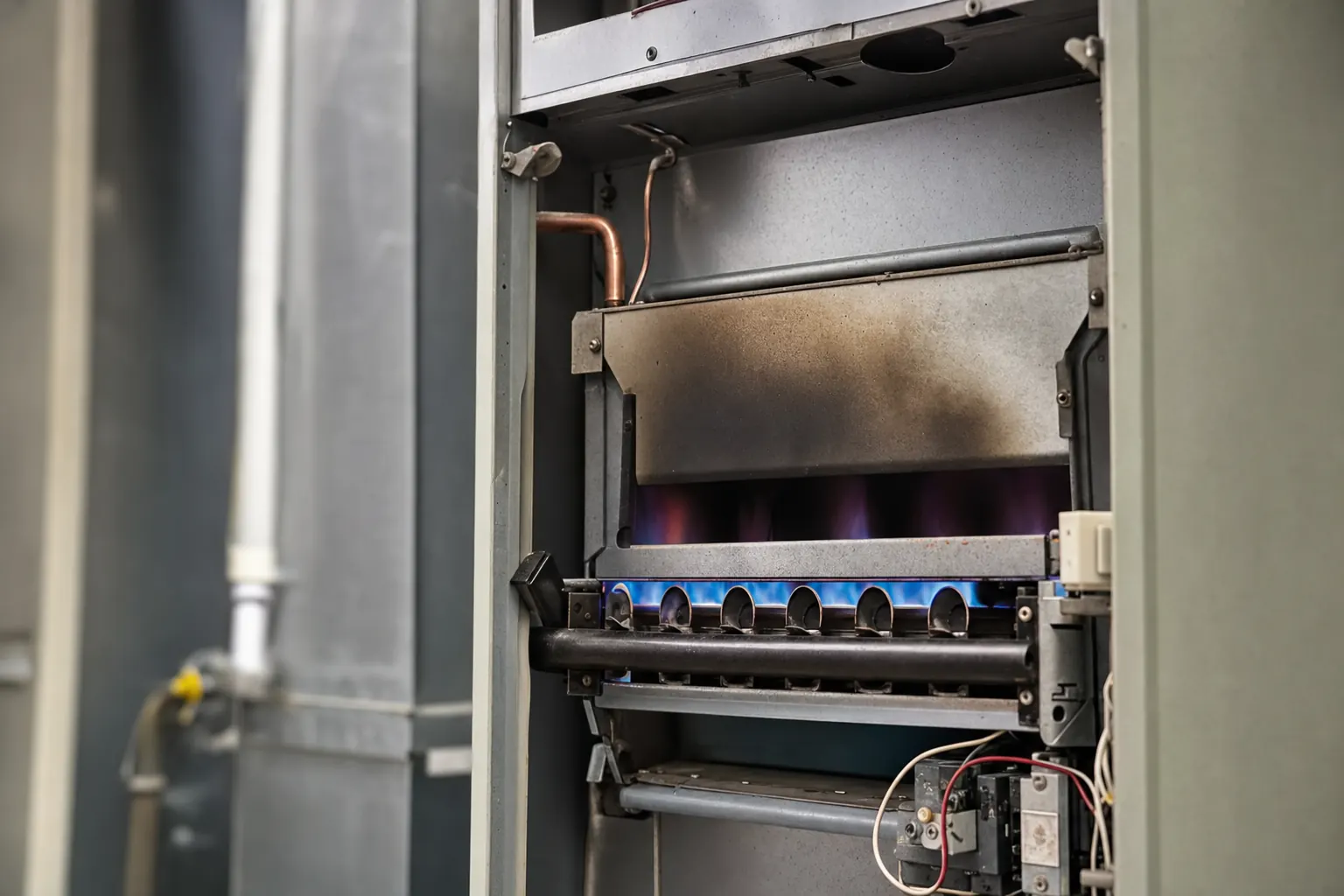
Older boilers may use a standing pilot, while newer systems usually use electronic ignition. If the pilot will not stay lit, or the ignition clicks repeatedly without establishing flame, do not try to diagnose gas valves, burners, flame sensors, or venting as a homeowner project. Those faults may involve combustion safety, flame proving, draft, or gas delivery. What you can observe is whether the thermostat is calling for heat, whether the boiler display shows a fault code, whether the problem happens in cold weather only, and whether it resets temporarily before failing again.
A single ignition failure after a storm or power interruption is one thing; repeated lockouts are another. If your boiler has a reset button, the manual may permit limited user resets, but repeated resetting is not a fix. It is a way to mask a fault long enough for it to become a no-heat emergency. Record the fault code if there is one, note any unusual noises or smells, and arrange service. That gives the contractor a stronger starting point than saying only that the heat stopped.
Visible leaks and signs of water damage
Any water around a boiler deserves attention, but where the water appears matters. A few drops from a nearby pipe fitting can be very different from active dripping from the heat exchanger, relief valve discharge, circulator flange, automatic air vent, or expansion tank connection. Chronic moisture can corrode electrical parts, damage flooring, rust the boiler jacket, and hide a pressure-control problem. If you are seeing staining, rust tracks, white mineral deposits, swollen wood, or fresh puddles, the leak may have been developing longer than it first appeared.
Leaks often cause other symptoms. A system that loses water can pull in air, leading to gurgling, cold radiators, and unstable pressure. A relief valve that occasionally spits may be reacting to overpressure, not simply failing on its own. A leak at the boiler block or heat exchanger is more serious than a small service-valve seep, because it may signal internal corrosion or a component approaching end of life. Homeowners can dry the area, monitor whether water returns, and take photos of where it starts, but diagnosis and repair should be left to a pro.
If water is near electrical components, turn off power at the service switch or breaker only if you can do so safely without standing in water. Do not remove covers or touch wet wiring. Water and boiler controls are a bad combination, and a leak that reaches wiring can create secondary failures that outlast the original cause.
What you can check yourself, and when it becomes a technician job
A useful homeowner inspection is mostly observation. Check the thermostat setting and schedule. Look at the boiler pressure gauge and temperature gauge if present. Notice whether the issue affects the whole house or one zone. Listen for noise at startup versus mid-cycle. Look for water at fittings, beneath the boiler, or at the relief valve discharge pipe. Confirm that accessible radiator valves are open. On systems with user-facing displays, write down any fault codes. These observations can save time once a contractor is on site.
The line into licensed work is crossed quickly on boilers because many faults involve combustion, venting, gas, line voltage, or pressure safety controls. A qualified technician should handle gas valves, burners, pilot assemblies, igniters, flame sensors, venting and flue components, control boards, circulators, zone valves, expansion tank diagnosis, relief valve replacement, internal leaks, descaling decisions, and any work that requires opening the sealed boiler cabinet or testing live electrical parts. Steam boiler pressure controls and low-water cutoff issues also belong in that category.
For repair planning, typical 2025-2026 US boiler service estimates vary widely by fault and region. Simple service calls with minor adjustments or sensor replacement may land in the low hundreds, while circulators, zone valves, expansion tanks, ignition assemblies, or control work often run several hundred dollars. Major component repairs or heat-exchanger-related problems can climb into the high hundreds or several thousands, especially on condensing boilers with proprietary parts. If the boiler is older, leaking at the block, or facing multiple failures at once, it may be time to compare repair versus replacement rather than authorizing one more major fix.
Sources and fact-checking
Reviewed July 25, 2026. We favor primary government and standards sources for safety, efficiency, and regulatory claims. These references support the technical and consumer guidance on this page.
- BoilersENERGY STARResidential boiler efficiency, equipment features, and buying guidance.
- Purchasing energy-efficient boilersU.S. Department of EnergyBoiler efficiency, maintenance planning, diagnostic procedures, and useful-life considerations.
- Carbon monoxide fact sheetU.S. Consumer Product Safety CommissionCarbon-monoxide sources, alarm placement, annual heating-system inspection, and emergency precautions.