Reviewed July 25, 2026
HVAC Rescue Editorial Team
Editorial StandardsIs a smart thermostat worth it?
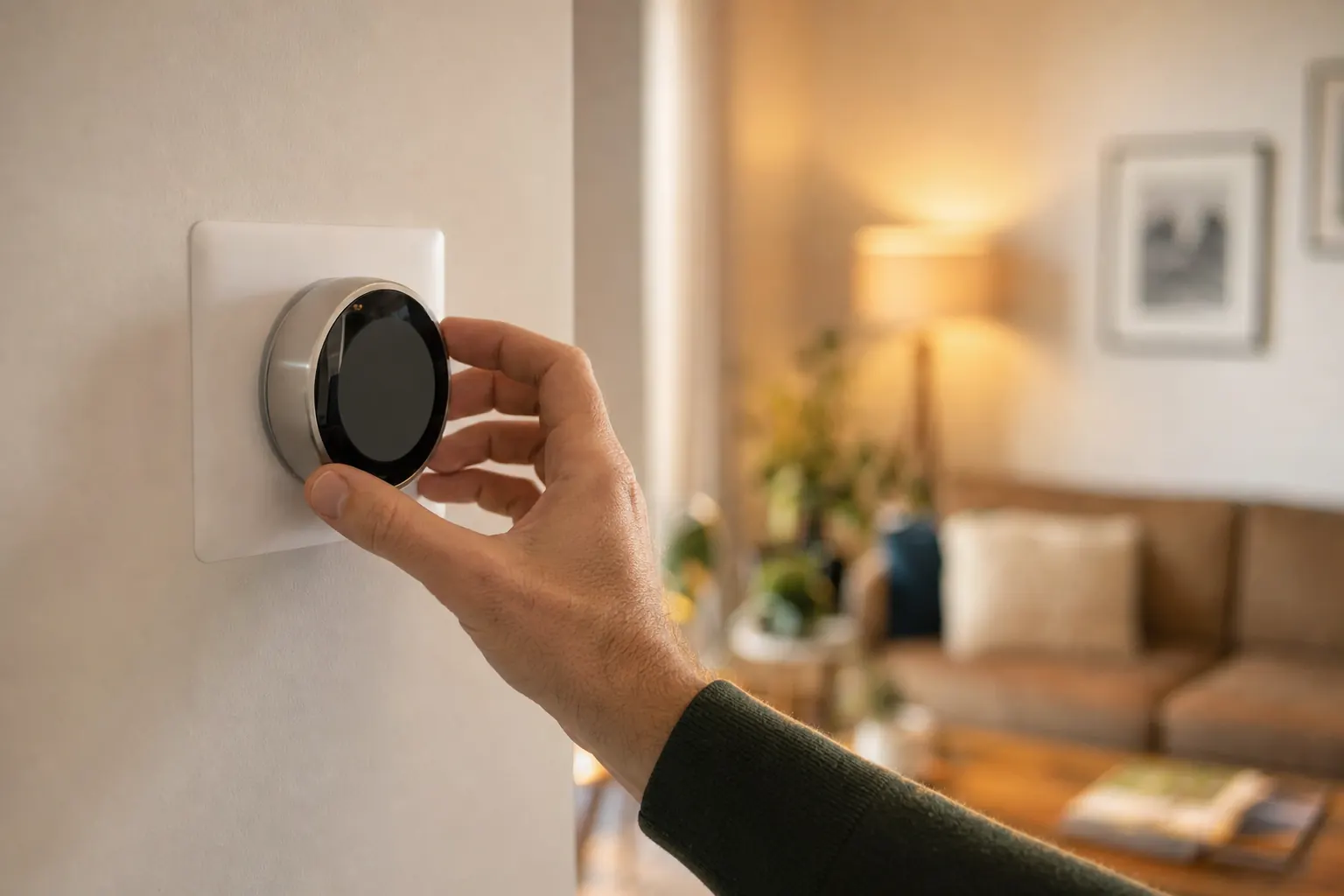
Usually, yes, but only in the right house and only at the right price. A smart thermostat can trim heating and cooling costs by reducing run time when nobody is home, smoothing schedules, and helping you catch wasteful settings. For many households, realistic savings are modest rather than dramatic: often enough to notice on utility bills over time, but not enough to turn a bad HVAC setup into a cheap one. If your current thermostat already follows a disciplined schedule, the improvement may be small.
The best candidates are homes with regular periods away from home, people who often forget to adjust settings, and systems that are compatible without expensive add-ons. Typical 2025-2026 pricing for a smart thermostat is about $100 to $300 for the device, with professional installation often around $150 to $400 depending on wiring and system complexity. If it saves roughly 5% to 10% on heating and cooling costs, payback can be fairly quick in a high-bill home and much slower in a mild climate or a tightly managed household.
Cost ranges are estimates developed from standardized project scopes and reviewed pricing inputs. Government labor and regional cost data are used where applicable. See our Pricing Methodology for the exact sources, calculations, and review date. Actual prices vary by property, scope, materials or equipment, location, and provider.
What the savings really look like
Marketing around smart thermostats often highlights big percentage savings, but real homes vary too much for one headline number to tell the truth. Savings depend on climate, insulation, utility rates, how long the home sits empty, and how your family actually uses the system. Heating and cooling may be a large share of home energy use, but a thermostat only affects the portion controlled by temperature setbacks and run-time management. It does not improve duct leakage, weak insulation, oversized equipment, or a failing heat pump.
A practical way to estimate savings is to start with your annual heating and cooling cost, not your total utility bill. If those combined costs are around $1,200 per year, then 5% savings is about $60 and 10% is about $120. If your smart thermostat setup costs $250 installed after any utility rebate, the simple payback could be roughly two to four years. If installation becomes a $500 to $700 project because of wiring changes or equipment quirks, the value proposition gets weaker fast.
- Homes with long empty weekdays often see better results than homes occupied all day.
- High heating or cooling bills create more room for meaningful dollar savings than low-bill homes in mild climates.
- Users who frequently override schedules or leave temperatures too aggressive may save more with automation and app control.
- Households already using a well-programmed setback schedule may see only small additional savings.
- A thermostat cannot compensate for bad insulation, leaky ducts, dirty equipment, or incorrect system sizing.
Who benefits most and who usually does not
A smart thermostat tends to make the most sense for commuters, households with changing schedules, second homes, and families that travel often. Remote access matters here. If you leave for the weekend and forget the system is set to an aggressive comfort temperature, changing it from an app can prevent unnecessary run time. Learning features can also help in homes where nobody wants to manually create and maintain schedules, though the “learning” label is often less important than basic occupancy setbacks done consistently.
The value is usually lower for retirees or remote workers who are home most of the day, small condos with low HVAC costs, and homeowners who already use a programmable thermostat correctly. It may also be a poor fit for people who dislike phone apps, notifications, and menu settings. If the fancy features will be ignored, a simpler thermostat often delivers nearly the same comfort with fewer headaches. The thermostat should fit the household’s habits, not the other way around.
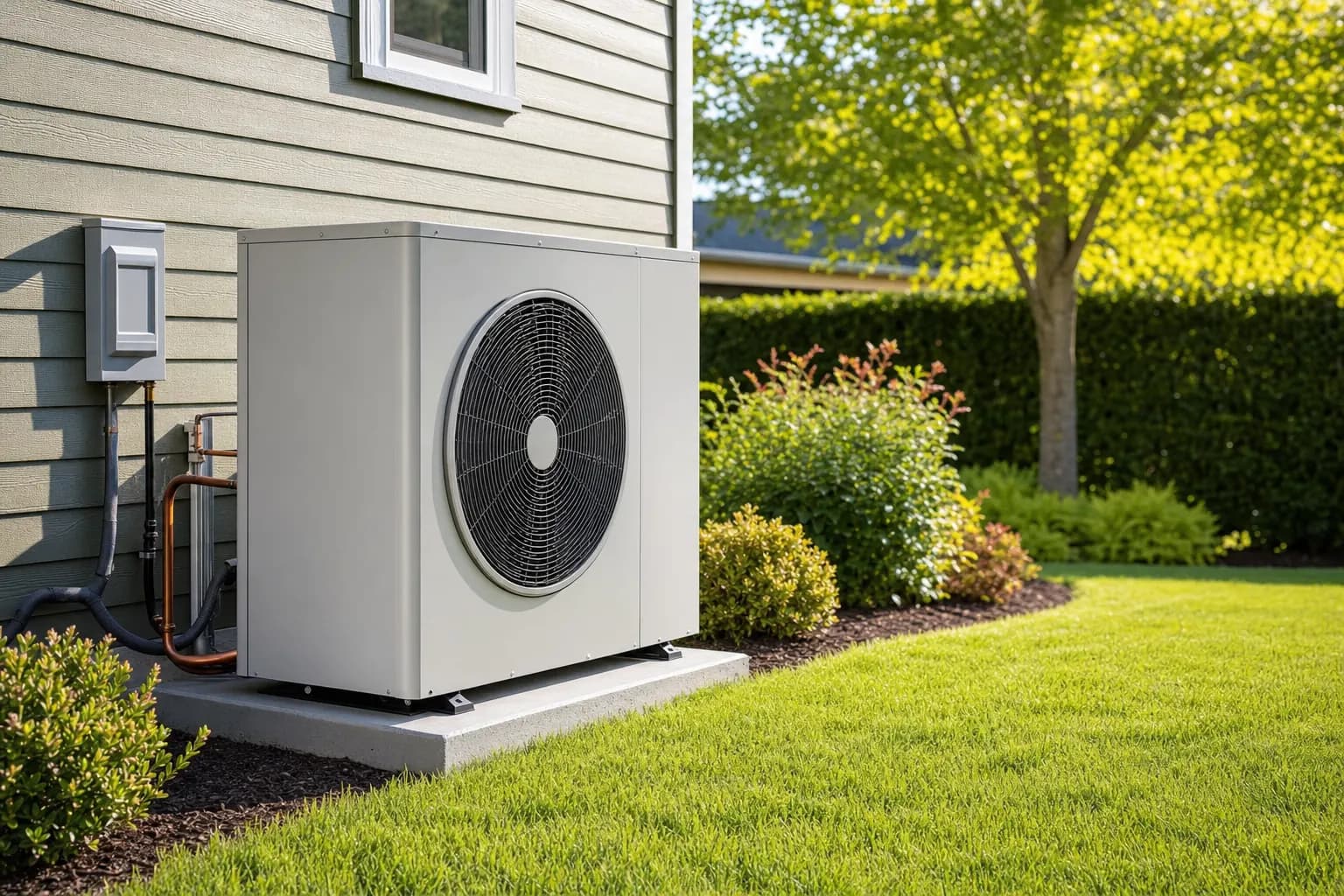
Another group that should be careful is owners of complex systems. Multi-stage furnaces and air conditioners, variable-speed equipment, dual-fuel systems, and heat pumps with auxiliary heat can perform poorly if paired with the wrong thermostat or incorrect setup. In those cases, savings can disappear and comfort can get worse. A thermostat that short-cycles stages, runs strip heat unnecessarily, or misunderstands heat pump operation can cost more to operate than the old one.
Compatibility traps that catch homeowners
The biggest smart thermostat mistake is buying first and checking compatibility later. Many homes still have older low-voltage thermostat wiring without a C-wire, also called a common wire. Some smart thermostats need that wire for constant power. Others can work with an adapter or power extender kit, but not in every system. If your setup is missing a C-wire, installation may still be possible, but it is no longer a simple swap. Extra parts, a new cable run, or a different thermostat model may be needed.
Heat pumps deserve special attention. A thermostat must be able to control compressor stages, reversing valve logic, fan behavior, and auxiliary or emergency heat correctly. If the settings are wrong, expensive electric backup heat may run more than necessary, especially in shoulder seasons or during defrost events. Multi-stage systems have a similar issue. A thermostat should support the number of heating and cooling stages your equipment has; otherwise you may lose efficiency, comfort, or humidity control.
Line-voltage systems are another common trap. Most smart thermostats are designed for 24-volt low-voltage central HVAC systems, not 120-volt or 240-volt electric baseboards, wall heaters, or radiant panels. A few specialty smart thermostats are made for line voltage, but choices are narrower and costs may be higher. If you are not sure what you have, check the equipment label and existing thermostat wiring, or have a qualified technician verify it before you buy anything.
Installation cost, setup, and hidden expenses
The device price is only part of the decision. Entry-level smart thermostats often run around $100 to $180, mainstream models about $180 to $280, and premium models about $250 to $350 or more. Professional installation for a straightforward replacement may land around $150 to $250. More involved jobs can cost $300 to $400 or higher if a C-wire solution is needed, a new thermostat cable must be pulled, or setup takes longer because the system has multiple stages or heat pump auxiliary heat.
There can also be hidden costs in the form of time and comfort. Some homeowners spend hours on compatibility checkers, app setup, Wi-Fi issues, account registration, geofencing permissions, and schedule tuning. If you want smart-room sensors for better occupancy tracking or temperature balancing, those accessories add to the price. Sensors commonly cost extra per room or in multi-packs. Utility rebates can improve the economics, but rebate rules vary and often require approved models or enrollment in demand-response programs.
A good contractor setup matters as much as the hardware. Installer configuration can include stage timing, heat pump balance decisions, cycle settings, and fan behavior. A thermostat with excellent reviews can still perform badly if configured as conventional heat when it is actually controlling a heat pump, or if auxiliary heat lockout settings are wrong. Homeowners should ask what equipment compatibility was verified and how the thermostat will be configured for their specific system.
When a programmable thermostat is the better buy
A smart thermostat is not automatically the best value. A well-made programmable thermostat often costs about $30 to $100, with some professional installations still straightforward and inexpensive. If your schedule is regular and you are willing to set weekday and weekend setbacks once, a programmable model can deliver much of the energy benefit at a much lower upfront cost. It also avoids Wi-Fi dependence, app accounts, firmware changes, and some compatibility headaches.
This is especially true if you already know your comfort pattern and rarely need remote control. For example, if the house is empty from 8 a. m. to 5 p. m. every weekday and occupied most evenings and weekends, a programmable thermostat can cover that pattern easily. In a home where heating and cooling bills are moderate, the extra savings from smart features may be too small to justify paying two or three times more for the thermostat itself.
There is another reason simple can be better: fewer settings can mean fewer mistakes. Some owners end up fighting geofencing, occupancy detection, and auto-learning schedules that do not match real life. If the system keeps getting overridden, your theoretical savings vanish. A programmable thermostat is often the better buy for straightforward single-stage systems, consistent schedules, and households that want basic control with less friction.
How to decide before you buy
Start with the system, not the thermostat brand. Identify whether you have a conventional furnace and AC, a heat pump, electric resistance heat, dual fuel, zoned control, or line-voltage heaters. Then check how many heating and cooling stages are present. Next, estimate your annual heating and cooling cost from recent utility bills. That gives you a base for realistic savings. If annual HVAC costs are low, even a good percentage improvement may not produce many dollars.
Then think honestly about household behavior. Do people leave and return at irregular times? Does anyone routinely forget to change settings? Will remote access actually be used? Are you comfortable managing apps and home Wi-Fi? A smart thermostat is worth more when it solves a real behavior problem. It is worth less when it only adds features that look good on a box. Also ask whether your utility offers a rebate, because a $50 to $100 incentive can materially change the payback.
Finally, ask a qualified contractor to verify compatibility before purchase if your system is anything beyond basic. Questions to ask include whether a C-wire is present, whether the thermostat supports your exact staging and heat pump functions, and whether any accessories or adapters are needed. For many homeowners, the honest answer is that a smart thermostat is worth it only if installation stays simple, the system is a clean match, and the household will actually use the features that create savings.
Sources and fact-checking
Reviewed July 25, 2026. We favor primary government and standards sources for safety, efficiency, and regulatory claims. These references support the technical and consumer guidance on this page.