Reviewed July 25, 2026
HVAC Rescue Editorial Team
Editorial StandardsWhat should you do if you suspect carbon monoxide from your HVAC system?
If a carbon monoxide alarm sounds, or if anyone in the home feels dizzy, nauseated, weak, confused, unusually sleepy, or has a headache, everyone should leave the building immediately and call the gas utility or emergency services from outside. Do not stay inside to investigate. Do not silence the alarm and go back to bed. Do not open up furnace panels, relight anything, or start trying to "figure it out" first. Carbon monoxide can build without any visible warning, and symptoms can progress fast.
The basic question most homeowners are really asking is: can my furnace, boiler, or water heater make carbon monoxide, and how serious is that risk? Yes, any appliance that burns natural gas, propane, oil, wood, or pellets can produce carbon monoxide if combustion is poor or exhaust does not vent outdoors properly. The danger is not limited to old equipment. A modern sealed-combustion furnace is generally safer than an older atmospheric unit, but no combustion appliance gets a free pass on installation, venting, and annual inspection.
Where carbon monoxide comes from in home heating equipment
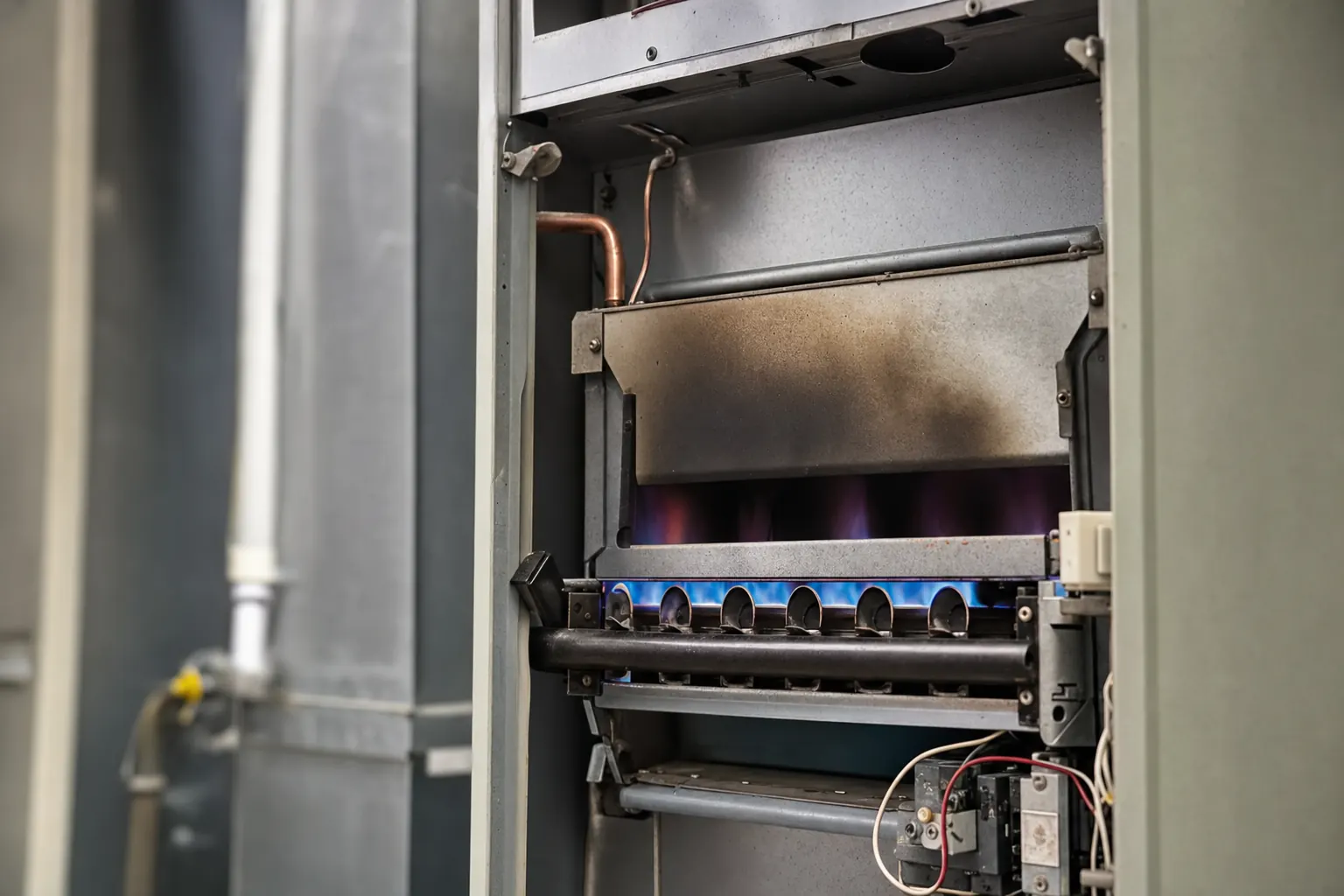
Carbon monoxide, or CO, is created when fuel does not burn completely. In a healthy combustion process, burners get the right fuel-to-air mix, ignite cleanly, and send exhaust up a vent or through a PVC pipe to the outdoors. If that process is disrupted, CO can rise. The most common HVAC-related sources are gas furnaces, oil furnaces, boilers, wall furnaces, unit heaters, and sometimes vented gas space heaters. Gas water heaters can also be part of the same venting problem, even if the heating system itself is not the direct source.
Two broad problems create danger. The first is combustion trouble inside the appliance: dirty burners, improper gas pressure, inadequate combustion air, a failing inducer motor, or a damaged heat exchanger can all change how fuel burns. The second is venting trouble after combustion: a blocked chimney, disconnected vent pipe, collapsed liner, bird nest, iced vent termination, or negative pressure in the house can keep exhaust from leaving. In either case, carbon monoxide can spill into living space instead of going outdoors.
- Natural-draft furnaces and boilers rely on warm exhaust rising up a flue, so they are more vulnerable to drafting and chimney problems than direct-vent equipment.
- High-efficiency condensing furnaces vent through plastic pipe, which avoids a chimney but still requires correct slope, termination, and unobstructed intake and exhaust piping.
- Attached garages matter because vehicle exhaust can move into the house and set off CO alarms, even when the furnace is not the source.
- Portable generators, grills, and unvented fuel-burning devices can create indoor CO hazards that homeowners sometimes mistake for an HVAC failure.
What a cracked heat exchanger actually means
A heat exchanger is the metal chamber or tube assembly that separates flame and combustion gases from the household air moving through your ductwork. Burners heat the exchanger, and the blower moves room air around the outside of it. In normal operation, the air you breathe never mixes with flue gas. A crack, split seam, rust perforation, or failed cell in that exchanger can allow combustion byproducts to escape where they do not belong. That is why contractors and code officials treat confirmed heat exchanger failure seriously.
Homeowners often hear "cracked heat exchanger" as a catch-all phrase, but the details matter. Some failures are obvious, such as visible separation, holes, or heavy corrosion. Others are harder to confirm and require mirrors, cameras, combustion testing, static pressure observations, or manufacturer guidance. A cracked exchanger does not automatically mean the furnace was actively pumping large amounts of CO into the house at that moment, but it does mean the barrier designed to keep exhaust isolated can no longer be trusted. In many cases, the appliance must be shut down until a licensed technician determines the next step.
Repair versus replacement depends on the furnace design, age, warranty status, and availability of approved parts. On some furnaces, the heat exchanger is technically replaceable, but labor is extensive and can approach the cost of a new furnace. Typical 2025-2026 US estimates for heat exchanger replacement often land around $1,500 to $4,000 or more, depending on model and access. Full furnace replacement often falls roughly in the $5,500 to $12,000+ range for standard residential systems, with higher costs for complex installations, high-efficiency models, and difficult venting changes.
Cost ranges are estimates developed from standardized project scopes and reviewed pricing inputs. Government labor and regional cost data are used where applicable. See our Pricing Methodology for the exact sources, calculations, and review date. Actual prices vary by property, scope, materials or equipment, location, and provider.
What a blocked flue means and why backdrafting is dangerous
A flue is the pathway that carries combustion gases outdoors. On older natural-draft equipment, that usually means a metal vent connector leading into a chimney or vent liner. On condensing furnaces, it usually means dedicated plastic exhaust piping. A blocked flue means that pathway is partially or fully obstructed, damaged, disconnected, or unable to draft properly. The result can be spillage or backdrafting, where exhaust that should leave the house reverses direction or spills from the draft hood, burner compartment, or vent joints.
Blockages happen for concrete reasons: bird or animal nests, masonry debris, collapsed liners, corrosion, snow or ice at terminations, sagging vent pipe, water damage, or vegetation at exterior terminations. Some houses also develop depressurization problems. Strong kitchen hoods, bath fans, dryers, or very tight building envelopes can pull indoor air out faster than makeup air enters, which can interfere with natural draft. That problem can involve the furnace, boiler, and water heater together, because several appliances may share venting conditions in the same mechanical room.
This is why a furnace that seems to "run fine" is not automatically safe. You can have acceptable heat output and still have a venting problem. Licensed technicians use combustion analyzers, draft measurements, visual vent inspections, and safety controls testing to determine whether the exhaust system is actually moving gases outdoors as intended. Flue and combustion work is not homeowner territory; it affects fuel delivery, exhaust, and life safety.
Where carbon monoxide detectors should go
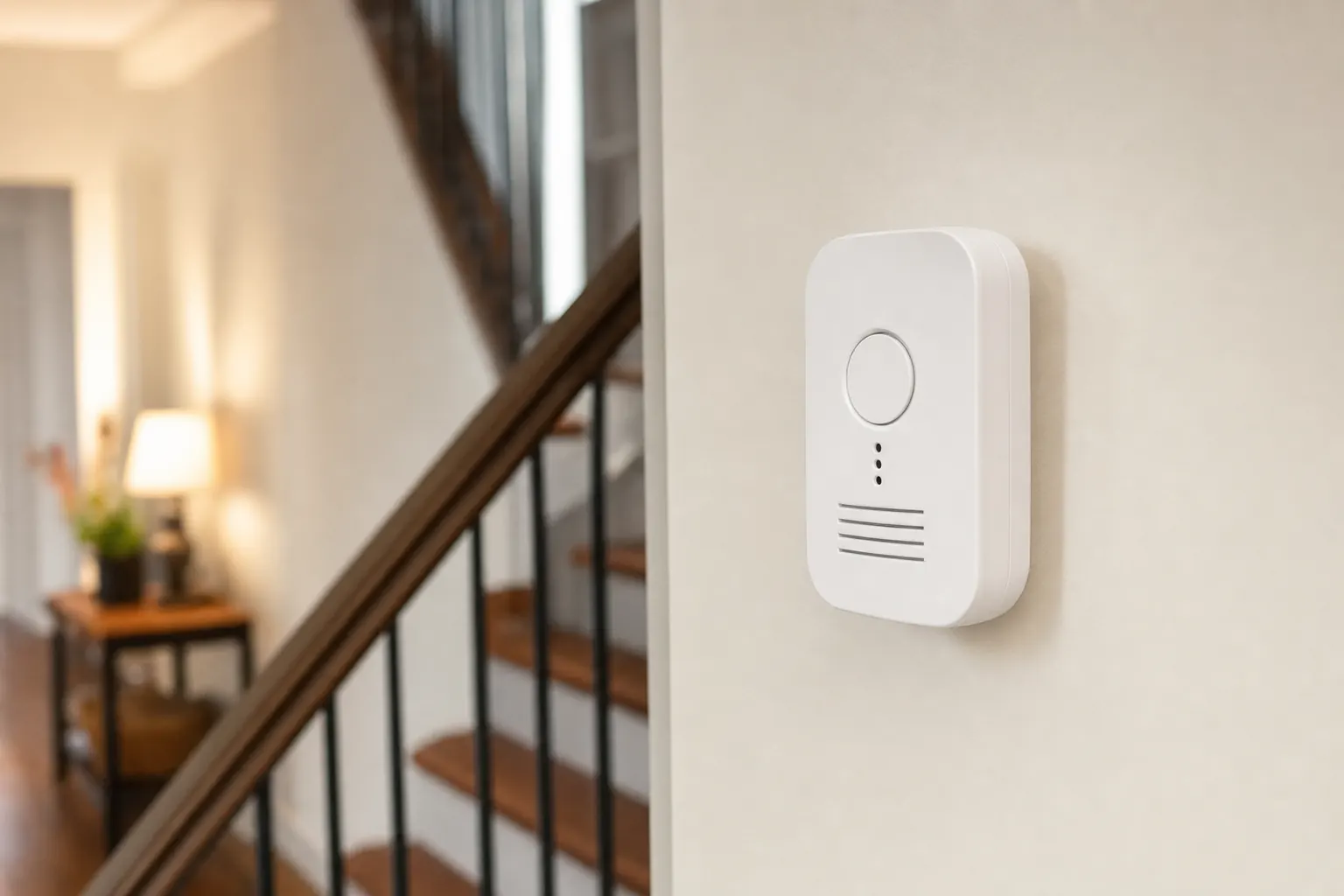
Carbon monoxide alarms are the backup, not the primary safety strategy, but every home with fuel-burning equipment should have them. The simplest placement rule is this: put a CO alarm outside each sleeping area and on every level of the home, including the basement. If bedrooms are spread out, each bedroom wing should have protection. Follow the specific mounting instructions for the brand you buy, because some units are listed for wall mounting, some for ceiling or tabletop use, and some combine smoke and CO functions with their own placement rules.
A good practical setup in many homes is one alarm in the hallway near bedrooms, one on the main living level, and one in or near the basement if that is where the furnace or boiler is located. Avoid putting them right next to fuel-burning appliances, directly over supply registers, in very humid bathrooms, or in dead-air corners where airflow is poor, unless the manufacturer explicitly allows that location. The goal is early warning where people sleep and where the alarm can sample normal household air, not nuisance trips caused by poor placement.
- Install CO alarms outside sleeping areas so they can wake occupants before symptoms become severe.
- Place an alarm on every floor, including basements and finished attics used as living space.
- Use the manufacturer’s spacing, height, and mounting instructions instead of a one-size-fits-all internet rule.
- Test alarms monthly using the test button, but remember that a passing test does not prove the sensor is still within its service life.
- If you have combination smoke/CO alarms, check both the smoke and CO replacement dates because the end-of-life schedule may differ by model.
When detectors should be replaced and what the alarm patterns mean
CO sensors do not last forever. Most standalone and combination residential CO alarms need full unit replacement about every 5 to 10 years, depending on the model. The exact date matters more than the general rule, so check the label on the side or back of the alarm and the manufacturer instructions. Many units have an end-of-life chirp that is different from a low-battery chirp. Hardwired alarms with battery backup still have CO sensors that age out, so being hardwired does not mean they last indefinitely.
Alarm patterns vary by manufacturer, which is one reason the user manual matters. A true CO alarm condition is usually a distinct repeating pattern, while a single chirp every minute or so often indicates low battery or end of life. But if the unit is sounding an actual alarm, treat it as real until emergency responders or the gas utility say otherwise. Do not assume it is false just because no one smells anything. Carbon monoxide is odorless, and many hazardous situations produce no obvious sign to a homeowner.
Replacement cost is usually modest compared with the risk. Typical 2025-2026 US pricing for basic standalone CO alarms is often about $20 to $60 each. Combination smoke/CO alarms commonly run about $40 to $120, with higher prices for interconnected, smart, or hardwired models. If your home has older alarms of unknown age, replacing them proactively is usually a straightforward decision.
What to do after an alarm event and how to talk to a contractor
After everyone is safely outside and you have called the gas utility or emergency services, the next step is evaluation by the appropriate responders and then a qualified licensed HVAC contractor if the heating system is involved. If medical symptoms are present, seek medical attention promptly, even if symptoms seem to improve after leaving the building. Carbon monoxide exposure is a health issue first and an equipment issue second. Returning indoors should happen only when emergency personnel or the utility says it is safe.
When you speak with a contractor, the useful questions are specific: Was there confirmed ambient CO in the living space? Was the source identified at the furnace, boiler, water heater, fireplace, garage, or somewhere else? Did testing include combustion analysis and venting assessment, not just a quick visual look? Was there evidence of a failed heat exchanger, blocked or disconnected venting, burner problems, or house depressurization? Clear answers to those questions help you understand whether the issue is a repairable venting fault, a condemned appliance, or a broader house-airflow problem.
For prevention, annual professional inspection of fuel-burning heating equipment is the sensible standard. That service should include checking burner condition, ignition, venting, draft or pressure conditions as applicable, heat exchanger condition as accessible, safety controls, and overall combustion performance. The point is not to chase every theoretical risk. It is to confirm that fuel is burning correctly, exhaust is leaving the house, and your alarms are current enough to warn you if something changes between inspections.
Sources and fact-checking
Reviewed July 25, 2026. We favor primary government and standards sources for safety, efficiency, and regulatory claims. These references support the technical and consumer guidance on this page.
- Carbon monoxide fact sheetU.S. Consumer Product Safety CommissionCarbon-monoxide sources, alarm placement, annual heating-system inspection, and emergency precautions.
- Stay safe while staying warm this winterU.S. Consumer Product Safety CommissionFuel-burning heating-system inspection, blocked-vent risks, and carbon-monoxide safety precautions.