Reviewed July 25, 2026
HVAC Rescue Editorial Team
Editorial StandardsBoiler vs furnace: what is the right choice?
Most homeowners asking this question want a simple answer: which heats better, costs less, and makes more sense long term? The honest answer is that in most existing US homes, the decision is heavily shaped by what is already installed. A boiler uses water to move heat through radiators, baseboards, or in-floor tubing. A furnace heats air and pushes it through ductwork. If your house already has one of those distribution systems in place, keeping that same type is usually far less expensive and disruptive than switching.
That does not mean the systems are equal in every situation. Boilers often feel steadier and quieter because hot water heat does not blow air around the house. Furnaces are usually cheaper to install, easier to pair with central air conditioning, and more common in the US, which can make repairs and replacement simpler. If you smell gas, a carbon monoxide alarm goes off, or you notice smoke or a burning-electrical smell, everyone should leave the building immediately and call the gas utility or emergency services from outside.
How the two systems actually move heat
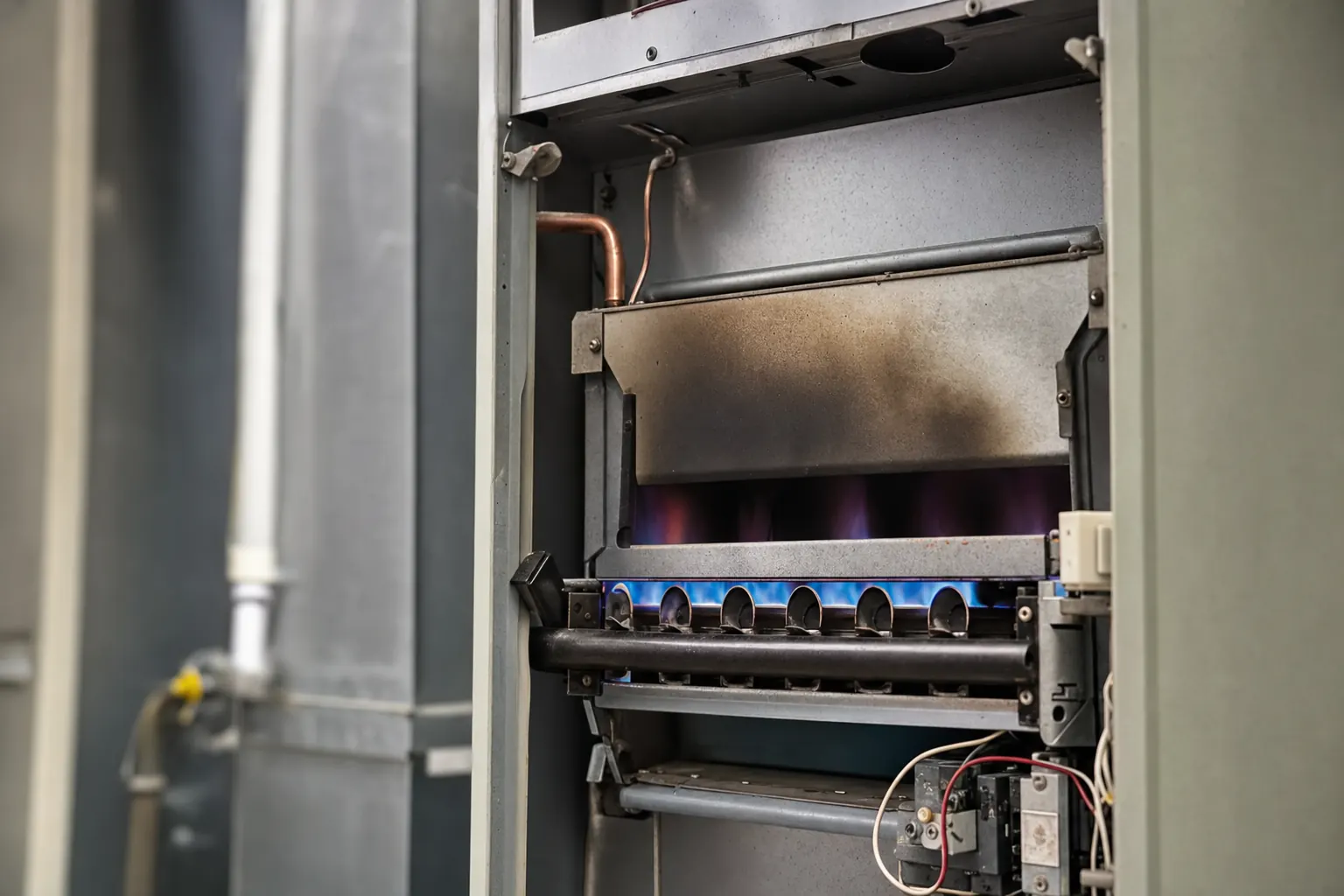
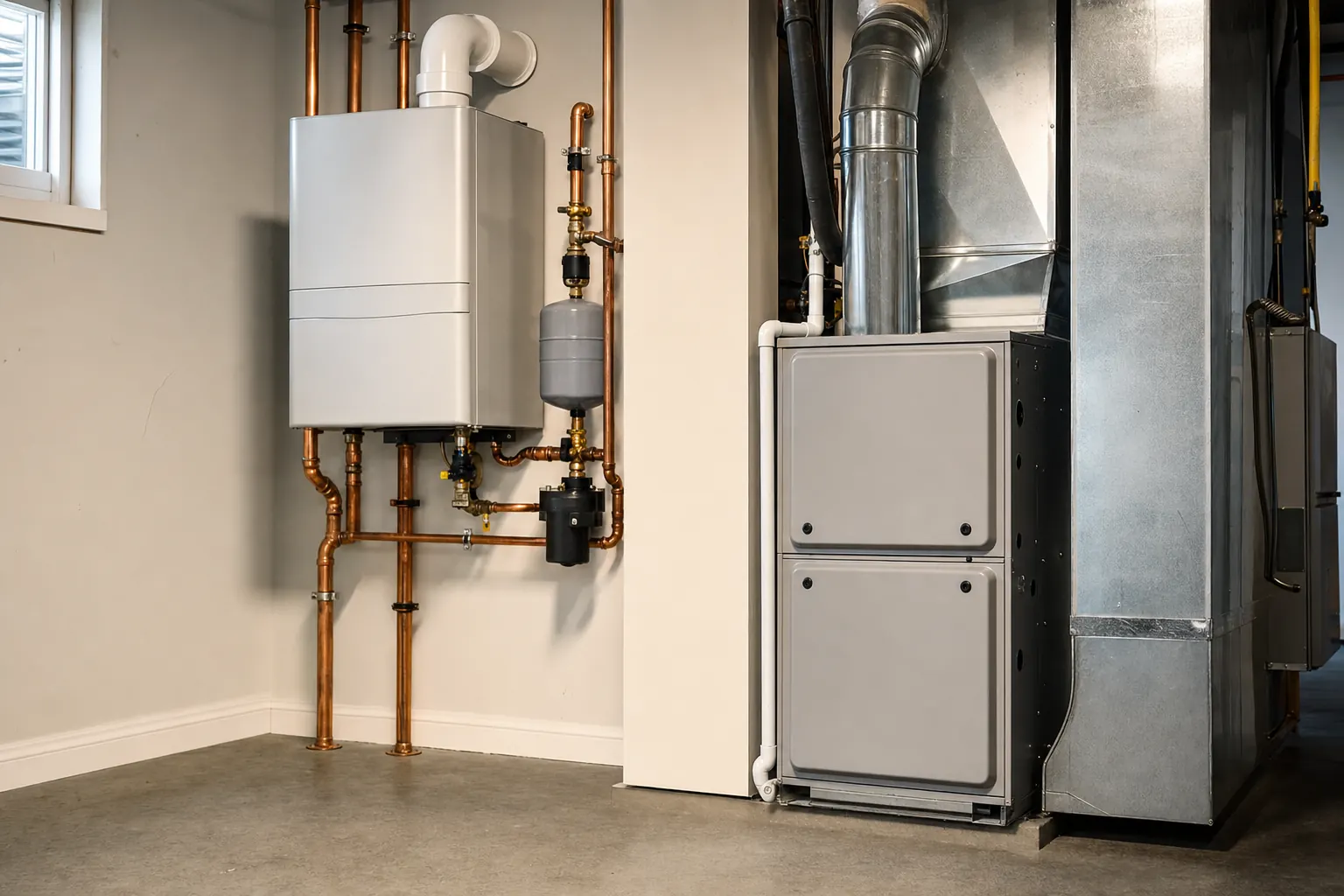
A furnace burns fuel or uses electric resistance elements to heat air inside a heat exchanger or cabinet, then a blower pushes that warm air through supply ducts into rooms. Return ducts pull cooler air back to the furnace to be reheated. The main components are the furnace cabinet, blower motor, control board, filter, heat exchanger, venting system on fuel-fired models, ductwork, registers, and thermostat. Because the system depends on moving air, duct design and air leakage have a large effect on comfort and efficiency.
A boiler heats water instead of air. That hot water circulates through piping to radiators, fin-tube baseboards, radiant floor loops, or sometimes fan coils. Key components include the boiler block or heat exchanger, burner or electric heating elements, circulator pumps, expansion tank, air separator, pressure relief valve, controls, zone valves, and emitters in the rooms. Boilers do not usually need ductwork. They deliver heat by radiation and natural convection off hot surfaces, which is why the heat often feels more even and less drafty.
- A furnace needs ductwork to distribute heat through the house.
- A boiler needs water piping and heat emitters such as radiators, baseboards, or radiant floor tubing.
- A furnace can often share ducts with a central air conditioner or heat pump air handler.
- A boiler can also provide domestic hot water in some setups, but not every boiler does.
- Both systems can have multiple zones, but zoning is often easier and more common with hydronic systems.
Comfort: why boiler heat feels different from forced air
This is where many people strongly prefer one system over the other. Boiler heat is usually described as softer, quieter, and more even. That is because hot water in radiators or baseboards keeps delivering heat after the burner shuts off, and the heat is not tied to bursts of moving air. Room surfaces warm up, and occupants feel that radiant effect. Many homes with hydronic heat also have less noticeable temperature swing between heating cycles.
Forced-air heat can warm a house quickly, which some homeowners like, especially after a nighttime setback. But it can also create drafts, more noticeable on-off cycling, and hot or cold spots if ductwork is undersized, leaky, or poorly balanced. Furnaces also move dust and dry winter air more than boilers do, though the dryness issue is partly because cold outdoor air in winter is naturally dry. Good filtration, proper duct sealing, and humidification can improve comfort, but they do not make forced air feel exactly like hydronic heat.
There are trade-offs. Radiators and baseboards take up wall space and can limit furniture placement. Radiant floor heat feels excellent underfoot, but it responds slowly, so rapid thermostat changes are less useful. Furnaces are better at integrating fresh-air ventilation, filtration, and whole-home air cleaning because the blower is already moving air through a central system. If allergies, filtration, or central cooling matter more to you than the feel of the heat itself, forced air may fit your priorities better.
Running cost and efficiency: the utility bill question
Operating cost depends on fuel type, local utility rates, system efficiency, and the condition of the distribution system. A high-efficiency gas furnace commonly has an AFUE around 95% to 98%. Modern gas boilers often land in a similar range, especially condensing models. In other words, the appliance itself may be comparably efficient. The bigger difference is often how the heat gets around the house. Leaky attic or crawlspace ducts can waste a meaningful amount of heat. Hydronic piping generally loses less in transit, especially when it runs inside conditioned space.
That said, it is a mistake to assume boilers are always cheaper to run. An old cast-iron boiler with poor controls can cost more to operate than a newer sealed-combustion furnace. A furnace in a tight, well-designed duct system may perform very well. Boilers can also use circulator pumps continuously in some designs, while furnaces use blower electricity during heat calls. The practical question is not just boiler or furnace, but what age, what efficiency rating, what fuel, and what condition the system is in.
If you are comparing replacement options, ask for an estimate of annual fuel use based on your climate and utility rates rather than relying on labels alone. Also ask whether the contractor expects any distribution upgrades such as duct sealing, added returns, pump replacement, balancing, radiator vent work, or new controls. Those details can affect comfort and bills almost as much as the new heating appliance. In mixed systems, remember that a furnace may help avoid the separate cost of adding ducted air conditioning later.
Installation cost: what homeowners usually pay
A standard gas furnace swap, a high-efficiency furnace project, a gas boiler replacement, and an oil-to-gas conversion are separate standardized scenarios. Boiler replacement usually starts higher than furnace replacement, and high-efficiency condensing boilers or larger homes can expand the scope further. Oil systems can also require tank, venting, and fuel-system work. Compare each option with its matching pricing-table scenario rather than selecting a range from the other equipment type.
Why are boilers usually more expensive? There are more hydronic components, more piping and control details, and more labor involved in setup. A boiler job may include circulators, expansion tank, air elimination devices, low-water cutoff where required, near-boiler piping, zone valves, and outdoor reset controls. Furnaces are mechanically simpler to swap in many homes, especially if the existing gas line, venting, electrical, and duct transitions are straightforward. If central air is already tied into the furnace, replacement may be especially simple.
Costs rise fast when the project is not a like-for-like replacement. New venting, chimney liner work, condensate drainage, asbestos abatement around old pipes or ducts, electrical upgrades, and code corrections can add a lot. In older hydronic homes, radiator valve issues or buried piping problems may only become obvious during replacement planning. In forced-air homes, a contractor may find undersized returns, failing plenums, or inaccessible duct runs. That is why a site-specific bid matters more than any national average.
Retrofit difficulty: switching from one system to the other
This is the part many homeowners underestimate. Replacing a furnace with another furnace is usually straightforward if the ducts are sound. Replacing a boiler with another boiler is also usually manageable if the piping and emitters are in decent shape. But switching a boiler-heated house to a furnace means adding supply and return ducts throughout the home, creating chases, opening walls and ceilings, and finding space for an air handler or furnace cabinet. In a finished older house, that can be expensive and visually disruptive.
Going the other direction can be just as difficult. Converting a forced-air house to boiler heat means running hydronic piping to every room and adding radiators, baseboards, or radiant floor loops. Radiant floors are easiest during major renovations or new construction, not as a casual retrofit. Unless the home is already being gutted, changing the distribution system is often hard to justify financially. That is why many homes keep whatever distribution they already have, even when homeowners prefer the feel of the other type.
- If your home already has working ducts, staying with forced air is usually the lower-cost path.
- If your home already has radiators or baseboards, staying hydronic is usually the lower-cost path.
- Boiler-to-furnace conversions often make sense only when central air is a top priority and the house can physically accept ducts.
- Furnace-to-boiler conversions are usually reserved for major remodels, high-end comfort projects, or homes where ductwork performs very poorly.
- A hybrid approach is common: keep boiler heat and add separate ductless or high-velocity cooling instead of changing the whole heating system.
Maintenance, lifespan, and what tends to break
Both systems need regular professional maintenance, but the work is different. Furnaces need filter changes, blower inspection, safety control checks, condensate service on high-efficiency models, venting inspection, and heat exchanger evaluation. Boilers need burner and combustion checks, pressure and expansion tank checks, circulator and zone control inspection, air removal, and verification that the system is filling and venting correctly. Neither one should be neglected. A neglected hydronic system can become noisy, uneven, or prone to leaks. A neglected furnace can become inefficient or unsafe.
Typical lifespan is often a little longer for boilers than furnaces, but there is overlap. Many furnaces last roughly 15 to 20 years, while boilers commonly last 20 to 30 years, especially heavy cast-iron models. Real-world life depends on water quality, maintenance, run time, installation quality, and whether parts stay available. Older radiators and baseboards can last a very long time, but pumps, valves, air vents, and controls are wear items. In forced-air systems, blower motors, inducer motors, igniters, control boards, and duct leakage issues are common service items.
For homeowners, the practical difference is this: furnace maintenance is usually simpler and more familiar in many US markets, while boiler maintenance can be a little more specialized depending on where you live. If you own a boiler-heated home, ask specifically whether the contractor is experienced with hydronic controls, zoning, circulators, and bleeding or purging procedures. Any work involving gas valves, burners, flues, sealed combustion, or line-voltage wiring belongs to a qualified licensed technician, not a do-it-yourself project.
How to decide in your house
If you are replacing an existing system in a typical US home, the short answer is usually to keep the same distribution type you already have unless there is a compelling reason not to. Choose a furnace if your home has decent ductwork, you want a lower first cost, and you value easy integration with central air and filtration. Choose a boiler if your home already has hydronic piping and emitters, you prefer quieter and more even heat, and you are comfortable with a higher installation cost.
If you are building new or doing a major whole-house renovation, the choice gets wider. Boilers can shine in high-comfort designs with radiant floors and multiple zones. Furnaces can make sense where cooling, ventilation, and lower install cost are top priorities. In either case, ask bidders to evaluate the distribution system, not just the box in the basement. A top-tier appliance connected to bad ducts or a poorly designed hydronic loop will still disappoint.
A good contractor conversation should cover fuel type, heat loss calculation, efficiency target, venting path, distribution condition, zoning, thermostat strategy, cooling plans, and expected maintenance needs. If two bids differ a lot, look closely at what each includes beyond the appliance itself. That is often where the comfort and cost difference really lives. For many homeowners, the best decision is not boiler versus furnace in the abstract. It is keeping the system type that matches the house and improving the parts around it.
Sources and fact-checking
Reviewed July 25, 2026. We favor primary government and standards sources for safety, efficiency, and regulatory claims. These references support the technical and consumer guidance on this page.