
Reviewed July 27, 2026
HVAC Rescue Editorial Team
Editorial StandardsWhy duct repair matters for comfort and energy use
Ductwork repair is the right starting point when the heating or cooling equipment runs, but certain rooms still stay too hot or too cold. This service also fits weak airflow in part of the home, excess dust around vents, or visible duct damage such as crushed, torn, or disconnected sections. The problem is often not that the system cannot make warm or cool air, but that the air is leaking out, being restricted, or not reaching the rooms that need it.
This page is different from general HVAC repair because it focuses on how air moves through the home after it leaves the equipment. If the whole house is off target, the issue may be the equipment or controls instead. If the main complaint is that one area barely gets airflow, a room never matches the thermostat, or accessible ducts look damaged, ductwork repair is a more precise place to start.
Ductwork Repair in North Carolina: what’s different here
North Carolina’s mixed-humid climate puts duct systems under pressure from both moisture and temperature swings. Along the coast, humidity and salt air can be harder on HVAC components, while western mountain homes need ductwork that supports dependable heating when temperatures drop.
In North Carolina, ductwork repair often centers on weak airflow, rooms that never quite match the rest of the house, and leaks that waste cooled or heated air. Humid weather can also contribute to condensation-related problems, while older systems may struggle to keep up with the state’s wide range of seasonal demands.
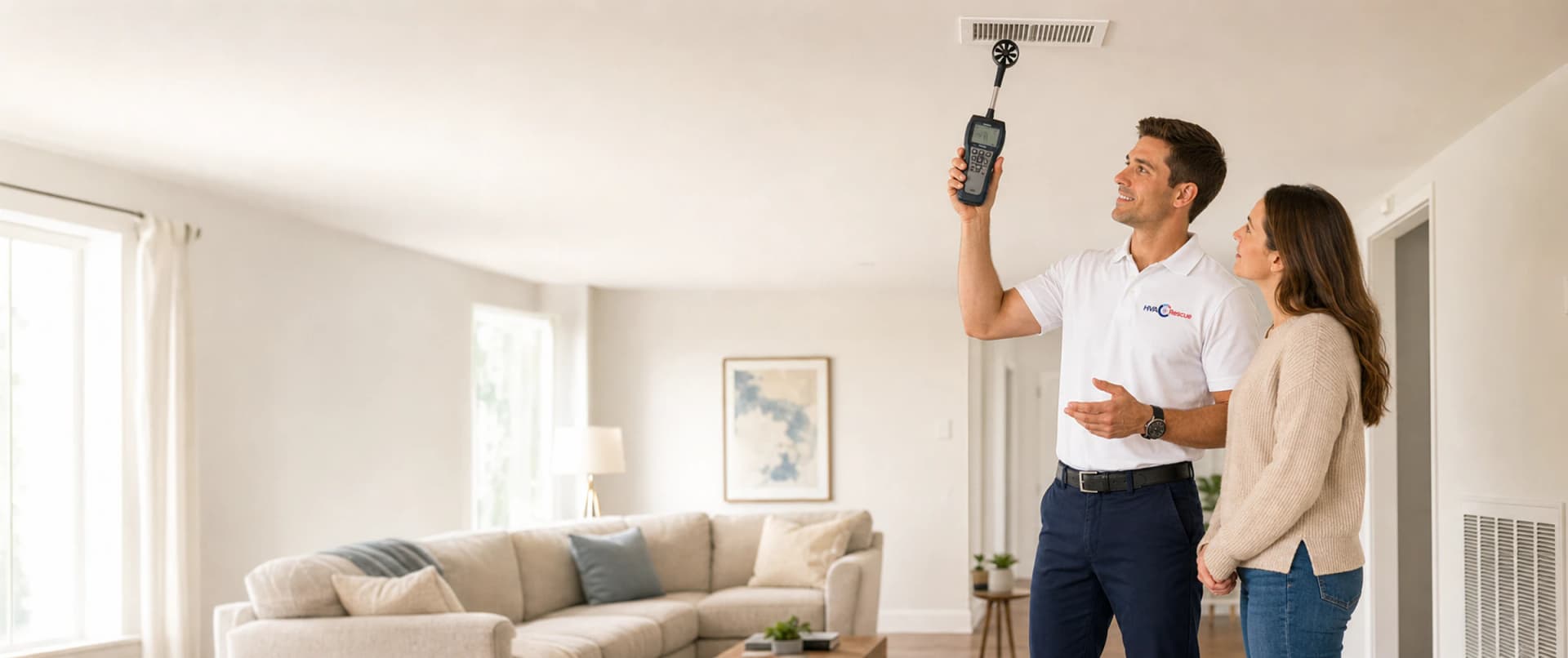
For ductwork repair in North Carolina, a professional scope should begin by note which rooms are affected and how airflow differs. Repair accessible, limited defects when the layout and material remain serviceable; compare redesign or replacement when condition, access, sizing, contamination, or distribution makes spot work inadequate. The written scope should also explain a qualified technician should narrow the problem by comparing the rooms that feel wrong with the airflow the system is actually delivering. that may include checking accessible duct sections for leaks, disconnections, restrictions, damage, and balance problems before deciding what needs sealing, repair, or adjustment. If some rooms remain too hot or too cold even with open vents and a clean filter, the issue may be air loss, restriction, or poor balance in the duct system. The system usually does not need to be shut off unless another serious safety hazard is present.
- Hot, humid summers make duct leaks more noticeable.
- Mountain and inland homes need dependable heating airflow too.
- Uneven room temperatures often point to duct problems.
- Humidity can add condensation concerns in some homes.
- Heat pumps depend on healthy ductwork for both seasons.
Ductwork Repair decisions for North Carolina homes
Determine whether measured leakage, restriction, damage, insulation, or return-path problems explain the room-comfort complaint before repairing ducts. For North Carolina, the relevant state focus is climate zone, duct location, insulation, condensation, climate-zone duct location insulation and moisture context. Repair accessible, limited defects when the layout and material remain serviceable; compare redesign or replacement when condition, access, sizing, contamination, or distribution makes spot work inadequate.
Repair or replace your system?
Repair often makes sense when
Many duct issues are localized and can be corrected by sealing joints, reconnecting sections, adding support, and restoring insulation. Targeted repair is often the practical choice when the system is otherwise in good shape.
- Leaks are concentrated at a handful of joints or connections
- The ducts are correctly sized for the system and the home
- Insulation is intact across most of the runs
- The existing layout delivers reasonably balanced airflow
- Damage is from a specific event, such as a crushed section
- The duct material is sound apart from the problem areas
Consider replacement when
When ductwork is widely deteriorated, badly undersized, or built from materials that are failing throughout, repairing one section at a time can become a losing battle. A professional can help you weigh whether replacing some or all of the duct system makes more sense.
- Leaks and damage are spread across many sections
- Ducts are clearly undersized or restrict airflow throughout
- Old materials are brittle, crumbling, or failing in multiple spots
- Insulation is degraded along most of the system
- The layout creates chronically uneven room temperatures
- Repeated patch repairs have not solved the comfort problems
How much does ductwork repair cost in North Carolina?
Ductwork repair scope varies with leak location, damage extent, access, materials, insulation, and testing. The factors below define the work:
- The total length and complexity of the duct system
- How accessible the affected runs are in attics or crawl spaces
- The type of duct material, such as flexible, sheet metal, or fiberboard
- The number and location of the leaks or damaged sections
- Whether sealing, reconnecting, or rebuilding work is needed
- The amount of insulation that must be repaired or replaced
- Whether registers, boots, or transitions also need attention
- The diagnostic time required to locate hidden leaks
- Any code or permit requirements in your area
- The age and overall condition of the existing ductwork
- Whether airflow balancing is part of the work
- Seasonal demand and provider availability in your area
| Duct Repair | Typical range |
|---|---|
| Patch a single hole or reconnect a jointPer-repair pricing on accessible ducts; most companies also charge a service-call or diagnostic fee | $150 – $600 |
| Targeted leak sealing (mastic and foil tape)Hand-sealing leaks at accessible joints, boots, and plenum connections | $275 – $1,200 |
| Whole-house manual duct sealingEvery accessible joint sealed with mastic or UL 181 foil tape; typical for an average-size home | $1,000 – $4,000 |
| Aeroseal (aerosolized interior sealing)Seals leaks from inside the ducts, including runs you can't reach; large or complex homes can exceed $6,000 | $1,750 – $5,075 |
| Replace one crushed or damaged branch runRemoving and re-running a single flex-duct branch, including materials and labor | $375 – $925 |
| Attic or crawlspace repairs with difficult accessTight crawlspaces, deep attics, and rodent or moisture damage push labor time up | $750 – $3,650 |
Cost ranges are estimates developed from standardized project scopes and reviewed pricing inputs. Government labor and regional cost data are used where applicable. See our Pricing Methodology for the exact sources, calculations, and review date. Actual prices vary by property, scope, materials or equipment, location, and provider.
See the full duct repair cost guide for the complete breakdown, then call to get a real quote for your North Carolina home.
Get ductwork repair help in North Carolina
One quick call connects you with HVAC pros who service your area. No pressure, no obligation.
North Carolina climate & seasonal demand
North Carolina homes need both effective cooling and reliable heating, with hot, humid summers and cool to cold winters. Air conditioners work against heat and moisture for much of the year, and heat pumps are popular for handling both seasons. Conditions vary from the humid coast to the cooler mountains, so needs differ across the state.
North Carolina has a varied climate, from a humid, warm coast to cooler mountains in the west. Summers are generally hot and humid, while winters are mild to cold depending on elevation.
Summer is the big stress test for ductwork in North Carolina because cooling and moisture control both matter for much of the warm season. In winter, especially in the mountains and inland areas, ducts need to support reliable heat delivery without losing comfort to leaks or poor distribution.
When ducts leak or restrict airflow, North Carolina homeowners often feel it as uneven temperatures, longer run times, and rooms that never feel fully comfortable. That can be especially noticeable in homes using heat pumps, since those systems depend on balanced airflow to handle both cooling and heating well.
- Summer humidity straining cooling performance
- Heat pumps working through cool winter stretches
- Salt air affecting outdoor units near the coast
- Clogged condensate drains in humid weather
- Uneven comfort between coastal and mountain conditions
- Aging equipment handling a wide range of weather
Before you call: what to have ready
Before scheduling ductwork repair, note which rooms feel too hot, too cold, or stuffy, and check whether the issue is constant or only shows up during certain weather. It also helps to make sure vents are not blocked by furniture and to look for visible signs of damage, loose connections, or condensation around accessible duct areas. For Ductwork Repair in North Carolina, relate this guidance to the actual equipment, property, and written scope.
Questions to ask before approving work
- Are you licensed and insured for HVAC work in this state?
- Will a technician give a written, itemized estimate before any work starts?
- Is the diagnostic fee waived or credited if I approve the repair?
- For a new system, will you run a Manual J load calculation to size it correctly?
- What parts and labor warranties come with the repair or installation?
- Are your technicians NATE-certified or manufacturer-trained?
- Can you pull the required permits and schedule any needed inspection?
- Do you offer financing or maintenance plans, and what do they cover?
What happens during service
- 1
Connect with a local pro
Reach out and we help you connect with HVAC professionals that service your area. Availability may vary by location and provider, and the local pro handles scheduling and pricing directly.
- 2
Inspection and diagnosis
A technician inspects accessible duct runs, checks connections, and looks for leaks, damage, and insulation problems that affect airflow and efficiency.
- 3
Pinpoint the problem areas
Using their findings, the pro identifies which joints, sections, or runs are losing air or restricting flow, and explains what they observed.
- 4
Repair recommendation
You receive a clear explanation of the recommended work, whether that is sealing, reconnecting, re-supporting, or repairing specific sections.
- 5
Sealing and repair
The technician seals joints, reconnects loose sections, secures sagging runs, and addresses damaged material so air stays inside the ducts.
- 6
Restore insulation
Where insulation is torn or missing, the pro restores it so conditioned air does not lose energy traveling through unconditioned spaces.
- 7
Verify airflow
After repairs, the technician checks airflow at the registers to confirm the work improved delivery to the affected rooms.
- 8
Walkthrough and next steps
The pro reviews what was done, points out anything to watch, and shares any maintenance suggestions to help keep the system performing.
Ductwork Repair in North Carolina: common questions
Who handles ductwork repair in North Carolina?
Is ductwork repair different in Charlotte or Raleigh compared with the coast?
Why do rooms in my North Carolina home feel uneven even when the system is running?
Can HVAC Rescue help with ductwork repair in Asheville, Wilmington, or the Triad?
Sources and fact-checking
Reviewed July 27, 2026. We favor primary government and standards sources for safety, efficiency, and regulatory claims. These references support the technical and consumer guidance on this page.
- Duct sealingENERGY STARHow duct leakage affects comfort and energy use, and appropriate sealing materials.
- HVAC ducted returnsU.S. Department of Energy Building Science EducationReturn-air pathways, room pressure balance, drafts, and temperature differences between rooms.
- Should you have the air ducts in your home cleaned?U.S. Environmental Protection AgencyWhen duct cleaning may be warranted, limitations, and consumer cautions.
- How to avoid a home improvement scamFederal Trade CommissionWritten estimates, contractor verification, payment cautions, and fraud warning signs.