Reviewed July 22, 2026
HVAC Rescue Editorial Team
Editorial StandardsTypical cost ranges
Approved national ranges grouped by comparable project scope.
Single-zone system
One indoor head, one outdoor unit, standard efficiency
$3,967 – $8,333
Single-zone high-efficiency
Higher SEER2/HSPF2 or longer line runs
$5,133 – $10,767
Multi-zone (2-3 heads)
Multiple indoor units sharing an outdoor condenser
$8,833 – $19,000
Multi-zone (4+ heads)
Larger systems or whole-home ductless coverage
$13,833 – $30,000
Cost ranges are estimates developed from standardized project scopes and reviewed pricing inputs. Government labor and regional cost data are used where applicable. See our Pricing Methodology for the exact sources, calculations, and review date. Actual prices vary by property, scope, materials or equipment, location, and provider.
What affects the price
Number of zones
Each indoor head adds equipment and labor; multi-zone systems cost more than single-zone setups.
Capacity / BTU size
Each zone is sized to the room or area it serves, and larger capacity raises cost.
Efficiency rating (SEER2 / HSPF2)
Higher-efficiency models cost more up front but can lower operating bills.
Indoor unit style
Wall-mounted, ceiling cassette, or concealed-duct heads vary in price and install complexity.
Line-set length and routing
Longer or more complex refrigerant and condensate runs add materials and labor.
Electrical work
A dedicated circuit or panel capacity may be needed depending on the system size.
Permits and inspection
Many installs require permits; requirements can vary by city, county, and state.
What a mini-split installation quote usually includes, line by line
A real mini-split quote should break out the indoor head or heads, the outdoor condenser, mounting brackets or a pad, the refrigerant line set, control wire, condensate drain, line-hide cover, disconnect, whip, and startup materials. Labor usually covers hanging the indoor unit, setting the outdoor unit, drilling the wall penetration, pressure-testing, evacuating the lines with a vacuum pump, releasing refrigerant, commissioning, and basic thermostat or remote setup. For a straightforward single-zone install in 2025–2026, the same general band shown on this page applies, with line-hide and electrical often making the difference between the low and high end.
What often gets left out is where homeowners get surprised. A quote may exclude a new 240-volt circuit, panel work, permits, crane or lift access, condensate pump, wall patching, paint, carpentry to build chases, roof penetration work, or upgraded pad and snow stand. Some proposals also price only a standard line-set length, then add charges if the actual routing is longer. If the job is a multi-zone system, ask whether branch boxes, extra communication wire, and each head’s mounting hardware are already included or listed as add-ons.
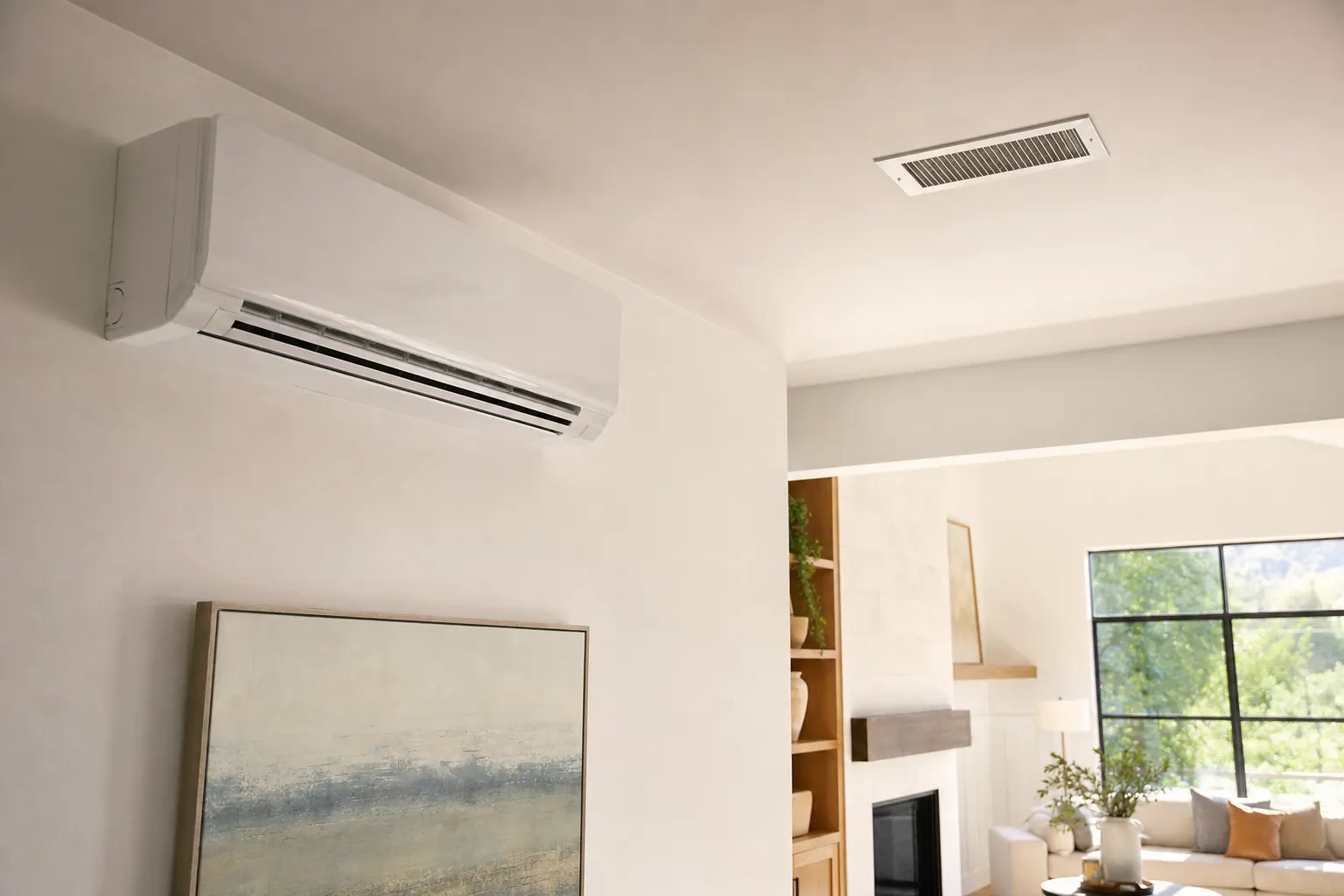
A good proposal should also state what brand and exact model series is being installed, not just “12,000 BTU mini-split. ” Efficiency tier matters, but so does indoor unit style. A wall-mount head is usually the least expensive configuration, while a ceiling cassette or slim-ducted concealed unit can add hundreds to a few thousand dollars in labor and materials because of framing access, drain routing, and finishing work. That level of detail is what makes mini-split quotes comparable.
Why two mini-split bids for the same room can be far apart
Two contractors can look at the same bonus room or garage conversion and come back with estimates that differ by $1,000 to $3,000 without either one being dishonest. One may be pricing a basic wall-mounted single-zone with a short exterior line run, while another includes a higher-efficiency series, a condenser stand, line-hide on the outside wall, and a dedicated circuit from a distant panel. On a 2- or 3-zone mini-split, differences grow faster because branch connections, drain routing, and outdoor unit placement have more moving parts than the homeowner sees at first glance.
Load sizing is another legitimate reason for quote differences. One installer may actually measure the room, windows, insulation, ceiling height, and sun exposure, while another may size by square footage alone. Oversizing is common on mini-splits because people assume bigger is safer, but a head that is too large can short-cycle in mild weather and control humidity poorly. A more careful quote may specify a different BTU size per zone or recommend separate single-zone systems instead of one multi-zone condenser, which changes both installation cost and how the system performs later.
Red flags are usually about missing scope, not just low price. Be cautious if the quote does not mention evacuation and pressure testing, permit responsibility, drain method, electrical scope, model numbers, or warranty terms from the manufacturer. Another warning sign is a bid that assumes an unrealistically short line-set and then plans to “sort it out later. ” Mini-split work involves refrigerant piping, condensate drainage, and high-voltage power; vague proposals create change orders and finger-pointing once the wall is drilled and the outdoor unit is already set.
How home layout, access, and local labour push mini-split pricing up or down
Mini-split installation cost is heavily affected by where the indoor head sits in relation to the condenser. Back-to-back placement on an exterior wall is the cheapest layout because the refrigerant lines and drain are short and simple. Put the head on an interior wall, above a stairwell, or across a finished basement ceiling, and the job can add several hundred dollars to well over $1,500 in labor, line-hide, carpentry access, and drain planning. Long vertical lifts also matter because line-set length and routing time increase quickly.
The house itself changes the number. Brick, stone, poured concrete, log walls, and older plaster interiors are slower to drill and patch than modern siding and drywall. A clean place for condensate to drain by gravity lowers cost; if the head location requires a condensate pump, that usually adds equipment, wiring, and future maintenance points. Outdoor access matters too. A condenser tucked onto a steep side yard, rooftop, balcony, or snow-stand above grade is a different installation than one sitting on a ground pad beside an accessible exterior wall.
Regional labor and permit costs are real drivers. Otherwise comparable mini-split scopes often cost more in dense metro areas, high-cost coastal markets, and places with stricter electrical and permit requirements. The exact same brand and BTU size can price noticeably lower in a lower-cost market with easy access and shorter travel time. That does not automatically make one quote padded. On mini-splits, local code requirements, licensed electrical subcontracting, and inspection logistics can move the final estimate more than homeowners expect.
Ways to lower mini-split cost without cutting corners
The best way to reduce mini-split installation cost is to simplify the layout before anyone starts drilling. Choosing an indoor head location on an exterior wall, close to where the condenser can sit, can save money on line-set length, line-hide, and labor. If a room can drain condensate by gravity to the outside, that is usually cheaper and simpler than relying on a pump. Homeowners can also clear access around the electrical panel, attic hatch, crawlspace, and outdoor unit area so the installer is not losing time moving storage or working around obstacles.
It also helps to decide early whether the goal is one problem room or broad whole-home coverage. Many people jump straight to a multi-zone system, but sometimes two separate single-zone systems are competitively priced and easier to stage over time. In other homes, one multi-zone condenser is cleaner and cheaper than placing several outdoor units. Comparing those layouts is one of the few changes that can save real money without reducing workmanship. The wrong layout choice can lock in higher install cost and more complicated service access later.
What usually does not save money is asking for the cheapest unknown equipment line or skipping parts of the scope that still need to happen. Omitting line-hide may save a few hundred dollars if appearance is not important, but skipping proper electrical work, vacuum and pressure testing, or permits is not a bargain. If you want to control spending, ask for alternate prices on standard versus high-efficiency equipment, wall-mount versus cassette, and back-to-back versus extended line routing. Those are honest scope choices that affect mini-split cost in predictable ways.
When the higher mini-split price is actually the cheaper decision
Spending more can make sense if the higher quote solves a known problem instead of just adding a premium label. A better cold-climate heat pump mini-split, for example, may cost more upfront than an entry-level heat pump, but in colder regions it can carry more of the heating load before backup heat or another system takes over. Over 5 to 10 years, lower winter electric use and better comfort can outweigh part of the purchase gap. The same logic applies if the higher bid includes better line routing, a gravity drain instead of a pump, or easier service access around the condenser.
Higher-efficiency equipment can be worth it when the mini-split will run many hours a year, such as a primary bedroom suite, open-plan addition, or whole-home ductless setup. The payback is usually weaker for a lightly used workshop or guest room. In current 2025–2026 estimate ranges, stepping from a standard single-zone system to a higher-efficiency series often adds roughly the kind of premium reflected in the bands on this page, and that premium is easier to justify in climates with long cooling seasons or high electric rates.
Paying more is also justified when the quote includes work that prevents repeat expenses. Proper sizing, a dedicated circuit sized for the equipment, a durable mounting method, and thoughtful drain routing are not flashy upgrades, but they reduce nuisance issues and callback risk. A low bid that leaves a visible tangle of line-set, uses a condensate pump where gravity drainage was possible, or places the condenser where snow, debris, or service access will be a problem can become the more expensive choice long before year five.
Each zone changes equipment and labor
A mini-split estimate is shaped by the number and type of indoor units, each room’s load, line-set length and route, condensate disposal, wall construction, outdoor-unit location, and electrical work. Adding heads is not simply a fixed price per room because the outdoor unit must support the connected capacities and each line route creates its own installation conditions.
Ask for a room-by-room load calculation and the proposed capacity for every indoor unit. Oversized heads can cycle quickly and struggle with humidity, while undersized equipment may rely heavily on maximum output. Open doorways do not guarantee that one wall unit will condition several closed rooms evenly.
Details that should appear in the quote
The proposal should identify all indoor and outdoor model numbers, rated and low-temperature capacity, line-set lengths, condensate method, line-hide or other finish work, mounting hardware, electrical circuit and disconnect, permits, controls, startup testing, and warranties. If a condensate pump is needed, ask where it will be installed and how noise and maintenance will be handled.
For cold-climate heating, compare output at the design outdoor temperature rather than relying only on the nominal rating. The plan should explain whether another heat source remains, how low-temperature performance is expected to meet the load, and what happens during defrost or unusually cold weather.
Estimate methodology
How we built these ranges
We develop these ranges from standardized residential project scopes and reviewed pricing inputs, then keep materially different scopes separate instead of presenting one misleading average. Government data supports labor and location adjustments where applicable; it does not publish the final HVAC project range. This page was reviewed on July 22, 2026.
The approved scenario definitions distinguish factors such as number of zones, capacity / btu size, efficiency rating (seer2 / hspf2), indoor unit style. Equipment capacity, model, access, and documented labor and material assumptions define each scope. Unsupported permit, tax, rebate, utility, insurance, financing, and warranty amounts are excluded from the canonical calculation.
Compare written, itemized proposals for the same model numbers and scope. Ask whether diagnosis, labor, refrigerant, permits, disposal, warranty registration, and any required supporting work are included.
Sources and fact-checking
Reviewed July 22, 2026. We favor primary government and standards sources for safety, efficiency, and regulatory claims. These references support only the specific technical, safety, efficiency, regulatory, or consumer-guidance claims described on their cards. They do not establish the displayed price ranges.
Want a real number for your system?
Connect with HVAC professionals that service your area for an accurate, no-obligation estimate.