
Reviewed July 22, 2026
HVAC Rescue Editorial Team
Editorial StandardsAir conditioning repair across South Carolina
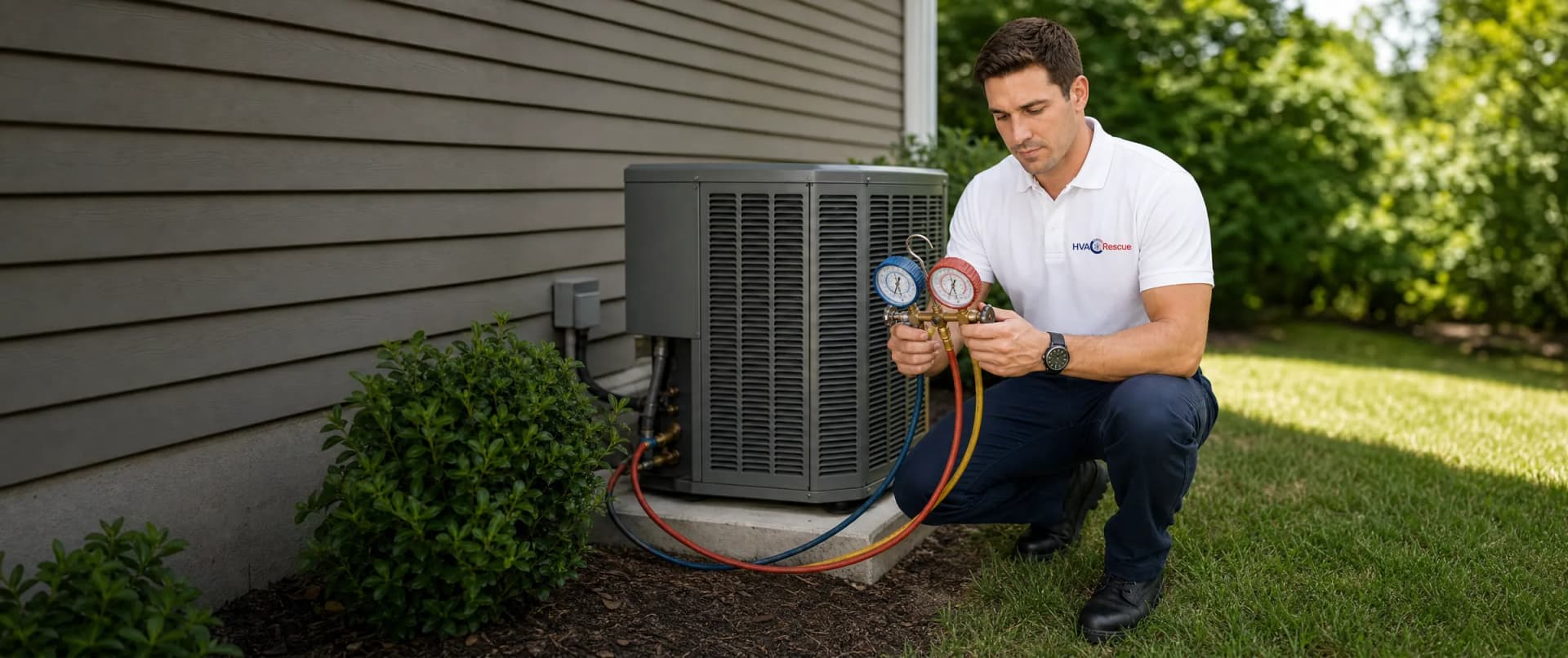
AC repair is the right starting point when the system used to cool and now does not. Common examples are warm air from the vents, weak airflow, ice on the indoor coil or outdoor lines, a loud outdoor unit, or an outdoor unit that stays silent while the thermostat is calling for cooling. These symptoms point to a fault that needs diagnosis, not just routine maintenance.
This page is different from AC tune-up, installation, and replacement. A tune-up is planned maintenance on a working system. Installation and replacement apply when new equipment is being added or a full system change is being considered. AC repair fits the middle ground: the equipment is there, but a part, airflow problem, electrical issue, or refrigerant problem is keeping it from cooling properly.
AC Repair in South Carolina: what’s different here
South Carolina's hot-humid conditions keep air conditioners working through much of the year, while the Lowcountry coast adds extra moisture and salt exposure that can affect outdoor equipment. The upstate is somewhat cooler, but across the state many homes rely on heat pumps because heating demand is lighter and cooling remains the bigger workload.
Common AC repair in South Carolina calls include warm air, frozen coils, weak airflow, and systems that run but leave the house feeling sticky. In muggy weather, clogged condensate drains, musty odors, and moisture around ductwork or indoor components can point to a larger humidity-related service issue.
If the issue is limited to comfort in one area, the scope may involve airflow, drainage, or humidity performance rather than a full system failure. If the unit is blowing warm air, freezing up, making new noises, or showing repeated moisture-related problems, a qualified HVAC professional should evaluate the system and any related duct or condensate concerns. For AC Repair in South Carolina, relate this guidance to the actual equipment, property, and written scope.
- Humidity control matters as much as cooling output
- Coastal salt air can affect outdoor unit condition
- Long runtimes can expose airflow and drain problems
- Heat pumps are common and may need review after cold snaps
AC Repair decisions for South Carolina homes
Determine why the air conditioner is not removing enough heat or moisture before replacing a part or adding refrigerant. For South Carolina, the relevant state focus is climate zone, cooling season, humidity, refrigerant rules, cooling season humidity and refrigerant context. Favor a measured repair when the fault is isolated and the matched system is otherwise sound; compare replacement only when condition, compatibility, repeated failures, or major-component economics support it.
Repair or replace your system?
Repair often makes sense when
Repair is often the practical choice when the system is relatively young, the failure is isolated, and the rest of the unit is in good shape.
- The unit is still within a typical service life and has been maintained
- The problem is a single component, like a capacitor, contactor, or fan motor
- Airflow or drainage issues that don't involve major parts
- A thermostat or control fault rather than a sealed-system failure
- The system still uses a refrigerant that is readily available
- This is the first significant repair the system has needed
Consider replacement when
Replacement may be worth discussing when the equipment is aging, repairs are stacking up, or the refrigerant type is being phased out. A professional can help you weigh the trade-offs for your home in South Carolina.
- The system is near or past its expected lifespan
- You've paid for several repairs in a short span of time
- A major component such as the compressor has failed
- The unit runs on an older refrigerant that is being phased down
- Energy bills keep climbing despite repairs and maintenance
- A pro recommends evaluating a higher-efficiency replacement
How much does AC repair cost in South Carolina?
AC repair scope in South Carolina varies with the system fault, parts, access, refrigerant work, electrical testing, and appointment urgency. The factors below define the work.
- The specific component that has failed and whether it needs repair or replacement
- Whether the issue is electrical, mechanical, airflow, or refrigerant related
- The age, brand, and model of the equipment
- Parts availability for that particular system
- The refrigerant type the system uses and current supply conditions
- How accessible the indoor and outdoor units are
- Whether the failure has caused secondary damage, such as a frozen coil
- The amount of diagnostic time required to find the root cause
- Local labor rates and market conditions where you live
- Whether any work is covered by an existing manufacturer warranty
- Time-of-day or after-hours factors, which vary by provider
- Any code or safety updates a provider identifies during the visit
| AC Repair Cost | Typical range |
|---|---|
| Minor repair (capacitor, contactor, fuse)Common, affordable fixes. | $175 – $575 |
| Moderate repair (fan motor, drain, thermostat)Mid-range parts and labor. | $350 – $1,400 |
| Major repair (compressor, refrigerant leak)Large repairs; may favor replacement on older units. | $1,400 – $5,100 |
Cost ranges are estimates developed from standardized project scopes and reviewed pricing inputs. Government labor and regional cost data are used where applicable. See our Pricing Methodology for the exact sources, calculations, and review date. Actual prices vary by property, scope, materials or equipment, location, and provider.
See the full ac repair cost guide for the complete breakdown, then call to get a real quote for your South Carolina home.
Get AC repair help in South Carolina
One quick call connects you with HVAC pros who service your area. No pressure, no obligation.
South Carolina climate & seasonal demand
The cooling season is long and demanding, especially in the humid Lowcountry. Managing humidity is as important as lowering temperature.
South Carolina has a humid subtropical climate with long, hot, humid summers and short, mild winters. The Lowcountry coast is especially muggy, while the upstate is somewhat cooler.
Before the long cooling stretch ramps up, it helps to review how the system performed last season, especially if airflow was weak or indoor humidity stayed high. Even though winters are mild, homeowners with heat pumps should also pay attention after cold snaps if the system struggled to keep up or relied heavily on backup heat. For AC Repair in South Carolina, relate this guidance to the actual equipment, property, and written scope.
When an AC system cannot remove enough moisture, a home can feel uncomfortable even when the thermostat setting looks reasonable. Near the coast, salt air and constant runtime can add wear to outdoor components, which can reduce efficiency and lead to more frequent repair needs. For AC Repair in South Carolina, relate this guidance to the actual equipment, property, and written scope.
- AC systems overworked by long, humid summers
- Poor humidity control leaving homes feeling sticky
- Salt air affecting outdoor units near the coast
- Clogged condensate drains in muggy weather
- Musty odors and moisture in ductwork
- Heat pumps needing backup heat on the coldest nights
Before you call: what to have ready
Have ready a simple timeline of symptoms such as warm air, unusual noise, frozen coils, musty smells, drainage problems, or rooms that never seem to cool evenly. It is also useful to note whether the problem shows up during the most humid parts of the day, after heavy rain, or only when the system has been running for long periods. For AC Repair in South Carolina, relate this guidance to the actual equipment, property, and written scope.
Questions to ask before approving work
- Are you licensed and insured for HVAC work in this state?
- Will a technician give a written, itemized estimate before any work starts?
- Is the diagnostic fee waived or credited if I approve the repair?
- For a new system, will you run a Manual J load calculation to size it correctly?
- What parts and labor warranties come with the repair or installation?
- Are your technicians NATE-certified or manufacturer-trained?
- Can you pull the required permits and schedule any needed inspection?
- Do you offer financing or maintenance plans, and what do they cover?
What happens during service
- 1
Tell us what's happening
Describe what your AC is doing, such as warm air, no airflow, strange noises, or no power, so we can route your request accurately.
- 2
Share your location
Let us know where you are in South Carolina so we can match you with HVAC professionals that service your area.
- 3
Get connected to a provider
We connect you with an independent cooling provider. Because we are a nationwide connection service, availability may vary by location and provider.
- 4
Schedule a diagnostic visit
Coordinate a time directly with the provider for them to inspect the system in person.
- 5
On-site diagnosis
The provider examines the equipment, identifies the root cause, and explains what they find.
- 6
Review the estimate
You receive an estimate based on the actual problem before any repair work moves forward.
- 7
Repair and verification
With your approval, the provider completes the repair and confirms the system is cooling properly again.
AC Repair in South Carolina: common questions
Why does my house in South Carolina feel sticky even when the AC is running?
Is coastal air harder on AC equipment in South Carolina?
Do heat pumps make sense for South Carolina homes?
Sources and fact-checking
Reviewed July 22, 2026. We favor primary government and standards sources for safety, efficiency, and regulatory claims. These references support the technical and consumer guidance on this page.
- Heating and cooling maintenance checklistENERGY STARProfessional tune-up scope, filters, airflow, coils, drains, and safety checks.
- ENERGY STAR heating and cooling guidanceENERGY STAREfficiency, replacement planning, qualified equipment, and contractor questions.
- Section 608 technician certification requirementsU.S. Environmental Protection AgencyFederal certification requirements for work that can release regulated refrigerants.
- How to avoid a home improvement scamFederal Trade CommissionWritten estimates, contractor verification, payment cautions, and fraud warning signs.