Quick summary
Match what you notice to a safe next step
These observations can narrow the starting service, but they do not confirm which part has failed.
What you notice
Failed ventilator fan motor or start/run capacitor
What it may point to
The ventilator has power but the fan cannot start or cannot stay running, so stale air builds up and you may hear a hum without any airflow.
Safe next action
Check the filter and look for visible moisture without opening equipment
What you notice
Power loss to the whole-home ventilator
What it may point to
A tripped breaker, blown fuse, service switch left off, or failed disconnect can leave the unit completely dead with no fan sound at all.
Safe next action
Turn the system off and request prompt service
What you notice
Blower wheel jammed by debris or worn bearings
What it may point to
The fan may try to start but cannot turn freely, which can stop airflow entirely and sometimes create a hot, electrical odor from an overheating motor.
Safe next action
Stop the furnace or boiler and arrange qualified inspection
What you notice
Control failure in the timer, wall control, relay, or humidistat
What it may point to
The ventilator itself may be healthy, but it is not receiving the signal to run, so the house feels stale even though the rest of the HVAC system operates normally.
Safe next action
Check filter condition and whether ventilation controls are enabled
Safe things to check
- Check the filter and visible control setting
- Look for visible moisture around accessible drains
- Note which rooms and times of day are affected
Do not attempt
- Do not open sealed electrical or equipment panels
- Do not bypass a safety switch or force repeated restarts
A few quick questions
Refine the best next step
Question 1 of 3
- 1How much of the home is affected?
- 2What is the system doing right now?
- 3When did this begin?
What this symptom can mean
Use the evidence you can observe
What this symptom usually points to
A whole-home ventilator that is not moving air is different from a room feeling stuffy for general HVAC reasons. This symptom usually means the dedicated fresh-air fan is not running, not being told to run, or is running against a blocked intake or exhaust path. Because this equipment is meant to exchange indoor and outdoor air, the home often feels stale first, and musty odors can linger longer than usual because the air change rate has dropped.
What your observations can tell you
If the home feels stale without a strong odor and you do not hear the ventilator at all, power loss or a failed control is more likely than a duct problem. If you hear a hum, a brief start attempt, or a squeal but no airflow, a bad capacitor, seized motor, or stuck blower wheel moves higher on the list. If the odor smells damp or musty, the ventilation problem may have been present long enough for moisture to hang around bathrooms, laundry areas, or lower levels. If you smell electrical burning or melting plastic, or if you see black residue near heating equipment, treat that as a life-safety issue: leave the building and call emergency services from outside.
How this is different from other air-quality complaints
This page is about the fresh-air ventilator itself not moving air, not weak airflow from heating or cooling vents and not a separate odor problem alone. A whole-home ventilator can fail while the furnace or air conditioner still blows normally through supply registers. That is why homeowners often notice the house getting stale even though temperature control seems fine.
What a service visit typically includes
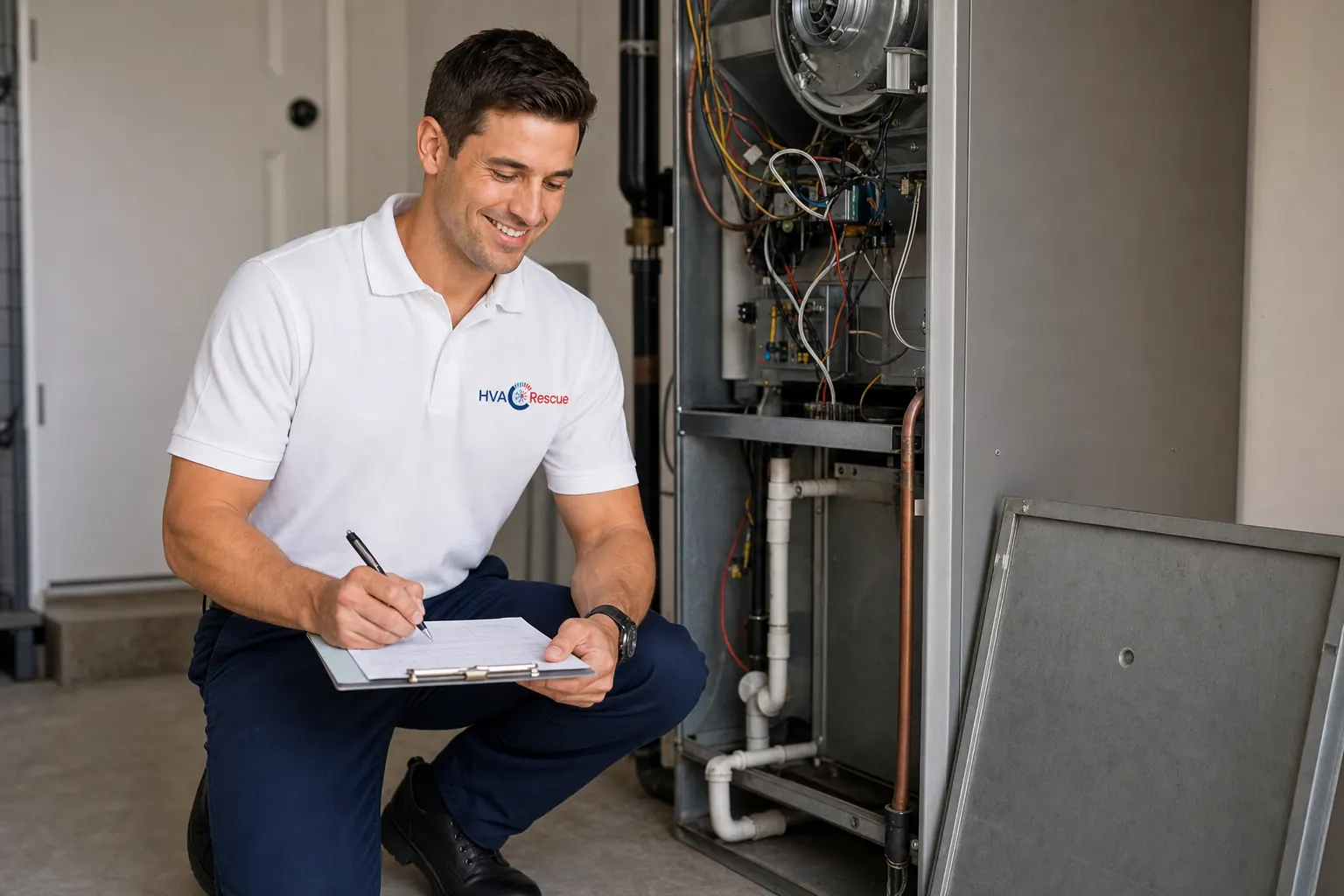
A technician usually starts by verifying whether the ventilator is receiving line voltage and whether the wall control, timer, relay, or humidistat is sending a run command. Then they check motor amperage, capacitor value if equipped, wheel rotation, bearings, dampers, and the intake and exhaust hoods outside. If the unit powers up but air still does not move, they will inspect for a jammed wheel, collapsed flex duct, blocked exterior screen, or a failed internal control board depending on the ventilator design.
What affects repair cost
Cost depends mostly on whether the problem is electrical, mechanical, or access-related. Typical 2025-2026 US pricing for diagnosis and minor electrical repairs such as a capacitor, fuse, switch, or simple control issue is often about $150-$450 total, while motor replacement commonly lands around $400-$1,200 depending on brand and access. Duct or exterior hood corrections can be modest if the blockage is simple, but difficult attic or crawlspace access, proprietary controls, or a damaged ventilator assembly can push the repair higher.
Cost ranges are estimates developed from standardized project scopes and reviewed pricing inputs. Government labor and regional cost data are used where applicable. See our Pricing Methodology for the exact sources, calculations, and review date. Actual prices vary by property, scope, materials or equipment, location, and provider.
If the ventilator has been off long enough for musty conditions to develop, the visit may also include checking whether a stuck damper or failed fan has allowed moisture to build up in connected ductwork or nearby spaces. That does not always mean the ventilator itself is ruined, but it can add cleaning or duct repairs beyond the core fan repair. For safety, anything involving overheated wiring, burned components, or high-voltage diagnostics belongs to a qualified technician.
When to turn the system off
- Stop if you smell gas, see smoke or sparks, or hear a carbon-monoxide alarm
- Stop if water reaches powered equipment or a breaker trips again
- Stop if loud grinding, booming, or heavy ice appears
When to call for help
- Call when the symptom continues after the safe checks
- Call promptly when comfort is lost for the whole home
- Describe when it started and any water, ice, noise, odor, alert, or breaker activity
Cost guidance
What could this cost to fix?
Price depends on the actual cause, equipment, access, and local labor. Compare the national ranges in the HVAC Repair Cost guide, or check service availability for your system.
Find local help for Indoor Air Quality
We will keep this problem and recommended service selected while you answer a few quick availability questions.
Browse HVAC help by stateFrequently asked questions
Whole-home ventilator is not moving air: common questions
Why does my whole-home ventilator make a humming sound but no air comes out?
Can a blocked outside vent keep a whole-home ventilator from moving air?
My furnace and AC still work, so why does the house feel stale when the ventilator stops?
How long does it usually take to fix a whole-home ventilator that is not moving air?
Is it worth repairing a whole-home ventilator motor, or should I replace the entire unit?
Sources and review standard
Last updated July 18, 2026. Last reviewed July 18, 2026. HVAC Rescue reviews problem pages for homeowner-safe boundaries, service routing, source quality, and unsupported claims. No named technical reviewer is shown unless a qualified HVAC reviewer has completed that review.