Reviewed July 22, 2026
HVAC Rescue Editorial Team
Editorial StandardsTypical cost ranges
Approved national ranges grouped by comparable project scope.
Diagnostic visit with electronic leak check
Often credited toward the repair if you proceed with the same contractor
$100 – $330
R-410A top-off, 1-2 lbs (2010-2024 systems)
Roughly $50-$90 per pound installed, plus the service call
$200 – $400
R-410A full recharge after repair, 6-12 lbs
Central systems hold about 2-4 lbs of refrigerant per ton of capacity
$400 – $1,100
R-22 recharge, pre-2010 system, 2-6 lbs
$100-$250 per pound; reclaimed supply only since the 2020 production ban
$300 – $1,500
R-454B or R-32 recharge (2025+ systems)
A2L pricing has been volatile since the 2025 cylinder shortage
$200 – $800
Leak search, minor repair, and recharge
Valve cores, fittings, or accessible line-set repairs plus refrigerant
$400 – $1,600
Evaporator coil replacement for a major leak
Roughly $1,000-$2,500 when a parts warranty covers the coil; more without
$1,500 – $4,500
Cost ranges are estimates developed from standardized project scopes and reviewed pricing inputs. Government labor and regional cost data are used where applicable. See our Pricing Methodology for the exact sources, calculations, and review date. Actual prices vary by property, scope, materials or equipment, location, and provider.
What affects the price
Refrigerant type
Refrigerant type, availability, and pounds required affect the recharge scope. Recovery, leak repair, and refrigerant should be itemized; do not infer a per-pound rate from an installed repair range.
Pounds needed
Central ACs hold roughly 2 to 4 pounds per ton, so a 3-ton system carries about 6 to 12 pounds; a slow leak may need only a 1-2 pound top-off, while a system evacuated for repair needs a full charge.
Leak location
A valve-core repair and an inaccessible coil leak are materially different scopes; require diagnosis and itemization before comparing repair with replacement.
Leak detection method
Electronic, dye, and nitrogen leak tests require different labor and materials. Leak detection should be itemized separately when it is outside the standardized recharge scope.
Warranty status
Manufacturer parts warranties — often 10 years when the system was registered — may cover a leaking coil itself, but labor and refrigerant are typically billed separately.
Season and urgency
Peak-summer and after-hours calls carry premium rates, and refrigerant demand spikes during the same heat waves that fill contractor schedules.
Local labor rates and supply
The active localized range uses approved state labor conditions and applies no city or regional refrigerant or material factor. Provider-specific availability may affect actual quotes.
Line-set length and access
Longer refrigerant lines increase the total charge the system holds, and rooftop, attic, or crawlspace equipment adds labor time to any leak search.
What an AC refrigerant recharge quote should actually include
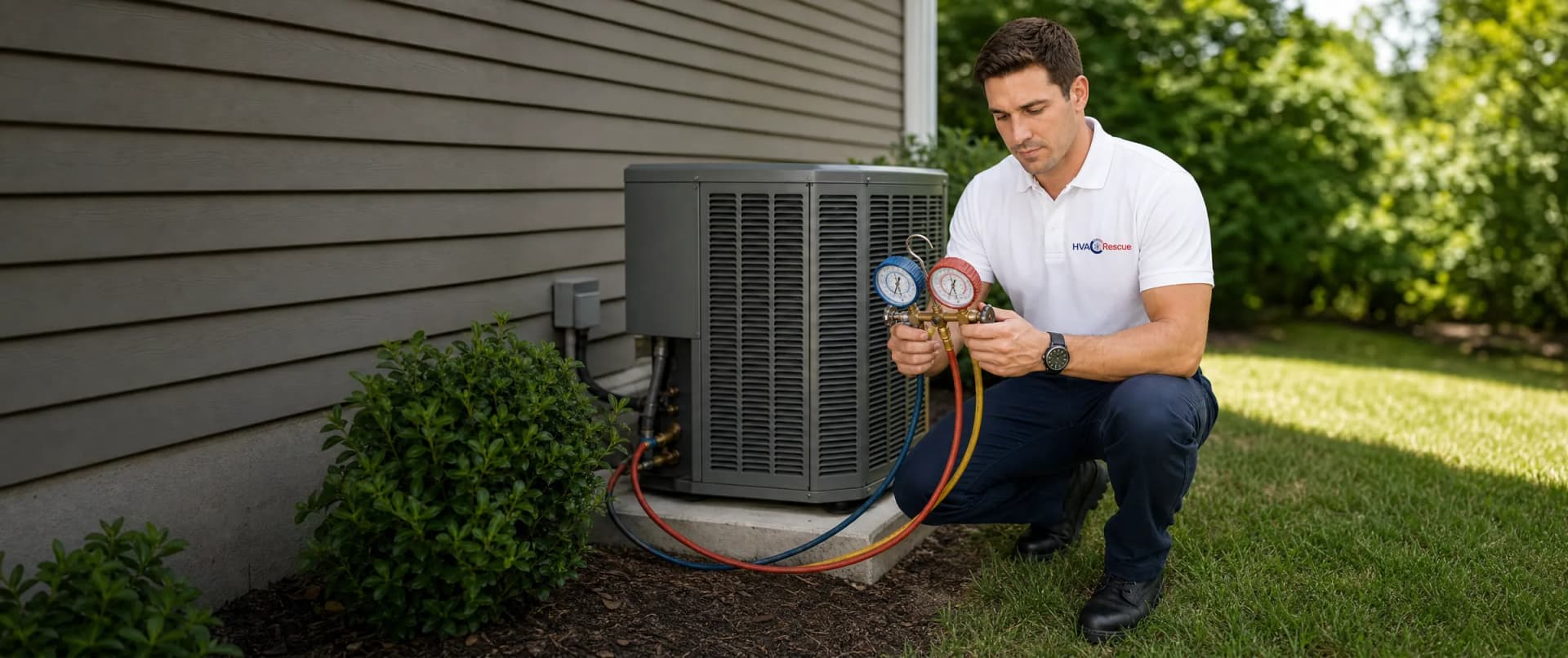
A real refrigerant recharge quote usually starts with a service call and system diagnosis, not just a price per pound. For a central AC, that often includes checking suction and liquid pressures, superheat or subcooling, supply and return temperatures, outdoor ambient conditions, and whether the system is actually low versus airflow-restricted or overcharged. On many estimates, the first line is the diagnostic visit, often in the low hundreds, then leak checking, then refrigerant added, then any repair needed before the final charge can be weighed in or dialed in.
The refrigerant line item itself should say which refrigerant is being used and whether the quote is for a small top-off or a full recharge after repair. A proper invoice may also include recovering any remaining charge, pulling a vacuum after the sealed system is opened, replacing valve cores or caps if they leak, and verifying final operating readings. Those steps matter because adding refrigerant without confirming the charge by factory method is how homeowners end up paying twice during the same cooling season.
Common exclusions are permit fees, attic access work, drywall or finish repairs to reach a leaking coil, and after-hours pricing. Coil replacement quotes also often separate the refrigerant from the labor because a manufacturer parts warranty may cover the coil but not the refrigerant lost from the leak. If a quote simply says 'add Freon' with no refrigerant type, no leak discussion, and no final performance check, it is too thin to compare fairly with a more complete estimate.
Why one recharge quote is $250 and another is $1,200
Two homeowners can both say they need an AC recharge and still be pricing very different jobs. A straightforward R-410A system that is only 1 to 2 pounds low and has no confirmed leak repair may land in the few-hundred-dollar range including the call. The number changes quickly if the system has to be leak-searched, opened, repaired, evacuated, and fully recharged. A 3-ton system may hold roughly 6 to 12 pounds total, so the difference between a small adjustment and a full weighed-in charge is not minor.
Refrigerant type also creates legitimate spread. Older R-22 systems often cost far more to recharge because the refrigerant comes from reclaimed supply and the installed per-pound rate is much higher than R-410A. Newer R-454B or R-32 equipment can price unpredictably by market because A2L supply and handling requirements have shifted since the 2025 shortage. A quote for the same number of pounds can still differ if one contractor includes nitrogen pressure testing, core tools, vacuum decay verification, and final commissioning while another is pricing a simpler visit.
Red flags are less about the total and more about what is missing. Be cautious if someone refuses to identify the refrigerant, quotes a large pound amount without reading the nameplate or measuring anything, or says leaks are normal and not worth addressing. Another warning sign is a very low quote that skips leak checking on a system that is clearly empty or repeatedly low. Refrigerant is not like gasoline; if it disappeared, there is usually a reason, and the cheapest invoice can become the most expensive summer.
The house and equipment details that quietly change recharge pricing
The same refrigerant issue costs more on some homes simply because the system is harder to reach and takes longer to test correctly. An air handler packed into a hot attic, a rooftop condenser, or a crawlspace line set adds labor before gauges ever go on. Longer line sets can increase the amount of refrigerant the system holds beyond the outdoor unit's factory charge assumption, so a full recharge on a large house may require more pounds than a similar-tonnage system mounted close to the coil.
Equipment age and design matter too. A builder-grade 2-ton split system with an accessible outdoor unit is usually simpler to diagnose than a variable-capacity communicating system where charging procedures are more exact and fault history may need to be reviewed. If the leak is at a service valve or Schrader core, the repair may stay relatively modest. If the leak is in an evaporator coil buried inside a tight closet air handler, labor climbs fast and a refrigerant charge becomes only one piece of the bill.
Regional labor and supply are the other quiet drivers. Large metro areas and coastal markets often run higher hourly rates than small inland towns, so the exact same sealed-system work can price materially differently even with the same refrigerant. Seasonal demand matters as well. During a heat wave, emergency evening or weekend service commonly carries premiums, and refrigerant availability can tighten just when more systems fail under heavy load.
How to lower the bill without paying for bad refrigerant work
The best way to lower recharge cost is to give the contractor a clean, easy diagnostic path. Change the filter, make sure return grilles are open, clear vegetation around the condenser, and know the model numbers and refrigerant type before the visit if the nameplates are readable. That does not repair a leak, but it reduces time spent sorting out airflow problems or hunting for basic equipment information. If the system has been topped off before, bring old invoices so the next contractor can see how many pounds were added and how often.
Ask for the quote broken into separate lines: diagnostic, leak search, repair, refrigerant, and any evacuation or vacuum procedure. That makes it easier to compare apples to apples and decide whether a minor leak repair makes sense now versus later replacement. Scheduling in normal business hours instead of a holiday weekend can also reduce the bill. So can authorizing leak search and repair during the same visit when practical, since some companies credit part of the diagnostic toward the approved work.
What does not save money is asking someone to 'just add a little' to a system that is known to be leaking. A cheap top-off can be reasonable on a very small loss while you plan next steps, but repeated recharges on the same leak usually cost more than fixing a service valve, braze joint, or line connection once. Any sealed-system repair, refrigerant handling, or high-voltage AC diagnosis should be done by a qualified licensed technician, especially on older R-22 systems and newer A2L equipment.
When the expensive option is actually cheaper over the next 5 to 10 years
Paying more upfront usually makes sense when the quote includes finding and repairing the leak instead of only replacing the lost refrigerant. If a system loses 2 pounds of R-410A every summer, the first refill may not look terrible, but repeating that service for several years can outrun the cost of repairing a leaking valve core, flare connection, or accessible line-set section. The same logic is even stronger on R-22 equipment, where each additional pound is expensive and future supply does not get easier.
There is also a point where coil replacement or full system planning is the better financial move. A leaking evaporator coil on a system still within the parts warranty may cost far less than replacing the whole AC, even after labor and refrigerant are added. On the other hand, if a pre-2010 R-22 system needs a major recharge and a coil, putting more money into it can be hard to justify. Spending more on a durable repair or replacement path can lower total cooling costs over the next five to ten years.
A good quote conversation should include that longer view. Ask how likely the leak is to return, whether the existing compressor may have been stressed by running low, and whether the repair requires opening the sealed system enough to justify a full evacuation and recharge. A careful, more expensive estimate is often cheaper than a bargain visit that skips leak correction, leaves moisture in the system, or charges by guesswork instead of verified operating targets.
Estimate methodology
How we built these ranges
We develop these ranges from standardized residential project scopes and reviewed pricing inputs, then keep materially different scopes separate instead of presenting one misleading average. Government data supports labor and location adjustments where applicable; it does not publish the final HVAC project range. This page was reviewed on July 22, 2026.
The approved scenario definitions distinguish factors such as refrigerant type, pounds needed, leak location, leak detection method. Equipment capacity, model, access, and documented labor and material assumptions define each scope. Unsupported permit, tax, rebate, utility, insurance, financing, and warranty amounts are excluded from the canonical calculation.
Compare written, itemized proposals for the same model numbers and scope. Ask whether diagnosis, labor, refrigerant, permits, disposal, warranty registration, and any required supporting work are included.
Sources and fact-checking
Reviewed July 22, 2026. We favor primary government and standards sources for safety, efficiency, and regulatory claims. These references support only the specific technical, safety, efficiency, regulatory, or consumer-guidance claims described on their cards. They do not establish the displayed price ranges.
- Section 608 technician certification requirementsU.S. Environmental Protection AgencyFederal certification requirements for work that can release regulated refrigerants.
- Technology Transitions ProgramU.S. Environmental Protection AgencyCurrent restrictions and transition rules for high-global-warming-potential HFC equipment.
Want a real number for your system?
Connect with HVAC professionals that service your area for an accurate, no-obligation estimate.