Reviewed July 22, 2026
HVAC Rescue Editorial Team
Editorial StandardsTypical cost ranges
Approved national ranges grouped by comparable project scope.
Hard-start kit (struggling compressor)
Part plus installation; only an option when the compressor is struggling electrically, not mechanically failed
$150 – $500
Under-warranty replacement (labor + refrigerant)
Manufacturer supplies the part; you pay labor, refrigerant, and materials
$600 – $1,300
1.5-2 ton compressor, out of warranty
Smaller condensers; the part alone typically runs $400-$700
$1,300 – $2,000
2.5-3.5 ton compressor, out of warranty
The most common residential sizes
$1,500 – $2,600
4-5 ton compressor, out of warranty
Larger parts ($1,200-$2,500 alone), more refrigerant, heavier labor
$2,200 – $3,700
Refrigerant recovery and recharge (part of the job)
A full R-410A recharge of 4-10 lbs at current phasedown-era prices
$150 – $600
Full condenser unit replacement instead
Sometimes the smarter path on older systems — see repair vs. replace below
$2,500 – $4,500
Cost ranges are estimates developed from standardized project scopes and reviewed pricing inputs. Government labor and regional cost data are used where applicable. See our Pricing Methodology for the exact sources, calculations, and review date. Actual prices vary by property, scope, materials or equipment, location, and provider.
What affects the price
Warranty status
An active manufacturer parts warranty changes which compressor charges remain the homeowner's responsibility. Warranty credits and uncovered labor or refrigerant should be itemized; unsupported warranty amounts are excluded from the canonical calculation.
System size (tonnage)
Required capacity and matched-system specifications determine compressor selection; compare the complete installed compressor-replacement scope rather than part-only prices.
Compressor type
Single-stage scroll compressors are the least expensive; two-stage and variable-speed (inverter) compressors cost substantially more and are often available only as brand-specific OEM parts.
Refrigerant type and charge size
Refrigerant type and required charge affect the job scope. Recovery, leak correction, evacuation, and recharge should be itemized separately from compressor replacement.
Root cause of the failure
A compressor killed by acid contamination, a refrigerant leak, or a failed capacitor needs extra work — a new filter-drier, a line flush, or electrical parts — or the new compressor fails the same way.
Labor rates and access
Access, line-set length, contamination cleanup, and elapsed labor affect the scope. Approved state labor conditions localize labor; no per-hour value should be inferred from an installed repair range.
Brand and part sourcing
OEM compressors for premium brands cost more than universal replacements, and a backordered part can stretch the timeline in peak season.
Season and urgency
Peak-summer emergency and after-hours calls often carry premium rates, while shoulder-season scheduling is easier and part availability is better.
What a compressor replacement quote should actually list
A real quote for central AC compressor replacement should break the job into parts, labor, refrigerant handling, and materials. On an out-of-warranty system, the compressor itself is often the largest line item, but it should not be the only one. A complete estimate usually includes recovering the existing refrigerant, cutting out the failed compressor, brazing in the new one, replacing the filter-drier, pressure testing, evacuating the system with a vacuum pump, recharging to the factory spec, and verifying amperage and pressures on startup. If those steps are missing, the quote is not describing a full sealed-system repair.
Many homeowners are surprised that the bill can still be significant even when the manufacturer supplies the compressor under parts warranty. The part may be covered, but labor, refrigerant, shop materials, and warranty processing are usually not. A clear estimate should say whether the price includes refrigerant by the pound or assumes the old charge can be reused after recovery, which is not always possible. It should also note whether the quote includes a new contactor or capacitor if testing shows they contributed to the failure.
Common exclusions matter on this job because compressor failures often have a cause. Leak repair, line-set flushing after a burnout, acid test kits, crankcase heater replacement, electrical troubleshooting beyond basic checks, and code upgrades are often separate. So is crane or roof access on commercial-style condo buildings. If one quote looks much lower, ask what happens if the technician finds acid contamination or a weak condenser fan motor after the system is opened. That can turn a cheap compressor quote into a much bigger final invoice.
Why one compressor quote is $1,400 and another is $3,200
Two estimates can both be reasonable even for the same condenser because the compressor model may not be the same. A standard single-stage scroll for a small 1. 5- to 2-ton condenser is a very different part from a 5-ton two-stage or inverter compressor tied to a communicating system. Brand-specific OEM parts can cost far more than a universal replacement, and some contractors will not install non-OEM compressors on matched equipment. That difference alone can move the quote by many hundreds of dollars before refrigerant or labor is added.
Labor assumptions also vary in legitimate ways. One company may be pricing a straightforward ground-level condenser with short line-set runs and good service clearance, while another is allowing for a tight side yard, difficult panel removal, or a rooftop haul. Recovery and recharge time changes with system size and refrigerant charge. Regional labor rates also matter: four to eight hours at roughly $75 to $200 per hour creates a wide spread, especially in dense metro areas or during peak cooling season emergency scheduling.
Red flags are less about the total and more about what is skipped. Be cautious if a quote does not include a filter-drier, does not mention evacuation and micron-level vacuum, or says the system can be topped off without addressing why the compressor failed. Another warning sign is a contractor willing to replace a burned compressor on an older R-22 unit without discussing replacement economics. On the other side, a very high quote should be explained line by line rather than waved away as 'that’s just compressor prices now. '
The house and equipment details that push compressor cost up
Compressor replacement pricing moves with more than tonnage. A builder-grade 2. 5-ton condenser with a common scroll compressor is usually simpler and cheaper to repair than a premium communicating system with a variable-speed outdoor unit. Those advanced compressors are expensive parts, and some are only available through brand channels. If the outdoor unit uses inverter controls, the estimate may also include verifying or replacing associated boards or sensors because a failed board can mimic compressor failure, and a bad board can damage a new compressor.
Home layout and condenser location matter more here than on many smaller AC repairs. A compressor is heavy, the refrigerant circuit must be opened and re-sealed, and brazing is done on site. Ground-level units with open access are the easiest. Units behind fences, under decks, on brackets, or on roofs add labor and sometimes extra equipment. Long refrigerant lines and larger coil volumes can also increase recharge cost, especially on 4- to 5-ton systems where the total charge is larger and current R-410A pricing has made every added pound noticeable.
Local code expectations and climate can move the number too. Coastal areas may call for more corrosion-resistant materials or reveal damaged service valves and wiring once the cabinet is opened. Hot-climate markets often see more compressor failures in peak season, which can affect part availability and urgency pricing. If a quote includes replacing a disconnect, whip, or surge protection while the condenser is open, that is not generic upselling by default; those items are often recommended because voltage problems are a known compressor killer.
How to lower the bill without cutting corners on sealed-system work
The best way to spend less on compressor replacement is to slow the job down enough to compare complete scopes, not just totals. Ask each contractor to state the exact compressor model, whether it is OEM or approved replacement, whether the filter-drier is included, how refrigerant is being billed, and what warranty applies to labor. Quotes that look similar on the surface can differ by several hundred dollars because one includes recovery, vacuum, and full recharge while another assumes ideal conditions and adds charges later. This is one AC repair where details matter more than slogans.
If the system still has a manufacturer parts warranty, have the model and serial number ready before requesting estimates. Registration status and install date can drastically change the economics because an active warranty removes the compressor part cost but not labor or refrigerant. Also ask whether shoulder-season scheduling is possible if the unit is not completely down. Emergency weekend pricing in a heat wave is often higher than weekday pricing, and backordered compressors are less painful when there is time to plan.
There are also cases where the lowest immediate number is a hard-start kit rather than a compressor, but only if the compressor is electrically struggling and not mechanically failed or grounded. That fix is typically a small fraction of full replacement cost, yet it is not interchangeable with compressor replacement. A qualified licensed technician has to diagnose locked rotor, winding damage, acid burnout, and refrigerant-side problems correctly. Sealed-system and high-voltage AC work is not a DIY cost-saving project.
When replacing the whole condenser or system is the cheaper move
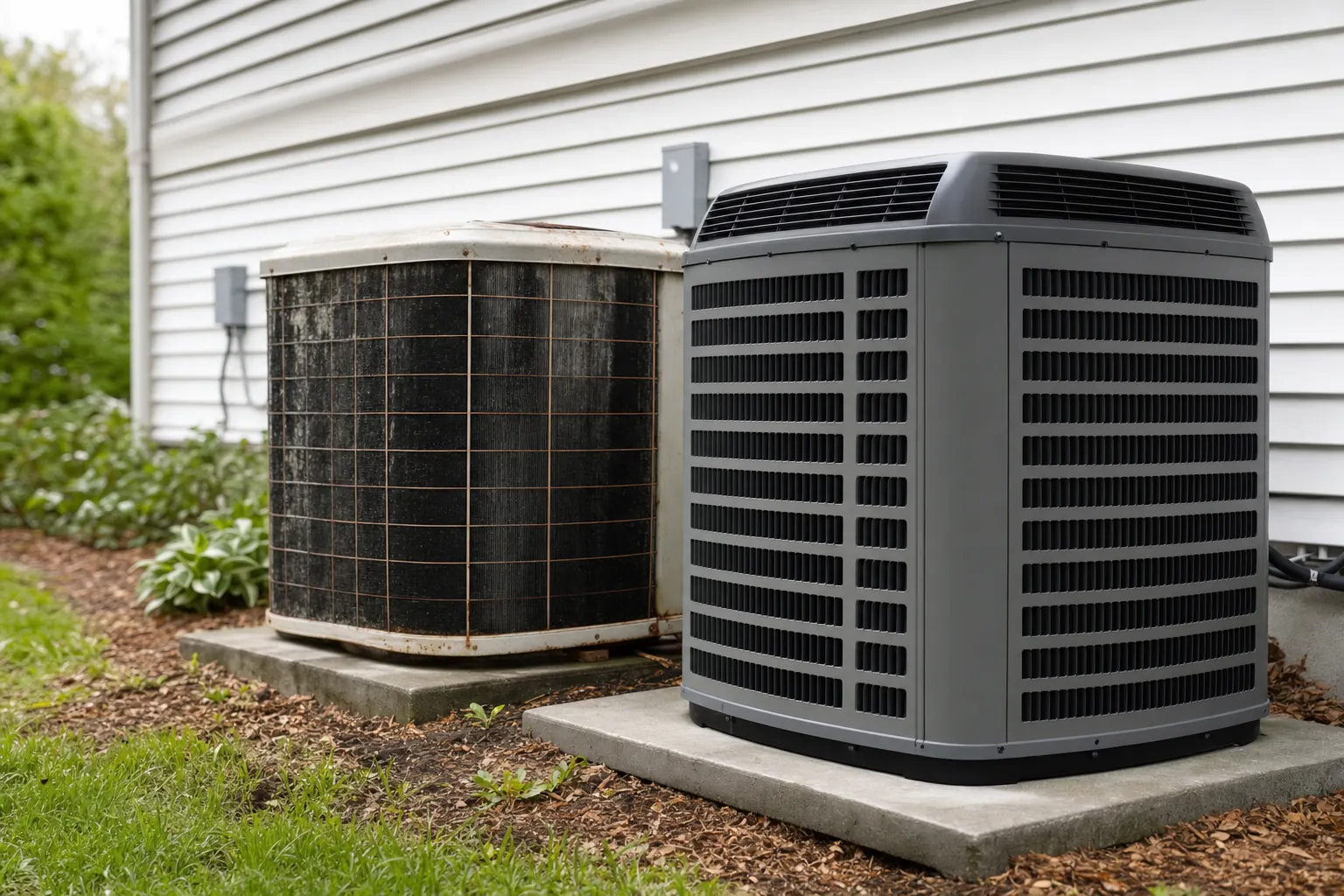
A compressor is the heart of the outdoor unit, so replacing it on an older condenser can be throwing major money at a machine near the end of its life. If the compressor is out of warranty, the condenser is older, and the repair estimate lands near the lower end of replacement pricing for the outdoor unit, it is reasonable to compare both paths carefully. This comes up often on larger 4- to 5-ton systems and on premium equipment where the compressor part is expensive enough that a new condenser starts to look less irrational.
Spending more now can be cheaper over five to ten years when the old system has multiple strikes against it: repeated refrigerant leaks, R-22 refrigerant, coil corrosion, obsolete controls, or visible wear on fan motors and contactors. A new compressor does not reset the age of the condenser coil, service valves, or electronics around it. If the failed compressor was caused by acid contamination from burnout, the repair can also require extra cleanup steps, and even then the rest of the system still remains old.
The smarter higher-cost choice is not always full system replacement. Sometimes replacing the condenser instead of only the compressor is the cleaner answer, especially if the indoor coil is compatible and the refrigerant type matches. Other times a complete matched system makes more sense for efficiency and warranty reasons. A good quote discussion should compare expected remaining life, not just this week’s invoice. Compressor replacement is one of the few AC repairs where stepping back and pricing the next bigger option is often financially sensible.
Estimate methodology
How we built these ranges
We develop these ranges from standardized residential project scopes and reviewed pricing inputs, then keep materially different scopes separate instead of presenting one misleading average. Government data supports labor and location adjustments where applicable; it does not publish the final HVAC project range. This page was reviewed on July 22, 2026.
The approved scenario definitions distinguish factors such as warranty status, system size (tonnage), compressor type, refrigerant type and charge size. Equipment capacity, model, access, and documented labor and material assumptions define each scope. Unsupported permit, tax, rebate, utility, insurance, financing, and warranty amounts are excluded from the canonical calculation.
Compare written, itemized proposals for the same model numbers and scope. Ask whether diagnosis, labor, refrigerant, permits, disposal, warranty registration, and any required supporting work are included.
Sources and fact-checking
Reviewed July 22, 2026. We favor primary government and standards sources for safety, efficiency, and regulatory claims. These references support only the specific technical, safety, efficiency, regulatory, or consumer-guidance claims described on their cards. They do not establish the displayed price ranges.
Want a real number for your system?
Connect with HVAC professionals that service your area for an accurate, no-obligation estimate.