
Reviewed July 22, 2026
HVAC Rescue Editorial Team
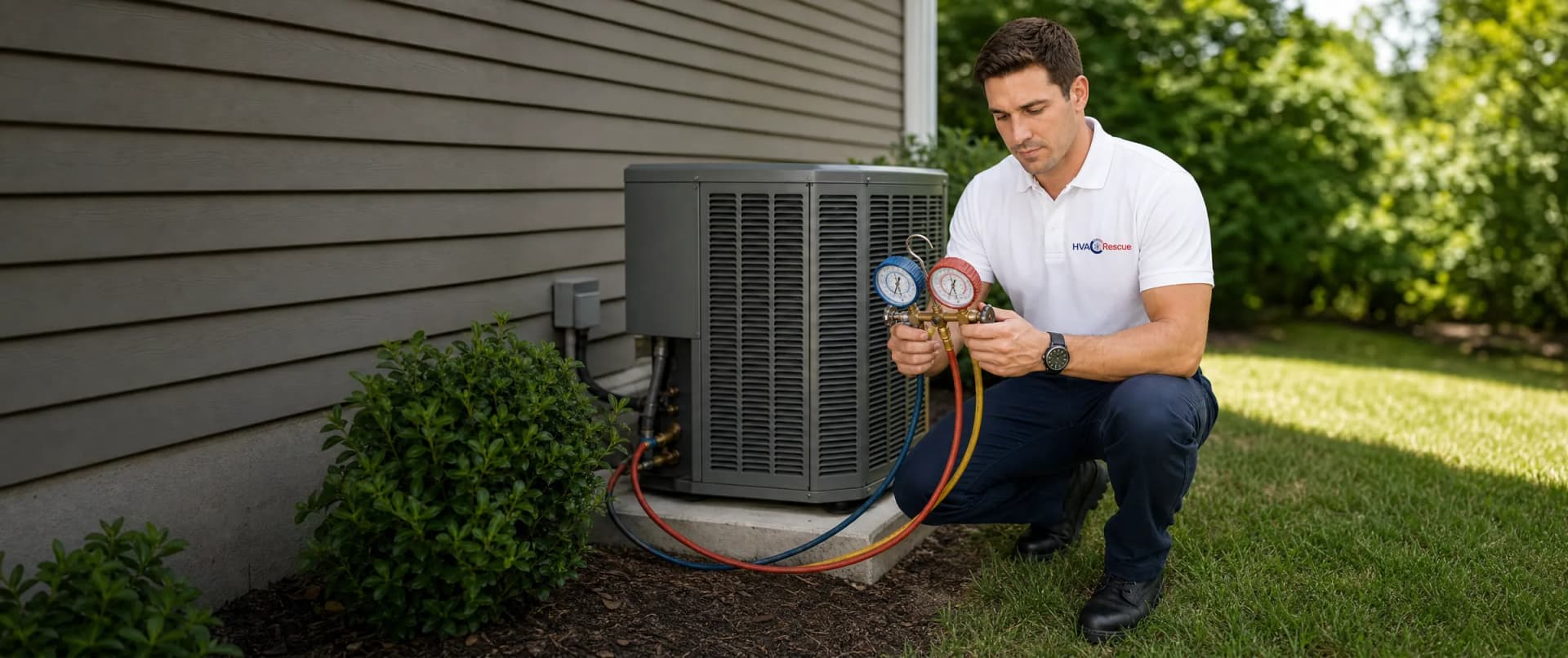
Editorial StandardsNew central AC installation in Utah
AC installation is the right starting point when the decision is about adding a complete cooling system or choosing a new setup for the home. That includes homes with no central cooling, homes being renovated or expanded, and homes where the current air conditioner was never sized correctly and has struggled from the beginning. It also fits when an older system has failed and cannot be repaired, but the main question is now equipment type, size, ductwork, and electrical readiness rather than a single failed part.
This service is different from AC repair, which focuses on finding and fixing a problem in an existing system, and different from AC tune-up, which is routine maintenance. It is also narrower than AC replacement or full HVAC replacement because the focus here is the air conditioning installation itself: matching the cooling load to the right capacity, choosing an efficiency level, and making sure the indoor and outdoor components work together.
AC Installation in Utah: what’s different here
Utah homes often live in two HVAC seasons at once, with winter heating taking center stage in the mountains and summer cooling becoming essential in the lower valleys. Elevation, dry air, and sharp regional differences across the Wasatch Front, St. George, and higher-elevation communities all influence which AC installation approach makes the most sense.
A common challenge in Utah is choosing an AC system that can handle dry summer demand without being oversized for the home, especially in multi-level layouts where airflow can be uneven. Dust, dry indoor air, and aging equipment can also make comfort feel inconsistent even when the system is running. In homes that depend heavily on both heating and cooling, replacement decisions often come down to balancing reliability across the whole year.
In Utah, it is smart to have a qualified HVAC professional evaluate system size, airflow needs, and the home’s heating and cooling balance before choosing new equipment. That is especially important in homes with multiple levels, older ductwork, or comfort issues that show up differently in summer and winter. Requirements can vary by city, county, and state, so homeowners should rely on local HVAC professionals for installation guidance.
- Utah homes need cooling that fits dry summer heat and year-round heating needs.
- Elevation and region can change which AC installation approach works best.
- Uneven airflow and dust are common comfort issues to address during replacement.
- A good install should support both summer comfort and winter system coordination.
AC Installation decisions for Utah homes
Plan a new cooling system around room loads, moisture control, distribution, electrical capacity, and the complete matched equipment scope. For Utah, the relevant state focus is design conditions, fuel, efficiency, permits, cooling design conditions efficiency and permit context. Compare proposals on load assumptions, matched model numbers, included supporting work, commissioning, warranties, and exclusions instead of choosing by nominal tonnage or price alone.
System & efficiency options for Utah homes
Standard-efficiency central AC
A conventional split-system air conditioner that meets current minimum SEER2 efficiency standards. It's a common starting point for whole-home cooling and pairs with existing ductwork where it's suitable. A provider can confirm whether your home is a good fit.
High-SEER2 central AC
A higher-efficiency system with a stronger SEER2 rating, often using variable or two-stage operation for steadier comfort and better humidity control. It can be worth discussing if you run cooling heavily, and some efficient equipment may qualify for state or utility rebate programs, which vary by location.
Heat pump alternative
A heat pump cools like an AC in summer and also provides heating, which makes it a flexible option for many homes. Qualifying heat pumps may be eligible for federal incentives, and an installer in Utah can explain whether it suits your climate and setup.
Ductless mini-split
For homes without ductwork or with hard-to-cool areas, a ductless mini-split delivers zoned cooling without a duct network. It's often used for additions, converted spaces, or whole homes where running ducts isn't practical.
How much does AC installation cost in Utah?
AC installation scope in Utah varies with capacity, efficiency, equipment matching, ductwork, electrical service, drainage, line-set work, and access. The factors below define the work.
- The size and layout of the home being cooled
- The efficiency level and type of system selected
- Whether existing ductwork can be used, modified, or needs to be added
- The condition and capacity of the home's electrical service
- Where the indoor and outdoor units will be located
- Accessibility of the install areas, including attics or tight spaces
- The refrigerant the new system uses
- Any modifications needed for proper drainage and venting
- Local labor rates and market conditions where you live
- Permits and code requirements that apply in your area
- Add-ons such as a new thermostat or air-quality equipment
- Removal and disposal of any existing equipment
| AC Installation | Typical range |
|---|---|
| Straightforward installExisting ductwork and electrical ready, standard efficiency | $4,600 – $9,000 |
| Mid-range installModerate efficiency with minor duct or electrical work | $7,400 – $14,800 |
| Higher-efficiency or larger homeHigh-SEER2 equipment or larger cooling load | $10,600 – $21,800 |
| Complex install with add-onsNew or modified ductwork, difficult access, or panel upgrade | $14,800 – $33,000 |
Cost ranges are estimates developed from standardized project scopes and reviewed pricing inputs. Government labor and regional cost data are used where applicable. See our Pricing Methodology for the exact sources, calculations, and review date. Actual prices vary by property, scope, materials or equipment, location, and provider.
See the full ac installation cost guide for the complete breakdown, then call to get a real quote for your Utah home.
Get AC installation help in Utah
One quick call connects you with HVAC pros who service your area. No pressure, no obligation.
Utah: efficiency standards, rebates & the rules that matter
A few national rules and Utah realities shape any heating or cooling project. Knowing them helps you buy the right system and avoid surprises.
Efficiency standards (SEER2)
Utah sits in the DOE's North region, where new split-system central air conditioners must meet a minimum of 13.4 SEER2. Many Utah homeowners step up to higher-efficiency equipment to cut long heating-and-cooling bills.
New equipment is moving to lower-GWP refrigerants
EPA technology-transition rules restrict new residential and light-commercial equipment that uses high-global-warming-potential HFCs. Most newly manufactured split systems now use A2L refrigerants such as R-454B or R-32, while existing R-410A systems and qualifying repair components remain serviceable. Ask which refrigerant a proposed system uses and confirm that every indoor and outdoor component is listed as a compatible match.
Rebates & tax credits
For equipment placed in service after December 31, 2025, do not assume the former federal Section 25C HVAC credit still applies. Utah households may have access to a state-administered Home Energy Rebate program, utility incentives, or local financing programs, but availability, income rules, eligible models, and funding vary. Check the U.S. Department of Energy program page, the Utah energy office, DSIRE, and the serving utility before signing a contract; use a tax professional for tax advice.
Licensing, permits & EPA 608
HVAC contractor licensing varies by state and sometimes by city or county. In Utah, confirm your contractor is licensed where required, carries liability and workers'-compensation insurance, and that anyone handling refrigerant holds EPA Section 608 certification. Replacements typically need a local permit and inspection.
Utah specifics
Utah's high elevation and wide temperature swings affect sizing and combustion tuning, and both heating and cooling carry real load.
Sources: U.S. DOE — central AC & heat pump regional efficiency standards · eCFR — 10 CFR 430.32 minimum efficiency standards · U.S. EPA — Technology Transitions Program · IRS — Energy Efficient Home Improvement Credit (§25C) · U.S. DOE — Home Energy Rebates · DSIRE — database of state & utility energy incentives · U.S. EPA — Section 608 technician certification
These references support the national regulatory, efficiency, and incentive notes above. State planning context does not represent a local office or guaranteed provider coverage.
Utah climate & seasonal demand
Summers are hot and dry, with strong daytime cooling demand, though cooler evenings provide some relief. The cooling season is meaningful in the lower valleys.
Utah has a dry climate with cold, snowy winters and hot, dry summers. Mountainous areas see heavy snow and longer winters, while the lower valleys are warmer and very dry.
Utah homeowners usually think about AC installation before the hottest part of summer, when daytime cooling demand rises in the valleys and the system has to work harder for longer stretches. At the same time, winter planning matters too, because many homes need equipment that fits into a broader heating setup and performs well after months of cold weather.
Because Utah’s air is dry, comfort is not just about temperature; it is also about how evenly the system cools the home and supports steady indoor conditions. Good AC installation can help reduce hot spots, improve airflow in multi-level homes, and make it easier to keep comfort consistent when outdoor conditions swing between seasons. The right system choice also matters in a state where both cooling and heating get meaningful use.
- Furnaces working hard through cold, snowy winters
- Air conditioners handling hot, dry summer heat
- Dry indoor air affecting comfort and static
- Dust affecting filters and equipment
- Heat distribution issues in multi-level homes
- Aging equipment handling both heat and cold
Before you call: what to have ready
Before scheduling AC installation, homeowners can clear access around the indoor and outdoor equipment areas, check that vents and registers are unobstructed, and make a note of rooms that feel too warm or uneven. It also helps to gather basic information about the home’s layout, any recent comfort problems, and how the current system has been performing. For AC Installation in Utah, relate this guidance to the actual equipment, property, and written scope.
Questions to ask before approving work
- Are you licensed and insured for HVAC work in this state?
- Will a technician give a written, itemized estimate before any work starts?
- Is the diagnostic fee waived or credited if I approve the repair?
- For a new system, will you run a Manual J load calculation to size it correctly?
- What parts and labor warranties come with the repair or installation?
- Are your technicians NATE-certified or manufacturer-trained?
- Can you pull the required permits and schedule any needed inspection?
- Do you offer financing or maintenance plans, and what do they cover?
What happens during service
- 1
Tell us about your project
Share that you're adding central AC and a bit about your home so we can route your request to the right kind of provider.
- 2
Share your location
Let us know where you are in Utah so we can match you with installers that service your area.
- 3
Get connected to a provider
We connect you with an independent installer. Because we are a nationwide connection service, availability may vary by location and provider.
- 4
In-home assessment
The provider evaluates your home, ductwork, and electrical to determine the right system size and setup.
- 5
Review options and estimate
You discuss equipment and efficiency choices and receive an estimate based on your specific home.
- 6
Schedule the installation
Coordinate an install date directly with the provider once you've chosen a system.
- 7
Professional installation
The provider installs the equipment, handles ductwork and electrical connections, and sets up the controls.
- 8
Startup and walkthrough
The system is started, tested, and explained so you know how to operate your new central AC.
AC Installation in Utah: common questions
What should Utah homeowners consider before AC installation?
Is AC installation different in Salt Lake City than in southern Utah?
Why do some Utah homes have comfort issues even with working AC?
Sources and fact-checking
Reviewed July 22, 2026. We favor primary government and standards sources for safety, efficiency, and regulatory claims. These references support the technical and consumer guidance on this page.
- ENERGY STAR heating and cooling guidanceENERGY STAREfficiency, replacement planning, qualified equipment, and contractor questions.
- Clean heating and coolingENERGY STARCentral-system sizing, efficiency, replacement planning, installation, and maintenance.
- Manual J residential load calculationAir Conditioning Contractors of AmericaRoom-by-room heating and cooling load calculations used for equipment sizing.
- Consumer central air conditioners and heat pumpsU.S. Department of EnergySEER2, EER2, HSPF2, test procedures, and current federal efficiency standards.
- How to avoid a home improvement scamFederal Trade CommissionWritten estimates, contractor verification, payment cautions, and fraud warning signs.